
Our verdict
One of Central's most enduring Cantonese institutions, Yung Kee has occupied its Wellington Street address for decades, building a reputation on roast goose and traditional multi-course shared dining. Ranked among Asia's top restaurants by Opinionated About Dining in both 2024 and 2025, it sits in a tier that balances heritage cooking with consistent technical execution, a reference point for classic Hong Kong Cantonese rather than a showcase for contemporary reinvention.

Pearl is the En Primeur Club membership app, where members save venues, book tables and use the concierge.
The menu
What to order
- Signature Charcoal Roasted Goose
- Steamed Bean Curd Sheet with Shrimp Roe
- Barbecued Pork (Char Siu)
Wellington Street and the Weight of a Shared Table
Central Hong Kong has always been a district where the formal and the habitual sit at the same table. The tower blocks belong to finance; the restaurants below them belong to a longer story. On Wellington Street, the tradition of gathering around a large round table, lazy Susan turning, dishes arriving in orchestrated waves, is not a nostalgic affectation but a structural fact of how Cantonese cooking is meant to be eaten. Yung Kee occupies that tradition with the confidence of a restaurant that has been filling those tables since before Hong Kong's skyline acquired its current shape.
The communal format is load-bearing here. Cantonese cuisine at this register is not designed for solo dining or small plates presented in minimalist sequence. It is designed for the rotation of a dozen dishes across a table of eight, for the negotiation of which soup arrives first, for the conversation that happens when a whole roasted bird is carved tableside and distributed according to preference. That choreography defines the experience before the first order is placed.
The OAD Signal and What It Measures
Yung Kee has appeared on the Opinionated About Dining Asia rankings for three consecutive years: Highly Recommended in 2023, ranked #265 in 2024, and #328 in 2025. The slight ranking shift is less significant than the sustained recognition. OAD's methodology is crowd-sourced from experienced diners and food professionals rather than anonymous inspectors, which means a restaurant ranked in this range has delivered consistent results across a broad base of informed repeat visitors.
Within Hong Kong's Cantonese dining hierarchy, the OAD placement positions Yung Kee in a tier below the three-Michelin-star rooms, Lung King Heen and Lai Ching Heen operate at a different price point and a different level of technical ambition, but comfortably above the mid-market tier. The comparison is not a criticism; it is a calibration.
The Roast Goose as Culinary Argument
No discussion of Yung Kee is complete without addressing roast goose, which functions here as both a signature and a statement of position. In Hong Kong, roast goose is one of the clearest markers of a Cantonese restaurant's technical seriousness. The process requires specific breeds, specific hanging and drying protocols, a precise understanding of the oven, and consistent execution across service. A kitchen that handles roast goose well has usually resolved a broader set of competence questions.
Yung Kee's roast goose is among the dishes most consistently cited by OAD reviewers and in broader food press coverage. It is not a dish that translates well to other cities or formats, the context of a full Cantonese banquet, the specific Hong Kong ingredients and preparation traditions, the table-sharing format, all contribute to how it reads. This is the kind of dish that makes the case for eating Cantonese food in Hong Kong rather than importing the cuisine elsewhere. For comparison, Le Palais in Taipei and Jade Dragon in Macau represent how Cantonese cooking travels across the region's premium tier, but each operates in a different local context. Shanghai's entries, 102 House, Bao Li Xuan, and Canton 8 (Huangpu), show how the same culinary tradition functions under different regulatory and ingredient conditions. Summer Pavilion in Singapore and Chef Tam's Seasons in Macau complete a regional picture that makes clear why sourcing and proximity to origin matter. Imperial Treasure Fine Chinese Cuisine in Shanghai operates in a hotel-anchored format that differs structurally from Yung Kee's standalone identity.
Dining in the Building on Wellington Street
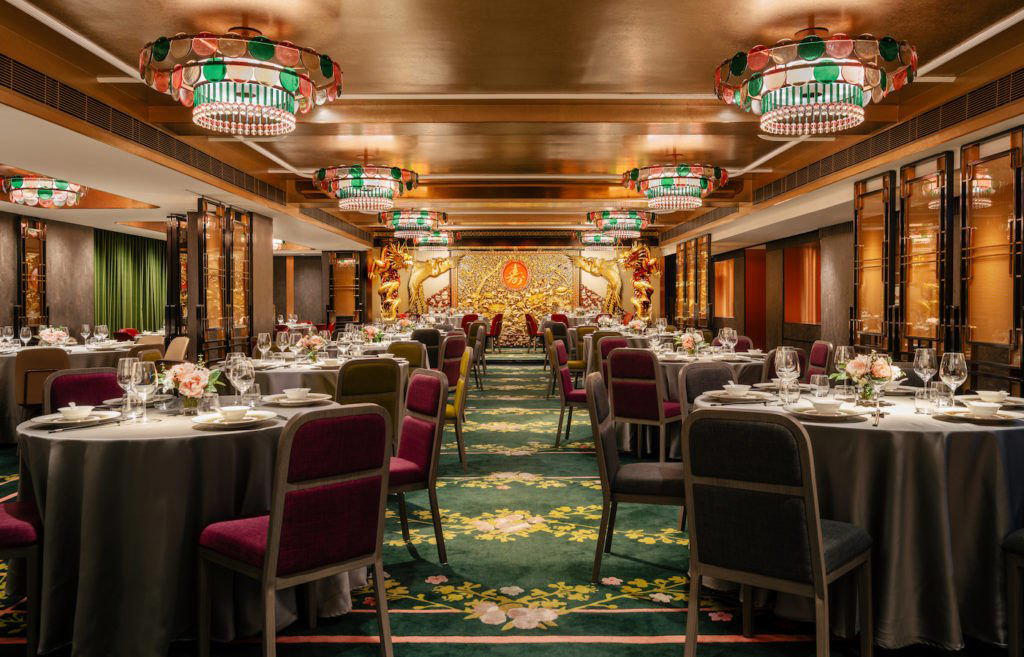
The restaurant occupies its own multi-storey building at 32-40 Wellington Street, an address that distinguishes it architecturally from the street-level shophouse format that defines much of Hong Kong's traditional Cantonese dining. The multi-floor layout allows for different table configurations, which matters for groups using the space for banquet-format dining. The operational hours run from 11am to 10:30pm daily, with no closing day, which means it functions equally well for long lunches, still the preferred format for business entertaining in Central, and full evening banquets.
Central's dining concentration has shifted over the years. The neighbourhood now hosts a mixed field that includes European fine dining at Forum, the French fine dining rooms like T'ang Court, and a growing number of internationally trained chefs opening smaller, more experimental formats. Yung Kee's position on Wellington Street places it inside this density, functioning as a reference institution rather than a discovery. For visitors working through the full range of Central dining, the contrast between Yung Kee's shared-table Cantonese format and the tasting-menu European rooms nearby is part of what makes the neighbourhood interesting.
The Logic of the Banquet Format
A table of six to ten at a restaurant like Yung Kee will typically order across categories: roasted proteins, steamed fish, stir-fried vegetables, a soup, dim sum items at lunch, congee as punctuation or closer. The lazy Susan is not merely convenient; it encodes a specific philosophy about food ownership. No dish belongs to any single diner. The conversation, the reach, the offer and acceptance of a particularly good piece of goose, these are part of the meal in a way that a plated tasting menu cannot replicate.
This format is worth understanding before booking. Yung Kee is leading experienced with a group large enough to order broadly. A party of two can eat here, but they will receive a fraction of what the kitchen is designed to produce. The same is true across the genre: Cantonese banquet cooking at any serious Hong Kong restaurant is calibrated for the table, not the individual plate.
Plan Your Visit
Yung Kee is located at the Yung Kee Building, 32-40 Wellington Street, Central, Hong Kong. The restaurant opens daily from 11am to 10:30pm. Given its position in Central and the volume of regulars and group bookings it handles, advance reservations are advisable, particularly for weekend lunch service and evening banquet tables.
For broader planning, see our full Hong Kong restaurants guide, our full Hong Kong hotels guide, our full Hong Kong bars guide, our full Hong Kong wineries guide, and our full Hong Kong experiences guide.
Quick reference: Yung Kee, 32-40 Wellington Street, Central. Open daily 11am–10:30pm. OAD Leading Restaurants in Asia #265 (2024), #328 (2025).
What's the Signature Dish at Yung Kee?
Roast goose is the dish most consistently associated with Yung Kee across OAD reviewer citations and editorial coverage. It sits within the broader Cantonese roasting tradition that Central Hong Kong handles at a level difficult to replicate outside the city, and it functions as the clearest single signal of the kitchen's technical range. The Michelin-starred rooms in Hong Kong approach roast preparations differently, with greater finish and formality, but Yung Kee's version draws its authority from consistency and volume of execution rather than from refinement for its own sake.
Frequently asked questions
What days is Yung Kee closed?
Hours at Yung Kee: Hours: Monday 11 am–10:30 pm Tuesday 11 am–10:30 pm Wednesday 11 am–10:30 pm Thursday 11 am–10:30 pm Friday 11 am–10:30 pm Saturday 11 am–10:30 pm Sunday 11 am–10:30 pm.
Who runs the kitchen at Yung Kee?
The chef associated with Yung Kee is Yvonne Kam.
The Minimal Set
Comparable options at a glance, pulled from our tracked venues.
| Venue | Cuisine | Price | Awards | Notes |
|---|---|---|---|---|
| Yung KeeThis venue (the venue you are viewing) | Classic Cantonese Roast Goose | $50–100 | Not listed | Not listed |
| 8 1/2 Otto e Mezzo Bombana (Hong Kong) | 3 Michelin-Star Italian Fine Dining | $200–300 | 3 Michelin Stars · World's 50 Best #94 | Italian |
| Ta Vie | Modern French-Japanese Fine Dining | $300–500 | 3 Michelin Stars · World's 50 Best #68 | Japanese - French, Innovative |
| Caprice | Contemporary French Fine Dining | $200–300 | 3 Michelin Stars · World's 50 Best #35 | French, French Contemporary |
| Feuille | Modern Vegetable-Forward French | $200–300 | 1 Michelin Star · World's 50 Best #93 | French Contemporary |
| Neighborhood | Modern French with Asian Influences | $50–100 | 1 Michelin Star · World's 50 Best #24 | International, European Contemporary |
Recognition history
Dated appearances from independent guides and award organizations, with the underlying list record or original source where available.
Opinionated About Dining Top Restaurants in Asia Recommended
Opinionated About Dining
Full recognition history (4 entries)
Opinionated About Dining Top Restaurants in Asia Ranked #328
Opinionated About Dining
Opinionated About Dining Top Restaurants in Asia Ranked #265
Opinionated About Dining
Opinionated About Dining Top Restaurants in Asia Highly Recommended
Opinionated About Dining
Continue exploring
More in Hong Kong
Restaurants in Hong Kong
All restaurants in Hong Kong →
Bars in Hong Kong
All bars in Hong Kong →
Hotels in Hong Kong
All hotels in Hong Kong →
Wineries in Hong Kong
All wineries in Hong Kong →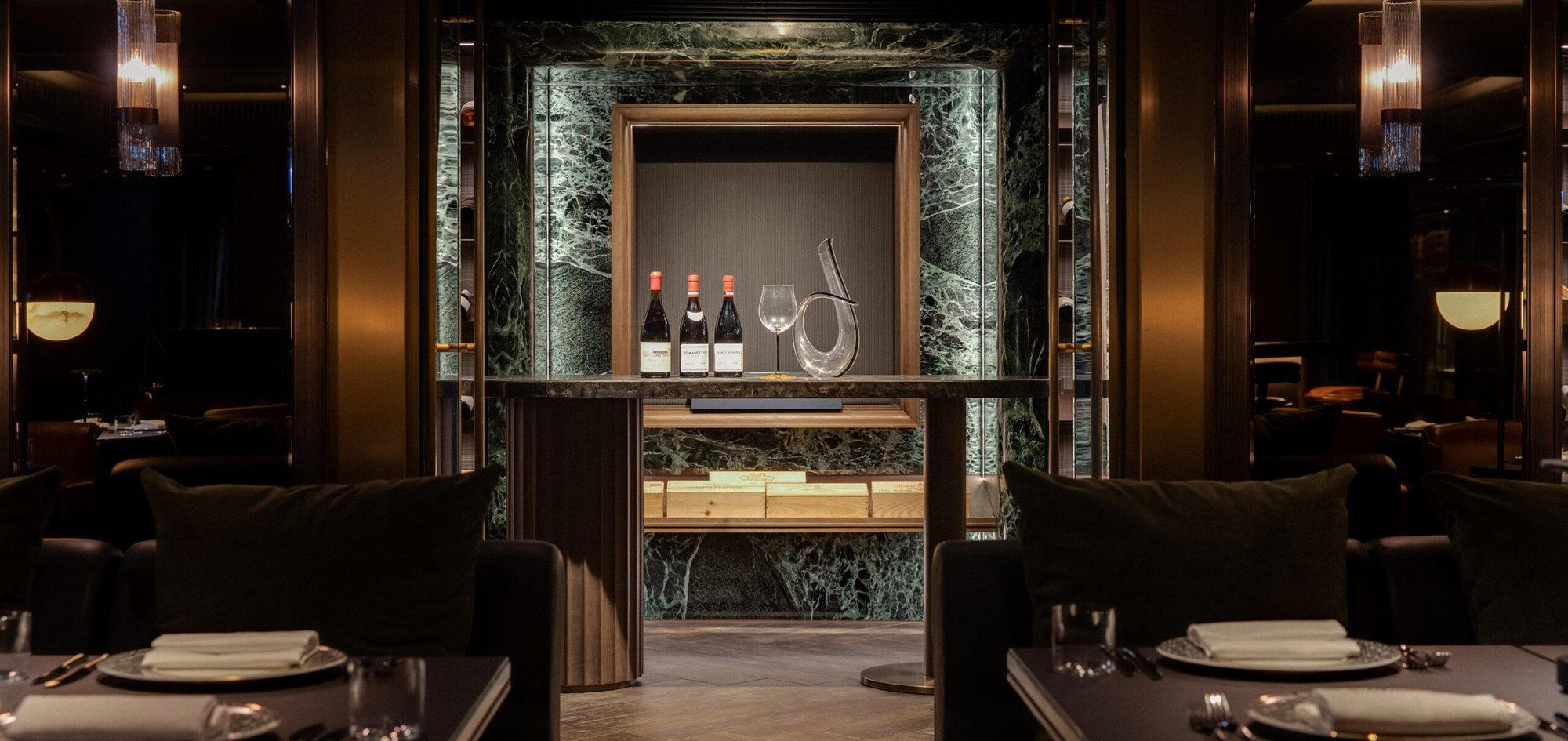
Details
- Classic
- Elegant
- Well Known
- Family
- Business Dinner
- Group Dining
- Historic Building
- Sake Program
- A La Carte
Current opening hours
- Monday
- 11 AM–10:30 PM
- Tuesday
- 11 AM–10:30 PM
- Wednesday
- 11 AM–10:30 PM
- Thursday
- 11 AM–10:30 PM
- Friday
- 11 AM–10:30 PM
- Saturday
- 11 AM–10:30 PM
- Sunday
- 11 AM–10:30 PM
Hours can change for holidays and private events. Hours as of .
Old-school elegant with traditional Chinese decor, grand multi-floor setting blending heritage charm and modern touches, comfortable yet sophisticated atmosphere.