
Michelin Bib Gourmand
Our verdict
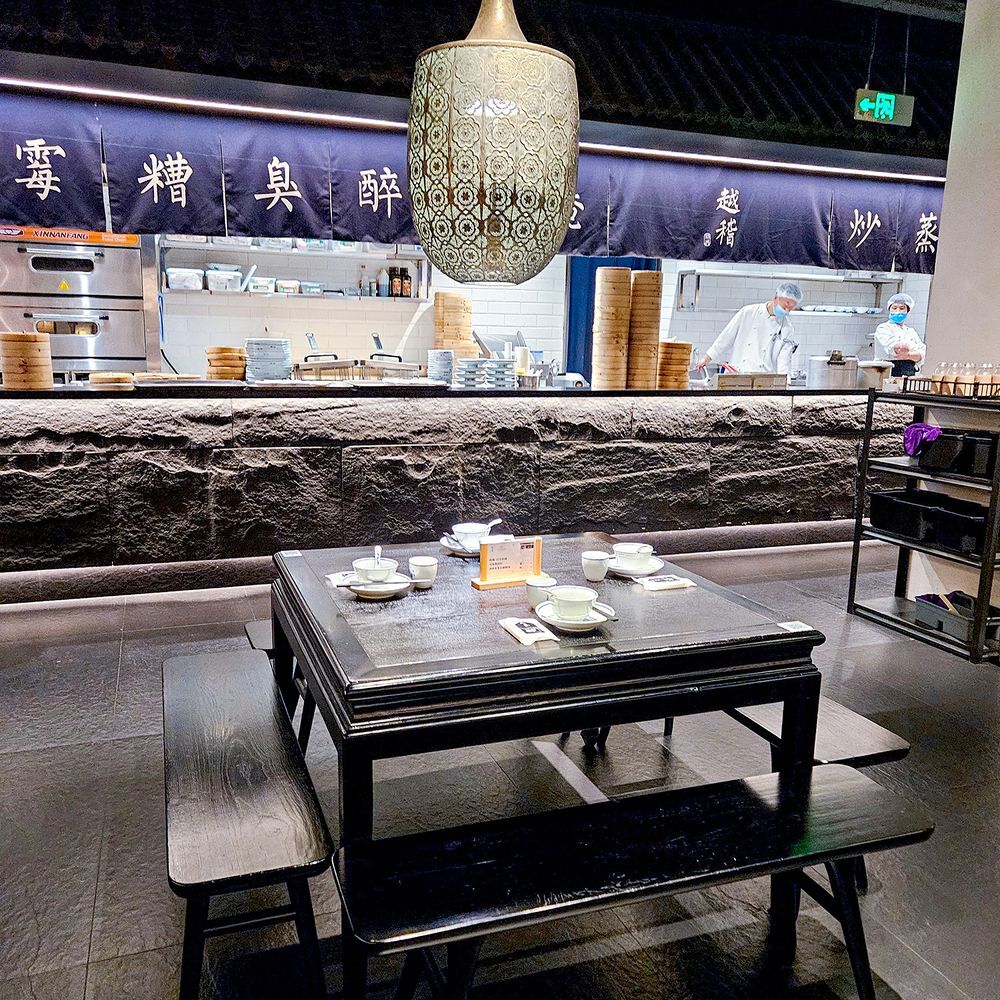
Yue Ji occupies a fourth-floor spot in Binjiang's Star Avenue development, flagged by signage that translates roughly to "stinky" or "rotten"—a nod to the fermented, aged, and preserved ingredients that anchor Zhejiang's culinary vocabulary. The address places it south of the Qiantang River, in a district that leans commercial rather than historic, and the restaurant's identity hinges on how those pungent, funky flavors translate in a newer dining context.

Pearl is the En Primeur Club membership app, where members save venues, book tables and use the concierge.
The menu
What to order
- Dishes marinated with distillers’ grains sauce (e.g., duck gizzard, pork tongue and belly)
- Deep-fried stinky tofu
Hangzhou's dining identity has historically centered on West Lake and the older Shangcheng and Xiacheng neighbourhoods, where restaurants like 28 Hubin Road and Amanfayun occupy heritage buildings and draw on Zhejiang's delicate, sweet-salty canon. Binjiang, by contrast, is a tech and commercial hub that developed rapidly after 2000, and its restaurant scene reflects that timing: newer fit-outs, formats that favor efficiency, and a customer base drawn from office towers and residential high-rises rather than tourist itineraries. Yue Ji sits on the fourth floor of Star Avenue's Phase 1, a mixed-use complex at 228 Jiangnan Avenue, and its signage, announcing itself with characters that translate to "stinky" or "rotten", signals a deliberate focus on the preserved, fermented, and aged ingredients that define much of Zhejiang's home cooking but often get softened or omitted in fine-dining contexts. The name itself is a provocation: in a city where many upscale Zhejiang restaurants emphasize refinement and restraint, Yue Ji leans into the funk.
Fermentation and Preservation as the Menu's Anchor
Zhejiang's culinary tradition relies heavily on fermentation, salting, drying, and pickling, techniques that developed in a region with abundant freshwater, a humid climate, and a historical need to preserve fish, vegetables, and meat. Stinky tofu, fermented amaranth stems, salted fish, and preserved mustard greens all carry sharp, umami-forward profiles that read as aggressive to palates trained on Cantonese delicacy or Sichuan heat. Hangzhou's fine-dining tier has historically downplayed these flavors in favor of the city's sweeter, lighter dishes, Dongpo pork, West Lake vinegar fish, beggar's chicken, but a subset of newer operations, particularly in Binjiang and Xiaoshan, have begun to reposition fermented and aged ingredients as markers of authenticity rather than rusticity. Yue Ji's signage and naming strategy suggest it falls into this camp, foregrounding the "stinky" and "rotten" as a badge rather than an apology. Whether that commitment extends to the full menu or functions as branding theater depends on execution, but the premise is clear: this is not a restaurant trying to sanitize Zhejiang's more polarizing flavors.
In practice, that approach often means dishes built around salted river fish, fermented tofu sauces, aged ham (Jinhua or local variants), and pickled vegetables that function as condiments rather than garnishes. The sourcing matters: Zhejiang's rivers and lakes yield shad, mandarin fish, and crucian carp that taste markedly different from ocean species, and local fermentation traditions vary by sub-region, Shaoxing for wine and preserved vegetables, Jinhua for ham, Ningbo for salted fish. A restaurant that takes this angle seriously will differentiate between these sources rather than homogenizing them under a generic "Zhejiang" label. Without a published menu or dish-level data, it's impossible to verify Yue Ji's sourcing depth, but the positioning suggests an emphasis on ingredient pedigree over chef-driven innovation.
Binjiang's Dining Landscape and What It Means for Format
Binjiang's restaurant scene skews practical. Office workers need efficient lunch options, and residential customers favor weeknight-friendly pricing and parking over destination dining. Fine-dining formats struggle here unless they're corporate-expense-account destinations or celebration venues, and most successful operations lean toward mid-tier pricing with high ingredient visibility, hot pot, seafood by weight, regional noodle specialists, and small-format regional concepts that operate as category leaders rather than all-rounders. Yue Ji's fourth-floor location inside a mixed-use development suggests it's not a street-level walk-in operation; fourth-floor placements typically depend on advance bookings, corporate groups, or a loyal repeat base that knows the address. That structure implies a format more aligned with multi-course meals or group dining than quick solo lunches, though without seat count or service-model data, it's difficult to pin down the exact tier.
Compared to 1913, which occupies a heritage courtyard and operates as a heritage-forward fine-dining destination, or Ambré Ciel, which runs an innovative format with a clear chef-driven narrative, Yue Ji reads as more ingredient-led and less chef-centric. That's not a criticism, it's a different competitive set. The restaurant's peers are more likely to be ingredient-specialist operations like Bai Yun or niche regional concepts that prioritize sourcing and technique over chef biography. In that tier, success hinges on ingredient quality, consistency, and whether the restaurant can articulate its sourcing story clearly enough to justify the price premium over home-style alternatives.
Without published hours, booking method, or price range, practical planning requires flexibility. Most mid-to-upper-tier Zhejiang restaurants in Binjiang operate dinner service as their primary window, with lunch available but less emphasized. Reservations are typically handled via WeChat or phone, and English-language booking support is rare outside of hotel-affiliated or internationally recognized venues. Dress code in this tier tends toward smart casual; formal attire is unnecessary unless the occasion demands it. Arriving by taxi or ride-share is direct from central Hangzhou, Jiangnan Avenue is well-served by main arteries, and the Star Avenue complex offers parking. Public transport requires a bus transfer from nearby metro stations, as Line 1's closest stop (Jiangnan Avenue Station) sits roughly 1.5 kilometers northwest.
For visitors building a broader Hangzhou itinerary, Yue Ji fits leading as a counterpoint to the city's more polished fine-dining tier. Pair it with 28 Hubin Road for heritage context or Wild Yeast for contemporary Chinese innovation, and use it to explore Zhejiang's funkier, more fermentation-forward side. The broader dining scene is covered in our full Hangzhou restaurants guide, and neighborhood-level context for bars, hotels, and experiences is available via our full Hangzhou bars guide, our full Hangzhou hotels guide, and our full Hangzhou experiences guide.
Frequently asked questions
Is Yue Ji (Binjiang) a family-friendly restaurant?
The restaurant is located in Binjiang's Star Avenue commercial complex, a district that balances office workers with residential traffic. Zhejiang fermentation techniques often produce pungent flavors, stinky tofu, aged pickles, salted fish, that divide diners by palate tolerance rather than age. The practical format and weeknight-oriented pricing in Binjiang suggest utility over formal occasion dining.
How would you describe the vibe at Yue Ji (Binjiang)?
Binjiang's dining scene favors efficiency over theater, and Yue Ji sits inside a multi-phase commercial development at 228 Jiangnan Avenue. The emphasis on fermentation and preservation signals a menu built for regulars who appreciate Zhejiang's salt-forward, umami-dense tradition rather than novelty seekers. Expect a straightforward service model aligned with the district's office-lunch and residential-dinner rhythm.
Is Yue Ji (Binjiang) Michelin-listed?
Yue Ji (Binjiang) has received recognition including: A sign that says "stinky" or "rotten"....
What part of town is Yue Ji (Binjiang) in?
Yue Ji (Binjiang) is located at 4F, Building 1, Phase 1, Star Avenue, 228 Jiangnan Avenue, Binjiang, Hangzhou, Zhejiang, CHN, Hangzhou.
How It Stacks Up
Comparable venues by cuisine and price in the same metro.
| Venue | Cuisine | Price | Awards |
|---|---|---|---|
| Yue Ji (Binjiang)This venue (the venue you are viewing) | Traditional Shaoxing & Zhejiang Cuisine | $20–30 | Michelin Bib Gourmand |
| Wan Li | Modern Zhejiang & Cantonese | Not listed | Michelin Plate |
| TUNG FU RESTAURANT | Modern Chaoshan Chinese | $20–30 | Black Pearl 1 Diamond |
| Rong Xian Mian Guan (Qianjiang Road) | Traditional Hangzhou Noodles | $10–20 | Michelin Bib Gourmand |
| Wild Yeast | Tai-French Chinese Contemporary | Not listed | 1 Michelin Star · Black Pearl 1 Diamond |
Recognition history
Dated appearances from independent guides and award organizations, with the underlying list record or original source where available.
Michelin Bib Gourmand
Michelin
Continue exploring
More in Hangzhou
Restaurants in Hangzhou
All restaurants in Hangzhou →
Bars in Hangzhou
All bars in Hangzhou →
Details
- Classic
- Cozy
- Quiet
- Family
- Group Dining
- Date Night
- Special Occasion
- Standalone
- Local Sourcing
- A La Carte
- Baijiu
- Beer
- Pescatarian Friendly
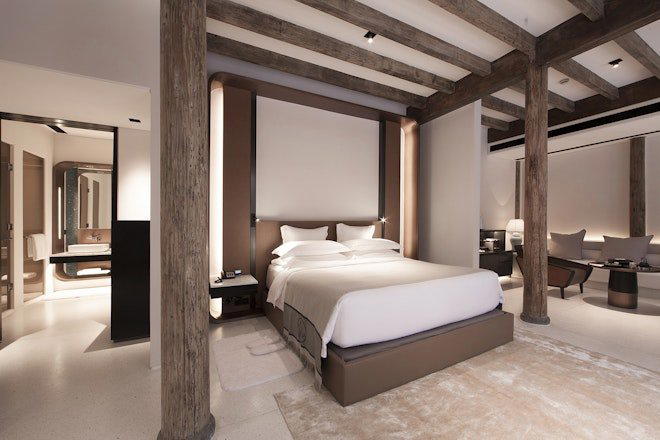
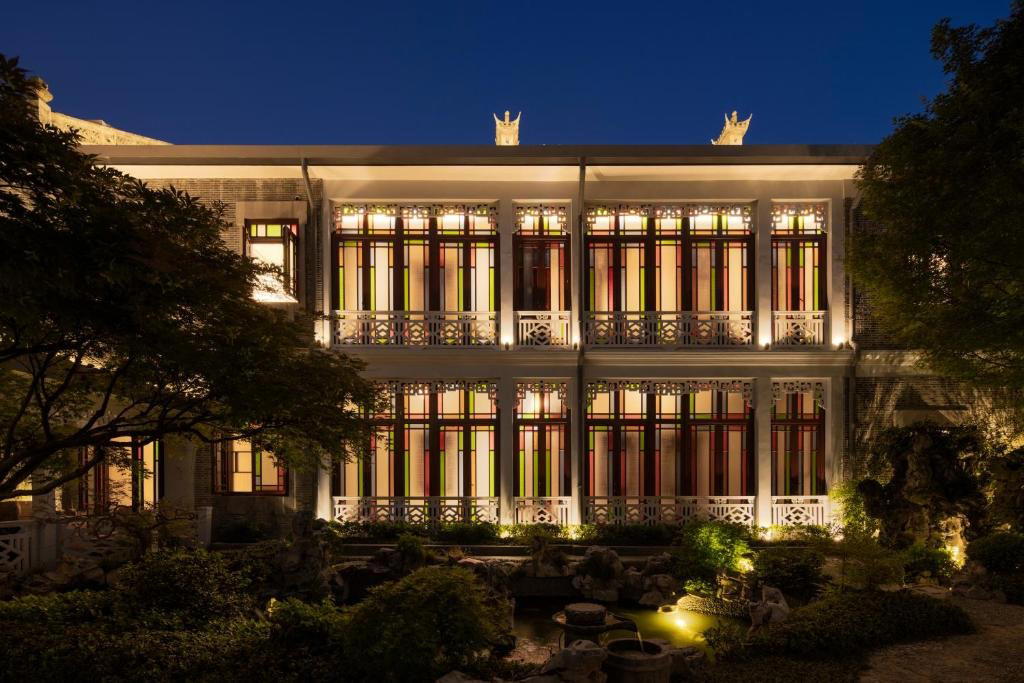
The dining room has a modest, home-style feel rather than a formal fine-dining look, with a relaxed, family-friendly atmosphere where guests linger over traditional Shaoxing dishes in a calm, unhurried setting.