
Tabelog 100 #61
Our verdict
In Chuo Ward's Bingomachi district, Yoshitora sits within one of Osaka's most concentrated corridors of serious dining. The address places it among the city's established kappo and kaiseki tier, where regulars return not for novelty but for consistency and craft. A reservation is the starting point for understanding what this part of Osaka values most.

Pearl is the En Primeur Club membership app, where members save venues, book tables and use the concierge.
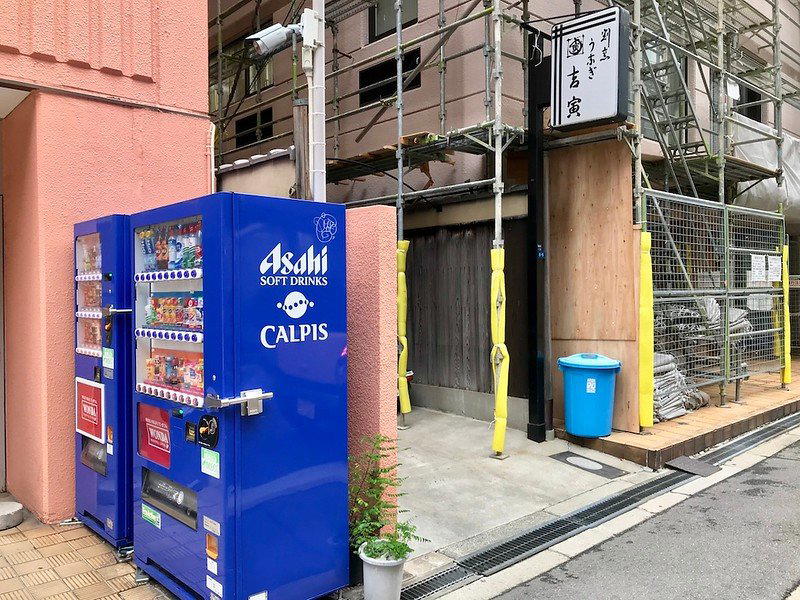
What Bingomachi Signals Before You Walk In
The streets around Bingomachi in Chuo Ward don't announce themselves. There are no lantern-lit alleys angled for photography, no queues doubling back toward the main road. What this part of central Osaka offers instead is density of intent: a concentration of dining rooms that operate on the assumption that guests already know why they've come. Yoshitora, at 1 Chome-6-6 Bingomachi, sits inside that logic. The address alone places it in conversation with the kind of Osaka establishment where the room is secondary to what happens at the table.
Chuo Ward is Osaka's commercial and culinary centre of gravity, and Bingomachi specifically has long functioned as the district where business-district precision meets the city's kappo and kaiseki traditions. The comparison set here is not casual dining. Venues like Ajikitcho Bunbuan and Ajihei Sonezaki define the register of the neighbourhood: considered, unhurried, built around repeat clientele rather than first-time foot traffic.
The Regulars' Geography
In Osaka's serious dining rooms, the concept of the regular is structural, not sentimental. A restaurant in this tier earns its core clientele over years, and that clientele in turn shapes the rhythm of service, the unspoken preferences the kitchen accommodates, the way the room feels on any given evening. Yoshitora's location in Bingomachi places it within a neighbourhood where this dynamic is the norm rather than the exception.
What keeps regulars returning to a room like this is rarely a single dish. It is the accumulation of small calibrations: the pace at which courses arrive, the temperature of ceramic, the way a server reads the table without being prompted. Osaka's kappo tradition is built on exactly this kind of attentiveness, where the counter or table functions as a two-way instrument. The kitchen observes the guest as much as the guest observes the kitchen. Venues like Aka to Shiro and Calendrier operate within a similar tradition of intimate, calibrated service in this part of the city.
The unwritten menu, in this context, is real. Long-standing guests at rooms of this type are not ordering from a printed card so much as signalling a set of understood preferences, built up across multiple visits. That is the currency of the Bingomachi dining room: accumulated trust between kitchen and guest, expressed through food.
Osaka's Dining Tier and Where Yoshitora Fits
Osaka positions itself differently from Tokyo within Japan's fine dining hierarchy. Where Tokyo's top tier is frequently defined by Michelin accumulation and international visibility, Osaka's equivalent is often quieter, more locally anchored, and more insistent on the primacy of the ingredient over the technique. The city's contribution to Japanese culinary culture, the concept of kuidaore (eating until you drop), is not merely a marketing line. It describes a genuine civic orientation toward food as civic life, something taken seriously at every price point.
At the upper end of that range, where Yoshitora's Bingomachi address positions it, the competition is serious. HAJIME in Osaka represents the city's most internationally decorated tier. Further afield, Gion Sasaki in Kyoto and Harutaka in Tokyo illustrate how Japan's premium dining rooms share a common grammar of restraint and seasonal precision, even as each city inflects it differently. Osaka's version tends toward directness: fewer elaborate garnishes, more emphasis on the clarity of the primary ingredient.
Within that frame, venues like Az in Osaka represent the city's capacity to absorb international influence without losing its native register. Yoshitora's Chuo Ward address suggests alignment with the more traditionally grounded end of that spectrum, where local sourcing and seasonal rhythm take precedence over imported culinary vocabulary.
Planning a Visit: What the Address Tells You
Bingomachi is accessible from central Osaka's main transport corridors. Honmachi Station on the Midosuji and Chuo lines is the most direct approach, placing the area within the dense grid of Chuo Ward's business district. Evenings in this part of the city shift quickly from corporate to culinary: the same streets that carry office traffic by day become the route to a set of serious dining rooms by seven o'clock.
For rooms of this type in Osaka, reservations are generally required well in advance. The city's top tier fills through a combination of regular bookings and word-of-mouth referral, with walk-in availability rare outside of specific circumstances. Advance contact is the only reliable approach, and given the international interest in Osaka's dining scene, particularly since the city's expanded Michelin coverage in recent years, the booking window for established addresses has lengthened considerably.
The broader Kansai region offers useful context for planning. akordu in Nara and Abon in Ashiya are both within reach of Osaka for those building a multi-day itinerary around serious eating. Further afield, Goh in Fukuoka represents another node in Japan's regional fine dining circuit that pairs naturally with an Osaka visit. Our full Osaka Shi restaurants guide maps the city's dining tiers in greater detail.
For international reference points, the structural logic of a room like Yoshitora, a small, reservation-driven space where regulars shape the rhythm and the kitchen operates with minimal fanfare, shares something with venues like Le Bernardin in New York City or the chef-driven intimacy of Lazy Bear in San Francisco, even if the culinary tradition differs completely. Japan's kappo counter and the Western tasting-menu room are distinct forms, but they share the underlying premise that the guest's commitment to the format is part of the experience.
For those building a wider view of Japan's regional dining circuit alongside their Osaka visit, rooms like affetto akita in Akita, Aji Arai in Oita, Ajidocoro in Yubari District, and Akakichi in Imabari illustrate how Japan's serious dining culture extends well beyond the main metropolitan corridors.
Frequently asked questions
Where do I go for Yoshitora?
Yoshitora is located at 1 Chome-6-6 Bingomachi, Chuo Ward, Osaka, 541-0051, Japan, Osaka Shi.
How does Yoshitora's location in Bingomachi compare to Osaka's more prominent dining districts?
Bingomachi in Chuo Ward sits within central Osaka's business corridor, a different register from the tourist-facing streets of Namba or Shinsaibashi. Restaurants at this address in Osaka Shi tend to draw a professional and corporate regular base rather than destination diners, which shapes everything from pacing to how the room operates on a given evening. Honmachi Station on the Midosuji and Chuo lines is the most direct approach.
What's the best thing to order at Yoshitora?
Specific menu details for Yoshitora are not published through public channels, which is consistent with how Bingomachi-area dining rooms in Osaka's Chuo Ward tend to operate, the menu comes to you, shaped by season and the kitchen's direction that evening. Arriving with preferences rather than expectations is the practical approach here.
Is Yoshitora reservation-only?
No booking contact is listed publicly for Yoshitora, which in Osaka's serious dining tier typically means access runs through existing relationships or introduction rather than an open online system. The Bingomachi address at 1 Chome-6-6 in Chuo Ward is documented, but walk-in availability is not confirmed.
What is Yoshitora known for?
Yoshitora occupies the kind of Osaka address, Bingomachi in Chuo Ward, that signals a restaurant built around a core clientele rather than passing trade. In Osaka's dining hierarchy, that positioning places it alongside rooms where the kitchen's consistency, not its marketing, is the draw. Cuisine type is not formally documented in public records.
Cuisine and Credentials
| Venue | Cuisine | Price | Awards |
|---|---|---|---|
| YoshitoraThis venue (the venue you are viewing) | Traditional Unagi (Freshwater Eel) | $50–100 | Tabelog 100 #61 |
| Dotonbori Kukuru | Osaka-Style Takoyaki | $10–20 | Not listed |
| Harijyu Dotombori Grill Western Food | Traditional Yoshoku (Japanese Western) Grill | $30–50 | Not listed |
| Moeyo Mensuke Ramen | Duck & Shellfish Ramen | $10–20 | Tabelog 100 #71 |
| Naniwa kappo Kigawa | Naniwa Kappo (Osaka-style Kaiseki) | $150–200 | Not listed |
| Okonomiyaki Kiji | Osaka-Style Okonomiyaki | $10–20 | Tabelog 100 #20 |
Recognition history
Dated appearances from independent guides and award organizations, with the underlying list record or original source where available.
Tabelog 100 #61 · No. 61
Tabelog · Tabelog 100 - Unagi - 2024
Continue exploring
More in Osaka
Restaurants in Osaka
All restaurants in Osaka →


Bars in Osaka
All bars in Osaka →
Hotels in Osaka
All hotels in Osaka →


Wineries in Osaka
Browse all →
Details
- Elegant
- Intimate
- Classic
- Special Occasion
- Business Dinner
- Historic Building
- Private Dining
- A La Carte
- Set Menu
Current opening hours
- Monday
- 11 AM–1:30 PM, 5–8 PM
- Tuesday
- 11 AM–1:30 PM, 5–8 PM
- Wednesday
- 11 AM–1:30 PM, 5–8 PM
- Thursday
- 11 AM–1:30 PM, 5–8 PM
- Friday
- 11 AM–1:30 PM, 5–8 PM
- Saturday
- Closed
- Sunday
- Closed
Hours can change for holidays and private events. Last verified .
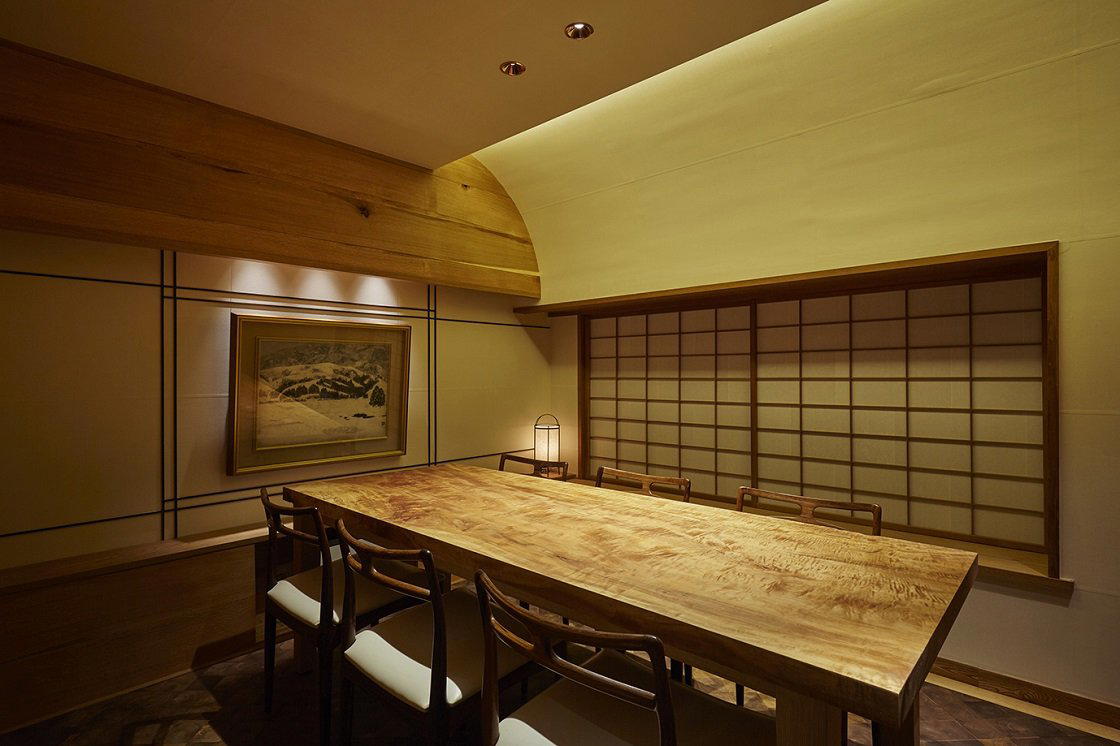
Refined and relaxing atmosphere with elegant, noble exterior; traditional intimate setting with spacious, relaxing interior space.