Google: 4.8 · 198 reviews
Yo También Cantina

A daytime counter on the eastern edge of San Francisco's Inner Sunset, Yo También Cantina has built a following since 2018 around Mexican cooking that treats the tamal bowl as a serious vehicle rather than an afterthought. The parklet, the nonalcoholic michelada, and the general lack of urgency make it a useful antidote to the city's more performance-driven dining rooms.
 Discover on Pearl
Pearl is the En Primeur Club membership app — saves, bookings, and concierge access live there. Same editors, same standards.
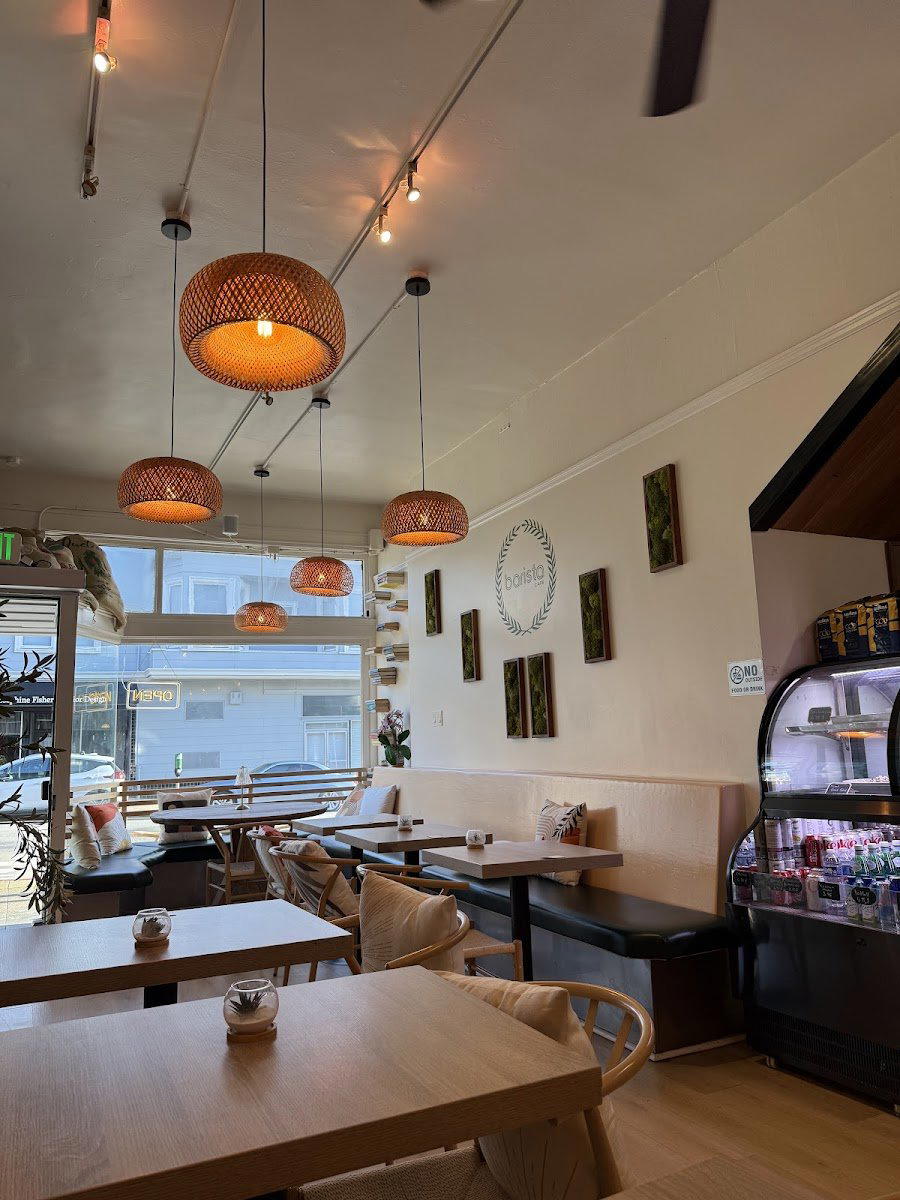
The Inner Sunset's Daytime Counter
San Francisco's Inner Sunset sits at a particular remove from the city's high-wattage dining circuit. The neighbourhood's food culture runs closer to the rhythms of the avenues than to the concentrated restaurant blocks of the Mission or Hayes Valley, and the dining rooms that have taken root here tend to reward the kind of eater who is happy to slow down. Yo También Cantina, which opened at 205 Hugo St. in 2018, belongs to that register. It operates as a daytime restaurant, which is itself a statement of intent in a city where the serious money follows dinner service.
Approaching the address, the parklet reads before the interior does. A spot for loitering rather than turning tables, it signals that the operating logic here is not built around throughput. That posture shapes the experience in ways that the menu alone cannot. San Francisco's $$$$ tier, represented by places like Lazy Bear, Atelier Crenn, Benu, Quince, and Saison, operates on the assumption that the diner is committed before they arrive. Yo También occupies a different position entirely, and the parklet is part of how it communicates that.
What the Tamal Bowl Argues About Mexican Cooking
The tamal bowl has become something of a test case in American cities for how Mexican cooking gets read by non-Mexican audiences. In many contexts, it arrives as a shortcut: masa that has been cut loose from its traditional form, placed into a vessel, and padded out with protein and sauce to approximate the logic of a grain bowl. The result is often dispiriting, a cuisine reduced to its most transferable components and stripped of the technique that makes those components matter.
Yo También Cantina's version has been described as an antidote to that tendency. The framing matters. Masa preparation, whether for tamales, tortillas, or sopes, carries a specific technical history that has more in common with artisan fermentation or hand-laminated pastry than it does with assembly-line bowl culture. Getting it right requires attention to nixtamalisation, fat ratios, and texture at each stage of cooking, the kind of process knowledge that sits at the intersection the San Francisco dining scene has long rewarded when it appears in European or Japanese contexts but has been slower to apply to Mexican kitchens.
That gap is closing. Across American cities, a generation of cooks trained in technically rigorous environments has brought those tools back to the cuisines they grew up eating. The result is Mexican food that doesn't need to simplify itself for credibility. The tamal bowl at Yo También operates in that tradition: the technique is the point, not the vessel.
The Nonalcoholic Michelada and What It Represents
The michelada is a good lens for reading what a Mexican restaurant thinks about its own cuisine. In its standard form, it is beer, lime, salt, and a hot sauce rim, a drink built around contrast and efficiency. The Yo También version replaces beer with sparkling water, swaps in fruit puree, and keeps the chamoy rim. The result is categorised on the menu as a wellness drink, a framing that would be easy to dismiss as trend-following if the execution weren't grounded in an actual understanding of the original.
Chamoy, a condiment made from pickled fruit with chile and lime, has deep roots in Mexican snack culture and brings a specific balance of sweet, sour, and saline that functions differently from a simple hot sauce rim. Using it in a nonalcoholic context is not a subtraction from the tradition but an extension of its logic. This is the kind of adaptation that distinguishes a kitchen with technical and cultural fluency from one simply borrowing aesthetics.
For visitors comparing daytime options across the city or elsewhere in California, the drink list at Single Thread Farm in Healdsburg or the non-alcoholic pairing programs that have become standard at places like The French Laundry in Napa signal the same broader shift: thoughtful restaurants now treat the nonalcoholic list as a parallel kitchen project, not an afterthought.
Context: Where Yo También Fits in the City's Mexican Food Conversation
San Francisco has a complicated relationship with Mexican cooking. The Mission District carries significant historical weight as one of the most concentrated Mexican-American neighbourhoods on the West Coast, and the taqueria culture there operates at a level of craft that rewards serious attention on its own terms. The question of what comes next, of how Mexican restaurants expand the conversation without abandoning what makes the tradition legible, is one the city is actively working through.
Yo También sits in that broader discussion. By operating in the Inner Sunset rather than the Mission, by running as a daytime restaurant rather than a dinner service, and by treating a bowl format as an occasion to demonstrate technique rather than to streamline production, it has staked out a specific position. That position is worth understanding before you arrive, because the restaurant is making an argument as much as it is serving food.
For context on how this kind of technique-forward approach to non-European cuisines plays out at the highest tier, Benu's French-Chinese synthesis and Atomix in New York City both demonstrate how imported methods applied to indigenous culinary traditions can produce cooking that neither tradition could have produced alone. Yo También operates at a different price point and scale, but the underlying logic is recognisable.
Planning Your Visit
Yo También Cantina operates as a daytime restaurant at 205 Hugo St. on the eastern edge of the Inner Sunset, a neighbourhood accessible via the N-Judah Muni line. As a daytime operation opened in 2018 with an established following, arrival early in the service window improves your chances of securing a spot in the parklet, which is the recommended seat for the full experience. The restaurant was founded by Kenzie Benesh and Isabella Bertorelli, whose names appear in coverage of the opening but whose individual roles in the kitchen are not detailed in available sources.
For those building a broader San Francisco itinerary, the full San Francisco restaurants guide maps the city's dining across price tiers and neighbourhoods. The San Francisco hotels guide, bars guide, wineries guide, and experiences guide cover the rest of the city's infrastructure at the same editorial standard. Further afield, Providence in Los Angeles, Le Bernardin in New York City, Emeril's in New Orleans, Alinea in Chicago, and Alain Ducasse at Louis XV in Monte Carlo round out a picture of where technique-led cooking sits globally.
Fast Comparison
A quick peer reference to anchor this venue in its category.
| Venue | Cuisine | Price | Awards | Notes |
|---|---|---|---|---|
| Yo También Cantina | The tamal bowl from Yo También Cantina is the antidote to depressing slop bowls.… | This venue | ||
| Lazy Bear | Progressive American, Contemporary | $$$$ | Michelin 2 Star | Progressive American, Contemporary, $$$$ |
| Atelier Crenn | Modern French, Contemporary | $$$$ | Michelin 3 Star | Modern French, Contemporary, $$$$ |
| Benu | French - Chinese, Asian | $$$$ | Michelin 3 Star | French - Chinese, Asian, $$$$ |
| Quince | Italian, Contemporary | $$$$ | Michelin 3 Star | Italian, Contemporary, $$$$ |
| Saison | Progressive American, Californian | $$$$ | Michelin 2 Star | Progressive American, Californian, $$$$ |
Continue exploring
More in San Francisco
Restaurants in San Francisco
Browse all →
Bars in San Francisco
Browse all →
Hotels in San Francisco
Browse all →



At a Glance
- Cozy
- Hidden Gem
- Bohemian
- Casual Hangout
- Brunch
- Solo
- Terrace
- Beer Program
- Farm To Table
- Local Sourcing
Casual, welcoming neighborhood oasis with outdoor patio seating that encourages relaxed conversation and community gathering.