
Yo, Cocina Contemporánea brings Sardinian-rooted contemporary cooking to Seville's Casco Antiguo, where Chef Stefano Deidda runs two tasting menus, Esencial and Esencia, that fold Andalucian and Gallic accents into a distinctly Mediterranean framework. The format is deliberately personal and unhurried, positioned closer to the intimate end of Seville's creative dining scene than to its more theatrical counterparts.
Pearl is the En Primeur Club membership app — saves, bookings, and concierge access live there. Same editors, same standards.
- Address
- C. Bailén, 34, Local, Casco Antiguo, 41001 Sevilla, Spain
- Phone
- +34 604 95 08 77
- Website
- restauranteyo.com
- Directions
- Get directions
 Saves & bookings on Pearl
Where Sardinia Meets Seville: A Tasting Menu Format Built on Affection for a City
Calle Bailén cuts through the older fabric of Seville's Casco Antiguo, a street with more residential grain than the heavily trafficked tourist corridors nearby. Approaching number 34, there is no grand entrance statement, no marquee signage calibrated for Instagram. The building reads as a local address first, a restaurant second, and that inversion is largely the point. Seville's creative dining scene has, over the past decade, bifurcated between formal destination restaurants with international ambitions and smaller, personally driven spaces where the format reflects a genuine affiliation with the city rather than a calculated positioning within it. Yo, Cocina Contemporánea sits firmly in the latter category.
Chef Stefano Deidda arrived with a credible track record from Sardinia, where his cooking had already drawn serious attention, and the project here was designed with a different register in mind: less institutional, more intimate. His partner Eva Urru is embedded in the operation, giving the place the character of a project built from genuine commitment to Seville rather than a chef planting a flag in a new market. For regulars, that distinction is felt before the first course arrives.
The Menu Structure and What It Tells You About the Kitchen's Priorities
Two tasting menus, Esencial and Esencia, are the only format on offer. In cities where tasting menus have become the dominant idiom for creative cooking, the choice between a shorter and a longer version is often just a question of time and budget. Here, the two options appear to reflect a more considered curatorial decision: what constitutes the essential expression of this particular kitchen, and what constitutes the fuller one. That kind of editorial clarity in menu design tends to signal a kitchen with a defined point of view rather than one building length for its own sake.
The culinary register is Sardinian at its structural core, but it absorbs Andalucian and Gallic influences without attempting to resolve them into a single, tidy identity. That multi-directional pull is common to chefs who have cooked seriously in more than one culinary tradition, and it tends to produce food that rewards attention rather than first impressions. Regulars at Yo report that the menu evolves meaningfully across visits, which is consistent with a kitchen treating its tasting menu as a working document rather than a fixed calling card.
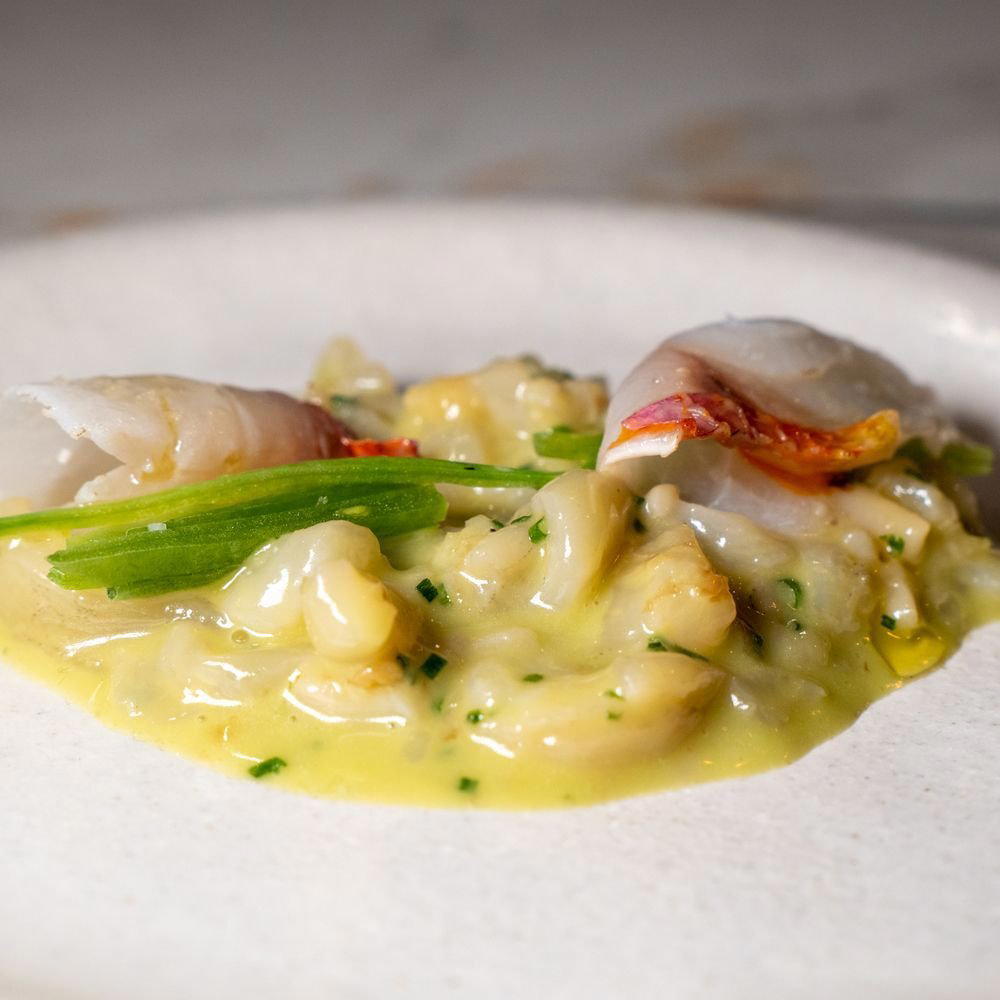
One dish that has drawn specific notice is an onion and cheese ravioli served with onion soup and white wine: technically a pasta course, but functioning more as a study in texture and depth, the creaminess of the filling in tension with the acidity of the soup base. It is the kind of dish that illustrates why Deidda's Sardinian background matters here: pasta formats with slow-cooked allium bases have deep roots in the island's cucina povera tradition, and transporting that logic into a contemporary tasting menu context requires both technical confidence and restraint. The dish delivers both.
How Yo Sits in Seville's Creative Dining Tier
Seville's fine dining scene has matured considerably since the early 2000s, but it remains smaller and less internationally profiled than Madrid or the Basque Country. For reference points at the sharper end of Spanish creative cooking, look to Arzak in San Sebastián, El Celler de Can Roca in Girona, DiverXO in Madrid, Quique Dacosta in Dénia, or Azurmendi in Larrabetzu, all operating in higher-profile markets with deeper international press coverage. Within Andalusia itself, Aponiente in El Puerto de Santa María occupies a different tier entirely in terms of scale and awards profile. Closer comparisons within Seville itself sit at Abantal, which operates at the €€€€ mark with a Modern Spanish creative format, and Az-Zait, another contemporary address in the city. Cañabota takes a different approach entirely, anchoring its reputation in high-quality seafood product. Balbuena y Huertas and Almansa · Pasión & brasas round out the contemporary and asador ends of the city's mid-to-upper tier. Among that cohort, Yo occupies a position defined less by price point or award count and more by its conceptual specificity: it is the only address in Seville drawing explicitly from Sardinian culinary tradition while operating within a contemporary tasting menu format shaped by deep familiarity with Andalucian ingredients and technique.
For international comparative context, the format shares a sensibility with places like Le Bernardin in New York City and Atomix in New York City in the sense that a clear cultural identity underpins technically demanding cooking, though the scale, profile, and price bracket are entirely different.
What Keeps Regulars Returning
Restaurants operating at this format, two tasting menus, no à la carte, a small and personally run room, succeed or fail on repeat visits. The economics of a short menu cycle require that regulars return, and the menus must reward that loyalty by evolving in ways that feel purposeful rather than merely seasonal. The evidence at Yo suggests this is working: the combination of a chef with genuine roots in a distinct culinary tradition, a space that feels personal rather than institutional, and a location that requires some deliberate seeking-out creates the conditions for a loyal, returning clientele rather than a high-turnover tourist crowd. In a city where much of the hospitality industry is calibrated around visitor traffic, that is a meaningful distinction.
Regulars also tend to return to places where the room itself feels consistent, where the pace is controlled and the experience of being there is not contingent on how busy the dining room is that evening. A tasting menu format in a small, personally run space tends to enforce that consistency in ways that larger, à la carte operations cannot.
Planning Your Visit
Yo, Cocina Contemporánea is at Calle Bailén 34, in the Casco Antiguo district, which is walkable from most central Seville accommodation. The tasting menu format means timing is more fixed than at a conventional restaurant, so advance booking is advisable, particularly for weekend evenings when Seville's creative dining addresses fill quickly. No phone or online booking link is published in the available record, so approaching the restaurant directly or inquiring through your hotel concierge is the practical path. The Casco Antiguo location also makes it direct to build an evening around: the neighbourhood's bars and the city's sherry culture provide natural context before or after. For broader orientation across the city's dining, drinking, and accommodation offer, see our full Seville restaurants guide, full Seville hotels guide, full Seville bars guide, full Seville wineries guide, and full Seville experiences guide.
A Tight Comparison
Comparable venues nearby, for context on price, style, and recognition.
| Venue | Cuisine | Price | Notes |
|---|---|---|---|
| Yo, Cocina ContemporáneaThis venue — the venue you are viewing | Museo, Dining | Not listed | Not listed |
| La Casa del Tigre | Encarnación-Regina, Modern Spanish Tapas | $$ | Not listed |
| El Disparate | San Lorenzo, Mediterranean Fusion Tapas | $$ | Not listed |
| Iki | La Buhaira, Japanese Sushi | $$$ | Not listed |
| Petit Comité Sevilla | Arenal, Modern Catalan Tapas | $$$ | Not listed |
| Espacio Eslava | Not listed | $$$ | San Lorenzo, Traditional Andalusian Tapas |
Recognition history
Dated appearances from independent guides and award organizations, with the underlying list record or original source where available.
Michelin Plate
Michelin
At a Glance
- Modern
- Intimate
- Sophisticated
- Elegant
- Date Night
- Special Occasion
- Private Event
- Standalone
- Local Sourcing
Current opening hours
- Monday
- Closed
- Tuesday
- Closed
- Wednesday
- 2–4 p.m., 8:30–11:30 p.m.
- Thursday
- 2–4 p.m., 8:30–11:30 p.m.
- Friday
- 2–4 p.m., 8:30–11:30 p.m.
- Saturday
- 2–4 p.m., 8:30–11:30 p.m.
- Sunday
- 2–4 p.m., 8–11:30 p.m.
Hours can change for holidays and private events. Last verified .
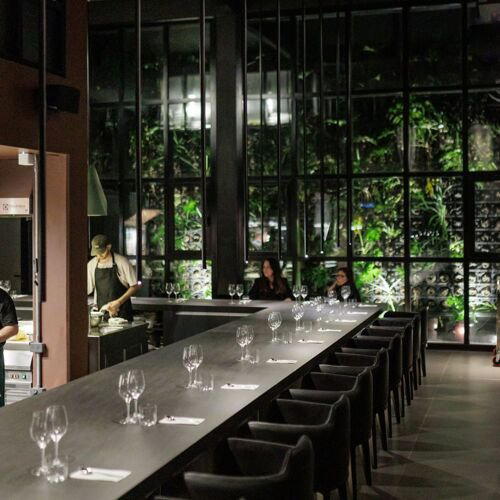
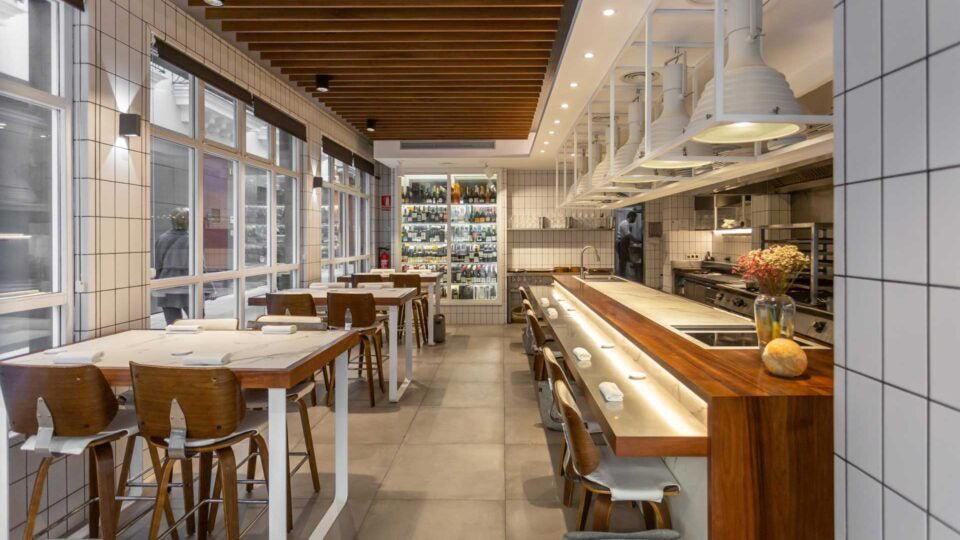
Minimalist, intimate, and unhurried, with a quietly refined atmosphere focused on technique and ingredient quality.