Yin Yang Chinese Cuisine
Yin Yang Chinese Cuisine operates from inside Santa Fe's Design Center on Cerrillos Road, occupying an unexpected position in a city whose dining identity runs heavily toward New Mexican red and green chile. For visitors tracing Chinese cooking across the American Southwest, it represents one of the few places in Santa Fe where that tradition has taken root on the high desert plateau.
Pearl is the En Primeur Club membership app — saves, bookings, and concierge access live there. Same editors, same standards.
- Address
- INSIDE DESIGN CENTER, 418 Cerrillos Rd, Santa Fe, NM 87501
- Phone
- +15059869279
- Website
- santafeyinyang.com
- Directions
- Get directions
 Saves & bookings on Pearl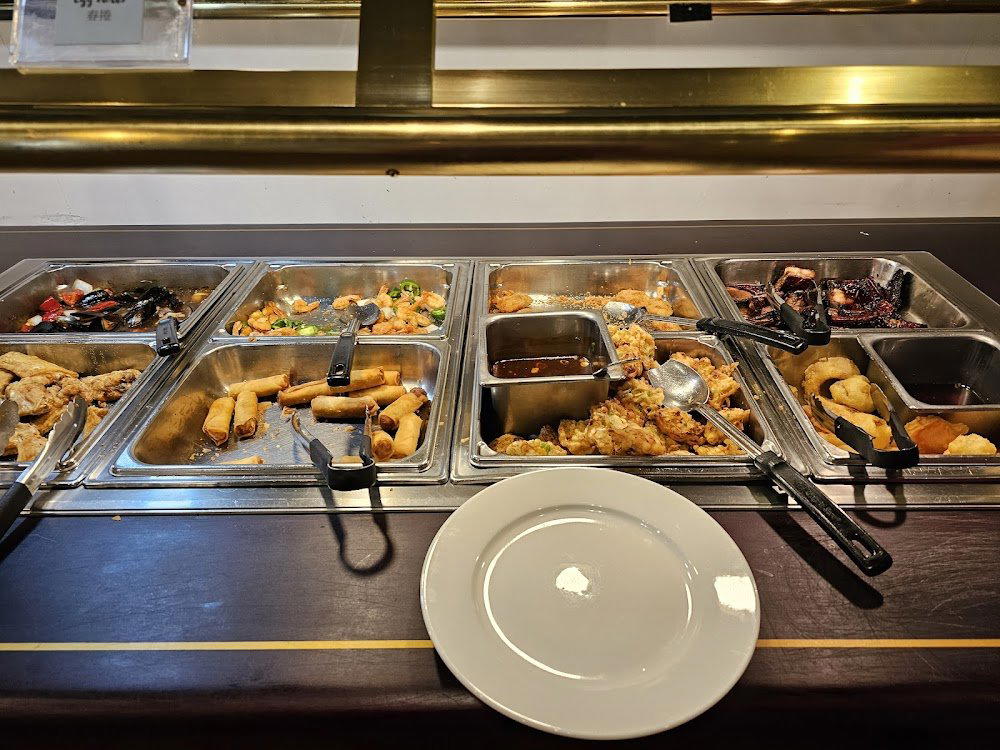
Chinese Cooking in the High Desert: A Different Kind of Santa Fe Table
Cerrillos Road is not where most visitors begin their Santa Fe dining itinerary. The corridor runs southwest from the historic Plaza district through a stretch of strip malls, design showrooms, and working-class commerce that the city's tourist economy largely bypasses. Inside the Design Center at 418 Cerrillos Road, Yin Yang Chinese Cuisine occupies a position that is, by local standards, genuinely peripheral to the main conversation. That peripheral quality is, in some ways, the point. Santa Fe's dominant culinary story is so thoroughly shaped by New Mexican cuisine, the Pueblo-derived chile traditions, the posole, the sopapillas, that a Chinese restaurant operating here is making an argument simply by existing.
Chinese cooking has been present in New Mexico since the nineteenth century, carried west by laborers who built the railroads and stayed. That history rarely surfaces in the fine-dining narrative that clusters around the Plaza, but it runs underneath the city's food culture in ways that become visible when you look for them. Yin Yang Chinese Cuisine sits within that longer arc, as one of the few full-service Chinese kitchens in a city of roughly 90,000 people whose restaurant identity is defined almost entirely by indigenous and Spanish-colonial food traditions.
The Technique Question: Imported Methods, Desert Context
The editorial angle that matters most for Chinese restaurants operating in landlocked, high-altitude cities is the way supply and technique shape the menu. Chinese cooking at its most technically demanding, the Cantonese tradition of precision steaming, the Sichuan management of fermented and fresh aromatics, the northern traditions of hand-pulled dough, relies on supply chains that major coastal metros take for granted. In Santa Fe, elevation sits above 7,000 feet, which affects everything from water boiling points to dough hydration to the behavior of frying oils.
The intersection of imported Chinese technique with the high desert's actual pantry is where the more interesting questions arise. New Mexico produces particularly distinctive chiles in North America, the Hatch green, the dried red ristras that hang from every portal in the autumn months, and the question of whether those local products enter the kitchen at all, or whether the menu stays deliberately insulated from its geographic context, defines two different kinds of Chinese restaurant. The former approach, integrating local product into a classical Chinese framework, is the rarer and more ambitious version. It places a kitchen in a lineage that includes restaurants like Atomix in New York City, where Korean technique meets hyper-local American sourcing, or Single Thread Farm in Healdsburg, where Japanese kaiseki discipline is applied to Northern California's agricultural calendar.
Where Yin Yang Sits in the Santa Fe Dining Order
Santa Fe's restaurant community skews heavily toward New Mexican and Southwestern American formats. The dominant comparable set for any non-New Mexican restaurant here includes places like Sazón, which represents the more refined end of New Mexican cooking, and 229 Galisteo St, which operates in the upscale-casual register. Against that backdrop, Yin Yang Chinese Cuisine competes less on price-tier signaling and more on category: it is offering something the market provides almost nowhere else in the city.
The Design Center setting on Cerrillos Road places it physically and socially outside the tourist circuit that sustains the Plaza-adjacent restaurants. That has consequences for who finds it. Walk-in traffic from hotel guests is lower; the clientele tends toward residents rather than visitors. In a city where restaurants like Alkemē and Back Road Pizza have built loyal neighborhood followings by operating slightly off the main tourist axis, that model is well-established. The restaurant follows a similar logic of local patronage over visitor volume.
Chinese restaurants at the premium end of the American market, places like 8 1/2 Otto e Mezzo Bombana in Hong Kong or the technically ambitious Chinese-American formats appearing in coastal cities, have raised the category's ceiling considerably in the last decade. That shift has made Chinese cooking more legible to the fine-dining audience that also follows institutions like Le Bernardin in New York City, The French Laundry in Napa, or Alinea in Chicago. That national conversation has not yet reached Santa Fe in any visible institutional form, which means a restaurant like Yin Yang Chinese Cuisine operates without the critical infrastructure, no local Michelin presence, limited food-press coverage, that would normally help position it within a tier.
Planning Your Visit
The restaurant is located inside the Design Center at 418 Cerrillos Road, a setting that rewards some advance orientation before you arrive. The Design Center complex is not a conventional retail or dining destination, so first-time visitors should confirm current hours and any entry specifics before traveling. Cerrillos Road is accessible by car from the Plaza district in under ten minutes, and the area has practical parking that the downtown restaurant zone often lacks. For visitors also planning to cover the broader Santa Fe dining range, from the approachable end represented by Bert's Burger Bowl to the more produce-forward approaches at places like Blue Hill at Stone Barns for comparison context, building a full-day itinerary around the Cerrillos corridor makes geographic sense. The autumn months, when New Mexico's chile harvest is at its peak and the city is past peak summer tourist volume, offer particularly favorable conditions for exploring the city's off-Plaza dining without the crowds that compress reservations elsewhere. Comparable experiences in the broader American Chinese fine-dining spectrum can be found at Providence in Los Angeles or, for those interested in how global technique meets American regional product, at Addison in San Diego and Emeril's in New Orleans. For regional comparison within the Chinese cooking tradition applied to American contexts, Lazy Bear in San Francisco and The Inn at Little Washington illustrate how serious kitchens in smaller markets build identity through precision rather than scale.
Peers in This Market
Comparable venues nearby, for context on price, style, and recognition.
| Venue | Cuisine | Price | Notes |
|---|---|---|---|
| Yin Yang Chinese CuisineThis venue — the venue you are viewing | Classic Cantonese Chinese | $$ | Not listed |
| Tomasita's | Northern New Mexican | $$ | Railyard District |
| Sweetwater Harvest Kitchen | Global Clean Eating Café | $$ | Pacheco Street |
| Jambo Cafe | African & Caribbean Fusion | $$ | College Plaza |
| El Nido | Wood-Fired Italian Steakhouse | $$ | Tesuque Village |
| Santa Fe Teahouse & Bistro | Global Bistro with Tea Focus | $$ | Canyon Road |


At a Glance
- Classic
- Cozy
- Family
- Casual Hangout
- Private Dining
Current opening hours
- Monday
- 11:30 AM–8 PM
- Tuesday
- 11:30 AM–8 PM
- Wednesday
- 11:30 AM–8 PM
- Thursday
- 11:30 AM–8 PM
- Friday
- 11:30 AM–8 PM
- Saturday
- 11:30 AM–8 PM
- Sunday
- Closed
Hours can change for holidays and private events. Last verified .
Clean and pleasant atmosphere with a slightly tired but family-owned charm and nice service.