Yang Chow
Yang Chow has anchored Chinatown's restaurant row on North Broadway since 1977, making it one of the longer-running Chinese-American dining institutions in Los Angeles. The kitchen draws a cross-generational crowd that spans first-time visitors to decades-long regulars, all navigating a menu wide enough to reward both caution and curiosity. It occupies a different register from the city's newer tasting-menu tier, operating as a reliable, high-volume neighbourhood fixture rather than a destination occasion.
Pearl is the En Primeur Club membership app — saves, bookings, and concierge access live there. Same editors, same standards.
- Address
- 819 N Broadway, Los Angeles, CA 90012
- Phone
- +12136250811
- Website
- yangchow.com
- Directions
- Get directions
 Saves & bookings on Pearl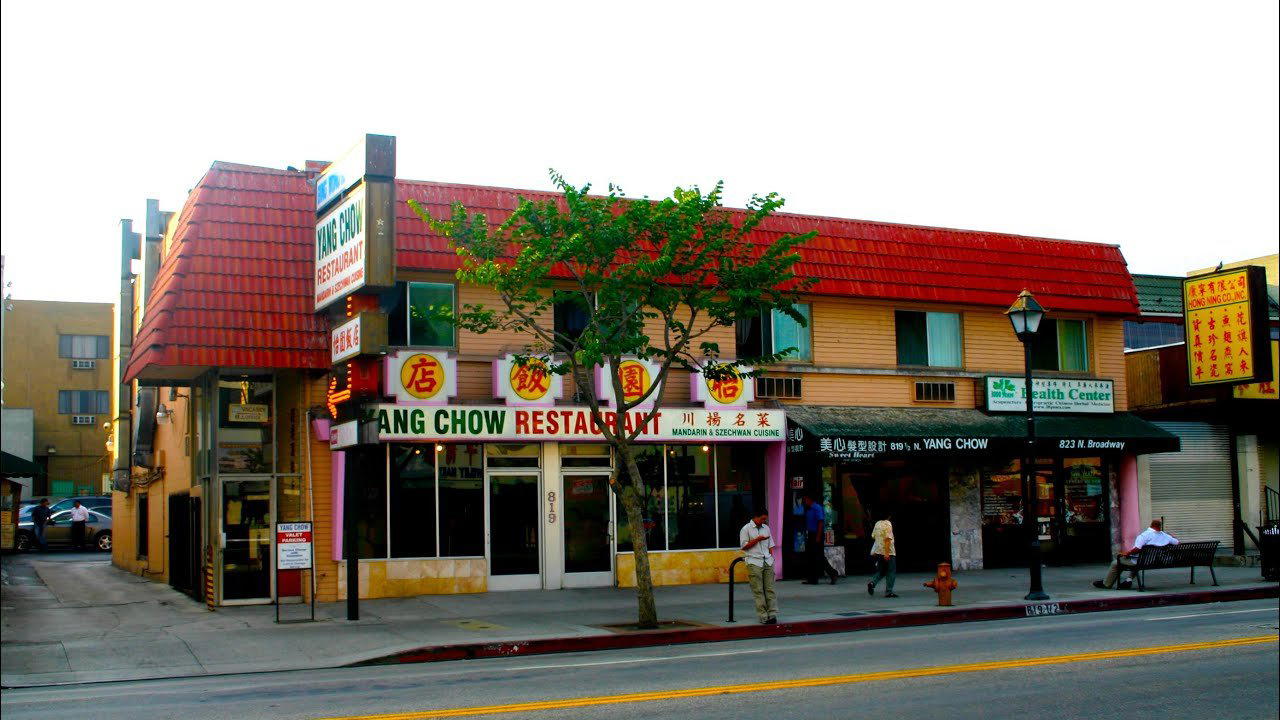
A Chinatown Fixture in the Era of Farm-to-Table Pressure
Yang Chow is a restaurant in Chinatown, Los Angeles, serving Mandarin & Szechuan Chinese at about $25 per person. When Yang Chow opened at 819 N Broadway in Los Angeles in 1977, the conversation around restaurant sustainability was largely nonexistent.
Across Los Angeles, the conversation about sustainable restaurant practice has concentrated heavily at the upper price brackets. Properties like Providence, with its rigorous seafood sourcing transparency, and farm-anchored formats like Single Thread Farm in Healdsburg and Blue Hill at Stone Barns in Tarrytown have shaped public expectations around what a conscientious kitchen looks like. But sustainability in everyday Chinese-American dining is a different kind of problem, one defined by volume, community supply chains, and decades of operational habit rather than curated sourcing manifestos.
The North Broadway Context
North Broadway through Chinatown is one of the few corridors in Los Angeles where a restaurant's longevity actually functions as a form of neighbourhood infrastructure. Yang Chow has occupied its current address for long enough that it predates most of the city's food-media apparatus. The surrounding block has cycled through multiple waves of change, development pressure, demographic shift, and the slow migration of younger restaurant operators toward Chengdu Taste-style regional specialists, yet the restaurant has remained a constant reference point for visitors approaching Chinatown dining for the first time.
That stability is worth examining editorially. In a city where restaurant tenures are short and formats shift quickly, compare the tasting-menu precision of Kato or the Japanese kaiseki rigour of Hayato with the operational churn in most mid-range dining corridors, a restaurant entering its fifth decade represents a different kind of achievement. It suggests supply chains with enough consistency to sustain volume, and a kitchen rhythm that has outlasted fashion cycles.
What Long-Running Operations Signal About Sourcing
Restaurants that survive four-plus decades in the same location typically do so through supplier relationships that newer kitchens spend years building. The Chinese-American dining tradition, as practised along corridors like Chinatown's Broadway strip, has historically relied on wholesale networks concentrated in the neighbourhood itself, produce markets, protein suppliers, and dry-goods distributors operating within a few blocks. That proximity has always carried an implicit efficiency: shorter transit, lower spoilage, and supply chains that do not depend on national distribution systems.
This stands in instructive contrast to the formalized sourcing programs at restaurants like Addison in San Diego or the hyper-local sourcing rhetoric at destination properties from The French Laundry in Napa to Bacchanalia in Atlanta. Those kitchens communicate sourcing decisions explicitly, building them into menu language and brand positioning. Neighbourhood Chinese-American kitchens rarely do, but the underlying supply geography is often no less local.
The Slippery Chicken Problem
The restaurant is most frequently referenced in connection with its slippery shrimp, a dish that has appeared consistently on the menu and generated enough word-of-mouth to anchor the restaurant's broader identity in the city. In the context of a sustainability discussion, it is a useful case study: a protein-forward signature dish in a restaurant with no stated sourcing credentials is not automatically problematic, but it raises the same questions that any high-volume seafood kitchen faces about traceability and supplier accountability. These are questions that the broader Chinese-American dining category has been slow to engage with publicly, even as its counterparts in fine dining, from Le Bernardin in New York City to 8 1/2 Otto e Mezzo Bombana in Hong Kong, have made sourcing transparency a centrepiece of their public identity.
Placing Yang Chow in the Wider Los Angeles Scene
Los Angeles has a layered Chinese dining scene that runs from the Michelin-adjacent innovation at Somni and the New Taiwanese precision of Kato down through the regional specialists of the San Gabriel Valley and the older-format institutions of Chinatown itself. The restaurant sits in the Chinatown layer, a format defined by accessibility, volume, and a broad menu architecture designed to accommodate tables of mixed preference rather than a focused tasting progression.
That positioning is editorially different from the high-concept tier. Osteria Mozza, Hayato, and Atomix in New York City all operate in a register where the kitchen's sourcing decisions are legible through menu language, price signal, and critical coverage. The restaurant operates in a register where those signals are absent, and the editorial challenge is to assess it on terms appropriate to its actual category rather than importing expectations from a different tier. For a fuller map of where the restaurant fits in the city's dining geography,
Vegetarian Options and Menu Range
Chinese-American menus of this format typically carry a meaningful proportion of vegetable-forward dishes alongside their protein anchors. The menu architecture at most comparable restaurants, wide, paginated, and organised by protein category, tends to offer sufficient range for vegetarians to navigate without coordination with the kitchen, though diners with strict dietary requirements are better served by confirming specifics directly when booking or arriving.
Getting a Table
The restaurant does not operate in the allocation-scarcity tier that defines booking dynamics at Lazy Bear in San Francisco, Alinea in Chicago, or The Inn at Little Washington. A restaurant of this format and history in Chinatown typically accommodates walk-ins across most of the week, with peak weekend dinner periods requiring more patience. The high-volume format and a dining room scaled for large groups means that solo diners and couples are rarely turned away for long.
Know Before You Go
Address: 819 N Broadway, Los Angeles, CA 90012
Neighbourhood: Chinatown, Los Angeles
Price range: About $25 per person
Reservations: Walk-ins accommodated; peak weekend evenings may require a wait
Dietary needs: Broad menu with vegetable-forward options; confirm specifics with the kitchen for strict requirements
Getting there: North Broadway is in Chinatown, Los Angeles.
The Quick Read
Comparable venues nearby, for context on price, style, and recognition.
| Venue | Cuisine | Price | Notes |
|---|---|---|---|
| Yang ChowThis venue — the venue you are viewing | Chinatown, Mandarin & Szechuan Chinese | $$ | Not listed |
| Hu's Szechwan Restaurant | Palms, Classic Szechwan Chinese | $$ | Not listed |
| Super Peach | Not listed | $$ | Century City, Chinese-American-Korean Fusion |
| Joy | Not listed | $$ | Highland Park, Modern Taiwanese Street Food |
| Schezwan Club | Silver Lake, Indo-Chinese | $$ | Not listed |
| Mitla Cafe | Not listed | $$ | San Bernardino, Traditional Mexican Taqueria |
Continue exploring
More in Los Angeles
Restaurants in Los Angeles
Browse all →
Bars in Los Angeles
Browse all →
Hotels in Los Angeles
Browse all →

Wineries in Los Angeles
Browse all →
At a Glance
- Classic
- Well Known
- Lively
- Family
- Group Dining
- Casual Hangout
- Historic Building
Current opening hours
- Monday
- 11:30 AM–8:30 PM
- Tuesday
- 11:30 AM–8:30 PM
- Wednesday
- 11:30 AM–8:30 PM
- Thursday
- 11:30 AM–8:30 PM
- Friday
- 11:30 AM–9:30 PM
- Saturday
- 11:30 AM–9:30 PM
- Sunday
- 11:30 AM–8:30 PM
Hours can change for holidays and private events. Last verified .
Classic Chinatown dining room bustling with families and friends sharing large platters of food in a lively, no-frills atmosphere.