Yamazato
.png)
Yamazato in Pasay's Newport City holds a Michelin Plate recognition in the 2026 guide, placing it among a small tier of formally acknowledged dining addresses in Metro Manila. The restaurant sits within a dense cluster of hotel-adjacent dining options along Portwood Street, where Japanese cuisine occupies a distinct register from the surrounding steakhouse and Chinese banquet formats nearby.
 Discover on Pearl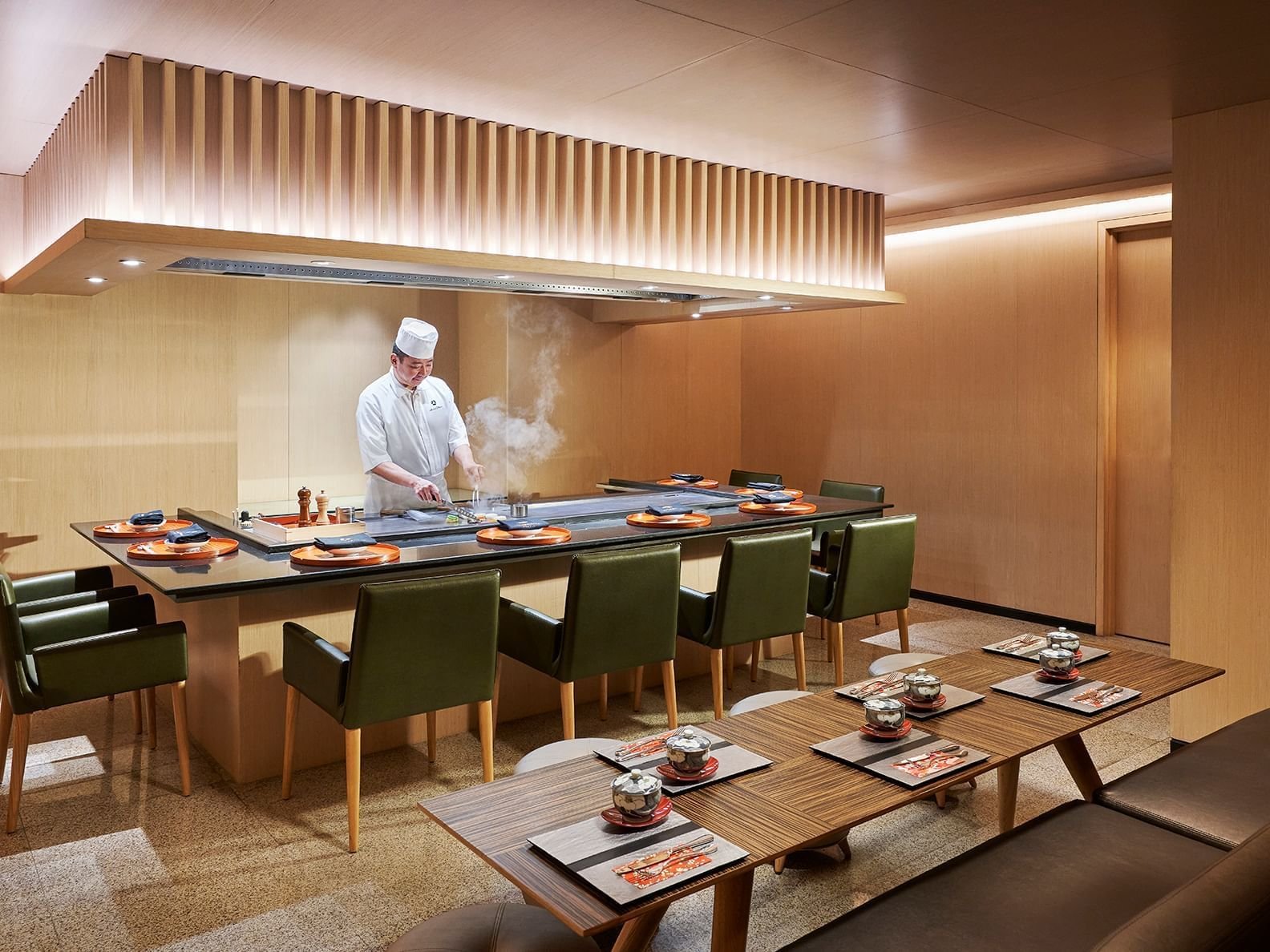
Where Newport City's Dining Scene Shifts Register
The stretch of Portwood Street in Newport City, Pasay, has become one of Metro Manila's more concentrated corridors for hotel-adjacent dining. Within that corridor, the formats vary considerably: a Cru Steakhouse built around prime cuts and open-fire theatrics, the China Blue and Man Ho addresses serving Cantonese in different registers, and a Gordon Ramsay Bar & Grill anchoring the branded-name end of the market. Yamazato occupies a different position within that cluster. It is a Japanese restaurant operating at a level of formality that the 2026 Michelin Plate recognition signals clearly: this is a kitchen being watched, not simply passed through.
That Michelin Plate distinction matters here more than it might in a city with deeper guide coverage. Metro Manila's Michelin footprint is still relatively new, and the list of formally recognized addresses remains short. A Plate indicates a kitchen that inspects well, that maintains consistency across visits, and that sits above the general noise of the hotel dining market. Among the Michelin-acknowledged restaurants in the Philippines, Yamazato joins a peer set that includes Gallery By Chele in Manila and a handful of others operating in that formally vetted tier.
The shortlist, unlocked.
Hard-to-book tables, cellar releases, and concierge-planned trips.
Get Exclusive Access →Japanese Dining in Manila: What the Format Tells You
Japanese cuisine in Metro Manila has historically split between two operational poles. On one side, high-volume casual formats, izakayas, conveyor-belt sushi, and fast-ramen concepts that serve a broad market. On the other, a smaller set of addresses where the menu architecture itself is the signal: structured progressions, seasonal framing, attention to sourcing provenance, and a kitchen discipline that reads as intentional rather than reactive. Yamazato belongs to the second category, and that positioning within the Manila restaurant scene is significant.
The name Yamazato has lineage across several Japanese hotel-dining addresses in Asia, typically associated with kaiseki or traditional Japanese formats where the structure of the meal does as much communicative work as any individual dish. In that tradition, a menu is not simply a list of options but a sequenced argument about ingredients, season, and technique. Whether that kaiseki framework applies here specifically is not confirmed in the available data, but the formal recognition and the Newport City address place it within a tier where that kind of structural seriousness is standard. For comparison, formally recognized Japanese addresses like Atomix in New York City or the tasting-menu precision of Le Bernardin in New York City demonstrate what Michelin recognition signals about kitchen ambition across different markets.
Reading the Menu Architecture
In traditional Japanese restaurant formats, particularly those operating at a Michelin-recognized level, the menu's architecture is often more revealing than any individual item. The ratio of composed dishes to a la carte options, the presence or absence of a fixed-progression format, the attention given to dashi, rice, and other foundational elements that lesser kitchens treat as afterthoughts — these structural choices describe a kitchen's philosophy more accurately than headline ingredients do.
At this tier of Japanese dining in Southeast Asia, the sourcing conversation typically intersects with the menu structure in specific ways. Premium Japanese ingredients — fish from particular markets, wagyu from named prefectures, seasonal vegetables aligned with Japan's agricultural calendar , appear not as luxury add-ons but as the organizing logic of the menu itself. The season dictates the structure, and the structure reveals the season. It is a format that rewards diners who come with some framework for reading what is in front of them, and it tends to make less immediate sense to those approaching it as a direct ordering exercise.
For context on the broader Philippines restaurant scene operating in this formal register, Celera in Makati, Blackbird Makati in Manila, and Bolero in Taguig each occupy distinct niches at the organized end of Metro Manila dining, while addresses like Linamnam in Parañaque and Asador Alfonso in Cavite demonstrate that the formally serious end of Philippine dining extends well beyond the capital's hotel corridors.
The Newport City Context
Newport City as a dining destination carries specific implications. It is a planned mixed-use development adjoining the Ninoy Aquino International Airport complex, which means it draws a reliable base of pre-flight diners, hotel guests, and the convention-adjacent crowd that uses the area's integrated facilities. That demographic context shapes what works in the area: formats that can be explained quickly, service that doesn't require extensive orientation, and a price architecture that aligns with international hotel-guest expectations rather than the local neighborhood market.
Japanese dining at a formal level fits that context reasonably well. The format is internationally legible, the quality signals are visible enough that a diner arriving without advance research can orient quickly, and the Michelin Plate adds an external credibility marker that functions as reassurance for visitors unfamiliar with the Manila scene. For those planning around the area more broadly, the full Pasay restaurants guide maps the range of options, while the Pasay hotels guide, bars guide, and experiences guide cover the broader Newport City matrix. The Pasay wineries guide is also available for those extending their research.
Across the Philippines, the Michelin-recognized tier remains thin enough that each listed address carries weight beyond its individual merits. The guide's Metro Manila coverage, launched more recently than in established markets, is still establishing its reference points. Addresses like Abaseria Deli & Cafe in Cebu show that quality dining in the Philippines is not confined to Metro Manila, but within Pasay specifically, Yamazato's Plate recognition places it at the organized leading of a market that is still building its critical infrastructure.
Planning Your Visit
Yamazato is located at 2 Portwood Street, Newport City, Pasay City, 1309 Metro Manila. The address is within the integrated Newport City development, easily accessible from the adjacent hotel properties and a short transfer from the airport terminals, making it a practical option for travelers with evening arrivals or early departures who want a serious meal without venturing into central Manila traffic. Given the Michelin Plate standing and the limited number of formally recognized addresses in the area, advance contact is advisable for groups or for visits on high-demand evenings, though specific booking mechanics and current hours are leading confirmed directly with the property.
The shortlist, unlocked.
Hard-to-book tables, cellar releases, and concierge-planned trips.
Get Exclusive Access →Frequently Asked Questions
A Credentials Check
A compact peer snapshot based on similar venues we track.
| Venue | Awards | Cuisine | Notes |
|---|---|---|---|
| Yamazato | Michelin Plate (2026) | This venue | |
| China Blue | |||
| Cru Steakhouse | |||
| Gordon Ramsay Bar & Grill | |||
| Man Ho |
Need a table?
Our members enjoy priority alerts and concierge-led booking support for the world's most difficult tables.
Get Exclusive AccessThe shortlist, unlocked.
Hard-to-book tables, cellar releases, and concierge-planned trips.
Get Exclusive Access →