Yamato
Our verdict
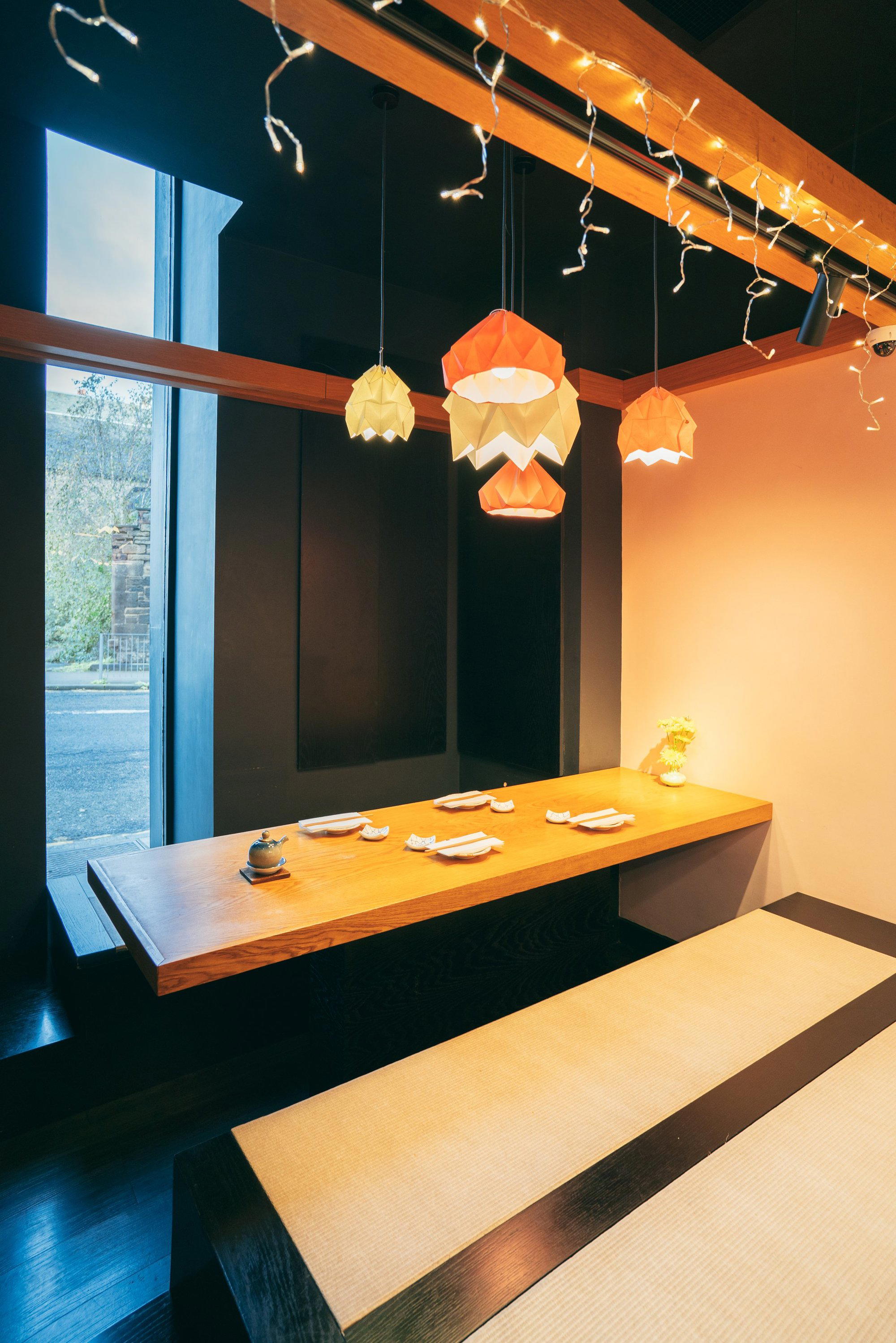
On a quiet Lochrin Terrace address in Edinburgh's Tollcross district, Yamato represents Japanese cuisine at a remove from the city's busier dining corridors. The kitchen operates where imported technique meets Scottish produce, placing it in a niche that Edinburgh's broader fine-dining scene has only recently begun to occupy seriously. Advance booking is advisable.

Pearl is the En Primeur Club membership app — saves, bookings, and concierge access live there. Same editors, same standards.
- Address
- 11 Lochrin Terrace, Edinburgh EH3 9QJ, United Kingdom
- Phone
- +44 131 466 5964
- Hours
- Mon ClosedTue–Thu 5–10:30 PMFri 5–11 PMSat 12–3 PM, 5–11 PMSun 12–2:30 PM, 5–10 PM
- Website
- yamatoedinburgh.co.uk
- Directions
- Get directions
- Booking
- Book on the venue's website
The menu
What to order
- A5 Wagyu beef sushi rolls
- Chef’s selection sashimi platter
- Whole sea urchin
- Crispy Brussels sprout salad
Lochrin Terrace and the Question of Where Edinburgh Eats Japanese
Edinburgh's serious dining has long clustered around Leith, the New Town, and the Old Town's fringe. The city's relationship with Japanese cuisine has been slower to mature than London's, but a shift is visible: a handful of addresses now apply precision techniques associated with Tokyo or Osaka to produce drawn from Scottish waters and farmland. Yamato, at 11 Lochrin Terrace in Tollcross, sits at this intersection. The address is residential rather than commercial in feel, a detail that separates it immediately from the city-centre restaurant strip and signals something about the experience inside: this is not a venue built on passing footfall.
Tollcross itself occupies an interesting position in Edinburgh's geography. South of the financial district and west of the Meadows, it functions as a transition neighbourhood, neither fully residential nor fully commercial, with a mix of local institutions and quieter evening trade. Dining in this pocket of the city tends to reward those who travel with intention rather than those who wander in. Edinburgh's comparison set at the leading end includes Martin Wishart, The Kitchin, Timberyard, AVERY, and Condita, all operating at the ££££ tier with modern technique as their shared grammar. Yamato operates in a different register: Japanese discipline applied in a Scottish context rather than Modern European or Nordic-inflected cooking.
Imported Technique, Northern Produce
The broader movement of Japanese culinary technique into non-Japanese contexts has been a defining thread in global fine dining over the past two decades. Knife discipline, temperature control, fermentation logic, and the primacy of single-ingredient focus: these methods have migrated into kitchens far from their origin, often producing work more interesting than either tradition would generate alone. Scotland is, in several respects, an ideal proving ground for this approach. The country's cold waters produce langoustine, scallop, and crab that rank among Europe's finest shellfish by catch quality. Seasonal game, hill-reared lamb, and foraged coastal ingredients add further depth to a larder that rewards restraint-led cooking.
What distinguishes the better examples of this hybrid approach, whether in Edinburgh or in comparable cities across the UK, is whether the Japanese technique genuinely serves the local ingredient or merely aestheticises it. The test is not whether the plating references Japan but whether the cutting, resting, and seasoning decisions actually change what the ingredient delivers. At the tier occupied by venues like Yamato, that discipline is the expectation, not a selling point. For context on how this argument plays out at the very leading of British fine dining, the work at CORE by Clare Smyth in London and L'Enclume in Cartmel both demonstrate how obsessive attention to a specific regional larder can anchor technique-heavy cooking to a sense of place. The same logic, applied through a Japanese rather than Modern European lens, is what venues like Yamato are navigating in Edinburgh.
How This Address Reads Against the Edinburgh Scene
Edinburgh's serious restaurant tier has expanded meaningfully over the past decade. Where once Leith's waterfront held a near-monopoly on destination dining, addresses across the city now compete for the same informed audience. This fragmentation has been good for diners: fewer single-venue pilgrimages, more scene-building. Japanese cuisine has been slower to join the upper tier in Edinburgh than in London or Manchester, which makes Yamato's positioning on Lochrin Terrace worth noting as a data point about the city's evolving appetite.
Internationally, the Japanese-technique-meets-local-produce model has produced some of the most awarded kitchens in the world. Le Bernardin in New York City and Lazy Bear in San Francisco both demonstrate how rigorous technical frameworks, when applied to a specific geography's produce, can create a distinct identity rather than an imitation of origin. Closer to home, Moor Hall in Aughton and Midsummer House in Cambridge have shown that regions outside London can sustain serious fine dining when the commitment to produce quality is genuine. Edinburgh's trajectory suggests it is moving in the same direction. Yamato's Tollcross address, precisely because it is not on a marquee street, reads as a restaurant building its reputation from the plate rather than from location advantage.
What to Expect in Practice
Reaching Yamato requires a short walk or taxi from Edinburgh's central zones, roughly ten to fifteen minutes on foot from the Grassmarket or Lothian Road area. The Tollcross location means parking is limited, and the evening approach along Lochrin Terrace is quiet rather than animated. These are conditions that tend to suit a focused, quiet dining experience rather than a pre-theatre crowd.
Booking ahead is the sensible approach for any serious Edinburgh dinner, and that applies at Yamato. The address does not suggest high-volume seating, which typically means lead times of several days to a week or more at busy periods. Edinburgh's festival season, running through most of August, compresses availability across the city's dining tier significantly, and the weeks around Hogmanay in late December follow a similar pattern. Both windows reward early planning.
For those building a wider Edinburgh itinerary around serious eating and drinking, the city's top tier is now geographically distributed enough to reward multi-venue programmes. Our full Edinburgh restaurants guide maps the relevant addresses across neighbourhoods and price points. Beyond Edinburgh, the broader British fine-dining circuit includes Waterside Inn in Bray, Gidleigh Park in Chagford, Hand and Flowers in Marlow, hide and fox in Saltwood, Opheem in Birmingham, and Ynyshir Hall in Machynlleth, all offering distinct approaches to serious cooking in non-London contexts.
Frequently asked questions
Where do I go for Yamato?
Yamato is located at 11 Lochrin Terrace, Edinburgh EH3 9QJ, United Kingdom, Edinburgh.
How does Yamato compare to other Japanese restaurants in Edinburgh?
Edinburgh's Japanese restaurant offering has grown over the past decade but remains concentrated in a handful of serious addresses. Yamato on Lochrin Terrace, EH3, sits outside the central tourist circuit, which positions it differently from Japanese venues in the Old Town or on George Street.
What's the signature dish at Yamato?
What the Lochrin Terrace address signals, in the context of Edinburgh's Japanese dining, is a focus on technique over novelty. For current menu specifics, contacting the restaurant directly before visiting is the practical approach.
Is Yamato reservation-only?
Edinburgh's smaller Japanese restaurants at this address tier typically fill quickly, particularly across Thursday-to-Sunday sittings. Reserving in advance is the prudent approach rather than walking in.
What's the standout thing about Yamato?
Yamato's position on Lochrin Terrace places it away from Edinburgh's more trafficked dining corridors in Leith and the Old Town fringe, which tends to attract a local rather than tourist-driven crowd. That address, in EH3, situates it within walking distance of the Meadows and Tollcross, areas with a concentration of residents who eat out regularly. For Edinburgh's Japanese dining tier specifically, that neighbourhood grounding matters.
Recognition Snapshot
Comparable venues nearby, for context on price, style, and recognition.
| Venue | Cuisine | Price | Notes |
|---|---|---|---|
| YamatoThis venue — the venue you are viewing | Authentic Japanese Fine Dining | $50–100 | Not listed |
| wagamama edinburgh lothian road | Modern Japanese Ramen | $20–30 | West End |
| Baba | Levantine Mezze & Charcoal Grill | $30–50 | West End |
| wagamama edinburgh st andrew square | Japanese Ramen Bar | $20–30 | Greenside |
| UMI JAPANESE Chapel St | Japanese Ramen & Sushi | $20–30 | The Canongate |