Condita


1 Michelin Star · The Good Food Guide GFG Very Good
Our verdict
A Michelin-starred former shop unit on a quiet Salisbury Place side street, Condita operates six tables and a fully surprise menu that changes with the seasons. Since opening in 2018, it has built a reputation for technically considered cooking that draws on Scottish produce, foraging, and occasional Asian inflections. The wine list goes deep on a small selection of producers rather than wide across regions.

Pearl is the En Primeur Club membership app, where members save venues, book tables and use the concierge.
The menu
What to order
- Wine-marinated mussel with edible potato starch and squid-ink shell
- Seared kohlrabi with spiced soy glaze and bergamot
- Hogget loin with courgettes and anchoïade dressing
- Pineapple weed dessert with nasturtium jam
The Room Before the Menu
Walking south from Edinburgh's Old Town along Salisbury Place, the building gives almost nothing away. A former post office and shop unit, it sits among ordinary residential frontage without a restaurant sign in any conventional sense. That studied anonymity is, in effect, the opening statement. Edinburgh's higher-end dining scene has historically concentrated in the New Town and the hotel dining rooms along Princes Street, where addresses do some of the work. Condita, operating since 2018 in this EH9 postcode, has built its position without that kind of ambient prestige, which makes the Michelin star it holds as of 2024 more instructive about the cooking than most awards are.
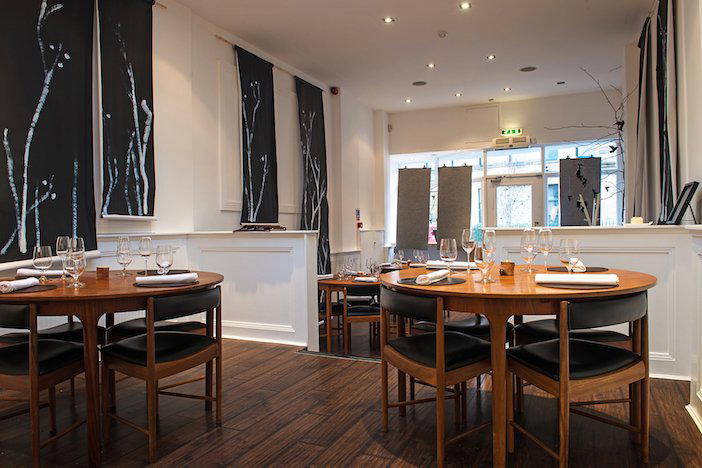
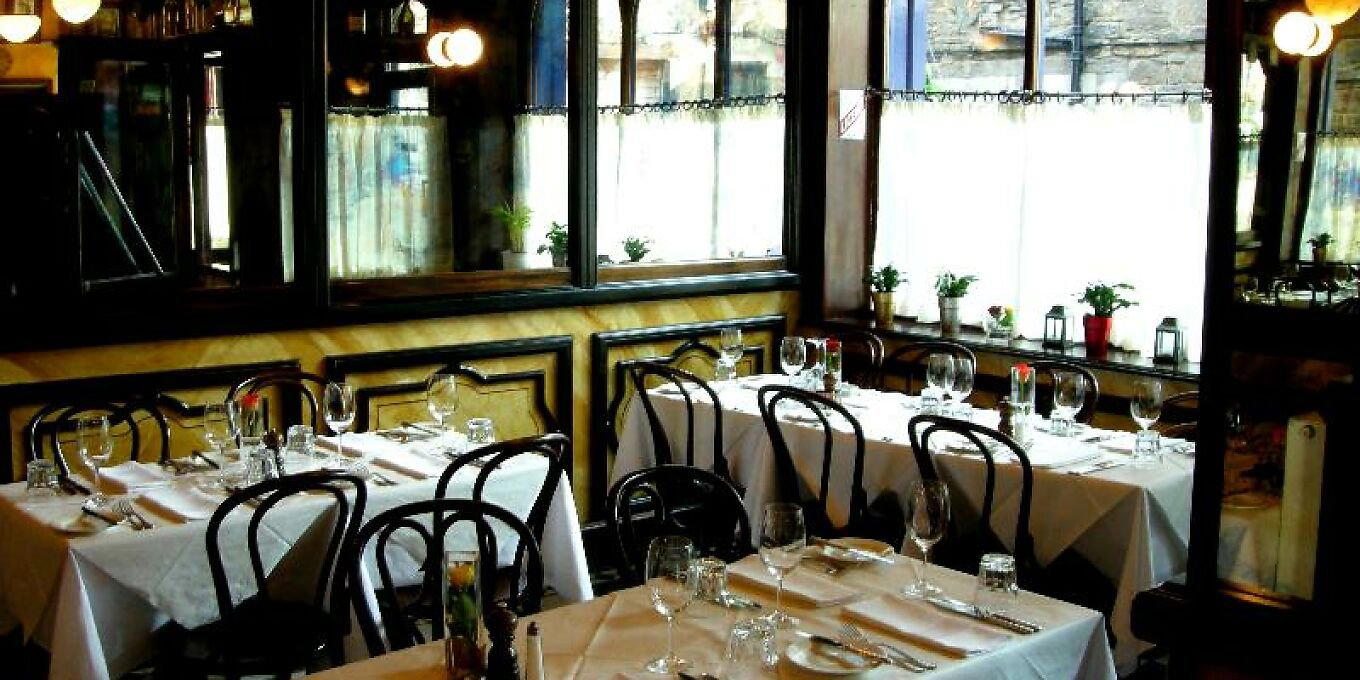
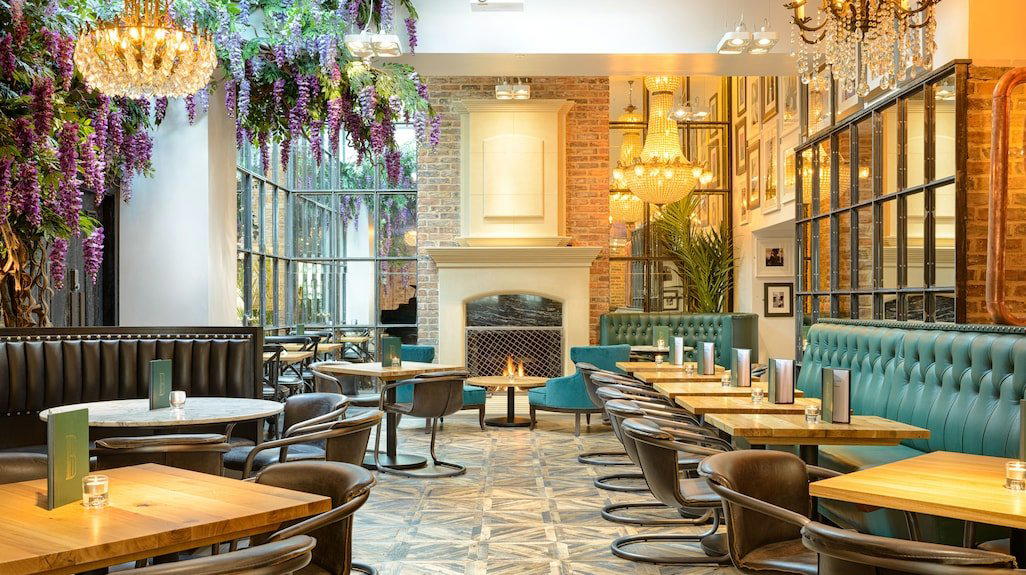
Inside, six large tables occupy a space that changes its surface character each season: rotating artworks, carefully selected retro furnishings, and lighting calibrated to the time of year mean that returning in autumn is a materially different sensory experience from arriving in spring. The effect is somewhere between a private dining room and an art installation with a kitchen attached. The soundtrack reflects the owners' tastes rather than any hospitality-industry default, and the front-of-house prep kitchen keeps the chefs visible and conversational. For a three-hour meal, that pacing detail matters more than it might seem.
What the Menu Architecture Reveals
The defining structural decision at Condita is the surprise menu: a fixed-price, multi-course format in which the only advance information is a hand-drawn pictogram bookmark, given to each guest, depicting certain ingredients that will appear during the meal. No dish names, no course titles. The bookmark is a signal about the kitchen's relationship with its own menu, it wants you to register arrival and texture before you reach for classification.
This format places Condita in a specific tier of the UK tasting-menu market. At The Fat Duck in Bray or L'Enclume in Cartmel, the surprise or semi-surprise menu is executed at multi-star scale with substantial front-of-house teams and kitchen brigades built around a single chef's public profile. Condita operates at six tables, which compresses every element of that format into something closer and less ceremonial. The trade-off is deliberate: you lose the theatre of distance and gain proximity to the cooking decisions being made that evening.
The sequence follows a recognisable architecture: an opening run of snacks, then a relatively predictable progression through vegetable, fish, and meat courses, before a cheese course and two desserts. Within that structure, the kitchen takes its risks in the flavour decisions rather than in the course order itself. Wine-marinated mussels served on an edible potato starch and squid-ink shell, a tartlet of sea trout with fennel tops, brown shrimps, and trout roe, these opening snacks establish that the approach is technical but not cold. The forms are familiar; the executions carry enough specificity to hold attention across multiple courses.
Where the kitchen's calibration shows most clearly is in the vegetable courses. The Michelin inspectors specifically cite kohlrabi with goat's curd as the kind of dish that extracts extraordinary flavour from a seemingly ordinary ingredient, and this is a meaningful observation about the cooking's philosophy. Producing a compelling plate from kohlrabi requires more precision than producing one from wagyu or lobster, because there is nowhere to hide. The seared and caramelised preparation, with a spiced soy glaze, bergamot, pickled kohlrabi, micro leaves, and flowers, is a dish in which every element justifies its presence. That restraint-and-precision combination is rarer at this price point than the industry sometimes acknowledges.
The Asian inflections that surface across the menu, soy, umeboshi, bergamot in less conventional applications, signal a kitchen willing to move beyond the Scottish seasonal framework without abandoning it. A foraging-led dessert built around pineapple weed, with nasturtium jam and a salty umeboshi crumble, reads as a genuine synthesis rather than a garnish. Loin of hogget with courgettes, roasted girolles, goat's curd, and an anchoïade dressing, meanwhile, is the kind of meat course that references both Scottish produce and French classical technique without performing either. Much of the produce comes from Condita's own walled garden in the Scottish Borders, which gives the sourcing claims a specificity that distinguishes them from generic farm-to-table positioning.
Edinburgh's Tasting-Menu Tier
Within Edinburgh's current fine dining market, Condita occupies a distinct position. The city's established high-end names, Martin Wishart, The Kitchin, and hotel-anchored operations like Number One, operate on formats that are either more accessible in structure or more conventionally grand in setting. Argile, Cardinal, Montrose, and Moss each represent a different facet of Edinburgh's contemporary dining ambition, but none operate the full-commitment surprise format that Condita uses. Timberyard runs a Nordic-influenced tasting menu with more transparency; AVERY leans toward creative small plates. Condita's approach, no menu, six tables, three hours, a walled garden supplying the kitchen, is a particular proposition that sits apart from those formats rather than competing directly within them.
At the European level, fully blind tasting menus from small-capacity kitchens have become a recognisable format for ambitious independent restaurants unwilling to operate at the scale that conventional fine dining requires. Frantzén in Stockholm and FZN by Björn Frantzén in Dubai represent that format at significantly larger investment levels. Condita's version strips it back to its functional core: a small room, careful cooking, and enough information to know what you're agreeing to without knowing what you'll eat.
The Wine List's Logic
The wine program here applies the same structural thinking as the food. Rather than building breadth across regions and appellations, the list goes deep into a narrow selection of individual producers, some available by the glass, with a matched flight for those who want to follow the menu's logic with the same surrender applied to the cooking. This is a meaningful curatorial choice. A wide list in a six-table restaurant with a surprise menu would create decision friction that contradicts the format. A focused list of producers the kitchen trusts extends the same editorial confidence that shapes the food into the drinks program. It also tends to surface bottles that wouldn't appear on a conventionally broad list assembled for commercial range.
Planning a Visit
Condita opens Tuesday through Saturday from 6:30 PM, closing at 9 PM; it is closed Sunday and Monday. The ££££ price range positions it at Edinburgh's higher end, consistent with a Michelin-starred multi-course format. With six tables, booking ahead is necessary, this is not a restaurant where walk-in availability should be assumed on any evening. Vegetarian and pescatarian menus are available but must be requested at the time of booking; the kitchen cannot accommodate changes to the menu on the night itself, which is consistent with the format's logic. The address is 15 Salisbury Place, Edinburgh EH9 1SL, a short distance south of the Meadows and accessible from the city centre without difficulty. For those planning a broader Edinburgh itinerary, our full Edinburgh restaurants guide covers the wider scene, while our Edinburgh hotels guide, bars guide, wineries guide, and experiences guide provide context for the city beyond the table. For comparable ambition in a rural UK setting, Moor Hall in Aughton, Gidleigh Park in Chagford, and Hand and Flowers in Marlow offer points of comparison for the kind of cooking that takes place away from capital-city visibility. The Ledbury in London is the obvious urban peer for technically considered modern cooking at this price tier.
Frequently asked questions
What days is Condita closed?
Hours at Condita: Monday closed Tuesday 6:30 PM-9 PM Wednesday 6:30 PM-9 PM Thursday 6:30 PM-9 PM Friday 6:30 PM-9 PM Saturday 6:30 PM-9 PM Sunday closed.
What kind of recognition has Condita received?
Condita has received recognition including: Just outside the city centre you'll find this smart, understated shop conversion with seasonally changing décor and just six large tables. The cooking takes the form of a surprise menu, with a hand-drawn bookmark picturing some of the ingre….
What dish is Condita famous for?
Condita's most cited preparation is seared and caramelised kohlrabi with a spiced soy glaze, bergamot, pickled kohlrabi, micro leaves, and flowers. Michelin's own notes single out this dish as evidence of the kitchen's ability to extract complex flavour from relatively simple produce. It captures the restaurant's broader approach: precise technique, considered flavour pairing, and produce sourced in part from Condita's own walled garden in the Scottish Borders.
Is Condita expensive?
Pricing at Condita is listed as ££££.
Peers You’d Cross-Shop
| Venue | Cuisine | Price | Awards | Notes |
|---|---|---|---|---|
| ConditaThis venue (the venue you are viewing) | Modern Scottish Seasonal Tasting Menu | $150–200 | 1 Michelin Star · The Good Food Guide GFG Very Good | Not listed |
| Martin Wishart | Modern French with Scottish Ingredients | $200–300 | 1 Michelin Star · La Liste Top Restaurants | Modern European, Modern Cuisine |
| The Kitchin | Modern Scottish Fine Dining | $150–200 | 1 Michelin Star · La Liste Top Restaurants | Modern British, Modern Cuisine |
| Timberyard | Modern British Fine Dining | $100–150 | 1 Michelin Star · Star Wine List | Modern British - Nordic, Modern British |
| AVERY | Modern Californian-Scottish Fusion | $150–200 | 1 Michelin Star | Creative |
| Dulse | Modern Scottish Seafood | $100–150 | Michelin Plate | Seafood |
Recognition history
Dated appearances from independent guides and award organizations, with the underlying list record or original source where available.
Michelin 1 Star
Michelin
The Good Food Guide GFG Very Good
The Good Food Guide
Full recognition history (4 entries)
Michelin 1 Star
Michelin
Michelin 1 Star
Michelin
Continue exploring
More in Edinburgh
Restaurants in Edinburgh
All restaurants in Edinburgh →

Bars in Edinburgh
All bars in Edinburgh →


Details
- Intimate
- Elegant
- Minimalist
- Sophisticated
- Date Night
- Celebration
- Special Occasion
- Open Kitchen
- Private Dining
- Standalone
- Sommelier Led
- Farm To Table
- Local Sourcing
- Organic
- Tasting Menu
- Set Menu
- Wine Pairing
- European Artisan Wines
- Vegetarian Friendly
- Pescatarian Friendly
- Allergy Accommodating
Current opening hours
- Monday
- Closed
- Tuesday
- 6:30–9 PM
- Wednesday
- 6:30–9 PM
- Thursday
- 6:30–9 PM
- Friday
- 6:30–9 PM
- Saturday
- 6:30–9 PM
- Sunday
- Closed
Hours can change for holidays and private events. Hours as of .
Understated and relaxed with candle-lit tables, seasonally changing artworks, retro furnishings, and a minimalist aesthetic that feels like a refined pop-up rather than a formal fine dining establishment.