Our verdict
Yamamoto sits on Avenida Uxmal in downtown Cancun, away from the Hotel Zone's tourist circuit, serving Japanese cuisine in a city whose dining scene is more layered than its resort reputation suggests. The address places it squarely in the commercial heart of the city proper, where locals eat rather than visitors pass through. For the Cancun resident looking for a consistent Japanese option outside the waterfront hotels, this is the relevant reference point.

Pearl is the En Primeur Club membership app — saves, bookings, and concierge access live there. Same editors, same standards.
- Address
- Av Uxmal 31, 77500 Cancún, Q.R., Mexico
- Phone
- +529987343520
- Hours
- Mon–Sat 1:30–11 PMSun 1:30–8 PM
- Website
- restauranteyamamoto.com
- Directions
- Get directions
- Booking
- Book on OpenTable
The menu
What to order
- Soya Ramen
- Spicy Tuna Roll
- Sushi Platter
Downtown Cancun and the Question of Japanese Dining
Avenida Uxmal runs through the working spine of Cancun's downtown grid, a stretch of commercial Cancun that most Hotel Zone visitors never see. The streets here are practical rather than scenic: pharmacies, tiendas, mid-century office blocks. It is also, for that reason, where much of the city's resident dining actually happens. Yamamoto's address at Av Uxmal 31 places it inside this local circuit, a positioning that tells you something useful before you've eaten a single dish. This is not a restaurant calibrated for tourists cycling through the zona hotelera; it is a restaurant that has to make sense to people who live here and return regularly.
Japanese cuisine in Mexican provincial cities occupies an interesting middle ground. The format arrived with sizable Japanese diaspora communities in Mexico City and Guadalajara, then spread outward in simplified, often hybrid forms. In resort cities like Cancun, it often defaults to hotel-grade sushi platters aimed at international visitors. The more interesting question is whether a downtown restaurant like Yamamoto operates closer to the community-rooted Japanese tradition or the resort approximation. The address, at least, argues for the former.
The Intersection of Japanese Technique and Yucatan Ingredients
The editorial angle worth applying to any Japanese restaurant in the Yucatan Peninsula is not authenticity in a narrow, Tokyo-referential sense, but rather what happens when precision-driven Japanese methods meet the ingredients that define this particular coast. The Gulf of Mexico and the Caribbean Sea together supply some of Mexico's most distinctive seafood: grouper, snapper, octopus, shrimp from the cold Yucatan shelf currents. Japanese technique, particularly the discipline around temperature, knife work, and minimal intervention with fresh fish, is well-suited to ingredients this good. The risk is that a restaurant stops at the surface of the format rather than applying its logic to local product.
Restaurants along the broader Mexican Caribbean corridor have wrestled with this in different ways. HA' in Playa del Carmen works squarely at the indigenous end of the spectrum. Le Chique in Puerto Morelos applies modernist European and Asian technique to Yucatan product with considerable formal ambition. Further afield in Mexico's broader fine-dining conversation, Pujol in Mexico City has spent years demonstrating how deeply imported technique can be absorbed into Mexican ingredient logic without erasing either. Yamamoto operates in a more modest register than any of these, but the underlying question is the same: does the technique serve the local product, or replace it?
Cancun's Dining Scene Beyond the Hotel Zone
Understanding where Yamamoto sits requires understanding Cancun's split dining geography. The zona hotelera runs along a narrow strip of barrier island and is oriented almost entirely toward international visitors; its restaurants price and format accordingly. Downtown Cancun, centered on areas like El Centro and the streets around Parque de las Palapas, operates on a completely different register, serving the half-million residents who live here year-round.
In this downtown circuit, Yamamoto sits alongside other immigrant-cuisine restaurants that have found a local footing. The Argentine restaurants Asador La Vaca Argentina and Bodega Argentina occupy a similar position in the red meat category. Bombay Cancun does the same for Indian cuisine. Café con Gracia and Capri Pizza Moderna anchor the café and Italian corners respectively. Together, these form a loose international dining layer in a city whose restaurant identity is often flattened to resort seafood and Yucatan regional cooking. For a fuller read on how the city's restaurant geography works, the full Cancun restaurants guide maps the territory more completely.
Mexican Restaurants Doing This at Greater Scale
For those who want to understand the broader ambition that the local ingredient and imported technique conversation can reach, the reference points are scattered across Mexico but consistently instructive. KOLI Cocina de Origen in Monterrey works with northern Mexico product through a rigorous, globally-inflected lens. Levadura de Olla in Oaxaca takes the opposite approach, driving depth of tradition rather than technique import. Alcalde in Guadalajara positions Jalisco ingredients inside a contemporary fine-dining framework. Animalón in Valle de Guadalupe integrates Baja product with fire-led technique from both Mexican and international traditions. Olivea Farm to Table in Ensenada makes the farm-to-table case in a wine country context. And in the northern fine dining tier, Pangea in San Pedro Garza Garcia has been one of the consistent long-term operators applying international classical training to Mexican regional product. Lunario in El Porvenir does this within wine country's unique constraints. None of these are Japanese in format, but they collectively illustrate what the local-ingredient, global-technique argument looks like when executed with real discipline.
For comparison outside Mexico entirely, the rigorous application of technique to local seafood is well illustrated by restaurants like Le Bernardin in New York City, where French classical method is applied to whatever the season's leading fish happens to be, or Atomix in New York City, which demonstrates how Korean culinary logic can be expressed through fine-dining formats without losing its essential character. These are not peer-group comparisons for Yamamoto; they are reference points for understanding what technique-forward thinking about seafood can reach.
Planning a Visit
Yamamoto is located at Av Uxmal 31, in downtown Cancun's El Centro district, well away from the Hotel Zone. The area is accessible by city bus from the hotel strip, and taxis or rideshare apps cover the route in under twenty minutes from most hotel zone points. The surrounding streets are commercial and active during daylight hours, making this a practical lunch destination as well as a dinner option. Downtown Cancun's pricing structure runs substantially below the Hotel Zone, which means meals here represent good value relative to the resort-area equivalent.
Frequently asked questions
Is Yamamoto child-friendly?
Located at Av Uxmal 31 in downtown Cancun's El Centro district, the restaurant serves a local commercial neighbourhood rather than a resort crowd, which typically means a more relaxed, everyday dining tone. Calling ahead to confirm seating arrangements is advisable before bringing young children.
What is the atmosphere like at Yamamoto?
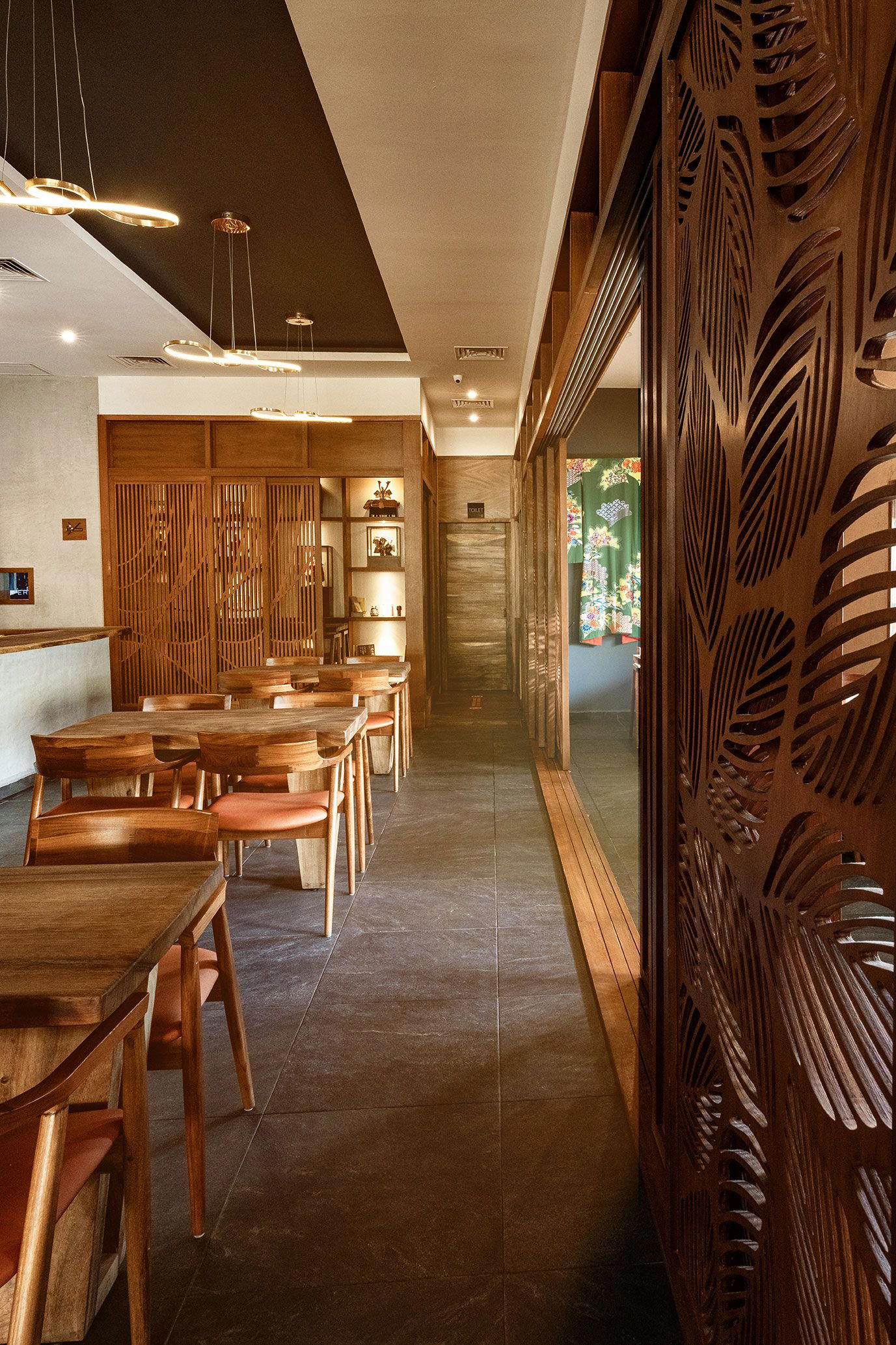
Yamamoto sits on Avenida Uxmal in El Centro, the working commercial core of Cancun that the Hotel Zone largely bypasses. That address signals a neighbourhood restaurant built around local regulars rather than tourist traffic. Expect a functional, no-frills setting consistent with downtown Cancun's dining culture rather than the polished resort aesthetic of the zona hotelera.
Is Yamamoto worth visiting if I'm staying in the Cancun Hotel Zone?
The journey from the zona hotelera to Av Uxmal 31 in El Centro requires a deliberate trip by city bus or taxi into working downtown Cancun, which most Hotel Zone visitors never make. That separation is the point: Yamamoto operates in a dining geography shaped by local demand rather than resort pricing or tourist menus. For travellers specifically looking for Japanese dining outside the Hotel Zone's commercial strip, the El Centro location is the defining reason to go.
What should I eat at Yamamoto?
What the editorial context does support is that Japanese restaurants operating in the Yucatan Peninsula have access to Gulf seafood and local produce that give their menus a regional character distinct from purely import-reliant kitchens. Visiting with an open brief and asking staff for their current focus dishes is the practical approach.
How do I find Yamamoto?
Yamamoto is located at Av Uxmal 31, 77500 Cancún, Q.R. Mexico, Cancun.
Do they take walk-ins at Yamamoto?
For a downtown Cancun address on Avenida Uxmal, walk-in dining is common practice at neighbourhood-level restaurants, though peak meal times can fill smaller rooms quickly. Arriving early in the lunch or dinner window reduces the risk of a wait.
Recognition, Side-by-Side
Comparable venues nearby, for context on price, style, and recognition.
| Venue | Cuisine | Price | Notes |
|---|---|---|---|
| YamamotoThis venue — the venue you are viewing | Authentic Japanese Sushi and Ramen | $20–30 | Not listed |
| Ryoshi Cancún | Japanese-Peruvian Nikkei Fusion | Not listed | 2300500011701 |
| El Tigre y El Toro | Italian Pizza & Pasta | $20–30 | 2300500010120 |
| Casa Bea | Authentic Mexican | Not listed | 2300500010243 |
| Cenacolo Plaza La Isla | Emilia-Romagna Italian | $30–50 | 2300500011701 |
| Trattoria Limoncello | Authentic Italian Trattoria | $20–30 | Cancún |