
Tabelog 100 #50
Our verdict
Yakitori Saihi belongs to Osaka’s small-counter yakitori tier, where the meal is built as a sequence rather than a casual skewer order. Its Tabelog 100 Yakitori WEST selections in 2024 and 2025, seven counter seats, and reservation-only course format place it in the city’s more tightly edited grilled-chicken category.

Pearl is the En Primeur Club membership app, where members save venues, book tables and use the concierge.
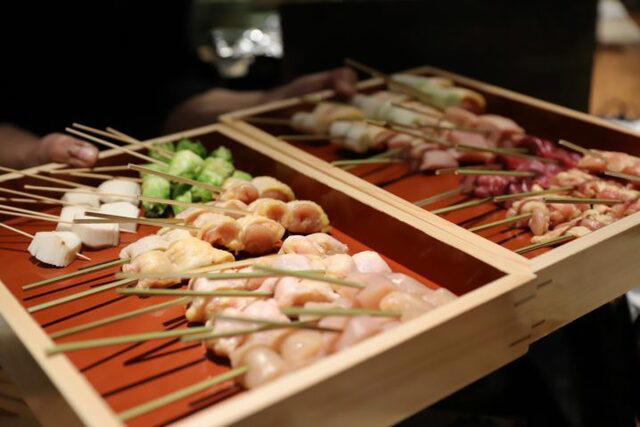
In Osaka, serious yakitori often announces itself through restraint rather than spectacle: a grill doing the talking, and an experience calibrated around timing. Yakitori Saihi fits that modern yakitori grammar. The experience is focused, and the point is not abundance but sequence: heat, rest, seasoning, repetition, and contrast across skewers.
That matters in a city better known internationally for takoyaki, okonomiyaki, kushikatsu, and late-night appetite. Osaka has always been fluent in food that moves quickly from grill or griddle to hand, but yakitori at this level slows the exchange down. The skewer becomes less snack than structure. Each round has to justify its place in the progression, and the format leaves little cover for weak pacing.
A focused experience built around sequence, not choice overload
The defining idea here is menu architecture. Rather than treating yakitori as simple grazing, the meal is best read through tempo: the kitchen’s control of heat, seasoning, and progression. In yakitori, that control is useful: different textures, levels of richness, and closing moments can be arranged so the grill’s intensity does not flatten the meal into smoke and salt.
Across Japan, specialist yakitori has moved away from the image of beer-led after-work eating. The stronger examples now treat grilled chicken skewers with unusual seriousness: preparation, grill management, and the order of service carry the meal. Yakitori Saihi’s inclusion in the 2025 Tabelog Hyakumeiten yakitori selection signals that it sits inside this specialist bracket rather than the broad casual field.
The format also makes the drinks side more than an accessory. Even without leaning on a long inventory claim, the logic is clear: smoke, tare, salt, skin fat, liver richness, and grilled aromatics ask different questions of a glass. A yakitori meal that builds carefully is positioning the evening for slower, more deliberate pairing.
There is a useful contrast with other Osaka categories. A place such as wad omotenashi cafe belongs to a tea-and-cafe register, while BAR RARITY sits in the city’s cocktail economy. Teppanyaki MYDO, Oh.lala... and Sushi UKIYO occupy different forms of controlled dining theatre. Yakitori Saihi is narrower: grilled chicken skewers, heat, and pacing. That narrowness is the point.
Osaka gives yakitori a quieter city frame
Osaka can be read through bright signage, fast snacks, and constant appetite, but its dining personality also includes small, focused meals where the evening is organized around craft rather than spectacle. For visitors who only read the city through its loudest food imagery, Yakitori Saihi offers a different version of Osaka: more concentrated, more deliberate, and less dependent on foot-traffic energy.
That city context suits focused yakitori. Small-format dining changes the contract between diner and kitchen. The atmosphere depends on timing, attention, and the rhythm of the service, not just an individual order. In serious yakitori, punctuality, pacing, and the diner’s willingness to follow the grill are part of the craft.
The Tabelog score of 3.65 is useful when read in context. On Japanese restaurant platforms, yakitori specialists compete in a crowded field where small differences in consistency, service rhythm, and grill control matter. The more persuasive signal is the 2025 Hyakumeiten selection for yakitori, because it places the restaurant within a specialist list rather than a general popularity pool.
Osaka diners tend to be unforgiving about value, even at higher spend levels. A dinner in the JPY 10,000 to JPY 14,999 bracket has to make a case through product handling and progression, not decorative luxury. That is where a restrained yakitori meal can be compelling: the meal either builds cleanly or it does not. There is little room for distraction.
How to place it in an Osaka eating itinerary
For a first Osaka trip, this is not the meal that explains the city’s street-food mythology. It is better understood as a counterpoint to it. The city’s casual canon is immediate, democratic, and often loud; this style of yakitori is focused, scheduled in feel, and dependent on the discipline of the grill. Pairing both sides of Osaka gives a sharper reading of the city than chasing a single category.
Travelers building a wider food map can use Our full Osaka restaurants guide for restaurant planning, then separate the evening economy through Our full Osaka bars guide. Hotels matter in a city where late dinners and rail transfers shape the night; Our full Osaka hotels guide is the practical companion. For broader trip design, Our full Osaka experiences guide and Our full Osaka wineries guide round out the planning frame.
Within Osaka’s wider dining spread, contrasts help. Casual daytime stops, bakeries, local snack counters, and cafe spaces serve a different purpose from a focused yakitori meal. International formats and other Japanese specialist rooms show how varied the city’s dining map can be without weakening the case for a narrow, grill-led meal.
For readers comparing Japanese dining categories beyond Osaka, the useful lesson is format. Other dining rooms in Japan may build themselves around beef, seafood, curry, sweets, or tightly defined bar service; each asks a different question of pacing and specialization. Even Japanese-adjacent addresses overseas show how tightly defined formats travel, but Yakitori Saihi’s argument is rooted in Osaka and in yakitori itself.
The editorial read is simple: choose Yakitori Saihi for a focused Osaka meal where the grill structure is the argument. It is for diners who want yakitori treated as a full evening, not as a stop between drinks.
Frequently asked questions
What's the address for Yakitori Saihi?
Osaka.
Is Yakitori Saihi expensive?
Pricing at Yakitori Saihi is listed as JPY 10,000 - JPY 14,999 View spending breakdown.
Do they take walk-ins at Yakitori Saihi?
The provided listing does not specify a walk-in policy. Given the focused nature of the meal, it is best to contact Yakitori Saihi in advance before planning a visit.
What's the defining dish or idea at Yakitori Saihi?
The defining idea is yakitori in Osaka, with the restaurant listed in the 2025 Tabelog Hyakumeiten yakitori selection.
How does Yakitori Saihi handle allergies?
The most reliable approach is to check the venue's official channels at +81-6-6258-8166 before booking and explain any allergies in advance.
Peers You’d Cross-Shop
Comparable venues to place this listing in its category.
| Venue | Cuisine | Price | Awards | Notes |
|---|---|---|---|---|
| Yakitori SaihiThis venue (the venue you are viewing) | Yakitori | $50–100 | Tabelog 100 #50 | Not listed |
| wad omotenashi cafe | Not listed | $10–20 | Tabelog 100 #28 | JPY 1,000 - JPY 1,999 JPY 2,000 - JPY 2,999 View spending breakdown |
| BAR RARITY | Bar | Not listed | Tabelog 100 #71 | JPY 3,000 - JPY 3,999 |
| Teppanyaki MYDO | Luxury Japanese Teppanyaki | Not listed | Not listed | Not listed |
| Oh.lala... | French-Japanese New Brasserie | Not listed | Not listed | Not listed |
| Sushi UKIYO | Edomae Sushi Omakase | Not listed | Not listed | Not listed |
Recognition history
Dated appearances from independent guides and award organizations, with the underlying list record or original source where available.
Tabelog 100 #50 · No. 50
Tabelog · Tabelog 100 - Yakitori - WEST - 2025
Continue exploring
More in Osaka
Restaurants in Osaka
All restaurants in Osaka →




Bars in Osaka
All bars in Osaka →
Hotels in Osaka
All hotels in Osaka →




Wineries in Osaka
Browse all →
Details
- Intimate
- Sophisticated
- Cozy
- Date Night
- Special Occasion
- Business Dinner
- Solo
- Chefs Counter
- Standalone
- Sake Program
- Beer Program
- Set Menu
- Counter Dining
- Sake
- Wine
- Shochu
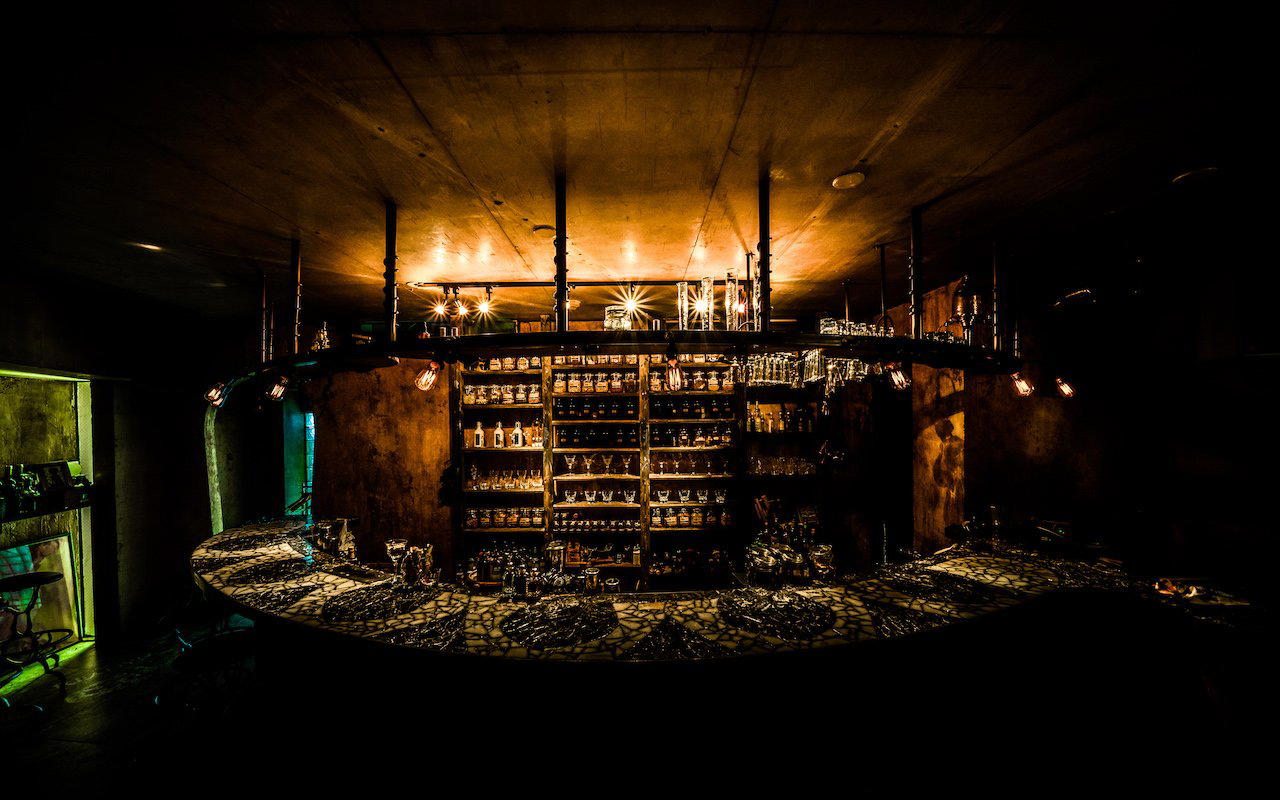
A small, hidden-gem counter setting with a quiet, focused, reservation-only atmosphere that feels tailored to a refined dinner experience.