A Kitchen Shaped by the Valley
Southern Brazil's interior dining scene operates differently from the country's headline restaurant tier. The restaurants in São Paulo and Rio de Janeiro that have drawn the most international attention, places like D.O.M. in São Paulo and Lasai in Rio de Janeiro, work within a creative-modern framework that interprets Brazilian ingredients through a fine-dining lens. What happens in Pomerode is structurally different: the tradition precedes the technique, and the ingredients define the menu rather than the other way around.
In the Itajaí Valley specifically, that means working with produce and proteins that reflect Pomeranian and German agricultural legacies. Cured pork products, fermented vegetables, rye-inflected breads, freshwater fish from the valley's rivers, and seasonal root vegetables form the backbone of a cuisine that has been largely self-sufficient for generations. The preservation techniques brought by nineteenth-century settlers, smoking, pickling, curing, fermenting, remain practical methods here, not nostalgia acts. A kitchen in Pomerode that takes its sourcing seriously is drawing from that continuous tradition, not reconstructing it from archival research.
This regional specificity is what separates Santa Catarina's interior from Brazil's more internationally-discussed food destinations. While restaurants in the Rio Grande do Sul wine country, see, for comparison, Cantina Pozzobon in Santa Maria or Fornazzo Pizzaria in Passo Fundo, operate within an Italian immigrant inheritance, Pomerode's kitchen culture draws from a distinct Central European root. The overlap is in the small-farm sourcing logic; the expression is different.
What the Address Tells You
Avenida XV de Novembro is Pomerode's primary civic artery, and the stretch around Testo Central is where the town's character is most legible. The neighborhood sits slightly outside the most concentrated tourist zone, which means the clientele at any given table trends local rather than visitor-heavy, a reliable indicator, in smaller Brazilian cities, of a kitchen that has to perform consistently rather than rely on first-impression volume.
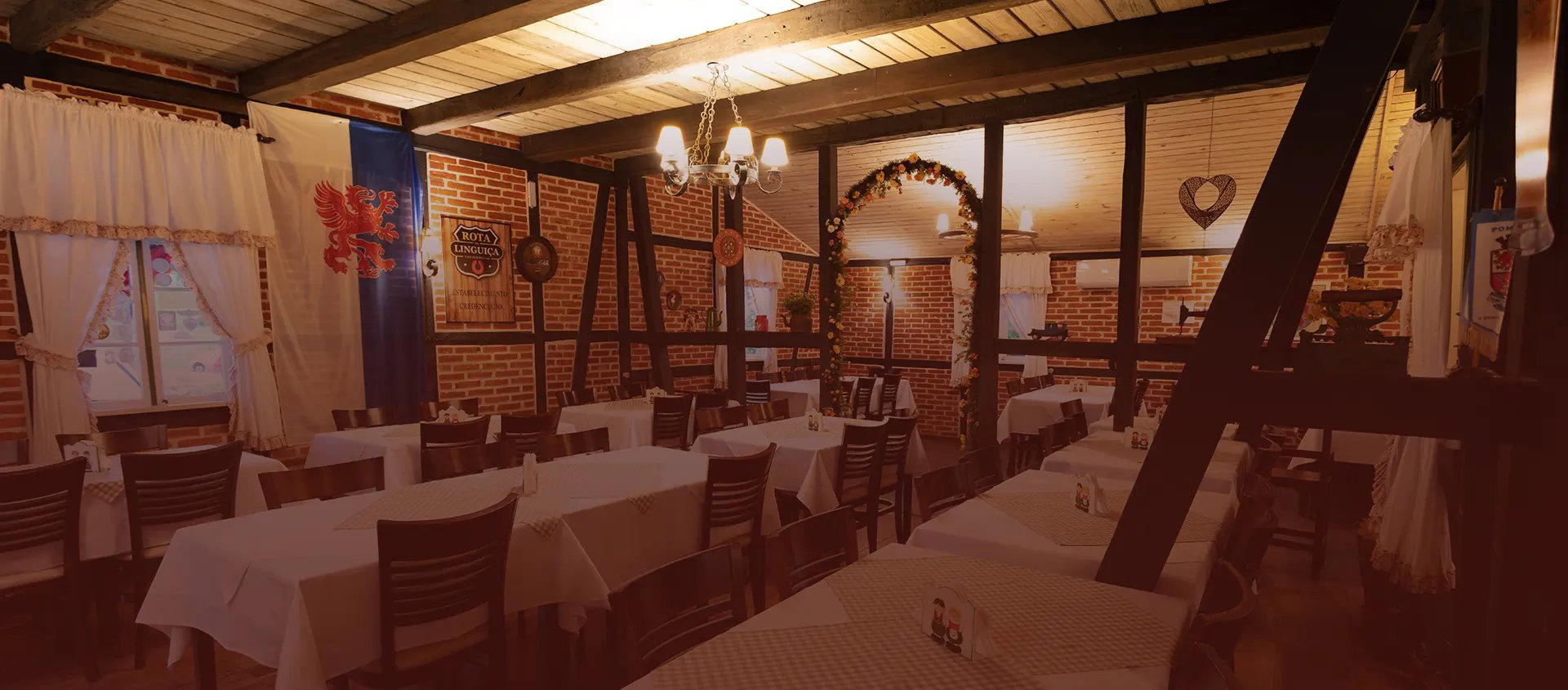
For context on how regional Brazilian restaurants operate outside the major urban centers, it is useful to compare with the format at places like Casa da Dika Restô e Eventos in Bragança or Casa da Flor Restaurante in Dourados, venues where community function and daily kitchen rhythm carry as much weight as any individual dish. Wunderwald occupies a similar position within its own municipality: a place where the local relationship with food is the primary frame, not the backdrop.
The dining formats that tend to work in towns like Pomerode are not the tasting-menu structures associated with high-end Brazilian restaurants. Planning a visit around the midday service, if available, is generally the more productive approach in this kind of municipality, where lunch is the cultural center of gravity.
Placing Wunderwald in a Broader Brazilian Context
Brazil's restaurant geography rewards the kind of lateral comparison that goes beyond the São Paulo-Rio axis. The country's interior and southern states carry culinary traditions that rarely register in international coverage but represent the lived kitchen culture of millions of Brazilians. The German and Pomeranian settlements of Santa Catarina, the Italian colonies of Rio Grande do Sul, and the mixed agricultural communities of Minas Gerais each developed distinct pantries and cooking logics shaped by what their immigrants brought and what the land offered in return.
At the international level of ambition, the conversation is about restaurants like Le Bernardin in New York City or Atomix in New York City, where ingredient sourcing is a curated, explicit program with documented supply chains and named producers. In a place like Pomerode, that relationship is more informal and often older: the farmer supplying the kitchen may be a neighbor, and the supply chain may predate the concept of supply-chain transparency by several generations. Neither model is superior, they are answers to different questions about what a restaurant is for.
Travelers who have covered southern Brazil's interior, moving between, say, Aero Burguer e Grill in Santa Cruz do Sul, Kampeki Sushi in Canoas, and the towns of the Itajaí Valley, tend to find that the region's dining is leading understood as an aggregate impression rather than a series of individual destinations. Each place is a data point in a larger map of how Brazil's European immigrant communities built food cultures that persist in specific, place-bound forms. For our full guide to eating in this part of the state, see our full Pomerode restaurants guide.
Planning a Visit
Pomerode is accessible from Blumenau, approximately 30 kilometers to the south, a practical base for visitors exploring the Itajaí Valley who want more range than a single municipality offers. The town's German-heritage tourism infrastructure means that accommodation options and transport connections are better developed than in comparably-sized Brazilian interior municipalities. Rua XV de Novembro and the Testo Central district are drivable from Blumenau in under 40 minutes, and the road runs through farmland that gives a clear visual account of why the valley's ingredient culture is what it is. No phone or booking information is currently listed for Wunderwald, so arriving during standard Brazilian dining hours, midday for lunch service, early evening for dinner, and confirming directly on site is the most reliable approach. Visitors coming from further afield, particularly those pairing the Itajaí Valley with the wider Santa Catarina coast or interior, will find Pomerode a half-day addition that reframes the state's culinary geography in useful ways.
For reference points in adjacent Brazilian dining traditions, Bistrô Vila Graziella in Bauru, Bistro Fitz Carraldo in Manaus, Madê in Santos, Camarões Potiguar in Natal, Arte e Café Imperial in Angra dos Reis, Famosa Pizza in Ribeirão Preto, and Casa da Picanha Penedo in Itatiaia each illustrate how Brazil's regional dining cultures diverge from one another and from the southern Teuto-Brazilian model that defines Pomerode's table.