Our verdict
A French restaurant in Sydney operated by a German chef, Wunderbar positions itself at an interesting intersection of culinary traditions rarely explored in the city's dining scene. The premise alone invites curiosity: classical French discipline filtered through a distinctly non-French sensibility. For Sydney diners tracking where the city's European-influenced fine dining is heading, Wunderbar warrants attention.

Pearl is the En Primeur Club membership app — saves, bookings, and concierge access live there. Same editors, same standards.
- Address
- Sydney, Australia
- Website
- wunderbar.au
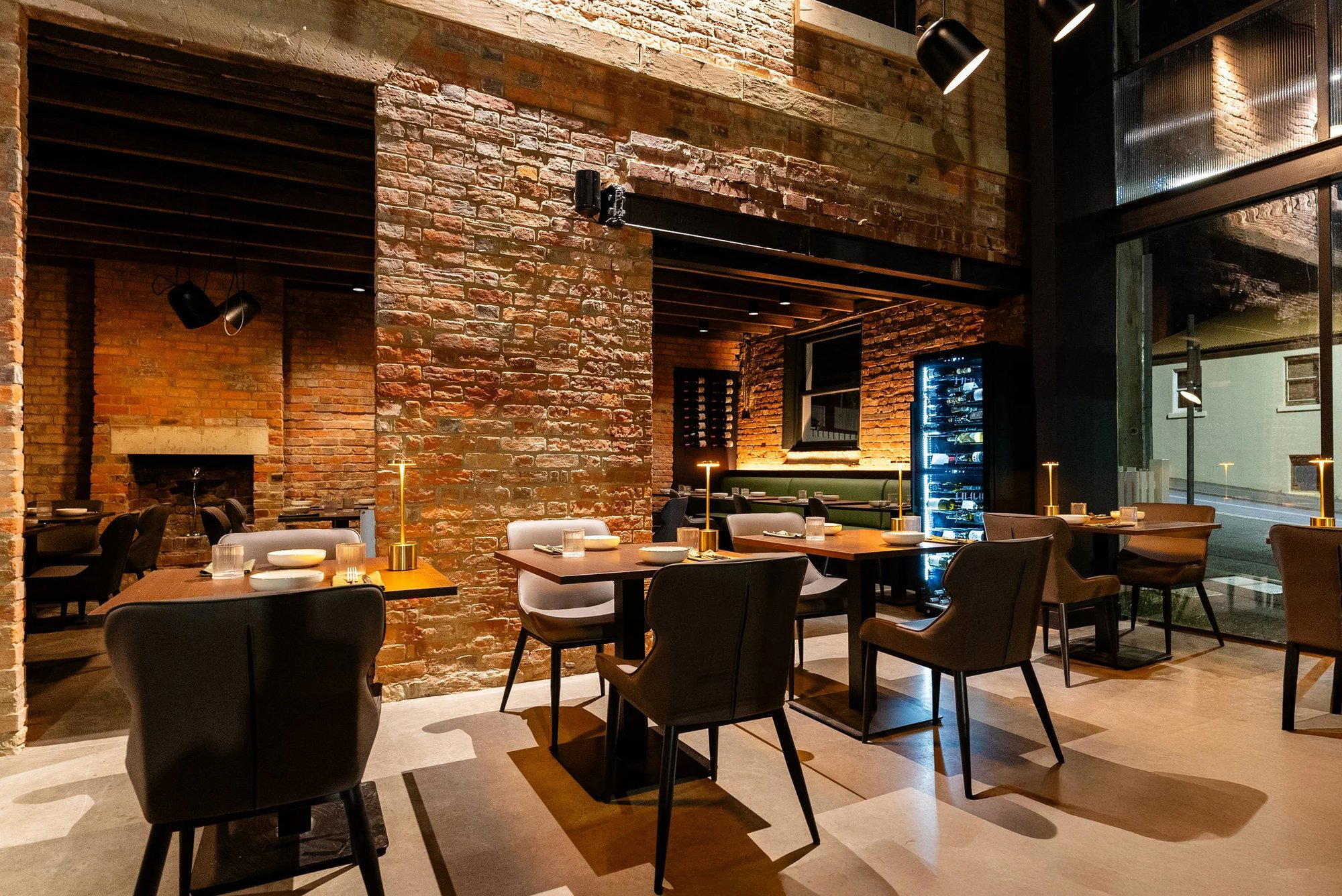
French Cooking, German Hands: A Cross-Cultural Premise in Sydney's Fine Dining Scene
Sydney's European-influenced fine dining has long defaulted to a familiar axis: French technique delivered by French-trained chefs who absorbed their discipline in Lyon, Paris, or the Burgundy countryside. The assumption is almost architectural — that classical French cooking carries an embedded cultural passport. Wunderbar quietly challenges that assumption. A French-format restaurant led by a German chef, it occupies a conceptual space that has more precedent in Europe than Australia, where the idea of French cooking as a universal technical language, rather than a specifically French cultural product, is only beginning to take hold.
Sydney's French-leaning restaurants tend to cluster around either the casual bistro register — linen tablecloths, steak frites, a short Rhône list, or the formal tasting-menu tier occupied by venues with deep French institutional lineage. Wunderbar sits somewhere between those poles, distinguished not by where it falls on the formality spectrum but by the cultural lens through which it processes French classical form. German culinary tradition brings its own rigour: a preference for precision over flourish, for restraint in fat and acid that differs slightly from the butter-forward Lyonnaise school, and for a sensibility shaped by Central European ingredient culture rather than the Loire or Provence.
Where French and German Culinary Logic Converge
The European fine dining tradition has produced a handful of celebrated examples where German-speaking chefs have operated within French frameworks to notable effect. The discipline of German kitchen culture, systematic, exacting, less prone to improvisational garnish, often maps cleanly onto the structural demands of classical French service. What tends to emerge is a version of French cooking that strips away some of its more theatrical gestures and leans into technical consistency. Whether that register is present at Wunderbar is for the diner to assess directly, but the premise has well-established precedent at restaurants like Le Bernardin in New York City, where European training traditions cross-pollinate to produce cooking that transcends any single national identity.
For Sydney specifically, this kind of cross-cultural authorship is less common than in cities with larger European-born chef populations. The city's fine dining scene has historically been defined by Australian-born chefs who absorbed European influence through stage programs and imports, rather than by European chefs operating natively within the local market. Restaurants like Rockpool and Saint Peter represent the dominant local mode: Australian technique, Australian produce, European structural logic. Wunderbar's identity as a French restaurant with a German chef represents a less-travelled path in this city.
The Sydney Context: European Fine Dining and Its Discontents
Sydney's relationship with European fine dining has always been slightly ambivalent. The city produces exceptional produce, the seafood supply alone justifies the attention of any serious kitchen, but its dining culture has increasingly moved toward a post-European confidence, finding authority in native ingredients and Australian-inflected formats rather than in faithfulness to continental tradition. That shift has pushed restaurants like 10 William St and 1021 Mediterranean toward Mediterranean looseness, away from the structured formality that defines classical French service.
Against that backdrop, a restaurant that foregrounds French classical form is making a deliberate counter-argument. It is saying, in effect, that there remains an audience in Sydney for the discipline of French cooking on its own terms, not as nostalgia, but as a still-relevant technical and aesthetic framework. The German chef dimension adds a further wrinkle: the cooking here is presumably not inflected by the Gallic confidence that comes from growing up within the culture being reproduced. That distance can be a liability, but it can equally produce a kind of clarity, a version of French cooking that is self-aware about what it is doing rather than executing from cultural muscle memory.
Parallels exist elsewhere in Australia's fine dining conversation. Attica in Melbourne and Brae in Birregurra both operate with chefs whose training crossed multiple culinary cultures before arriving at a distinctly Australian expression. Wunderbar's trajectory is different, it is not moving toward Australian identity but holding a European framework, but the underlying logic of a chef working across cultural lines is a recognisable feature of contemporary Australian fine dining.
Neighbourhood and Setting
The editorial angle assigned to a French restaurant in a non-Paris city is always partly about what the location says regarding the restaurant's ambitions and audience. Sydney's fine dining geography is dispersed across the CBD, the inner east, and the lower north shore, with pockets of concentrated restaurant activity in Surry Hills, Potts Point, and Kirribilli, where Bayly's Bistro occupies a related European-bistro register. What can be said is that the restaurant's cross-cultural premise is one that plays differently depending on whether it is surrounded by the casual density of an inner-city dining strip or operating in relative isolation in a residential suburb. The character of a French restaurant changes when its neighbours are Vietnamese noodle shops versus when it is flanked by wine bars and European-format bistros.
For a fuller picture of how Wunderbar sits within Sydney's current dining map, the full Sydney restaurants guide provides the neighbourhood-level context this venue requires. Other Sydney options worth considering alongside Wunderbar include 10 Pounds, bills in Bondi Beach, and Johnny Bird in Crows Nest, each representing a different point on the city's European-influence spectrum. Beyond Sydney, the broader Australian dining conversation includes Bar Carolina in South Yarra, Barry Cafe in Northcote, Hungry Wolfs Italian Restaurant in Newcastle, Jaani Street Food in Ballarat, and Kulcha Restaurant in Wollongong.
Planning Your Visit
Prospective diners should verify these directly before planning. What the venue's premise implies is a restaurant operating in a format that rewards advance planning: French-format restaurants of this type in Sydney's fine dining tier typically require bookings rather than walk-in access, and the more focused the kitchen's format, the more likely that availability is constrained. As fuller information becomes available, this entry will be updated accordingly.
Frequently asked questions
What's the must-try dish at Wunderbar?
EP Club does not currently hold confirmed menu data for Wunderbar, so naming a specific dish would mean fabricating rather than informing. What the French-with-German-chef format suggests is a kitchen oriented toward technical precision over theatrical presentation. When visiting, ask the front-of-house team which dishes reflect the chef's personal interpretation of the French canon, that question tends to surface the most revealing plates at restaurants operating in this register.
How far ahead should I plan for Wunderbar?
French-format fine dining restaurants in Sydney operating at the quality tier this premise implies tend to fill two to four weeks ahead on weekends. Given Wunderbar's cross-cultural premise, which is a narrower niche with a more targeted audience, availability may be more accessible than at higher-volume peers like Rockpool, but that should be verified directly.
What do critics highlight about Wunderbar?
The restaurant's distinguishing feature, French cuisine executed by a German chef in Sydney, is the kind of conceptual premise that tends to attract critical interest once a venue establishes consistency. For comparable critical frameworks applied to Sydney's European-influenced fine dining, the broader context at Saint Peter is instructive, even though the cuisine type differs.
Does Wunderbar justify its prices?
French fine dining in Sydney at the quality tier this venue's premise implies typically runs in a range comparable to other European-format restaurants in the inner city. The value question at any French restaurant of this type ultimately turns on whether the kitchen's technical execution matches the formality of the format, something leading assessed after a visit rather than before one.
When is the ideal time to visit Wunderbar?
French-format restaurants in Sydney's fine dining tier typically operate dinner service Thursday through Saturday, with some extending to Wednesday and Sunday. Visiting earlier in the week, if the kitchen operates on those nights, often means a quieter room and more attentive pacing. Sydney's shoulder seasons, autumn and spring, offer comfortable dining conditions and tend to align with the most produce-driven moments for European-format kitchens sourcing locally.
How does a German chef's background change the experience of eating French food at Wunderbar?
The question is one of culinary translation: German kitchen culture emphasises structural precision and a slightly different calibration of fat, acid, and restraint than the Lyonnaise or Parisian mainstream. At Atomix in New York City, a comparable cross-cultural dynamic between Korean chefs and European fine dining formats produced cooking that was technically fluent in both traditions without being reducible to either. Whether Wunderbar achieves something analogous at the French-German intersection is the central question the restaurant poses to its audience, and one that the cuisine-type description alone cannot answer.
Reputation First
Comparable venues nearby, for context on price, style, and recognition.
| Venue | Cuisine | Price | Awards | Notes |
|---|---|---|---|---|
| WunderbarThis venue — the venue you are viewing | French Brasserie with Tasmanian Ingredients | Not listed | Not listed | Not listed |
| Le Petit Flot | Contemporary French Bistro with Japanese Twist | $50–100 | Not listed | Sydney |
| Claret Club | European wine bar and restaurant with French influence | $50–100 | Not listed | Darlinghurst |
| Bistro Rex | Modern French Bistro | Not listed | Star Wine List | Elizabeth Bay |
| Gavroche Brasserie | Classic French Brasserie | $50–100 | Not listed | Ultimo |
| Cafe Loulou | All-day French café & bistro | $20–30 | Not listed | North Sydney |
Continue exploring
More in Sydney
Restaurants in Sydney
Browse all →
Bars in Sydney
Browse all →
Hotels in Sydney
Browse all →
Wineries in Sydney
Browse all →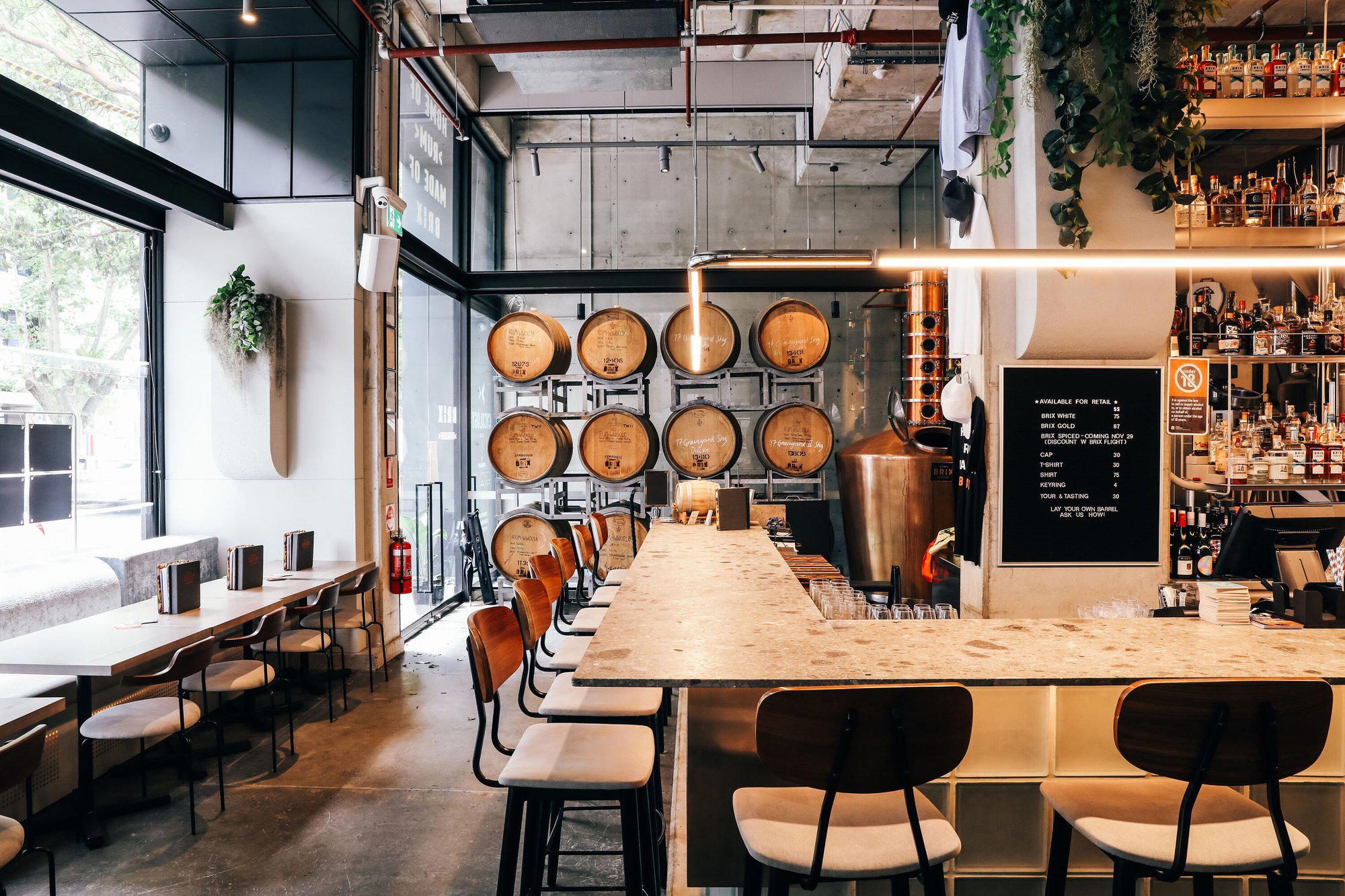
Details
- Elegant
- Modern
- Special Occasion
- Brunch
- Open Kitchen
- Extensive Wine List
- Local Sourcing
- A La Carte
Refined atmosphere combining French culinary tradition with local charm.