Wong Kei
Our verdict
Wong Kei on Wardour Street has anchored Chinatown's edge since the 1970s, operating as one of London's most recognisable Chinese canteens. The multi-floor dining room runs at volume and speed, with a no-frills format that suits a quick, filling lunch as much as a late-night group dinner. It occupies a different register entirely from London's Michelin-tracked Chinese restaurants, and that contrast is precisely the point.

Pearl is the En Primeur Club membership app, where members save venues, book tables and use the concierge.

The menu
What to order
- Won Ton Noodle Soup
- Barbecue Pork on Rice
Wardour Street's Canteen, in Context
London's Chinatown, concentrated along Gerrard Street and its surrounding blocks, has always operated on two parallel tracks: the tourist-facing restaurants that line the main drag, and the utility canteens that serve the local Chinese community, the Soho workforce, and anyone who learned early that volume and speed can coexist with decent food. Wong Kei, at 41-43 Wardour Street, sits at the junction of those two worlds. It is not a destination in the way that CORE by Clare Smyth or The Ledbury are destinations. It is, instead, a fixture: a place that functions as a kind of barometer for how central London's budget Chinese dining has evolved, or in some respects, held its ground.
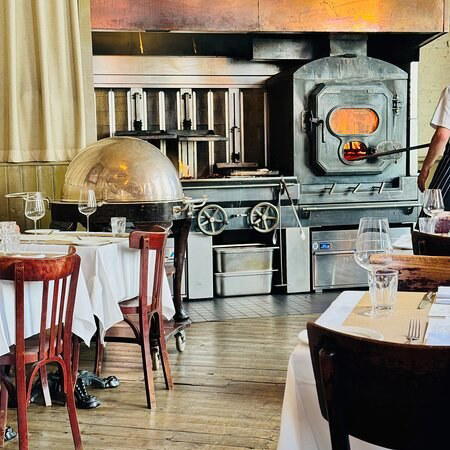
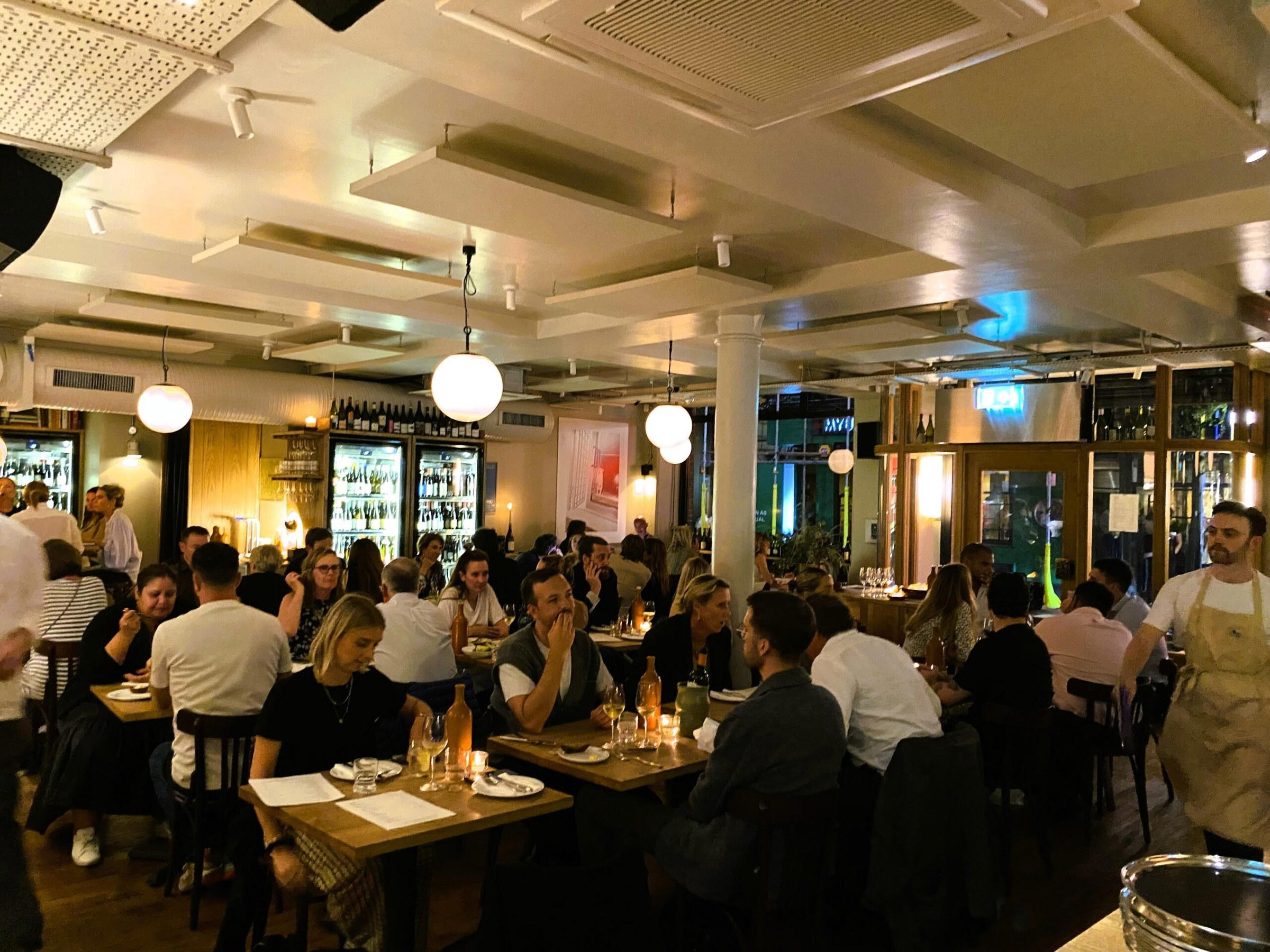
The building spans multiple floors, and the format is canteen through and through: communal seating when busy, laminated menus, fast turnover. For decades it carried a reputation for brusque service that became, in its own way, a point of civic pride. That edge has softened over the years, but the essential character of the operation has not: Wong Kei exists to feed large numbers of people at low prices, quickly, without ceremony. That is a harder thing to sustain in central London in 2024 than it might appear.
Lunch and Dinner: Two Different Canteens
The lunch versus dinner divide at Wong Kei is sharper than at most comparable operations in the area. Lunchtime here tilts heavily toward the one-plate economy: rice dishes, roast meats over steamed rice, noodle soups. The room fills with office workers from the surrounding Soho blocks, with people passing between Piccadilly Circus and Oxford Street, and with regulars who know to arrive before midday to beat the queue. The pace of service at lunch is fast to the point of being transactional, which is not a criticism. This is exactly what the format promises.
Evening service operates at a slower tempo and attracts a different mix: larger groups working through a shared menu, pre-theatre diners from nearby venues, and a cohort of visitors who have been told about the place by someone who ate here in a previous decade. The kitchen's range becomes more apparent in the evening, when the menu's breadth, spanning Cantonese roast meats, seafood preparations, stir-fries, and rice and noodle dishes, invites more exploratory ordering. In this sense, Wong Kei operates something like two distinct services under the same roof, with the value proposition slightly different in each.
On a per-cover basis, Wong Kei sits at a price point that has become genuinely scarce in central London. That scarcity is contextually important. Soho's restaurant rents have risen sharply over the past decade, and the attrition rate among affordable independent operations in the area has been significant. The fact that a multi-floor canteen of this scale continues to operate at accessible price points on Wardour Street says something about the resilience of the format, and about the economics of volume-led Chinese dining specifically.
Where This Fits in London's Chinese Dining Picture
London's Chinese restaurant sector has bifurcated over the past fifteen years. At one end, a tier of high-spending modern Chinese restaurants, some drawing on Cantonese fine dining traditions from Hong Kong, others working with regional Chinese cuisines that had little presence in the UK until recently, now competes directly with the broader London fine dining market. At the other end, the Chinatown canteen model, of which Wong Kei is one of the most durable examples, continues to serve a function that no amount of tasting menu innovation can replace.
This is a different register from Sketch's Lecture Room and Library, from Restaurant Gordon Ramsay, or from Dinner by Heston Blumenthal. It is also a different register from the Michelin-tracked end of the UK dining scene, whether that means Waterside Inn in Bray, L'Enclume in Cartmel, Moor Hall in Aughton, or Ynyshir Hall in Machynlleth. Wong Kei does not compete in that space and has no ambition to do so. What it does represent is a specific and increasingly pressured category: the large-capacity, low-cost, central-London canteen with genuine cooking at its core.
For context across the broader London picture, our full London restaurants guide maps the city's dining across price tiers and neighbourhoods. Internationally, the contrast is equally instructive: the canteen-versus-fine-dining split visible in London's Chinatown has equivalents in cities like New York, where Le Bernardin occupies one extreme of the spectrum, or San Francisco, where Lazy Bear operates in a different register entirely from the city's Cantonese workhorses.
The more useful UK comparisons are places like Opheem in Birmingham, Midsummer House in Cambridge, Restaurant Andrew Fairlie in Auchterarder, Gidleigh Park in Chagford, Hand and Flowers in Marlow, and hide and fox in Saltwood, not because they resemble Wong Kei in any operational sense, but because they illustrate how wide a spectrum serious British dining now occupies. Wong Kei represents one pole of that spectrum: a place where the argument for value is made through output, not curation.
What the Format Delivers
Cantonese roast meat, which means barbecued pork, roast duck, and soy-poached chicken served over rice or noodles, forms the backbone of the menu and the most reliable ordering path. This is a category of cooking with a long Cantonese tradition in which the craft lies in the preparation of the meat itself: the lacquering, the hanging, the resting. In the London Chinatown context, quality across venues varies considerably. The rice plates at Wong Kei have historically represented one of the more dependable versions of this format in the area, eaten at speed under fluorescent lights, which is entirely in keeping with how this food is consumed at its point of origin.
The format also suits group dining better than it might appear. With a broad menu and fast kitchen, larger tables can range across multiple dishes without the ordering anxiety of a tasting menu or the budget pressure of a higher-tier restaurant. This is the evening version of Wong Kei working at its most effective.
Know Before You Go
- Address: 41-43 Wardour St, London W1D 6PX
- Nearest Tube: Leicester Square or Piccadilly Circus (a short walk from either)
- Reservations: Not typically required; walk-in format with communal seating during peak hours
- When to visit: Arrive before midday for lunch to avoid queuing; evening service is less pressured
- Format: Multi-floor canteen, fast turnover, laminated menus, cash historically preferred
- Price tier: Among the lower price points for sit-down Chinese food in central London
Frequently asked questions
What should I expect atmosphere-wise at Wong Kei?
Wong Kei at 41-43 Wardour Street operates as a high-volume canteen: communal tables, quick turnover, and minimal ceremony. Service has historically been blunt and efficient rather than polished. The room prioritises throughput over comfort, which suits the format and price point.
Where exactly is Wong Kei?
Wong Kei is located at 41-43 Wardour St, London W1D 6PX, United Kingdom, London.
Is Wong Kei one of the oldest Chinese restaurants still operating in London's Chinatown?
Wong Kei has been trading on Wardour Street for several decades, placing it among the longer-running Chinese operations in the area around Gerrard Street. Its longevity in a high-turnover central London location is itself a credential: Soho rents and shifting dining habits have closed many comparable canteens. The Chinatown context matters here, the restaurant sits at the edge of the Gerrard Street cluster, slightly removed from the main tourist corridor.
What's the best thing to order at Wong Kei?
Cantonese roast meats anchor the menu: barbecued pork, roast duck, and soy-poached chicken, served over rice or noodles. These are the dishes the kitchen is built around, and they reflect a straightforward Cantonese roast-meat-house tradition rather than a broad pan-Chinese scope. Order from that section first.
Do I need a reservation for Wong Kei?
Wong Kei operates without reservations in the conventional sense, functioning as a walk-in canteen. At peak lunch and dinner hours on Wardour Street, expect a queue or to share a table. The turnover is fast enough that waits rarely stretch long.
What's the standout thing about Wong Kei?
The format itself: a large-scale Cantonese roast meat canteen operating in central London's Chinatown, where the menu stays focused and the pace stays high. In a Soho neighbourhood where restaurant costs have pushed many operations toward premium pricing, Wong Kei holds to a canteen model that has become increasingly rare at this scale.
Can Wong Kei adjust for dietary needs?
The menu centres on roast meats and protein-forward Cantonese dishes, which limits straightforward substitutions for vegetarians or those avoiding pork and poultry. Noodle and rice dishes with vegetable options exist, but this is not a kitchen oriented around customisation. Diners with specific dietary requirements should approach with that in mind.
Credentials Lens
Comparable options at a glance, pulled from our tracked venues.
| Venue | Cuisine | Price | Awards | Notes |
|---|---|---|---|---|
| Wong KeiThis venue (the venue you are viewing) | Cantonese | $10–20 | Not listed | Not listed |
| CORE by Clare Smyth | Modern British Fine Dining | $150–200 | 3 Michelin Stars · World's 50 Best #97 | Modern British |
| Restaurant Gordon Ramsay | French Fine Dining | $200–300 | 3 Michelin Stars · World's 50 Best #13 | Contemporary European, French |
| Sketch, The Lecture Room and Library | Modern French Fine Dining | $200–300 | 3 Michelin Stars · World's 50 Best #18 | Modern French |
| The Ledbury | Modern British Fine Dining | $300–500 | 3 Michelin Stars · World's 50 Best #83 | Modern European, Modern Cuisine |
| Dinner by Heston Blumenthal | Historic British Fine Dining | $200–300 | 2 Michelin Stars · World's 50 Best #45 | Modern British, Traditional British |