Klein Jan

Klein Jan sits on Farm Korranaberg within the Tswalu Kalahari Reserve, one of South Africa's most remote private game reserves. The restaurant draws directly from the surrounding desert ecosystem, making ingredient provenance inseparable from the dining experience. Recognised on La Liste's global restaurant rankings in both 2025 and 2026, it occupies a small tier of destination restaurants where the journey itself is part of the proposition.
- Address
- Farm Korranaberg 296 Tswalu Kalahari Reserve Van Zylsrus, 8467, South Africa
- Phone
- +27 53 781 9441
- Website
- janonline.com
- Directions
- Get directions
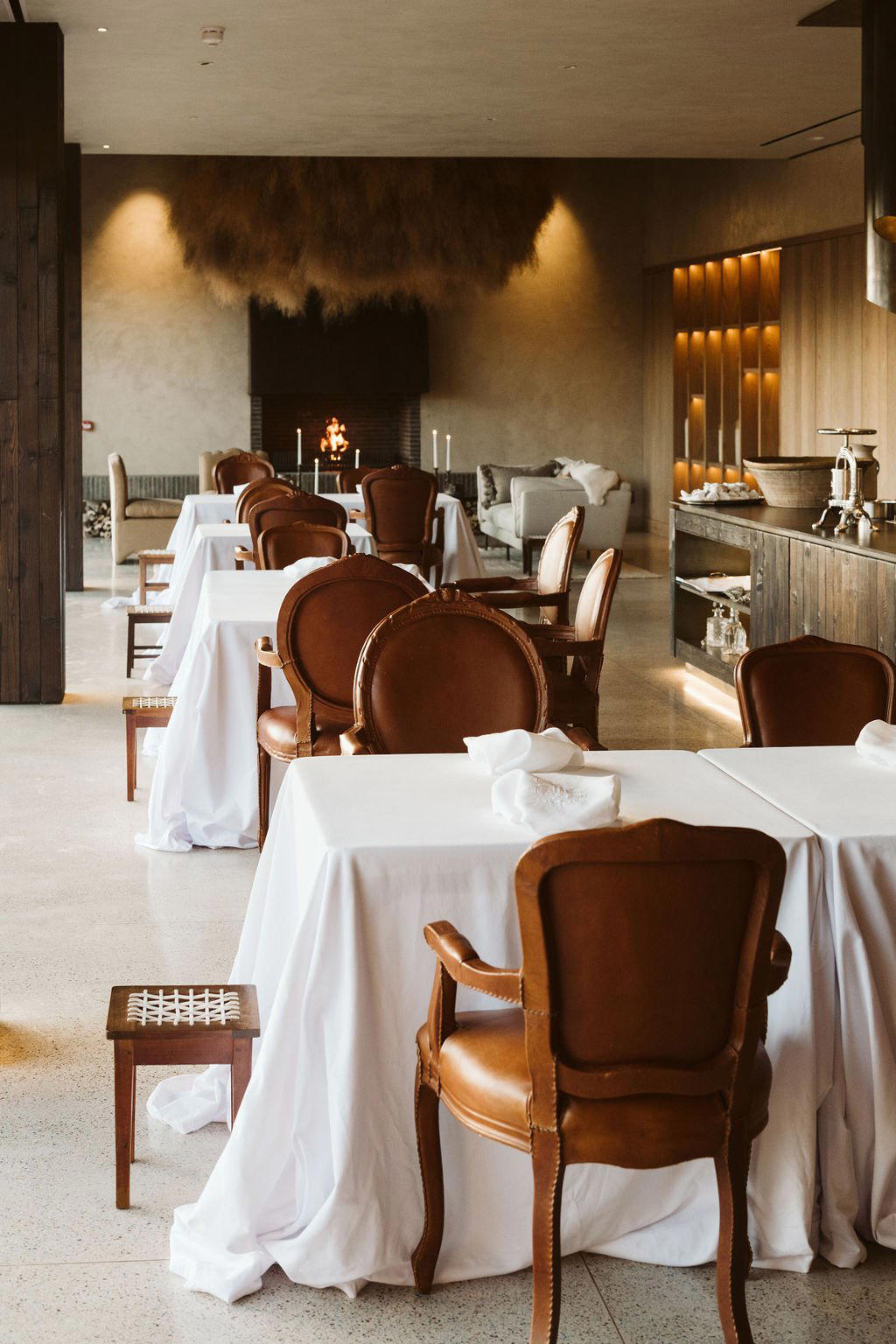
Where the Kalahari Sets the Menu
Klein Jan is a restaurant in the Tswalu Kalahari Reserve in the Northern Cape, serving modern South African Kalahari fine dining. The red dunes shift. The heat is real. The nearest town of any scale is hours away. And that is precisely the condition that gives Klein Jan, located on Farm Korranaberg 296 within the Tswalu Kalahari Reserve, its particular authority: the surrounding wilderness is not a backdrop to the food, it is the source of it. Arriving here, whether by light aircraft into Tswalu's private airstrip or by road from Van Zylsrus, the remoteness registers before you ever sit down. The reserve is among the largest privately owned game reserves in South Africa, and Klein Jan operates within that ecosystem.
This places the restaurant in a specific and thinly populated category of destination restaurants, venues where the sourcing argument is geographically non-negotiable rather than aspirational. Unlike urban fine-dining operations that build farm-to-table narratives around weekly market relationships, the Kalahari context makes provenance a structural reality. Ingredients here are drawn from and shaped by a semi-arid environment that most kitchens never engage with. For diners tracking South Africa's broader movement toward indigenous ingredient use, a shift visible at restaurants like Wolfgat in Paternoster and Fyn in Cape Town, the restaurant represents the extreme end of that commitment: full geographic isolation, a single ecosystem, no alternative supply chain.
The Sourcing Argument Made Concrete
South African fine dining has spent the better part of a decade interrogating what it actually means to cook from this country's terrain rather than from European templates applied to local produce. Particularly compelling answers have come from places willing to operate under genuine constraint. In Paternoster, Wolfgat built a globally recognised identity on West Coast fynbos and shoreline foraging. In the Western Cape winelands, restaurants attached to properties like Delaire Graff work within the softer constraints of a cultivated landscape. The restaurant operates under harder constraints still: the Kalahari is not a fertile region in any conventional agricultural sense, and cooking meaningfully from it requires an understanding of what desert environments actually yield.
Tswalu's reserve management has long operated with ecological sustainability as a governing principle, and the restaurant sits inside that framework. The restaurant's identity is built around what the Kalahari provides, endemic plants, desert-adapted proteins, seasonal availability that follows rainfall and temperature rather than a produce calendar designed for temperate conditions. This is a materially different proposition from most high-end safari lodge dining, which tends to import the conventions of urban fine dining into a bush setting. The distinction matters when assessing the restaurant's position on the global stage.
La Liste Recognition and the comparable set Question
The restaurant has appeared on La Liste's global restaurant rankings in consecutive years: 83.5 points in 2025 and 81 points in 2026. The scores place the restaurant within the upper tier of globally recognised South African restaurants, a cohort that includes urban operations with fundamentally different competitive conditions.
Restaurants like La Colombe and Salsify at the Roundhouse in Cape Town, or Le Quartier Français in Franschhoek, operate within competitive urban and winelands dining scenes where the reference points are density and peer pressure from neighbouring operations. The restaurant has no local comparable set of that kind. Its comparison group is not the restaurant down the road; it is other destination restaurants globally that require deliberate travel and deliver an experience inseparable from place. That recognition carries weight across contexts.
6 across 90 reviews gives a secondary data point. For a restaurant accessible only to guests of a private reserve, that volume of responses reflects a concentrated, typically high-expectation audience. The rating holds.
Safari Dining as a Distinct Format
It is worth being clear-eyed about what the restaurant is and what it is not. It is not a standalone restaurant you can book independently for a night out. Access requires staying at Tswalu Kalahari Reserve, one of South Africa's most exclusive private game reserves, with accommodation priced accordingly. This is a category of dining experience seen at other high-end safari properties across the country, including Jabulani Safari in Hoedspruit, Londolozi in the Kruger, and Esiweni Luxury Safari Lodge near the Drakensberg, but the restaurant's La Liste placement distinguishes it from the field. Most lodge dining earns its reputation from setting and service; the restaurant earns it additionally from culinary identity with a verifiable international footprint.
Guests travelling for the food specifically should treat the restaurant as the main reason for a Tswalu stay. The reserve experience, game drives, conservation engagement, the particular silence of the Northern Cape at night, compounds rather than competes with the restaurant. Properties like Morukuru Family De Hoop in the De Hoop Nature Reserve operate on a similar integrated logic, where food, accommodation, and protected landscape are a single proposition. Tswalu and the restaurant represent that model at the northern extreme of the country.
Planning a Visit
Tswalu Kalahari Reserve is accessed primarily by light aircraft, with the nearest commercial hub being Upington. Road access from Van Zylsrus is possible for those already in the Northern Cape, though distances in this part of South Africa should be taken seriously. Given that restaurant is integrated into a private game reserve, all dining access flows through the reserve's own booking infrastructure; interested guests should contact Tswalu directly. Visiting during the cooler dry season months (May through August) offers more temperate conditions and is typically the higher-demand period for Southern African private reserves, so advance planning matters. For broader context on what the region offers beyond the restaurant, see our Kalahari CBDC restaurants guide and related guides to hotels, bars, wineries, and experiences in the region. For those building a broader South African food itinerary, urban anchors like Gigi in Johannesburg, Dusk in Stellenbosch, and Ellerman House in Bantry Bay provide contrasting reference points for the same national dining moment.
At-a-Glance Comparison
Comparable venues nearby, for context on price, style, and recognition.
| Venue | Cuisine | Price | Notes |
|---|---|---|---|
| Klein JanThis venue — the venue you are viewing | Modern South African Kalahari Fine Dining | $$$$ | Not listed |
| Greenhouse Restaurant Constantia | Modern African Fine Dining | $$$$ | Constantia |
| Curate | Modern South African Fine Dining | $$$$ | Bantry Bay |
| Klein Jan | Modern South African Desert Tasting | $$$$ | Moshaweng Nu |
| Tomson | South Cantonese Street Food | $$$ | Cape Town Central |
| Burrata | Modern Neapolitan Italian | $$$ | Woodstock |
Recognition history
Dated appearances from independent guides and award organizations, with the underlying list record or original source where available.
La Liste Top Restaurants
La Liste
La Liste Top Restaurants
La Liste
Continue exploring
More in Kalahari CBDC
Hotels in Kalahari CBDC
Browse all →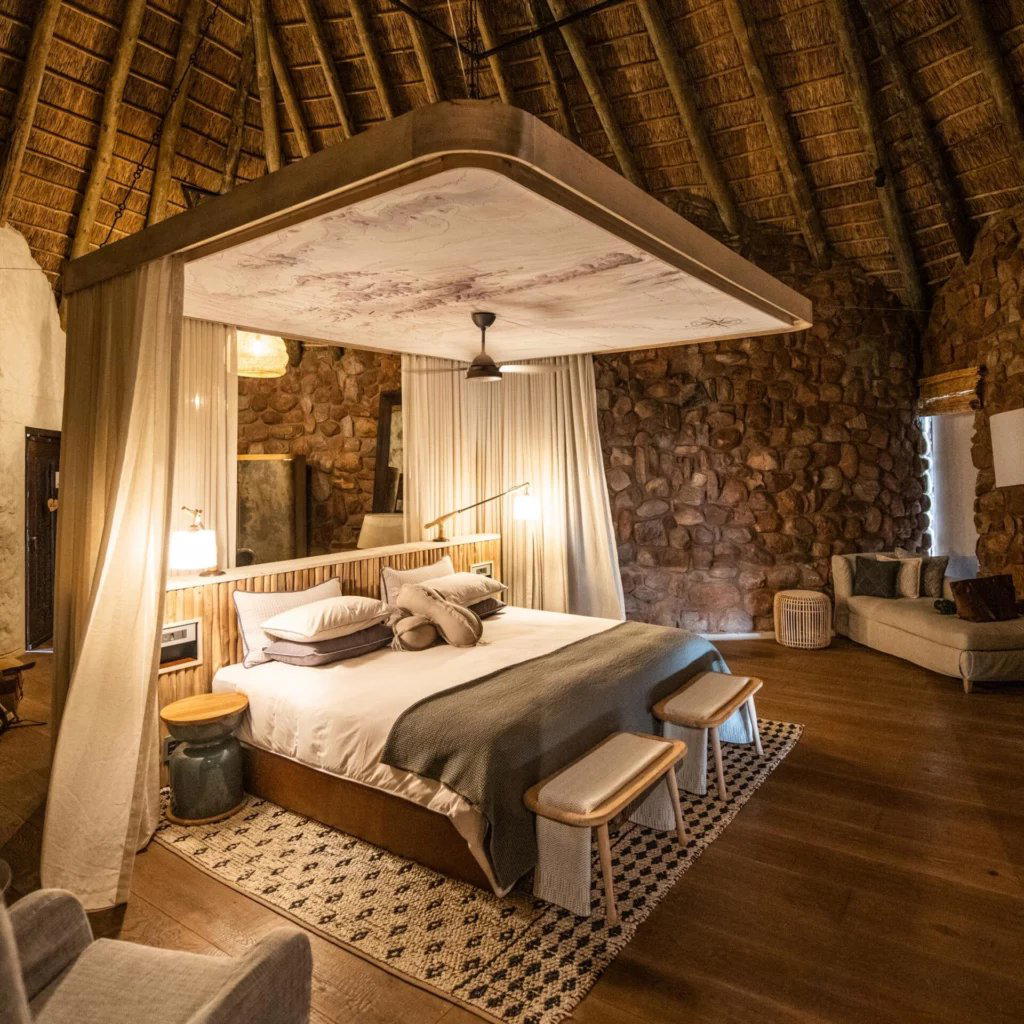
At a Glance
- Intimate
- Elegant
- Scenic
- Sophisticated
- Rustic
- Special Occasion
- Celebration
- Open Kitchen
- Historic Building
- Extensive Wine List
- Local Sourcing
- Sustainable Seafood
Current opening hours
- Monday
- 10 AM–1 PM
- Tuesday
- 10 AM–1 PM
- Wednesday
- 10 AM–1 PM
- Thursday
- 10 AM–1 PM
- Friday
- 10 AM–1 PM
- Saturday
- Closed
- Sunday
- Closed
Hours can change for holidays and private events. Last verified .
Cozy historic farmhouse with starched white linens, reclaimed furniture, dried bush flowers, and retractable glass bringing Kalahari scents and sounds inside under warm bushland breeze.