Wild Flor


Michelin Plate · The Good Food Guide GFG Very Good
Our verdict
Wild Flor on Church Road holds two consecutive Michelin Plates (2024 and 2025), placing it among the more decorated neighbourhood restaurants in Hove. The weekly-changing seasonal menu reads like a classic bistro but delivers considerably more precision in the kitchen, backed by one of the most carefully assembled small-producer wine lists in Brighton and Hove.

Pearl is the En Primeur Club membership app — saves, bookings, and concierge access live there. Same editors, same standards.
- Address
- 42 Church Rd, Brighton and Hove, Hove BN3 2FN, United Kingdom
- Phone
- +44 1273 329111
- Hours
- Mon ClosedTue–Thu 12–2 PM, 6–9 PMFri 12–2 PM, 6–9:15 PMSat 12–3 PM, 5:30–9:15 PMSun Closed
- Website
- wildflor.com
- Directions
- Get directions
- Booking
- Book on SevenRooms
The Room Before the Menu
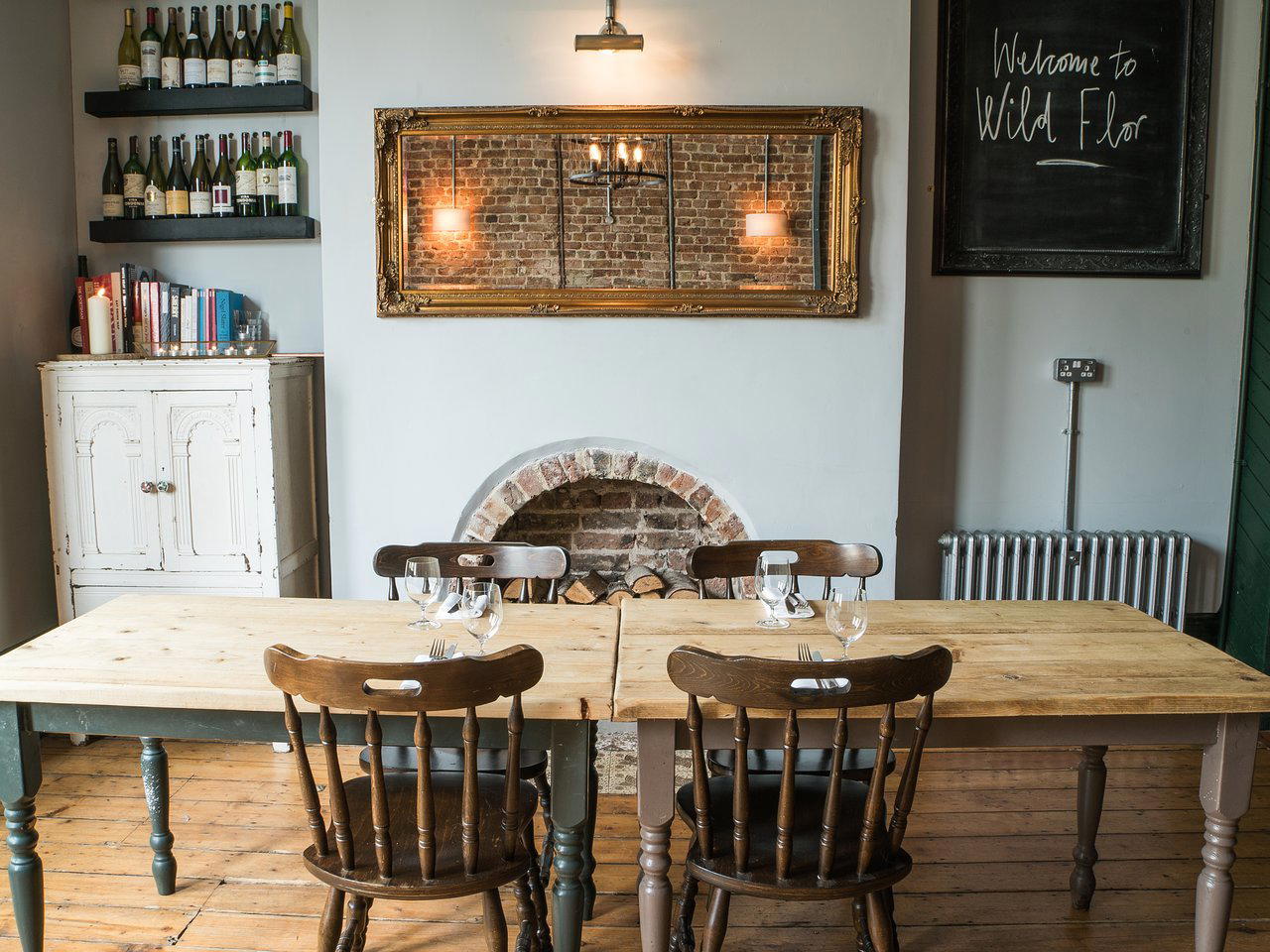
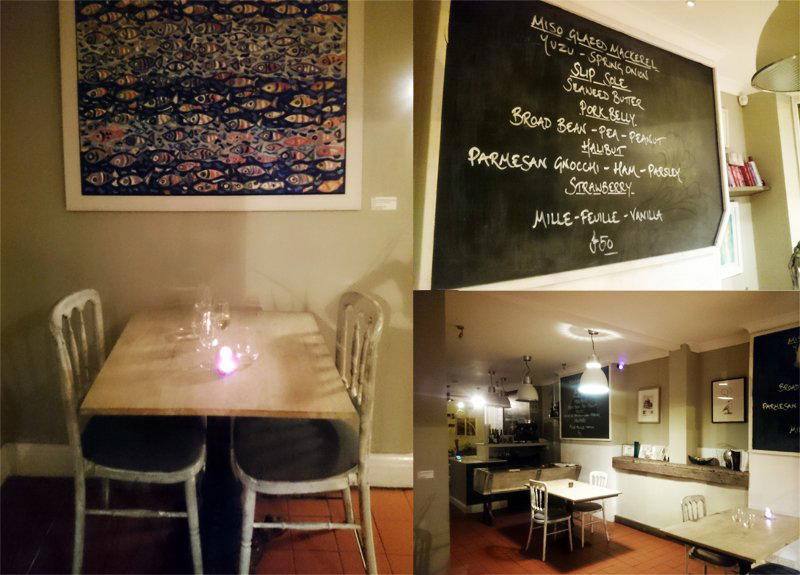
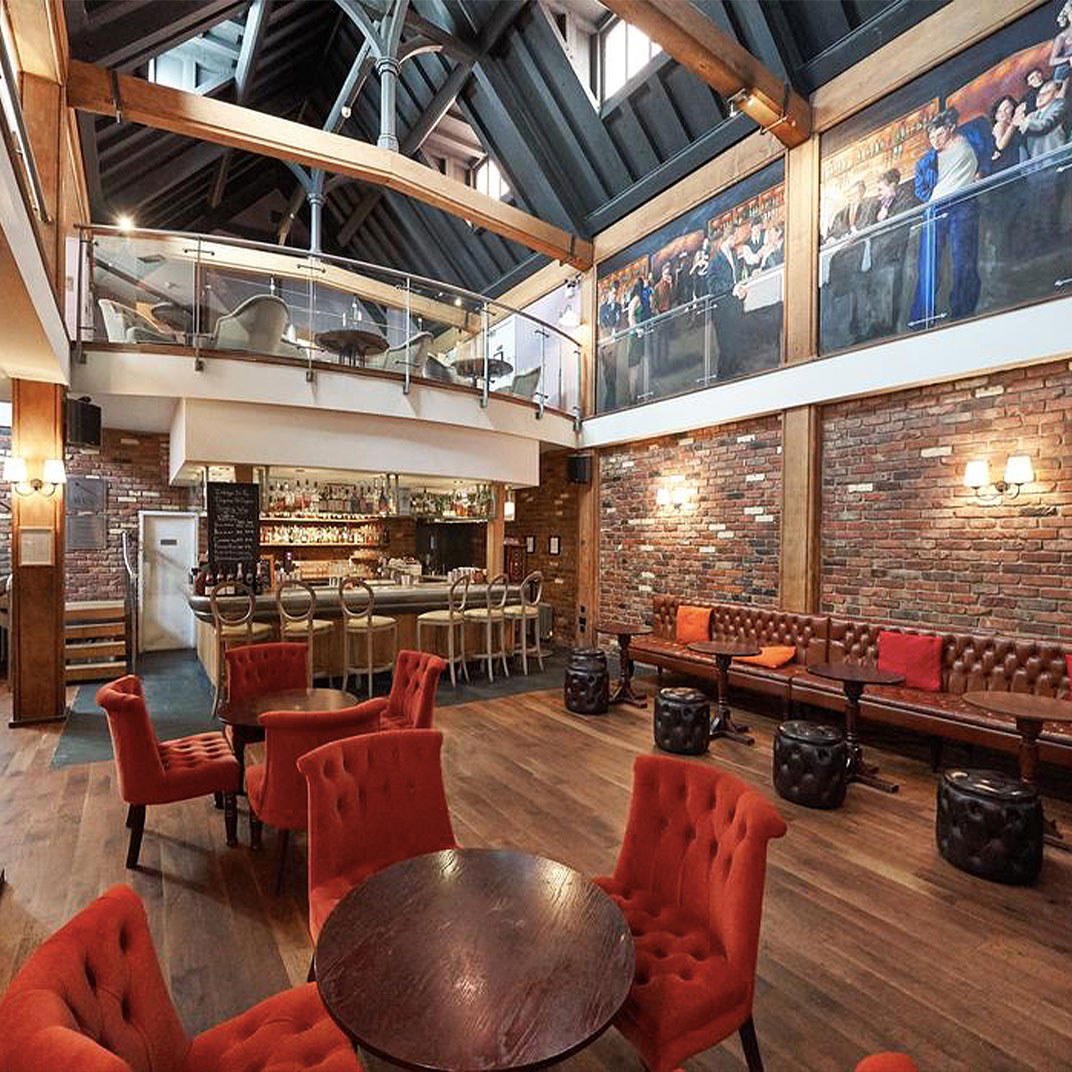
Walk into Wild Flor on Church Road and the signals are deliberately familiar: wine prints on the walls, a chalkboard running the day's dishes, banquette seating worn comfortably in, bare wood tables with no linen in sight. It is the kind of room that makes no visual argument for itself, which is exactly the point. Bistro interiors that broadcast ambition tend to set expectations the kitchen then has to fight; here the room steps back and lets the plate speak. The atmosphere reads as relaxed without tipping into indifferent, and the front-of-house team operates with a quiet attentiveness, topping up glasses with just enough ceremony to signal care without theatre.
Brighton and Hove's neighbourhood dining scene has matured considerably over the past decade. Where the city once ran heavily on casual pizza and pan-Asian formats, a tier of serious small restaurants has emerged in the suburbs and along the Hove stretch of Church Road. Wild Flor sits in that tier alongside peers like Ginger Pig, which operates in the same Modern British register at a comparable price point. The difference at Wild Flor is in how the wine programme integrates with the menu rather than running parallel to it, and in the kitchen's evident command of classical French technique applied to seasonal British produce.
Menu Architecture: Weekly, Seasonal, Deliberately Brief
The structure of Wild Flor's menu is itself an editorial statement. It changes weekly, which is a genuine operational commitment rather than a marketing claim; weekly rotation forces the kitchen to track produce availability in real time and eliminates the inertia of dishes that stay on a menu long after they've stopped making sense seasonally. The format is tight, offering limited choices per course rather than the sprawling optionality of mid-market restaurants that prioritise broad appeal over culinary coherence.
What the menu includes is as telling as how it's structured. Oysters, beef tartare, bavette steak: these are French bistro staples that have held their position across decades precisely because they reward good sourcing and accurate technique rather than disguising either behind elaborate construction. A rabbit and chicken galantine cited in recent coverage illustrates the kitchen's classical training, a preparation that requires patience and technical discipline and that has no shortcut version. The accompanying sherry-infused prune wrapped in pancetta signals an understanding of how to balance subtle primary flavours with a single assertive counterpoint.
Main courses follow the same logic. A veal chop cooked accurately to medium-rare and served with a brown butter jus and the bone left in for presentation reflects a kitchen confident enough to let quality product carry the dish. The sides warrant attention: garlicky greens and a multi-layered confit potato prepared in the style associated with Quality Chop House in London demonstrate that supporting components receive the same care as the centrepiece. Desserts hold to the same classical register, with a crème caramel cited for correct texture and restrained sweetness.
This approach sits at a different point on the Modern British spectrum from the tasting-menu format that defines the higher-investment end of the genre. Restaurants like etch. by Steven Edwards locally, or nationally recognised addresses such as CORE by Clare Smyth, The Ledbury, and L'Enclume operate through the fixed tasting-menu model, where the chef controls every variable of the experience. Wild Flor operates in an older, arguably more demanding tradition: a short à la carte or set-menu format where each dish must justify its place on its own terms, not as part of a curated sequence. That tradition connects it more naturally to institutions like Hand and Flowers in Marlow than to destination tasting-room venues, and it's a harder format to sustain at consistent quality.
The Wine Programme as a Parallel Argument
The wine list at Wild Flor makes a separate but related argument to the menu. Its focus on small producers from across the globe, with Sussex growers included alongside international selections, reflects the same sourcing logic that drives the kitchen: provenance matters, volume production does not. Wine lists structured around small producers require ongoing curation rather than a one-time selection process, since producer availability shifts and allocation quantities are limited. That commitment places Wild Flor in a relatively small peer group within Brighton and Hove's restaurant scene.
For context on how the city's broader drinking options connect to this ethos, our full Brighton and Hove bars guide covers venues where provenance-led programmes are also emerging, and our Brighton and Hove wineries guide maps the Sussex producers that appear on lists like Wild Flor's.
Michelin Recognition and What It Signals
Wild Flor holds a Michelin Plate for both 2024 and 2025. The Plate designation, introduced by Michelin to acknowledge restaurants serving good cooking that falls outside the starred tier, is a more meaningful signal in this context than it might appear. In a city where the density of Michelin-recognised addresses is lower than in London, consecutive Plate recognition across two years confirms that the kitchen is maintaining standards rather than benefiting from a single strong inspection. It places Wild Flor in a different bracket from similarly priced neighbourhood restaurants in Hove that operate without independent verification of kitchen quality.
For comparison, Dilsk and Amari occupy different cuisine territories in Brighton and Hove, while Burnt Orange covers the Mediterranean register at a comparable price tier. Each represents a distinct approach to the city's mid-market dining offer, and Wild Flor's Michelin status makes it one of the more credentialed options in the ££ bracket. For a wider view of the city's restaurant landscape, see our full Brighton and Hove restaurants guide.
Planning Your Visit
Wild Flor is at 42 Church Road in Hove, BN3 2FN, in the stretch of the road that has established itself as one of the more food-focused corridors in the wider Brighton and Hove area. The price range sits at ££, reflecting the bistro format and the set-menu offer: a seasonal set menu priced under £30 runs at various points during the week, making it one of the more accessible entry points to Michelin-recognised cooking in the city. Checking the current schedule for that offer directly on the restaurant's website before booking is worth the step, as availability changes with the weekly menu rotation.
For those building a wider itinerary in Brighton and Hove, our hotels guide and our experiences guide map the full picture beyond the restaurant table.
Frequently asked questions
Is Wild Flor award-winning?
Wild Flor has received recognition including: There is something reassuring about the classic bistro feel of period wine prints, a chalkboard, banquette seating and bare wood tables – it may be 2025, but you could be dining in 1975. There's also a certain timelessness to the menu, whic….
What should I order at Wild Flor?
The menu changes weekly, so specific dishes rotate, but the kitchen has a documented track record with classical preparations: rabbit and chicken galantine, veal chop, and crème caramel have all featured at recent services. A sub-£30 seasonal set menu runs at various times during the week and represents the clearest entry point into what Wild Flor does best. Check the restaurant's website for current availability.
What price level is Wild Flor?
Pricing at Wild Flor is listed as ££.
Where is Wild Flor in Brighton and Hove?
Wild Flor is located at 42 Church Rd, Brighton and Hove, Hove BN3 2FN, United Kingdom, Brighton and Hove.
What's the best way to book Wild Flor?
Wild Flor is at 42 Church Road, Hove, BN3 2FN. The restaurant's own website is the recommended route for reservations and for confirming when the set menu is available. Given that it holds a Michelin Plate for both 2024 and 2025 and operates as a neighbourhood staple in one of Hove's more food-focused stretches, booking ahead rather than walking in is the practical approach.
What's the standout thing about Wild Flor?
The wine list is the element that separates Wild Flor from comparable bistros in Brighton and Hove: it concentrates on small producers globally, with Sussex growers included alongside international names, and it holds a reputation as one of the stronger lists in the city. That sits alongside two consecutive Michelin Plate awards and a weekly-changing seasonal menu, which together make the food programme more demanding operationally than the relaxed room suggests.
The Essentials
| Venue | Cuisine | Price | Awards | Notes |
|---|---|---|---|---|
| Wild FlorThis venue — the venue you are viewing | Modern British Bistro | $50–100 | Michelin Plate · The Good Food Guide GFG Very Good | Not listed |
| Burnt Orange | Modern Wood-Fired Mediterranean Small Plates | $50–100 | Michelin Bib Gourmand · The Good Food Guide GFG Very Good | Mediterranean Cuisine |
| Palmito | Ecuadorian-Indian Fusion Small Plates | $50–100 | Michelin Bib Gourmand · The Good Food Guide GFG Very Good | Asian |
| Ginger Pig | Traditional British Gastropub | $20–30 | Michelin Plate | Modern British |
| Lucky Khao | Northern Thai Barbecue | $20–30 | Michelin Plate | Thai |
| Tutto | Modern Italian Brasserie | $50–100 | Michelin Plate | Italian |
Recognition history
Dated appearances from independent guides and award organizations, with the underlying list record or original source where available.
Michelin Plate
Michelin
The Good Food Guide GFG Very Good
The Good Food Guide
Full recognition history (4 entries)
Michelin Plate
Michelin
Michelin Plate
Michelin
Continue exploring
More in Brighton and Hove
Restaurants in Brighton and Hove
Browse all →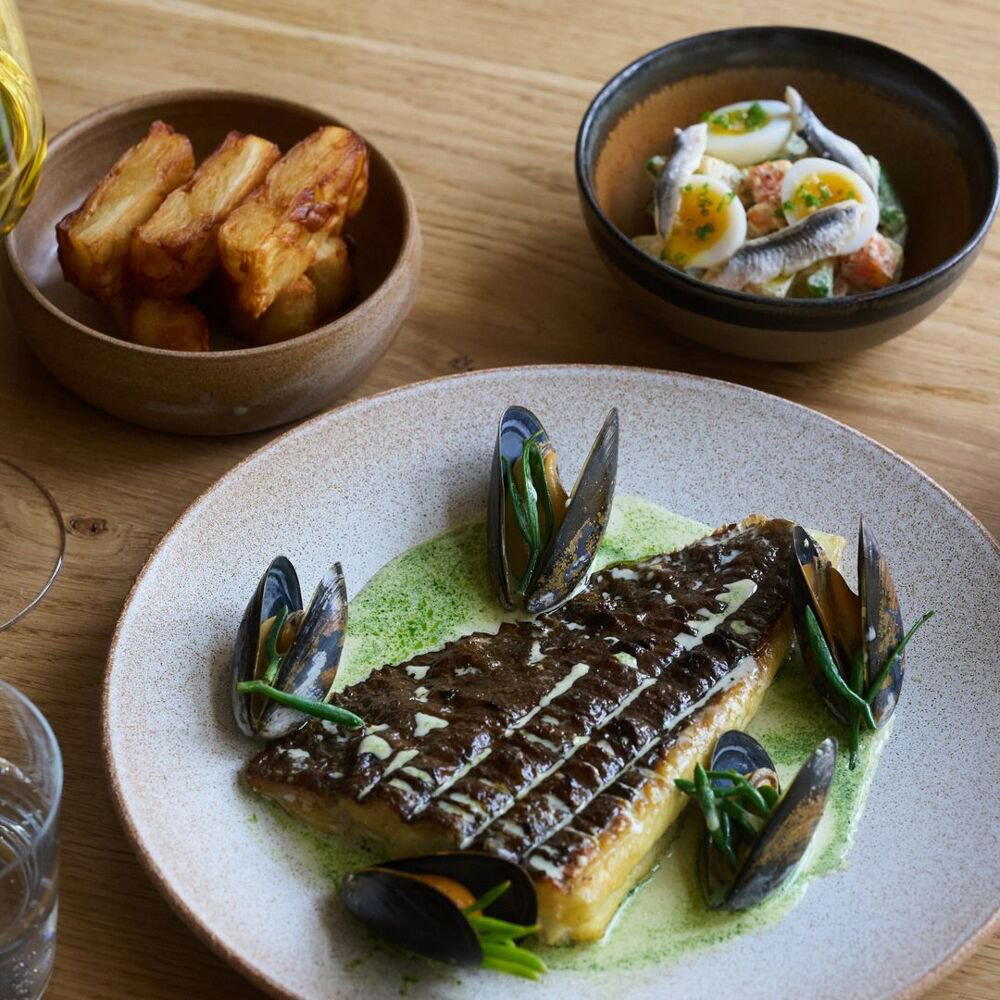
Bars in Brighton and Hove
Browse all →
Hotels in Brighton and Hove
Browse all →

Details
- Cozy
- Intimate
- Elegant
- Rustic
- Date Night
- Special Occasion
- Group Dining
- Private Dining
- Extensive Wine List
- Local Sourcing
- A La Carte
- Set Menu
- Vegetarian Friendly
- Vegan Options
- Gluten Free Options
Current opening hours
- Monday
- Closed
- Tuesday
- 12–2 PM, 6–9 PM
- Wednesday
- 12–2 PM, 6–9 PM
- Thursday
- 12–2 PM, 6–9 PM
- Friday
- 12–2 PM, 6–9:15 PM
- Saturday
- 12–3 PM, 5:30–9:15 PM
- Sunday
- Closed
Hours can change for holidays and private events. Last verified .
Intimate and cosy dining area featuring bare brick walls, wood accents, blue leather seating, and wine bottle-lined walls evoking rustic French elegance in a relaxed, sophisticated atmosphere.