Whitechapel Gallery
Whitechapel Gallery occupies a significant position in London's East End arts scene, sitting at the intersection of contemporary practice and the neighbourhood's long history of cultural exchange. The gallery's programming draws on both international technique and locally rooted perspectives, making it a reference point for how London's East End has shaped and been shaped by global art movements. Check the current exhibition schedule before visiting.
Pearl is the En Primeur Club membership app — saves, bookings, and concierge access live there. Same editors, same standards.
- Address
- 77-82 Whitechapel High St, London E1 7QX, United Kingdom
- Phone
- +44 20 7522 7888
- Website
- whitechapelgallery.org
- Directions
- Get directions
 Saves & bookings on Pearl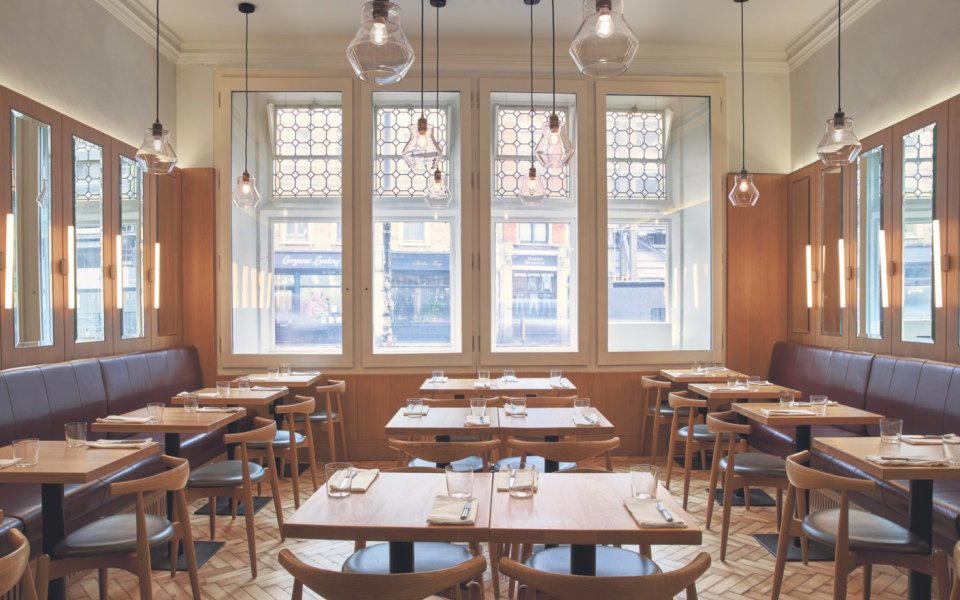
East End, Global Reach: Why Whitechapel Gallery Belongs on Any Serious London Itinerary
Whitechapel Gallery is a contemporary art gallery in London on Whitechapel High Street. Whitechapel Gallery, at 77-82 Whitechapel High St, has occupied that position in E1 for well over a century, and the tension it holds between the globally sourced and the locally embedded is precisely what makes it worth understanding on its own terms.
The gallery sits in a part of London where the logic of cultural exchange has always operated at street level. Whitechapel's history as a point of arrival for successive waves of new communities, from Jewish immigrants in the late nineteenth century to Bangladeshi families through the twentieth, has made its cultural institutions unusually porous. Ideas, techniques, and aesthetic frameworks have moved through this neighbourhood with less institutional gatekeeping than in the West End. The restaurant absorbed that openness into its programming DNA long before "global contemporary art" became a curatorial category.
A Building That Reads the City
The gallery's Arts and Crafts building on Whitechapel High Street is itself a signal about the institution's position. Designed by Charles Harrison Townsend and completed in 1901, it was built to bring art to a working-class East End community at a moment when that ambition was genuinely radical. The façade, with its distinctive arched entrance and organic ornamentation, reads differently now that the surrounding streets have shifted toward the creative industries and hospitality, but the building's original democratic premise still inflects how the space programmes and presents work.
Expansion into the neighbouring Passmore Edwards Library in 2009 added significant floor space and allowed the gallery to run more complex, multi-room exhibitions. That scale matters: the restaurant can now hold large-scale international loans and commission installation work that would be impossible in a smaller footprint, placing it in a comparable set with institutions like the Serpentine Galleries and the Hayward, rather than with smaller commercial spaces in nearby Shoreditch.
Programming Logic: Where Imported Method Meets Local Reference
Editorial angle that makes the restaurant most legible to a serious visitor is the one that runs through its most significant historical programming moments: the collision between technique developed elsewhere and subject matter drawn from the immediate environment. The gallery showed Picasso's Guernica in 1939, bringing a work made in response to Spanish political trauma to a community that understood displacement in visceral terms. That pairing of internationally developed formal language with locally resonant subject matter has remained a programming throughline.
More recently, the gallery has built a reputation for presenting artists who work across traditions without resolving the tension between them. Artists from South Asian, Middle Eastern, and African diasporic backgrounds, many with studio practices shaped by multiple cultural frameworks simultaneously, find a more natural home here than at institutions with more consolidated aesthetic identities. This is not a gallery with a single house style. It is a gallery that treats the intersection of methods as the subject itself, which is exactly the right approach for a neighbourhood that has never had the luxury of a single cultural narrative.
Just as CORE by Clare Smyth frames British produce through classical French training, or Dinner by Heston Blumenthal applies contemporary technique to archival British culinary history, the restaurant applies rigorous international curatorial frameworks to artists whose work is anchored in specific, non-Western material and social realities. The method is imported; the substance is local. That combination is harder to execute than it looks.
How It Fits the Broader London Experience
The restaurant operates in a part of London that has changed faster than almost any other district over the past two decades. The arrival of the Elizabeth line at Whitechapel station has reduced journey times from central London and from Heathrow significantly, making the East End more accessible than the postcode once suggested. The gallery is a seven-minute walk from the station, and the surrounding streets now include serious dining options, particularly in the Spitalfields and Bethnal Green directions, that make a half-day cultural itinerary direct to build.
For visitors building a broader London programme, the gallery works as an anchor for East End exploration rather than as a single destination. Pair it with the nearby Dennis Severs' House for a completely different register of historical immersion, or use it as a starting point before moving east toward the Columbia Road area. The neighbourhood rewards walking in a way that the gallery's immediate surroundings, which can feel transitional between the City and Bethnal Green, don't immediately signal.
For comparable ambition in fine dining terms, The Ledbury, Sketch, The Lecture Room and Library, and Restaurant Gordon Ramsay represent the upper tier of London's contemporary restaurant scene, each with its own approach to the local-meets-global dynamic that restaurant explores in visual art terms.
L'Enclume in Cartmel, Moor Hall in Aughton, and Gidleigh Park in Chagford in the UK's broader fine dining circuit, and internationally at Le Bernardin in New York City and Atomix in New York City, where technique developed across culinary traditions serves locally and culturally specific subject matter. The Fat Duck in Bray, Hand and Flowers in Marlow, and Le Manoir aux Quat' Saisons round out the regional picture for visitors extending their UK itinerary.
Planning Your Visit
The gallery is free to enter for most exhibitions. Ticketed shows and events exist for specific programmes, so checking the current schedule before arrival is worthwhile. The gallery café operates during opening hours and functions as a reasonable stop for lunch or coffee in a neighbourhood that has fewer sit-down options than the immediate Spitalfields area to the west.
Address: 77-82 Whitechapel High St, London E1 7QX. Nearest station: Whitechapel (Elizabeth, District, Hammersmith & City lines). General admission free; ticketed events vary.
Quick Comparison
Comparable venues nearby, for context on price, style, and recognition.
| Venue | Cuisine | Price | Notes |
|---|---|---|---|
| Whitechapel GalleryThis venue — the venue you are viewing | Modern British | $$ | Not listed |
| Slug & Lettuce - Aldgate | British Gastropub | $$ | Aldgate |
| Bonds | British Gastropub | $$ | Cheapside |
| Nutbourne Bar and Restaurant, Battersea | Farm-to-Table British Brasserie | $$ | Battersea |
| Smokehouse | British Gastropub with Smoked Meats | $$ | Canonbury |
| Café Bloom | British Gastropub Comfort Food | $$ | Angel |
Continue exploring
More in London
Restaurants in London
Browse all →
Bars in London
Browse all →
Hotels in London
Browse all →


At a Glance
- Minimalist
- Elegant
- Intimate
- Casual Hangout
- Historic Building
- Local Sourcing
Current opening hours
- Monday
- Closed
- Tuesday
- 11 AM–6 PM
- Wednesday
- 11 AM–6 PM
- Thursday
- 11 AM–9 PM
- Friday
- 11 AM–6 PM
- Saturday
- 11 AM–6 PM
- Sunday
- 11 AM–6 PM
Hours can change for holidays and private events. Last verified .
Nearly minimalist understated elegant décor reminiscent of 1950s Scandinavian home with beautiful chairs parquet flooring and light wood small cosy nicely lit.