Google: 4.5 · 1,073 reviews
White City House
White City House occupies the former BBC Television Centre in West London, a postwar broadcasting landmark that Soho House transformed into a members club with dining, a rooftop pool, and hotel rooms. The building's circular brutalist core and preserved production-era details make it one of the more architecturally coherent club conversions in London, sitting in a distinct tier from the group's Fitzrovia and Shoreditch properties.
 Discover on Pearl
Pearl is the En Primeur Club membership app — saves, bookings, and concierge access live there. Same editors, same standards.
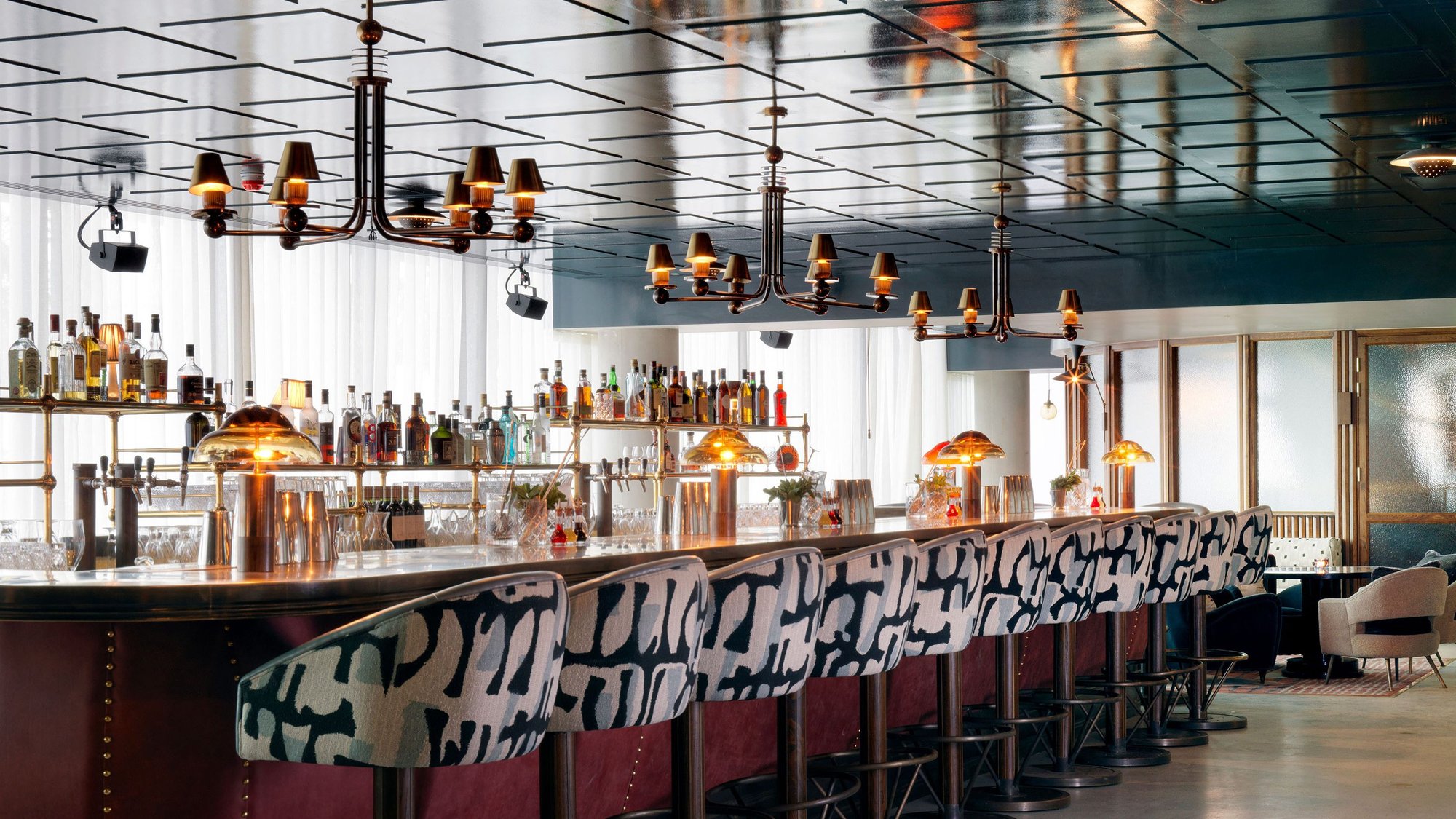
A Broadcast Building Repurposed, Not Erased
The former BBC Television Centre on Wood Lane is one of the few postwar buildings in London that carries genuine cultural weight before you step inside. Opened in 1960 and designed by architect Graham Dawbarn, the circular structure housed British broadcasting for more than five decades. When Soho House took over and opened White City House in 2018, the more interesting design decision was not what they added but what they kept. The curved corridors, the scale of the public atrium, the industrial proportions of the original build — these remain the primary spatial experience, with the members club layered around them rather than replacing them.
That approach separates White City House from the broader Soho House estate. Properties like Soho House Fitzrovia or the original Dean Street townhouse operate inside converted Georgian or Victorian buildings where the architecture is background. Here, the architecture is the argument. The doughnut-shaped floorplate means circulation follows the building's original logic, and the rooms — whether dining, drinking, or sleeping , sit inside that inherited geometry.
The Physical Container and What It Does to the Room
The interior design team worked with the listed status of certain elements, which constrained and, arguably, improved the result. Original terrazzo floors appear in the corridors. The rooftop pool sits in the curved volume above the main building mass, with views across White City and the Westfield development to the south. The hotel rooms, of which there are 45, follow the arc of the building's outer ring and are proportioned accordingly , not large by central London standards, but spatially coherent in a way that purpose-built hotel blocks rarely achieve.
The main dining room occupies a double-height space that reads as a working room rather than a decorative one. The ceiling height is functional rather than theatrical, the lighting warm without being dim, and the seating arrangement prioritises coverage over drama. This is a deliberate contrast to the design-forward dining rooms that have become standard at this price tier in London , venues like Sketch, The Lecture Room and Library, where the room itself is performing at the same pitch as the kitchen. White City House's dining environment is lower in temperature, closer in character to a well-resourced private dining room than a statement restaurant.
Where It Sits in West London's Hospitality Pattern
White City has changed considerably since the Television Centre closed its main production operations in 2013. The BBC retained a presence, ITV Studios moved in, and a cluster of creative and tech businesses followed. The hospitality that has grown alongside this is calibrated to that daytime professional population as much as to a destination evening crowd. White City House fits that pattern: a place that functions as an all-day working, eating, and drinking environment, with the hotel rooms serving an overflow of visiting professionals and media industry contacts.
This positions it differently from the destination dining addresses that define London's higher-end food scene. Kitchens at CORE by Clare Smyth, The Ledbury, or Dinner by Heston Blumenthal operate with a different brief , the meal is the reason for being there. At White City House, the food is part of a broader environmental offering. Soho House kitchens across the estate share a broadly accessible European repertoire, with the clubs functioning more as consistent neighbourhood resources than as destination restaurants in the Michelin sense. For high-intensity tasting menu experiences, the relevant London addresses remain Restaurant Gordon Ramsay and its peer set. White City House operates in a parallel register.
The same comparison applies nationally. The Soho House model is urban and membership-driven, distinct from the country house tradition represented by Le Manoir aux Quat'Saisons in Oxford, Waterside Inn in Bray, or L'Enclume in Cartmel, where the property and the kitchen are jointly the draw. White City House's peer set is other urban members clubs with hotel components, not destination dining destinations in rural or semi-rural settings.
Access, Membership, and Practical Considerations
White City House operates on the standard Soho House membership model: the club spaces, pool, and gym require membership, while the hotel rooms are bookable without one. This two-tier access structure is worth understanding before planning a visit. Non-members staying in the hotel can access the rooms and some ground-floor areas, but the rooftop pool and main club floors are members-only. Prospective members apply through the standard Soho House process, which is application-based and assessed against the group's broadly creative-industry membership profile.
The hotel component makes White City House accessible to visitors who want the architectural experience without membership. At 45 rooms, it is small enough to feel residential rather than transient. The address at 101 Wood Lane is directly adjacent to Wood Lane Underground station on the Circle and Hammersmith and City lines, making it genuinely easy to reach from central London without relying on the Overground or a taxi. This is a logistical advantage that the Shepherd's Bush and Notting Hill areas to the south do not consistently offer.
For those building a broader London itinerary, White City House works as a base for the western part of the city, with Holland Park, Portobello Road, and Notting Hill within easy reach. The full context of what London's dining scene offers across price tiers and neighbourhoods is covered in our full London restaurants guide. For high-end dining outside London, relevant regional references include Moor Hall in Aughton, Gidleigh Park in Chagford, Midsummer House in Cambridge, Opheem in Birmingham, Restaurant Andrew Fairlie in Auchterarder, and Hand and Flowers in Marlow. For international comparisons in the Soho House tier, Le Bernardin in New York City and Atomix in New York City represent the upper end of that city's dining offer, a useful reference point for transatlantic visitors calibrating expectations. Additional UK references include hide and fox in Saltwood.
Just the Basics
These are the closest comparables we have in our database for quick context.
| Venue | Notes | Price |
|---|---|---|
| White City House | This venue | |
| CORE by Clare Smyth | Modern British, ££££ | ££££ |
| Restaurant Gordon Ramsay | Contemporary European, French, ££££ | ££££ |
| Sketch, The Lecture Room and Library | Modern French, ££££ | ££££ |
| The Ledbury | Modern European, Modern Cuisine, ££££ | ££££ |
| Dinner by Heston Blumenthal | Modern British, Traditional British, ££££ | ££££ |
Continue exploring
More in London
Restaurants in London
Browse all →
Bars in London
Browse all →
Hotels in London
Browse all →
At a Glance
- Trendy
- Modern
- Sophisticated
- Elegant
- Brunch
- Business Dinner
- Special Occasion
- Rooftop
- Hotel Restaurant
- Historic Building
- Craft Cocktails
- Skyline
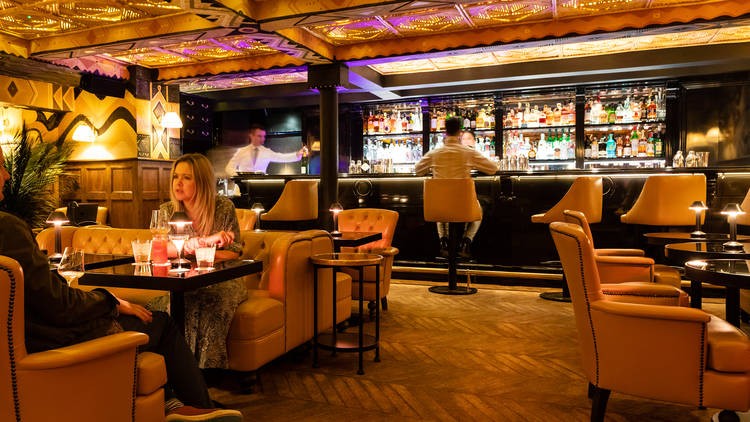
Dark and glossy with '70s interior accents including old-school table lamps and neon wall art, laidback yet trendy attracting creatives.