Wakuda

Tetsuya Wakuda brings his Tokyo-rooted approach to Japanese cuisine to the Las Vegas Strip, translating the precision of Golden Gai sensibility into a setting calibrated for both afternoon and evening service. The restaurant sits within the Venetian complex and positions itself within a city tier that includes some of North America's most credentialed Japanese dining rooms. A reservation is advisable, particularly for dinner, when the room shifts register entirely.
 Discover on Pearl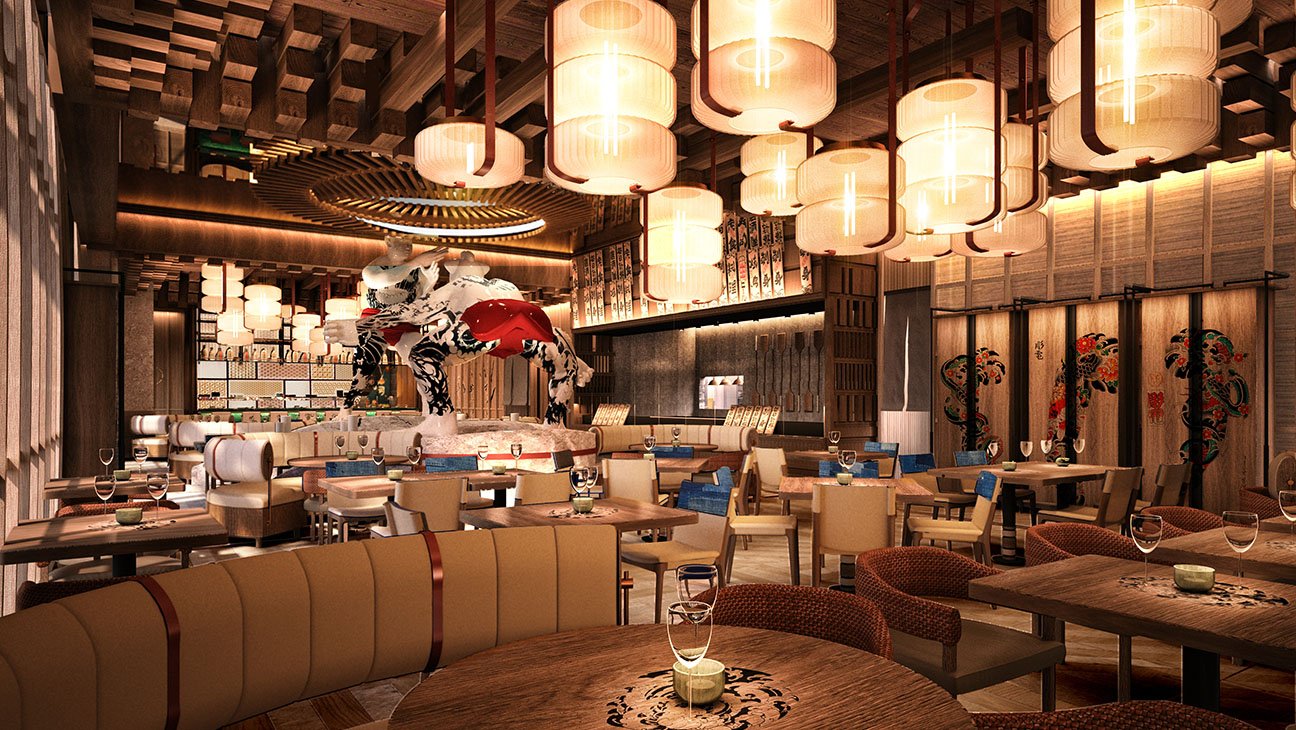
Where Tokyo Discipline Meets the Strip
Las Vegas has developed, over the past two decades, a Japanese dining tier that few American cities outside New York can match. The Strip's major properties have drawn chefs whose credentials trace back to Tokyo, Osaka, and Kyoto, and the competitive set has tightened considerably since the early wave of celebrity-chef outposts that arrived in the 2000s. Wakuda, located at the Venetian at 3325 S Las Vegas Blvd, sits within this more recent, more serious cohort: restaurants where the reference points are Tokyo dining rooms, not adapted Americanized formats.
Chef Tetsuya Wakuda's connection to Golden Gai, Tokyo's dense warren of intimate bars and specialty rooms, is not incidental. That neighborhood operates on a logic of concentration and restraint: small menus, focused technique, the assumption that the guest knows why they came. That ethos, transplanted to one of the most high-volume hospitality environments in the world, produces something worth examining on its own terms. Las Vegas diners who have also sat at Aburiya Raku will recognize the ambition: Japanese cooking executed with genuine Tokyo-side seriousness, not as set dressing for a casino floor.
The shortlist, unlocked.
Hard-to-book tables, cellar releases, and concierge-planned trips.
Get Exclusive Access →The Room Across Two Services
The experience at Wakuda divides meaningfully between daytime and evening service, a divide that matters more here than it does at most Strip restaurants. Las Vegas high-end dining tends to function primarily as a dinner proposition — the rooms, the pricing, the energy, and the reservation architecture are all calibrated for evening. What happens during the day is often an afterthought. Wakuda is an exception worth noting in that context.
Lunch service, where available, tends to draw a quieter crowd: conventioneers with an afternoon free, guests doing the Venetian's internal circuit, and a portion of the local Las Vegas dining contingent that prefers the room before it shifts into full evening mode. The pace is different. The light through the room reads differently. For anyone eating on a schedule or comparing value across a Strip visit, the daytime window at a restaurant of this caliber typically represents a more accessible entry point, both in terms of atmosphere and in how the kitchen sequences its output. Japanese restaurants globally have a long tradition of treating lunch as a considered, if compressed, version of their evening program — a tradition that transfers well to this format.
By evening, the Venetian's ambient energy changes the context entirely. Wakuda's dinner service operates against that backdrop: the wider Strip crowd, longer reservation windows, the full arc of an omakase-adjacent Japanese dinner that takes time. The comparison worth making here is to the broader category of Strip Japanese restaurants: Aburiya Raku operates off-Strip with a more local-leaning clientele; Wakuda is deliberately on-Strip, engaging with the resort guest as primary audience while maintaining a standard that gives reason for repeat visits from residents. That is a harder calibration to get right, and it is the one that separates the credentialed chef-driven rooms from the branded outposts.
Tetsuya Wakuda in Context
Long counted among the most respected Japanese chefs operating outside Japan, Wakuda built his reputation in Sydney before extending his reach. The culinary reference frame he works within is traditional Japanese , deeply so , but with the kind of modern technique and non-Japanese ingredient literacy that comes from decades of operating in a Western-facing city. That combination, traditional meets modern, is well-documented across his work. In Las Vegas, it positions him within a peer set that includes international chefs who have brought a genuine home-market sensibility to Strip addresses rather than licensing a brand name to an operator.
For context on what that kind of pedigree looks like across the broader range of chef-driven destination restaurants, consider the profile of rooms like Le Bernardin in New York City or The French Laundry in Napa , properties where the chef's training and point of view are the defining competitive asset, not the hotel affiliation or the room design. Wakuda operates in that logic, even within the very different commercial context of a Las Vegas casino resort.
The Strip's Japanese category also includes some significant competition. Restaurants attached to properties along or near the Venetian corridor have attracted serious culinary investment. Anyone mapping the full Japanese dining tier in this city will want to look beyond the Strip as well: Aburiya Raku remains the reference point for off-Strip Japanese seriousness, and the contrast between the two models , resort-integrated versus neighborhood-independent , is one of the more instructive comparisons the city offers.
Planning Your Visit
Wakuda is located within the Venetian complex, accessible from the main casino floor and from the street entrance on Las Vegas Boulevard. Guests staying at the property have the shortest path; visitors from other hotels should account for the Venetian's considerable internal distances when timing their arrival. For dinner reservations, particularly on weekend evenings and during convention weeks, advance booking is advisable , the restaurant's profile draws both hotel guests and destination diners from across the city. Lunch presents more flexibility in most cases, and represents a reasonable first visit if you want to assess the room before committing to an extended dinner. Dress codes at this tier of Strip Japanese restaurant tend toward smart casual at minimum; evening service will have guests dressed accordingly.
For anyone building a broader Las Vegas dining itinerary, Wakuda fits logically alongside other high-intent restaurants at the serious end of the city's range. Aqua Seafood and Caviar Restaurant by Shaun Hergatt covers similar ground on the seafood-forward, technically serious side of the spectrum. Craftsteak offers the American steakhouse counterpoint. For Thai with genuine culinary ambition, Amata Modern Thai sits in the same tier of non-Italian, non-French seriousness that has grown considerably in the city over the past decade. Ada's Food and Wine is worth consulting for something more wine-forward and less format-driven.
Our full Las Vegas restaurants guide maps the full competitive set across cuisines and price tiers. For the wider picture, see also our Las Vegas hotels guide, bars guide, and experiences guide.
Frequently Asked Questions
- What do people recommend at Wakuda?
- The restaurant's foundation is traditional Japanese technique as interpreted through Tetsuya Wakuda's background , a chef long associated with the synthesis of Japanese precision and Western-facing ingredients. Guests familiar with his work elsewhere will recognize the approach: restraint in presentation, depth in flavor construction, the assumption that quality of ingredient does more work than complexity of preparation. For those building context, Wakuda's Golden Gai roots and his position among the most respected Japanese chefs operating internationally give the menu its orientation. Comparable reference points for this style of cooking can be found at 8½ Otto e Mezzo Bombana in Hong Kong , a similarly positioned chef-driven room where training and tradition anchor the offer.
- Do I need a reservation for Wakuda?
- For dinner, particularly on Friday and Saturday evenings or during major Las Vegas convention periods, a reservation is strongly advisable. The restaurant draws both hotel guests from the Venetian and destination diners from across the city, and the room's profile means demand exceeds walk-in capacity on most nights. Lunch service generally offers more availability, and can function as a lower-friction entry point to the same kitchen. Las Vegas restaurants at this price tier and with this level of chef credentialing , comparable in positioning to Alinea in Chicago or Lazy Bear in San Francisco , operate on advance-booking logic rather than walk-in hospitality.
- What's the defining dish or idea at Wakuda?
- The defining idea is the meeting point between classical Japanese cooking and the kind of modern technique and ingredient range that comes from a career spent partly outside Japan. Tetsuya Wakuda has long been associated with this synthesis , not fusion in any diluted sense, but a serious engagement with Japanese tradition that does not exclude non-Japanese influences when they serve the dish. In Las Vegas terms, that places Wakuda in a distinct category from the sushi-only counters and the teppanyaki rooms that make up much of the Strip's Japanese offer. The comparison that holds is to restaurants like Single Thread Farm in Healdsburg , chef-led rooms where a specific culinary philosophy, not a format or a brand, is the product.
A Minimal Peer Set
A quick comparison pulled from similar venues we track in the same category.
| Venue | Notes | Price |
|---|---|---|
| Wakuda | This venue | |
| Sinatra | Italian | |
| Aburiya Raku | Japanese | |
| Bacchanal Buffet | International | |
| Bardot Brasserie | French | |
| Bazaar Meat by Jose Andres | Steakhouse |
Need a table?
Our members enjoy priority alerts and concierge-led booking support for the world's most difficult tables.
Get Exclusive AccessThe shortlist, unlocked.
Hard-to-book tables, cellar releases, and concierge-planned trips.
Get Exclusive Access →