Viand
Viand at 673 Madison Avenue occupies a specific niche in New York's diner tradition: a counter-and-booth Greek-American coffee shop that has outlasted several cycles of Midtown East redevelopment. Where the blocks around it have turned over repeatedly, Viand holds a consistent daytime crowd of Upper East Side regulars and office workers who treat it as a standing appointment rather than a destination. The lunch counter and the dinner room operate at noticeably different tempos.
Pearl is the En Primeur Club membership app — saves, bookings, and concierge access live there. Same editors, same standards.
- Address
- 673 Madison Ave, New York, NY 10065
- Phone
- +12127516622
- Website
- viandnyc.com
- Directions
- Get directions
 Saves & bookings on Pearl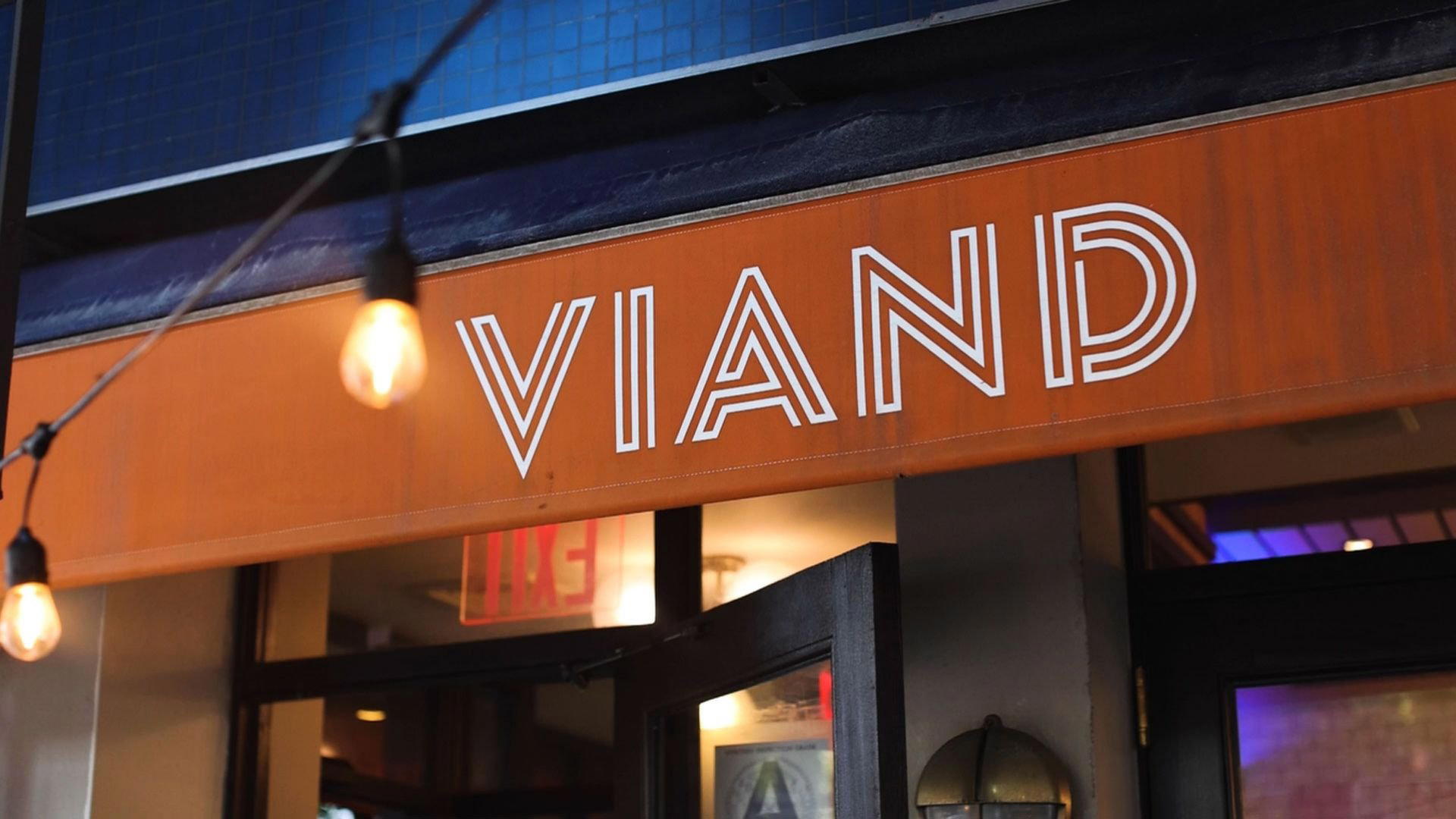
A Madison Avenue Constant in a City That Rarely Holds Still
Viand is a classic American diner at 673 Madison Ave in New York, New York, with a casual dress code, walk-in friendly seating, and an average price of about $20 per person. Against that backdrop, Viand at 673 Madison Ave remains a functioning Greek-American diner in among the more commercially pressured zip codes in the United States. That alone positions it differently from the tasting-menu tier represented by Per Se or the precision counter format of Masa. Viand is not competing in that register. Its staying power comes from a different kind of loyalty: the repeat customer who does not need a reason to return because returning is already the habit.
New York's diner category has contracted sharply since 2010. Rising rents and shifting breakfast and lunch patterns have closed hundreds of the coffee shops that once anchored residential and commercial neighborhoods. Viand's location on Madison Avenue, within walking distance of several major office buildings and the denser residential blocks of the Upper East Side, gives it a daytime customer base that few surviving diners in Manhattan can match on consistency alone.
Daytime Service: Where the Room Earns Its Reputation
The lunch-versus-dinner divide is sharper at a diner than at almost any other format. At venues like Le Bernardin or Atomix, the evening service is the primary event and the lunch or prix-fixe afternoon slot is the secondary one. At a Madison Avenue coffee shop, that hierarchy inverts. The morning and midday hours carry the operational weight. The counter fills early. The booth turnover is faster. The menu reads as a working document rather than a curated list: eggs, sandwiches, club-format plates, soups, and the kind of turkey and tuna options that function as reliable defaults rather than signature statements.
This is the format that defined New York's daytime eating culture for most of the twentieth century. Greek-American diner families built an infrastructure of short-order cooking that fed the city between formal meals. The coffee was kept hot and refilled without being asked. The check arrived without ceremony. Viand fits inside that tradition rather than departing from it, which is both its limitation and its argument for continued relevance in a neighborhood where the alternatives have largely moved toward fast-casual or delivery-first models.
The daytime crowd here tends to include longtime neighborhood residents, office workers, and nearby visitors looking for a direct meal at a moderate price point. The Upper East Side lunch counter draws a mix that is harder to find at comparable price points elsewhere in Manhattan: longtime neighborhood residents, hospital workers from nearby institutions, gallery staff from the 60s and 70s blocks, and the occasional visitor who has learned that the distance between a $28 salad at a hotel restaurant and a counter seat at Viand is measured in atmosphere rather than quality. For those keeping a tighter per-head budget while working or living in one of the city's more expensive corridors, the diner counter remains a rational choice.
Evening at the Counter: A Different Tempo
Dinner at a Greek-American diner on Madison Avenue does not carry the social weight it does at the kind of room represented by Jungsik New York or the destination pull of Blue Hill at Stone Barns in Tarrytown. The evening at Viand is quieter in the way that neighborhood restaurants become quieter when the surrounding office population clears out. The room shifts toward residents rather than workers. The pace slows. The diner format, which is engineered for speed at lunch, starts to function more like a neighborhood restaurant in the early evening: fewer turns, longer stays, less urgency on either side of the counter.
That shift matters for how you read the menu. What works at lunch, the quick egg order or the stacked sandwich, carries differently at 7pm when the surrounding blocks have emptied and the room is being used as a neighborhood anchor rather than a midday utility. This is the tension that surviving Manhattan diners manage constantly: the format was built for speed, but the evening customer is not always there for speed. The ones that have lasted tend to accommodate that without forcing it.
Where Viand Sits in the New York Restaurant Picture
Positioning Viand against the broader New York City restaurant scene requires a clear acknowledgment of category. It does not share a competitive tier with the Michelin-decorated rooms that define the city's international reputation. It is not in the same conversation as the progressive tasting formats at venues like Atomix, nor does it operate with the format precision of destination counters. Its category is the remaining group of functional Manhattan diners that predate the current cycle of restaurant culture.
Compared to the high-investment, high-concept formats that have come to represent American fine dining at Alinea in Chicago, The French Laundry in Napa, or Single Thread Farm in Healdsburg, the Greek-American diner format operates at the opposite end of the production spectrum. No tasting menu, no reservation two months in advance, no ceremony around the water service. The value proposition is reliability, accessibility, and the specific comfort of knowing exactly what you are going to get. In a city where novelty is the dominant currency, that consistency reads as its own kind of position.
Other American cities have their own versions of this format. Emeril's in New Orleans and Bacchanalia in Atlanta anchor their local dining cultures at the high end. The diner fills the opposite anchor. Both matter to how a city actually functions as an eating environment, and New York without its remaining coffee shops would lose a particular texture that no tasting menu can replicate.
Compact Comparison
Comparable venues nearby, for context on price, style, and recognition.
| Venue | Price | Notes |
|---|---|---|
| ViandThis venue — the venue you are viewing | $$ | Not listed |
| Inès | $$ | Upper East Side-Lenox Hill-Roosevelt Island, Fresh American Breakfast & Lunch Café |
| Westville Hells Kitchen | $$ | Hell's Kitchen, American Comfort Food with Fresh Market Vegetables |
| Emmy Squared - Midtown West | $$ | Upper West Side-Lincoln Square, Detroit-Style Pizza |
| Sarabeth's Upper West Side | $$ | Upper West Side (Central), Classic American Brunch |
| Schnipper's | $$ | Midtown-Times Square, Classic American Burgers & Salads |
Continue exploring
More in New York City
Restaurants in New York City
Browse all →
Bars in New York City
Browse all →

Hotels in New York City
Browse all →





At a Glance
- Classic
- Cozy
- Casual
- Family
- Brunch
- Casual Hangout
- Standalone
Current opening hours
- Monday
- 6 AM–9 PM
- Tuesday
- 6 AM–9 PM
- Wednesday
- 6 AM–9 PM
- Thursday
- 6 AM–9 PM
- Friday
- 6 AM–9 PM
- Saturday
- 6 AM–9 PM
- Sunday
- 6 AM–9 PM
Hours can change for holidays and private events. Last verified .
Cozy and casual diner atmosphere with retro flair providing warm comfort and nostalgia.