Ursula’s Paddington


World's Best Wine Lists Awards WBWL 3-Star · We're Smart World 1 Radish
Our verdict
Ursula’s Paddington runs a Modern Australian Bistro menu with an extensive wine list and an open kitchen, suited to leisurely lunch or dinner.

Pearl is the En Primeur Club membership app, where members save venues, book tables and use the concierge.
The menu
What to order
- Moreton Bay bug pasta
- Roast duck
- Seared swordfish
Where Paddington's Village Streets Meet a Plant-Forward Kitchen
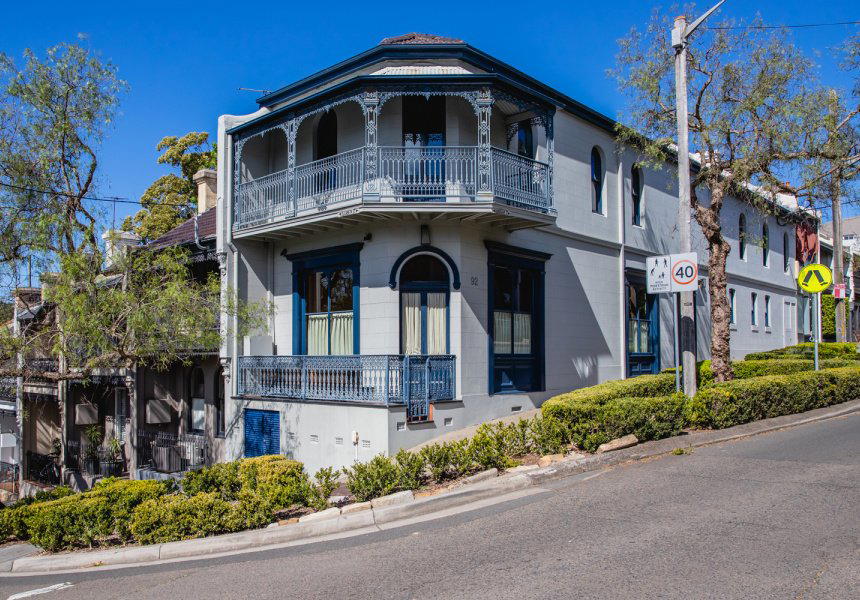
Hargrave Street sits at the quieter end of Paddington's residential grid, away from the heavier foot traffic of Oxford Street's main drag. The terrace houses thin out, the pace drops, and the dining options that line this stretch tend toward the considered rather than the convenient. It is the kind of address where a restaurant earns its regulars through repetition rather than spectacle, and Ursula's Paddington has found its footing in exactly that register. The room signals neighborhood familiarity without the casualness that sometimes tips into indifference.
What sets Ursula's apart from the wider Paddington dining scene is its position within the plant-based tier of Sydney's contemporary restaurant market. That tier has grown considerably over the past decade, but most of its volume sits at either the casual end (cafes, bowl-format operators) or the high-concept fine-dining register, where theatricality sometimes overtakes the food itself. Ursula's occupies the space between those poles: a menu that reads as recognisable and direct, but sourced entirely from the plant kingdom.
The We're Smart Green Guide Accreditation and What It Signals
The We're Smart Green Guide, operated by the World of Fine Wine awards framework, rates restaurants according to the depth and integrity of their vegetable-forward sourcing. Its three-star accreditation for Ursula's Paddington places the restaurant in a specific peer cohort: kitchens that have demonstrated not just the absence of animal products but a positive commitment to ingredient provenance. In Australia, the restaurants recognised at this level include operations that draw from their own farms, from certified organic growers, or from networks of specialist producers whose supply chains can withstand scrutiny.
The distinction matters because the accreditation is producer-side as much as it is kitchen-side. A three-star rating in the We're Smart framework does not reward a chef for technique alone; it rewards the sourcing infrastructure behind the plate. Compared to recognition systems like Michelin or the Australian Good Food Guide, which weight execution and service, We're Smart focuses on the agricultural and supply-chain choices that precede cooking entirely. At the same scale of recognition, you find restaurants like Brae in Birregurra, which operates with its own on-site farm, and Agrarian Kitchen in Hobart, which built its identity around a kitchen garden model. Ursula's sits in that conversation, framed around provenance rather than just plant-based category membership.
How the Menu Reads: Classic Frameworks, Pure Plant Execution
Language used by the We're Smart Green Guide to describe Ursula's approach is instructive: "classic with a twist to 100% pure plant" and "recognisable, clear and the right taste." These are not phrases typically associated with the more abstract end of plant-based fine dining, where dishes are often deconstructed beyond easy recognition. The editorial framing here points toward a kitchen that respects the conventions of a familiar dish structure and then executes it entirely without animal products. That is a harder discipline than it sounds.
Pure plant cooking at this level requires sourcing decisions that compensate for the textural and flavour depth that animal fats and proteins provide. The produce has to carry more weight, which means grower relationships become central to kitchen performance. Where a conventional kitchen might lean on a quality protein to anchor a plate, a pure plant kitchen has to solve for umami, fat, and texture from vegetable, legume, grain, and fermentation sources. The accreditation signals that Ursula's has built the sourcing relationships necessary to do that consistently, rather than relying on commodity plant-based substitutes.
Australia's produce network makes this more achievable than in many other markets. The country's specialist grower ecosystem, particularly across NSW and Victoria, supports restaurants whose sourcing requirements extend beyond standard wholesale supply. For context, Saint Peter in Sydney has demonstrated a comparable commitment to provenance-led cooking within the seafood category, and the recognition it has accumulated reflects how Sydney's dining culture increasingly rewards that kind of supply-chain discipline, regardless of the protein source. Ursula's applies the same logic to the plant side of the spectrum.
Paddington as a Setting for This Style of Cooking
Paddington's dining identity has always been shaped by its demographic: owner-occupier households, creative industries professionals, and a strong independent food culture that predates Sydney's broader restaurant boom. The suburb has historically supported mid-tier independents better than its more commercially dense neighbors, partly because its residents tend to dine locally rather than traveling across the city for a special occasion. That dynamic is good for a restaurant like Ursula's, which sits in a format that rewards return visits and growing familiarity with the menu's seasonal shifts.
The plant-based category fits Paddington's existing character better than it might in some other Sydney suburbs. The area has a density of health-conscious, environmentally aware consumers who have made ingredient transparency a dining expectation rather than a niche preference. That is not merely demographic speculation; it is reflected in the kinds of grocers, delis, and specialty food retailers that have sustained businesses here for years.
For visitors arriving from elsewhere in Sydney, Paddington is accessible on foot from Bondi Junction or by bus along Oxford Street. The suburb rewards an unhurried visit, and pairing a meal at Ursula's with an afternoon exploring the area's gallery strip on Jersey Road or the weekend market at Paddington Markets gives the evening a natural rhythm. Our full Paddington restaurants guide covers the broader dining options across the suburb, while the Paddington bars guide, Paddington hotels guide, Paddington wineries guide, and Paddington experiences guide help round out a full visit.
Contextualising Ursula's in Australia's Plant-Forward Restaurant Scene
The wider trajectory of plant-based dining in Australia has moved away from the compensation model (recreating meat analogues) toward a produce-first model (designing dishes around what the vegetable or grain does leading). Ursula's We're Smart accreditation positions it within the latter camp. That shift is visible across multiple cities and formats: at Amaru in Armadale in Melbourne's inner east, where the tasting menu draws heavily from seasonal produce; at Kadota in Daylesford, which operates in a regional setting where farm proximity is built into the concept; and at Hentley Farm in Seppeltsfield, which connects its kitchen directly to estate agriculture. These restaurants share a sourcing logic even when their specific categories differ. Ursula's sits within that broader Australian conversation about what it means to cook from the land up.
For comparison beyond Australia, the same provenance-first logic animates kitchens at Flower Drum in Melbourne (in its long commitment to seasonal Cantonese produce traditions), at Bacchus in Brisbane, at Carlton Wine Rooms in Carlton, at Dan Arnold in Fortitude Valley, at 400 Gradi in Brunswick East, and internationally at Le Bernardin in New York City and Emeril's in New Orleans, each of which has built a distinct identity around the specificity of what it sources and how.
Planning Your Visit
Ursula's Paddington is at 92 Hargrave Street, Paddington NSW 2021. Specific hours, current pricing, and reservation details are not published in public databases at the time of writing; contacting the restaurant directly before visiting is the most reliable approach. Given the neighborhood's compact footprint, the restaurant is walkable from several bus routes along Oxford Street, and street parking on Hargrave and adjacent streets is generally easier outside peak weekend dining hours. The format, a neighborhood restaurant rather than a destination tasting-menu operation, tends to suit walk-ins and shorter-notice bookings more readily than the high-demand fine-dining counters found elsewhere in Sydney.
Frequently asked questions
What awards or recognition does Ursula’s Paddington have?
Ursula’s Paddington has received recognition including:
Is Ursula's Paddington suitable for children?
The 100% plant-based menu at 92 Hargrave Street works naturally for families with plant-eating children, since the kitchen operates entirely without meat. The We're Smart Green Guide accreditation signals a produce-led approach built around recognisable flavour frameworks, which tends to translate better for younger diners than conceptually abstract tasting menus.
Is Ursula's Paddington better for a quiet night or a lively one?
Hargrave Street sits on the residential side of Paddington, removed from the Oxford Street corridor, which sets a calmer baseline than comparable Sydney dining strips. The We're Smart Green Guide's description of chef Phil Wood's cooking as 'recognisable, clear' suggests a kitchen focused on precision rather than spectacle, pointing toward an evening that rewards conversation. It is not a venue that appears designed around high-volume energy.
What should I eat at Ursula's Paddington?
The entire menu at Ursula's operates within a 100% pure plant framework, so the question is less about selecting around meat and more about engaging with how chef Phil Wood reinterprets classic dish structures through vegetables and produce. The We're Smart Green Guide, part of the World of Fine Wine awards framework, accredited the restaurant specifically for that approach: familiar culinary logic executed without compromise.
Fast Comparison
| Venue | Cuisine | Price | Awards | Notes |
|---|---|---|---|---|
| Ursula’s PaddingtonThis venue (the venue you are viewing) | Modern Australian Bistro | Not listed | World's Best Wine Lists Awards WBWL 3-Star · We're Smart World 1 Radish | Not listed |
| Brae | Modern Australian Seasonal Tasting Menu | $200–300 | World's 50 Best #44 · La Liste Top Restaurants | Modern Australian |
| Flower Drum | Fine Dining Cantonese | $50–100 | World's 50 Best #33 · Star Wine List | Cantonese |
| Saint Peter | Modern Australian Seafood | $150–200 | World's 50 Best #66 · La Liste Top Restaurants | Australian Seafood |
| Rockpool | Modern Australian Steakhouse | $150–200 | World's 50 Best #49 · La Liste Top Restaurants | Australian Cuisine |
| Attica | Modern Australian Indigenous Fine Dining | $300–500 | World's 50 Best #20 · La Liste Top Restaurants | Australian Modern |
Recognition history
Dated appearances from independent guides and award organizations, with the underlying list record or original source where available.
We're Smart World 1 Radish
We're Smart World
World's Best Wine Lists Awards WBWL 3-Star
World's Best Wine Lists Awards
Continue exploring
More in Paddington
Restaurants in Paddington
All restaurants in Paddington →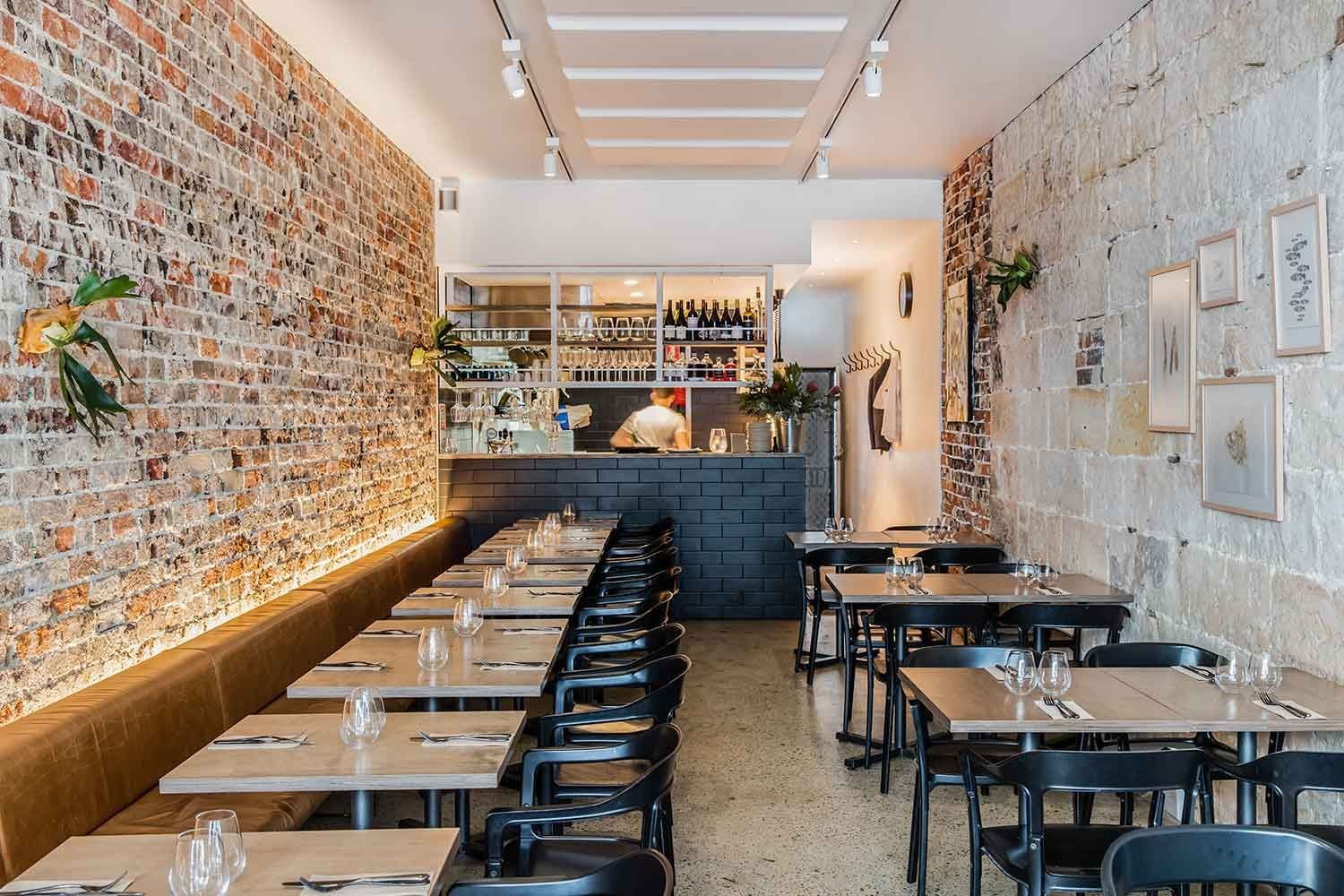
Bars in Paddington
All bars in Paddington →
Hotels in Paddington
All hotels in Paddington →
Wineries in Paddington
Browse all →

Details
- Elegant
- Cozy
- Sophisticated
- Romantic
- Date Night
- Special Occasion
- Business Dinner
- Open Kitchen
- Extensive Wine List
- Local Sourcing
- Street Scene
- A La Carte
- Wine
- Vegetarian Friendly
Current opening hours
- Monday
- Closed
- Tuesday
- 6–11:30 PM
- Wednesday
- 6–11:30 PM
- Thursday
- 6–11:30 PM
- Friday
- 6–11:30 PM
- Saturday
- 12–4:30 PM, 6–11:30 PM
- Sunday
- Closed
Hours can change for holidays and private events. Hours as of .
Charming terrace house with sunlight-filled elegant floors, understated decor, interesting lighting, well-spaced tables, and warm butterscotch and blue hues.