
Tabelog 100 #20
Our verdict
Unagi Ogawa Abiko ten belongs to Abiko’s serious eel circuit rather than the Tokyo trophy-table chase. Its case rests on live eel preparation, a choice between Kanto and Kansai grilling styles, and Tabelog 100 Unagi selections in 2022 and 2024, making it a useful address for understanding how regional unagi dining works beyond the capital.

Pearl is the En Primeur Club membership app, where members save venues, book tables and use the concierge.
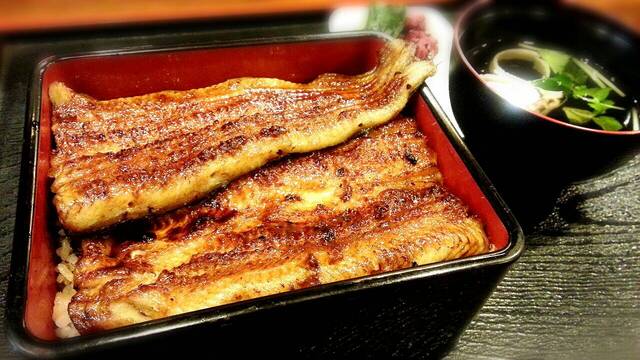
The menu
What to order
- Unajū (grilled eel over rice)
- Kabayaki eel
- Kanto-style steamed-grilled eel
- Kansai-style crispy-grilled eel
Abiko’s restaurant rhythm changes around eel. The meal is slower than a station snack, more technical than a casual grill, and rooted in a craft where handling, heat, sauce, and timing decide the result long before the lacquered box reaches the table. Unagi Ogawa Abiko ten sits inside that tradition with a specialist focus on unagi, a category where small differences in preparation can define the whole meal.
For travelers using Abiko as more than a rail stop, this is the kind of restaurant that explains the city’s dining character quickly. Tokyo’s unagi counters often compete on scarcity, lineage, and metropolitan polish; suburban Chiba can offer a more grounded reading of the same craft, with local regulars and enough technical seriousness to earn national food-list recognition. The venue was selected for Tabelog Hyakumeiten in 2024, a useful signal in a category where details in preparation carry heavy weight.
Unagi craft, balance, and why the choice matters
Unagi is not simply a generic grilled-fish meal. Its appeal depends on how the eel, rice, and sauce are brought into balance, and on how the cooking preserves richness without letting the dish become heavy. Even when a restaurant keeps the format straightforward, the category asks diners to notice texture, sweetness, aroma, and the way the sauce settles into the rice.
That is the editorial reason to pay attention here. Unagi preparation places emphasis on sequence and control, while the finished dish depends on a narrow margin between sweetness, smoke, fat, and sauce. The craft is not loud. It rewards diners who care about the order of the meal: eel prepared, cooked, sauced, and served with enough discipline that the rice, tare, and fish read as one dish rather than separate components.
Abiko already has another serious reference point in Kogureya, which helps frame the city as more than a minor suburb on the Chiba dining map. In the wider area, Takeyabu Kashiwa honten and zoe’s sit in different dining lanes, giving travelers a broader sense of nearby options. Those comparisons matter because Unagi Ogawa Abiko ten is not trying to mimic Tokyo’s destination model. Its value is in specialist execution at a local scale, with eel as the main argument.
Abiko dining works through specialization, not spectacle
The strongest suburban Japanese restaurants often rely on category depth rather than theatrical luxury. Soba houses, eel specialists, tempura counters, and fish-focused rooms build reputations through repetition and local trust. Abiko follows that pattern. The city’s better meals tend to be anchored by a specific craft instead of a broad international menu, which makes a dedicated unagi restaurant more revealing than a generic dining room with a long card.
Tabelog’s Hyakumeiten lists are useful here because they reward category strength. A Tabelog Hyakumeiten Unagi selection does not make the room formal or expensive by default; it marks the restaurant as part of a national conversation around a specific dish. For diners who usually read Japanese food through sushi or ramen, eel offers a different lens: less about speed, more about preparation order, heat management, and the relation between sauce and rice.
The restaurant’s appeal sits in that cultural lane. It is easier to understand as a specialist Japanese dining room than as a wine-pairing fine-dining project or a broad casual restaurant. In unagi restaurants, spectacle is not always the point; the pleasure is in how a narrow craft holds attention from the first bite to the last grain of rice.
How to fold it into an Abiko itinerary
Unagi Ogawa Abiko ten is useful for travelers who want one meal in Abiko to carry local meaning. It suits a lunch or dinner where the focus stays on a single Japanese tradition rather than a wide menu. The experience is better understood as a specialist dining room than as a secluded occasion restaurant built around ceremony.
The practical read is simple: choose this for eel, not for breadth. Diners seeking a long tasting menu, chef biography, or luxury-room choreography will find stronger matches elsewhere. Diners interested in how an Abiko unagi specialist fits into the city’s dining scene will get a clearer lesson here than at many broader Japanese restaurants. That is the point: Abiko’s appeal is not scale, but the ability to encounter a defined craft without the capital-city performance around it.
For a wider plan, use our full Abiko restaurants guide to map the city’s dining options, then pair the meal with our full Abiko hotels guide, our full Abiko bars guide, our full Abiko wineries guide, and our full Abiko experiences guide. Readers comparing Japanese dining categories beyond Chiba can also scan other dining guides generically, but for this Abiko page the useful comparison is with local and nearby specialists rather than unrelated named venues elsewhere.
Frequently asked questions
Would Unagi Ogawa Abiko ten be comfortable with kids?
Its listed budget is Dinner: JPY 4,000 - JPY 4,999; Lunch: JPY 2,000 - JPY 2,999, which places it in a practical meal range for many visitors. Check the venue's official channels for the latest details.
How would you describe the vibe at Unagi Ogawa Abiko ten?
It reads as a specialist eel restaurant in Abiko rather than a broad suburban diner or a formal tasting-room setting. The Tabelog Hyakumeiten 2024 recognition gives it credibility within the unagi category without requiring a luxury framing.
What does dinner at Unagi Ogawa Abiko ten typically cost?
Pricing at Unagi Ogawa Abiko ten is listed as Dinner: JPY 4,000 - JPY 4,999; Lunch: JPY 2,000 - JPY 2,999.
What is Unagi Ogawa Abiko ten known for?
Unagi Ogawa Abiko ten is known for unagi in Abiko and for its Tabelog Hyakumeiten 2024 recognition.
Comparable Spots, Quickly
Comparable venues by cuisine and price in the same metro.
| Venue | Cuisine | Price | Awards | Notes |
|---|---|---|---|---|
| Unagi Ogawa Abiko tenThis venue (the venue you are viewing) | Traditional Unagi (Freshwater Eel) | $20–30 | Tabelog 100 #20 | Not listed |
| Kogureya | Traditional Japanese Unagi | Not listed | Tabelog 100 #40 | Tennodai |
| りんすけ | 南予郷土料理 たいめし | Not listed | Not listed | 内子町内子 |
| Koshu Houtou Kosaku (甲州ほうとう 小作) | Koshu Houtou (Yamanashi Regional Noodles) | Not listed | Not listed | Fujikawaguchiko |
| Keyaki (けやき) | Sapporo miso ramen shop | $10–20 | Tabelog 100 #85 | Susukino |
| 1000mヒュッテ 1000m Hut | Mountain Café - Japanese & Western | Not listed | Not listed | Niseko Grand Hirafu |
Recognition history
Dated appearances from independent guides and award organizations, with the underlying list record or original source where available.
Tabelog 100 #20 · No. 20
Tabelog · Tabelog 100 - Unagi - 2024
Continue exploring
More in Abiko
Restaurants in Abiko
All restaurants in Abiko →







Details
- Classic
- Cozy
- Quiet
- Family
- Casual Hangout
- Solo
- Group Dining
- Date Night
- Standalone
- A La Carte
- Pescatarian Friendly
Current opening hours
- Monday
- 11 AM–1:30 PM, 5–7:30 PM
- Tuesday
- 11 AM–1:30 PM, 5–7:30 PM
- Wednesday
- 11 AM–1:30 PM, 5–7:30 PM
- Thursday
- Closed
- Friday
- 11 AM–1:30 PM, 5–7:30 PM
- Saturday
- 11 AM–1:30 PM, 5–7:30 PM
- Sunday
- 11 AM–1:30 PM, 5–7:30 PM
Hours can change for holidays and private events. Last verified .
Traditional, compact eel shop with a simple, classic interior focused on the open kitchen and charcoal grill, creating a calm, slightly bustling atmosphere typical of a long-loved local unagi specialist.