Umi Restaurante Bar Izakaya

Umi Restaurante Bar Izakaya brings a refined Japanese izakaya format to Panama City's Plaza 54, pairing Japanese mixology with fine seafood and hand rolls under the Kome Hospitality Group. A new entry on Latin America's 50 Best list, it occupies a distinct position among the city's internationally oriented dining addresses. The bar program runs parallel to the food, making it equally viable as a drinking destination.
 Discover on Pearl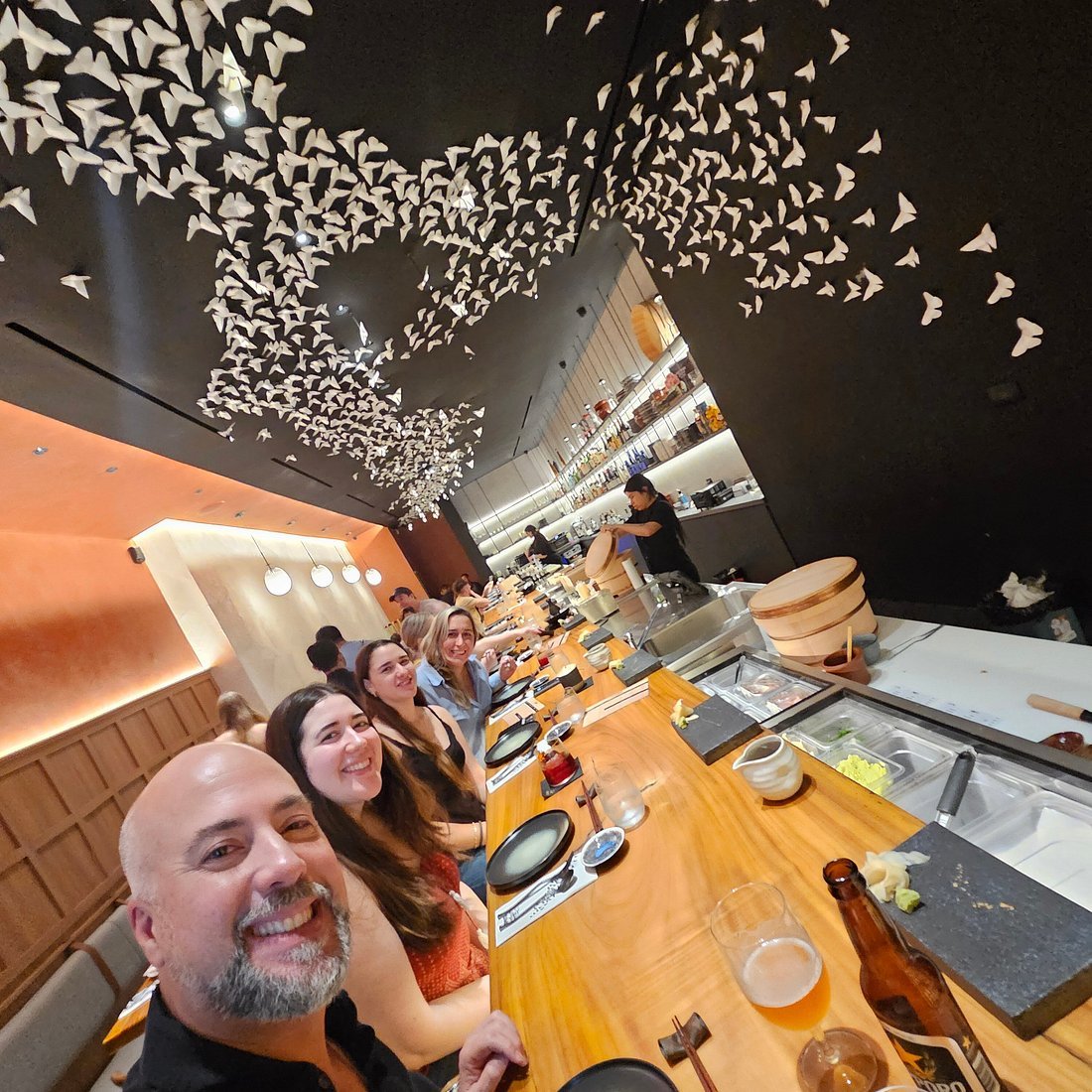
Where Japanese Drinking Culture Lands in Panama City
Panama City's dining scene has shifted noticeably in the past several years. The city that once relied on imported fine-dining formats has developed a tier of restaurants that engage seriously with culinary tradition rather than just borrowing its aesthetics. The izakaya format is one of the more demanding traditions to transplant: in Japan, it implies a specific relationship between drinking and eating, between the informal and the precise, between loud sociability and careful technique. Most international attempts collapse that balance into one direction or the other. At Umi Restaurante Bar Izakaya, set inside Plaza 54 on Avenida Samuel Lewis in the financial district, the format holds. The room reads as a modern Japanese bar-restaurant rather than a themed simulacrum, and the recognition from Latin America's 50 Best — where Umi appears as a new entry — signals that the broader region has taken notice.
The Atmosphere at Plaza 54
The address matters here. Plaza 54 sits inside Panama City's financial corridor, an area that rewards a specific kind of evening: a drink that extends into dinner, or a dinner that extends into drinks, without the formality of a dedicated fine-dining room pressing down on the experience. The izakaya tradition evolved to serve exactly this kind of night, and Umi's placement within that district gives it a natural constituency of professionals, travellers in transit, and the city's internationally mobile residents. The sensory register at an izakaya done well runs from the clean brightness of seafood to the deeper warmth of umami-heavy dishes, and the drinks program should run alongside food rather than before or after it. That parallelism is what distinguishes the format from a cocktail bar with a kitchen or a restaurant with a bar.
The shortlist, unlocked.
Hard-to-book tables, cellar releases, and concierge-planned trips.
Get Exclusive Access →Japanese mixology, the specific craft practice that developed in Tokyo and Osaka over decades, brings a different discipline to cocktail-making than the European or American traditions that dominate most of Latin America's premium bars. It prioritises technique, dilution control, and ingredient clarity over the high-volume theatrical presentation that still drives much of the region's bar culture. Panama City's bar scene is developing, but the combination of serious Japanese cocktail practice with a food program built around fine seafood and hand rolls places Umi in a niche that has few direct peers in the city. For comparison, you can see how different cities handle the integration of serious bar programs and food-focused formats at venues like Atomix in New York City or Lazy Bear in San Francisco, where the drink-food relationship is treated with equivalent seriousness.
The Food: Seafood, Hand Rolls, and Umami
The culinary program at Umi is built around fine seafood, warm umami flavours, and fresh hand rolls. In the izakaya tradition, this means the kitchen is producing dishes that function as counterweights to the drinks, not centrepieces to be admired in isolation. A hand roll done well is a fast, textural thing: the nori crackles before it softens, the rice should carry distinct seasoning, and the filling should be proportioned so that each bite carries all the elements. That precision is easy to describe and difficult to sustain across a service. The emphasis on fine seafood aligns Umi with the broader international tier of seafood-focused restaurants, a category that includes technically demanding addresses like Le Bernardin in New York City and Aponiente in El Puerto de Santa María, though Umi operates in a more casual, drinking-oriented format than either.
The umami dimension of the menu reflects a broader understanding of Japanese flavour architecture: the layering of fermented, cured, and stock-based elements that creates depth without heaviness. Panama is well-positioned for this kind of cooking. The Pacific and Caribbean coastlines supply seafood of genuine quality, and the city's position as a transit hub means ingredient sourcing is less constrained than in many comparable Latin American markets. The combination of local Pacific seafood with Japanese technique is a logical one, and the izakaya format gives the kitchen permission to serve smaller, more varied portions that showcase range rather than committing to a single showpiece dish.
Umi Within Panama City's Broader Dining Context
Panama City's restaurant scene is more layered than its international reputation suggests. The city has produced serious Panamanian cooking at places like Maito, which has its own Latin America's 50 Best recognition and operates as the clearest reference point for locally rooted fine dining. Caleta and Fonda Lo Que Hay occupy different points on the casual-to-refined axis. Cantina del Tigre and La Tapa Del Coco serve different registers of the local market. Umi sits apart from all of these. It is neither a Panamanian cooking address nor a straightforwardly international fine-dining room. It represents something more specific: a coherent application of a Japanese cultural format by a hospitality group with established local credibility.
The Kome Hospitality Group, which operates Umi, has a track record in Panama City's Japanese food space that provides an important foundation. In a market where restaurant groups often diversify by format and cuisine without deepening their expertise in either, Kome's specialisation in Japanese hospitality is a meaningful signal. The Latin America's 50 Best listing, achieved as a new entry, suggests the restaurant has moved from local favourite to regional reference point at reasonable speed. Among the internationally minded restaurants across the region, including those with deeper resources and longer track records, that kind of listing is not automatic. For the full picture of where to eat and drink in the city, the full Panama City restaurants guide covers the broader scene, and the full Panama City bars guide provides context for the cocktail culture Umi operates within.
Planning Your Visit
Umi sits at Plaza 54, Avenida Samuel Lewis, which is accessible from most major hotels in the Miraflores and financial district areas. The venue is positioned as an evening destination, suited to both pre-dinner drinks that extend into a full meal and a more structured dinner with cocktails running through the courses. Given its appearance on Latin America's 50 Best, demand has grown, and booking ahead , particularly for weekends and the dry season months from December through April, when Panama City's dining scene runs at full capacity , is sensible. Travellers stopping in Panama City in transit, a significant portion of the city's restaurant visitors given its hub status, will find Umi's format compatible with a single well-planned evening rather than requiring repeat visits to explore the menu. Those looking to extend the evening can reference the Panama City experiences guide and the Panama City hotels guide for accommodation options within reasonable distance of Plaza 54. For wine-focused visitors, the Panama City wineries guide covers what the local market offers in that category, though at Umi the cocktail program is the primary drinking focus.
For reference points in the international league of restaurants with serious bar-and-food integration, Emeril's in New Orleans, 8 1/2 Otto e Mezzo Bombana in Hong Kong, Alain Ducasse at Louis XV in Monte Carlo, and Alléno Paris au Pavillon Ledoyen each represent different models of how drinking and eating can be integrated at high levels. Umi operates in a more accessible register than most of those addresses, which is part of the izakaya proposition: rigorous craft in a format that does not require formal occasion to justify the visit.
The shortlist, unlocked.
Hard-to-book tables, cellar releases, and concierge-planned trips.
Get Exclusive Access →Frequently Asked Questions
Peers in This Market
A fast peer set for context, pulled from similar venues in our database.
| Venue | Cuisine | Price | Notes |
|---|---|---|---|
| Umi Restaurante Bar Izakaya | This venue | ||
| Maito | Panamanian | Panamanian | |
| Cantina del Tigre | |||
| Caleta | |||
| Fonda Lo Que Hay | |||
| La Tapa Del Coco |
Need a table?
Our members enjoy priority alerts and concierge-led booking support for the world's most difficult tables.
Get Exclusive AccessThe shortlist, unlocked.
Hard-to-book tables, cellar releases, and concierge-planned trips.
Get Exclusive Access →