Fonda Lo Que Hay

Fonda Lo Que Hay occupies a spot in Casco Antiguo where Panamanian culinary history meets a deliberately modern frame. The kitchen draws on the country's layered food traditions, while the bar program treats local mixology with the same seriousness. For anyone tracing where Panama City's restaurant scene is headed, this is a useful reference point.
 Discover on Pearl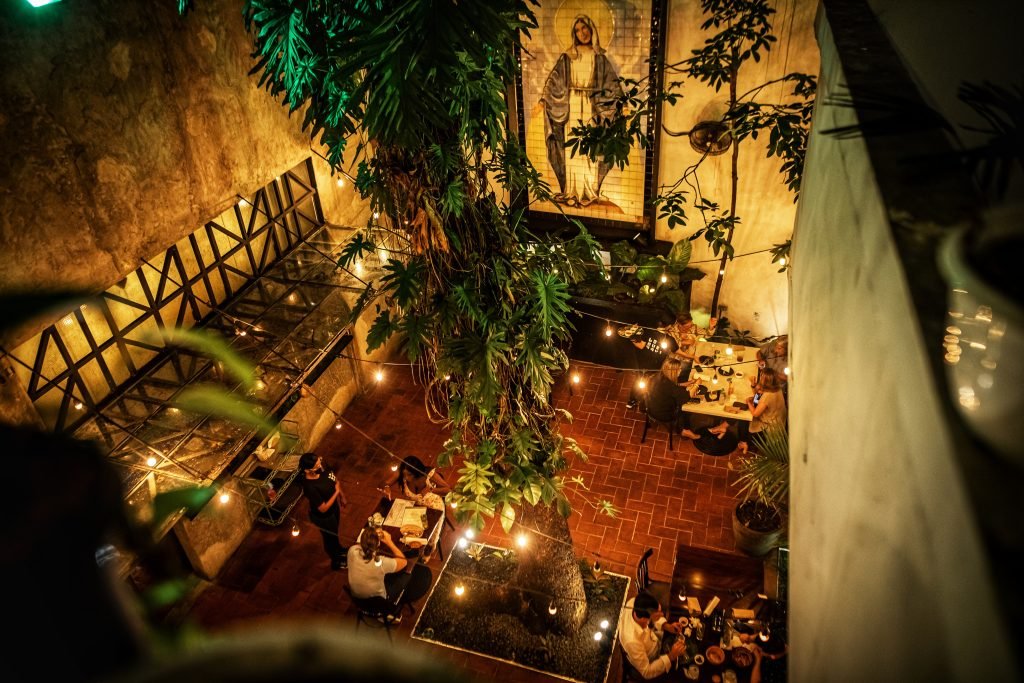
Casco Antiguo as the Stage for a National Cuisine Argument
Casco Antiguo, Panama City's UNESCO-listed colonial quarter, has spent the past decade becoming the address where the country's most considered restaurants choose to open. The neighbourhood's stone streets and 18th-century facades create a particular pressure on any kitchen that opens there: the surroundings already carry historical weight, and a restaurant claiming to represent a national culinary tradition has to earn that position rather than simply inherit it from the postcode. Fonda Lo Que Hay sets up that argument from the moment you arrive at Edificio el Colegio on Calle José D. de la Obaldía, a building that itself sits inside the broader architectural conversation the district has been having for generations.
The word fonda matters here. In Latin American food culture, a fonda is not a fine-dining establishment. It is a modest, often family-run eating house where the food is direct, the sourcing local, and the ritual of the meal is more important than ceremony around it. Calling a modern Casco Antiguo restaurant a fonda is a deliberate positioning move: the name signals that whatever ambition is on the plate, the posture at the table should remain grounded. That tension between the historic neighbourhood, the modern execution, and the deliberately unpretentious framing is what gives Fonda Lo Que Hay its editorial interest within Panama City's current restaurant conversation.
The shortlist, unlocked.
Hard-to-book tables, cellar releases, and concierge-planned trips.
Get Exclusive Access →The Dining Ritual: How Panama Eats, and What This Kitchen Does with That
Panamanian food culture is less codified in the global dining press than, say, Peruvian or Mexican cuisine, but it carries its own distinct logic. The country sits at a crossroads where indigenous ingredients, Spanish colonial cooking, Afro-Caribbean techniques, and waves of Chinese, West Indian, and North American influence have been layering for centuries. The result is a cuisine that is often misread as simple when it is actually composite: sancocho, the country's unofficial national dish, is a clear broth that looks modest but requires understanding how to build depth without excess. Patacones, ceviche, ropa vieja, and rice-forward plates all carry specific regional inflections that shift between the Pacific coast, the Caribbean side, and the interior provinces.
What restaurants like Fonda Lo Que Hay are doing in Casco Antiguo is applying the same interpretive rigour to these traditions that kitchens in Lima or Mexico City have applied to theirs over the past two decades. The meal at this type of restaurant is not a museum exercise. It is an argument that Panamanian ingredients and techniques can hold a place at the table alongside cuisines that have received far more international editorial attention. Comparable ambitions in other cities have produced globally recognised results: Maito, the Panamanian restaurant that has become the country's most internationally cited address, demonstrates what happens when that argument is made with consistent discipline over time. Fonda Lo Que Hay positions itself in the same broader movement, with mixology given parallel weight to the kitchen.
Mixology as a Peer to the Kitchen
The decision to frame the bar program as a co-equal part of the restaurant's identity, rather than a supporting function, places Fonda Lo Que Hay inside a wider shift in how Latin American restaurants think about the full meal. In cities where the cocktail conversation has matured, from Santiago to Bogotá to San José, the bar is increasingly where a kitchen's sourcing philosophy is made tangible for guests who arrive early or stay late. Panama has a specific ingredient story to tell through spirits: local rums, tropical fruit distillates, and the country's own herbs and botanicals create a palette that a committed bar program can use to extend the same argument the kitchen is making.
This dual focus on food and drink as a coherent statement rather than separate departments brings Fonda Lo Que Hay closer, in structural terms, to restaurants like Caleta and Cantina del Tigre within Panama City, and echoes the integrated food-and-drink ambition you see at places like Lazy Bear in San Francisco or Atomix in New York, where the beverage program is conceived as part of the same editorial voice as the kitchen. The scale and price points differ significantly, but the structural logic is the same.
Where Fonda Lo Que Hay Sits in the Panama City Dining Conversation
Panama City's restaurant scene has been stratifying over the past several years into distinct tiers and approaches. At one end, internationally trained chefs working with formal tasting menus have pushed for external recognition, with Maito leading that cohort. At another end, neighbourhood fondas and comedores serve the daily rhythms of the city without any pretension toward a global audience. Fonda Lo Que Hay occupies a middle position that is increasingly relevant: modern in execution and self-aware about its place in Panamanian culinary history, but informal enough in register to avoid the distance that full fine-dining formats can create between the food and the guest.
Other Panama City addresses working in adjacent registers include Umi Restaurante Bar Izakaya and La Tapa Del Coco, each approaching the city's dining moment from different culinary traditions. For context on how Casco Antiguo fits into Panama City's broader hospitality picture, the EP Club Panama City hotels guide and the bars guide map the neighbourhood's full range. The full Panama City restaurants guide provides the wider competitive context across price points and cuisines.
The aspiration to become a global reference for Panamanian gastronomy is a significant claim, and the restaurants that have made similar claims in other markets have done so by being consistent over years rather than by announcing the position. The comparison set for that kind of trajectory in Latin America includes places that were once making the same argument quietly before external attention arrived. Whether the kitchen at Fonda Lo Que Hay is building toward that kind of sustained reputation is a question the next few years will answer more clearly than any single visit.
Planning Your Visit
Fonda Lo Que Hay sits in Edificio el Colegio on Calle José D. de la Obaldía in Casco Antiguo, the colonial quarter that is leading reached by taxi or rideshare from the banking district or Miraflores, particularly in the evening when parking in the historic centre is limited. The neighbourhood is walkable once you arrive, and the concentration of restaurants and bars in Casco Antiguo means a meal here fits naturally into a longer evening across multiple addresses. Current booking details, hours, and pricing are not listed centrally, so confirming directly before arriving is the practical move, particularly for weekend evenings when Casco Antiguo draws significant foot traffic. For a broader picture of how to structure time in Panama City across dining, drinking, and cultural experiences, the EP Club Panama City experiences guide and the wineries guide cover the full range of what the city currently offers.
The shortlist, unlocked.
Hard-to-book tables, cellar releases, and concierge-planned trips.
Get Exclusive Access →Frequently Asked Questions
Cuisine Lens
These are the closest comparables we have in our database for quick context.
| Venue | Cuisine | Awards | Notes |
|---|---|---|---|
| Fonda Lo Que Hay | A modern restaurant in Casco Antiguo serving Panamanian cuisine, taking inspirat… | This venue | |
| Maito | Panamanian | World's 50 Best | Panamanian |
| Cantina del Tigre | |||
| Umi Restaurante Bar Izakaya | World's 50 Best | ||
| Caleta | |||
| La Tapa Del Coco |
Need a table?
Our members enjoy priority alerts and concierge-led booking support for the world's most difficult tables.
Get Exclusive AccessThe shortlist, unlocked.
Hard-to-book tables, cellar releases, and concierge-planned trips.
Get Exclusive Access →