Turtle Bay Exeter
Our verdict
Turtle Bay sits inside the Guildhall Shopping Centre, bringing Caribbean-influenced cooking and rum-forward bar culture to central Exeter. The format is casual and high-energy, with a menu built around jerk marinades, slow-cooked proteins, and tropical cocktails that have made the chain a reliable reference point for affordable Caribbean food across UK cities.

Pearl is the En Primeur Club membership app — saves, bookings, and concierge access live there. Same editors, same standards.
- Address
- Guildhall Shopping Centre, Exeter EX4 3HP, United Kingdom
- Phone
- +441392425928
- Hours
- Mon–Thu 10 AM–10:30 PMFri–Sat 10 AM–12:30 AMSun 10 AM–10:30 PM
- Website
- turtlebay.co.uk
- Directions
- Get directions
- Booking
- Book on the venue's website
Caribbean Cooking in a Cathedral City
Exeter's dining scene has expanded steadily over the past decade, pulling in operators across price points and cuisine categories as the city's student population and professional base have grown. The casual-dining tier, in particular, has filled with formats that would have been difficult to sustain here twenty years ago. Turtle Bay belongs to that wave: a Caribbean-focused chain that has established a consistent footprint across UK cities, translating jerk-spiced cooking and rum bar culture into a format accessible enough for shopping-centre locations and affordable enough to generate regular repeat visits.
The Guildhall Shopping Centre address places Turtle Bay at the commercial heart of the city, close to the High Street and within easy reach of the Cathedral Quarter. That positioning means the restaurant draws a broad cross-section of diners rather than a destination-driven crowd. It sits in a different category from the more considered kitchens at Otis Restaurant or the European comfort of Celestial Cafe, and it occupies a different price register than a steakhouse operation like Miller & Carter Exeter.
The Roots of the Menu: Where Caribbean Flavour Comes From
Caribbean cooking as practised by a chain like Turtle Bay draws on a specific set of culinary traditions: the jerk technique developed in Jamaica, where meats are marinated in a blend of scotch bonnet peppers, allspice, thyme, and other aromatics before being cooked low and slow; the rice-and-peas combinations common across the region; and the rum culture of the Eastern Caribbean, where aged spirits from islands including Barbados, Trinidad, and Jamaica have long been the basis for punchy, fruit-forward cocktails. The sourcing logic for a chain operation differs from that of a small independent: consistency across locations requires standardised supply chains, which means the ingredient story is less about hyper-local provenance and more about fidelity to the regional flavour profiles that define Caribbean food as a broader category.
That distinction matters when comparing Caribbean chains to the kind of provenance-driven sourcing you find at, say, Gidleigh Park in Chagford, where the kitchen's relationship with Devon suppliers and producers is central to the editorial proposition. Turtle Bay operates in a register where the sourcing question is answered by recipe integrity rather than farm-to-table geography. The jerk marinade's credibility comes from the heat level and the balance of allspice against scotch bonnet, not from a named supplier on the menu. For the price point and format, that is a reasonable trade-off, and the chain has built a following that endorses it.
Contrast that approach with the ingredient-first philosophies at institutions like Le Manoir aux Quat'Saisons in Oxford or L'Enclume in Cartmel, where sourcing geography is inseparable from the menu's identity. Those kitchens operate at a different scale and price point entirely, but the comparison clarifies where Turtle Bay sits in the broader taxonomy of UK dining: it is a casual-format operator making Caribbean food accessible rather than a destination kitchen making ingredient provenance its primary argument.
The Room and the Register
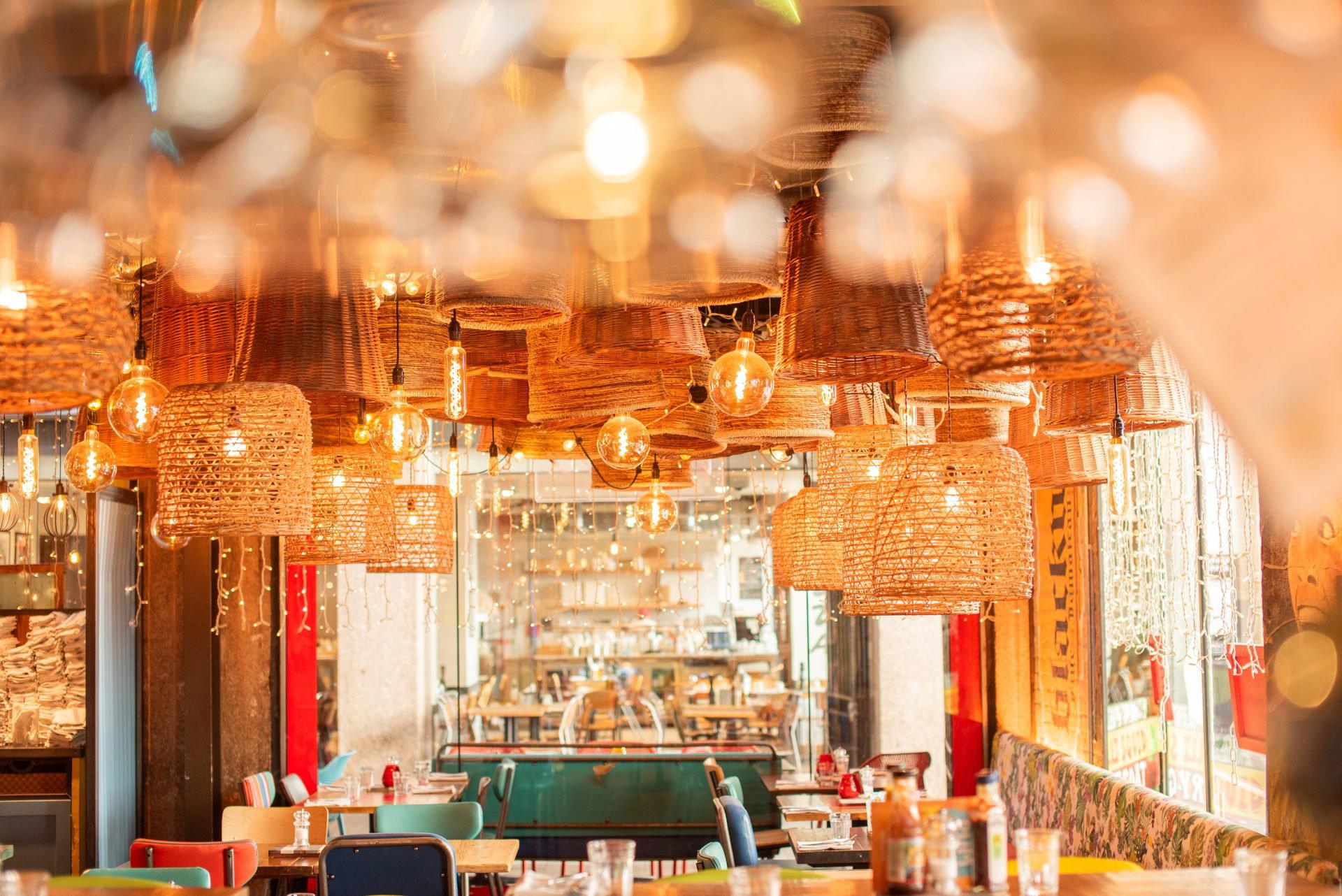
Inside, Turtle Bay spaces typically combine colour, noise, and a bar that takes equal billing with the kitchen. The format is designed for groups and occasions rather than quiet meals, and the cocktail programme, built around rums, tropical fruit juices, and house punches, reflects that social orientation. This is a venue that performs leading when it is busy, and the shopping-centre location in Exeter means the footfall is there to support that energy across lunch and dinner services.
For diners exploring Exeter's broader offer of international cuisines, Turtle Bay sits alongside options like ReaL Korea and Red Panda in the city's casual international dining segment. The common thread across that tier is flavour intensity at accessible prices, with cooking styles that rely on distinctive spice and fermentation traditions rather than the technical refinement that drives higher price-point restaurants. Our full Exeter restaurants guide maps this tier in more detail alongside the city's independent and fine-dining options.
Where Turtle Bay Fits in a Wider UK Picture
Across the UK, the Caribbean-casual format occupies a specific niche: it delivers a cuisine category that remains underrepresented in independent restaurant form while offering a bar programme that supports longer visits and higher spend-per-head than a quick-service operation. Cities with a strong student and young professional demographic, which Exeter qualifies as, tend to sustain this format well. The rum-cocktail component adds margin and occasion, which is why Turtle Bay's venues tend to have bars that are as prominently designed as their kitchens.
For context, the upper reaches of UK dining look very different from this mid-market register. Michelin-starred kitchens like CORE by Clare Smyth in London, Moor Hall in Aughton, or Midsummer House in Cambridge operate with fundamentally different sourcing and service logic. Internationally, the gap is wider still: the precision of Le Bernardin in New York City or the Korean tasting-counter rigour of Atomix in New York City represents a different category of ambition. Even within the UK's more approachable mid-range, venues like Hand and Flowers in Marlow or hide and fox in Saltwood anchor their menus to a specific regional and sourcing identity that a national chain format cannot replicate. Similarly, Opheem in Birmingham, with its starred modern Indian cooking, and Waterside Inn in Bray represent a depth of kitchen ambition that operates in an entirely different frame of reference. Turtle Bay is not competing in that territory, and understanding that distinction is the starting point for assessing what it actually delivers.
Planning Your Visit
Turtle Bay Exeter is inside the Guildhall Shopping Centre, which puts it within a few minutes' walk of Exeter Central and Exeter St Davids stations. The format suits groups, pre-theatre or pre-event dinners, and anyone wanting a full cocktail-and-food occasion rather than a focused kitchen-driven meal. Walk-ins are possible but the venue can fill quickly on weekend evenings, making an advance reservation sensible for larger parties. The price point sits firmly in the casual-dining range, making it one of the more approachable options in central Exeter for a complete meal with drinks.
Frequently asked questions
Is Turtle Bay Exeter good for families?
Turtle Bay's format works well for families with older children given the group-friendly layout and broad menu drawn from Caribbean cooking traditions including jerk dishes and rice-based plates. The Guildhall Shopping Centre location in central Exeter makes it easy to reach on foot from either Exeter Central or Exeter St Davids. Younger children may find the noise level and bar-forward atmosphere less suitable for a quiet sit-down meal.
How would you describe the vibe at Turtle Bay Exeter?
Turtle Bay spaces are built around colour, volume, and a bar programme that runs parallel to the kitchen in terms of emphasis. The Exeter site inside the Guildhall Shopping Centre fits that format: it draws a mixed crowd of students, groups, and city-centre shoppers looking for a casual meal rather than a quiet dinner. Think communal energy over intimacy.
Does Turtle Bay Exeter serve authentic Caribbean food or is it a British adaptation?
Turtle Bay operates as a Caribbean-casual chain across the UK, drawing on documented culinary traditions — jerk from Jamaica, roti from Trinidad and Tobago, rice and peas from across the region — rather than inventing dishes from scratch. Like most chain operators in this category, the cooking is adapted for a broad British audience, which means some heat levels and regional specificity are moderated compared to independent Caribbean restaurants. For Exeter diners, it remains one of the few accessible entry points into Caribbean cuisine in the city, where independent operators in this category are sparse.
What do people recommend at Turtle Bay Exeter?
Across the Turtle Bay estate, the jerk dishes are the menu's anchor — jerk is a Jamaican technique built on allspice, scotch bonnet, and slow cooking over smoke or indirect heat, and it defines the chain's identity. The rum cocktail list draws consistent attention alongside the food. For specific current dishes or seasonal additions, checking the Turtle Bay website directly before visiting is the most reliable approach, as menus are updated periodically.
Where exactly is Turtle Bay Exeter?
Turtle Bay Exeter is located at Guildhall Shopping Centre, Exeter EX4 3HP, United Kingdom, Exeter.
In Context: Similar Options
Comparable venues nearby, for context on price, style, and recognition.
| Venue | Cuisine | Price | Notes |
|---|---|---|---|
| Turtle Bay ExeterThis venue — the venue you are viewing | Caribbean Jerk | $20–30 | Not listed |
| Thai Orchid | Authentic Thai | $20–30 | Cathedral Yard |
| The Flat | Vegetarian & Vegan Italian Pizza | $20–30 | Exeter City Centre |
| Red Panda | Asian Street Food Bao Buns | $10–20 | Gandy Street |
| ReaL Korea | Authentic Korean | $10–20 | Exeter City Centre |
| Miller & Carter Exeter | Steakhouse | $30–50 | Exeter Business Park |




Details
- Lively
- Energetic
- Trendy
- Brunch
- Group Dining
- Casual Hangout
- Celebration
- Open Kitchen
- Craft Cocktails
- Beer Program
- A La Carte
- Small Plates
- Tropical Cocktails
- Rum
- Vegetarian Friendly
- Vegan Options
- Gluten Free Options
Current opening hours
- Monday
- 10 AM–10:30 PM
- Tuesday
- 10 AM–10:30 PM
- Wednesday
- 10 AM–10:30 PM
- Thursday
- 10 AM–10:30 PM
- Friday
- 10 AM–12:30 AM
- Saturday
- 10 AM–12:30 AM
- Sunday
- 10 AM–10:30 PM
Hours can change for holidays and private events. Last verified .
Bright colors, fairy lights, and energetic vibe filled with chatter, cocktails, and Caribbean spirit.