Red Panda
Our verdict
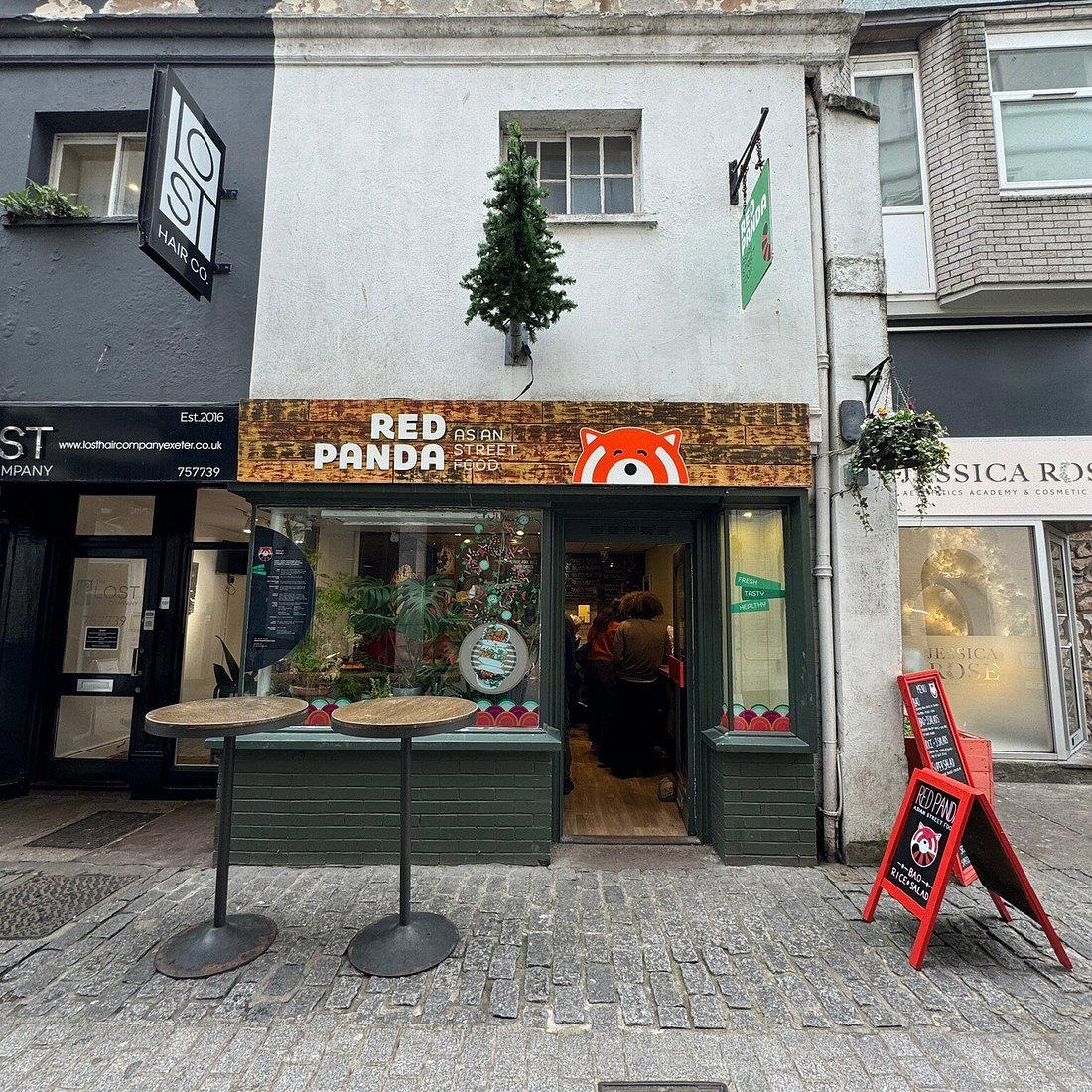
Red Panda occupies a well-known address on Exeter's pedestrianised Gandy Street, a lane that has quietly become the city's most concentrated strip for independent dining. The restaurant sits within a wider scene that rewards explorers willing to move beyond the obvious chains, offering a distinct option on a street where character and specificity are the common currency.

Pearl is the En Primeur Club membership app — saves, bookings, and concierge access live there. Same editors, same standards.
- Address
- 29 Gandy St, Exeter EX4 3LS, United Kingdom
- Phone
- +447864090317
- Hours
- Mon–Fri 11:30 AM–2:30 PMSat 11:30 AM–4 PMSun Closed
- Website
- redpandafood.com
- Directions
- Get directions
The menu
What to order
- Aromatic pork belly bao
- Spicy tofu bao
- Bao buns
- Salad boxes
Gandy Street and the Shape of Exeter's Independent Dining
Gandy Street does not announce itself. The pedestrianised lane off Exeter's main retail drag is easy to miss, but the city's most committed independent operators have been gravitating toward it for years. The result is a condensed strip where the quality of neighbours tells you as much as any review: a street that houses Celestial Cafe, Stage (Modern Cuisine), and Otis Restaurant is not operating at the level of a provincial high street. Red Panda sits at number 29 within that context, and its address alone places it in a peer group defined by independent ambition rather than chain-restaurant reliability.
Exeter's dining scene has matured significantly over the past decade. The city lacks the critical mass of a Bristol or Manchester, but it has developed a number of credible independent operators, particularly in the cuisine categories that require genuine specialism: the Korean kitchen at ReaL Korea, the steakhouse format at Miller & Carter Exeter, and the contemporary British cooking at Stage all point toward a city that has moved past purely defensive eating. Red Panda occupies its own position within that spread, representing a category of cooking that requires disciplined sourcing and kitchen consistency to execute at any level worth discussing.
What the Menu Structure Tells You
In a mid-sized English city, the menu architecture of an Asian restaurant is often the most reliable signal of ambition. A long, undifferentiated list of dishes from across the continent typically signals a kitchen calibrated for volume and familiarity. A tighter, more considered structure, where dishes cluster around a regional logic or a defined cooking philosophy, points toward something more specific. The menu at Red Panda is the lens through which any serious assessment of the place has to begin, because it determines whether the kitchen is chasing breadth or depth.
What distinguishes the more serious Asian independents in British cities is precisely this: an unwillingness to be everything. The Korean restaurants that have earned genuine recognition in the UK, including those operating at the level of Atomix in New York City or the growing cohort of credible Korean operations in London, have succeeded by committing to a tighter culinary logic rather than papering over the gaps with familiar crowd-pleasers. For a restaurant named Red Panda on a street with Exeter's current independent credentials, the question the menu must answer is whether it commits to a specific regional or stylistic identity, or whether it defaults to the kind of pan-Asian survey that serves as a default position for operators uncertain of their audience.
That question is worth raising here precisely because Gandy Street's leading performers have tended to answer it clearly. Stage runs a modern European tasting format with a defined point of view. Otis operates within a clear register. The street rewards specificity, and any new or established operator working alongside those neighbours is implicitly measured against that standard.
Exeter in the Wider Context of UK Regional Dining
For a frame of reference, Devon's most celebrated fine dining address remains Gidleigh Park in Chagford, which has operated at the top of the county's culinary tier for decades. At the national level, restaurants like L'Enclume in Cartmel, Moor Hall in Aughton, and Midsummer House in Cambridge define what serious regional ambition looks like when it reaches the Michelin tier. Exeter is not operating at that level, nor does it claim to, but the comparison is instructive: the regional restaurants that have broken through have done so by committing to a singular identity rather than attempting to serve every preference simultaneously.
Within that context, Red Panda's position on Gandy Street puts it adjacent to Exeter's most credible independents, a meaningful address signal in a city where location still correlates with operator seriousness. The operators who have chosen that street have, in the main, done so because they believe in what they are serving. That culture of conviction is the most useful context in which to assess what Red Panda is attempting.
Planning a Visit
Red Panda is at 29 Gandy St, Exeter EX4 3LS. Gandy Street is a short walk from Exeter Central station and sits within easy reach of the city's main retail quarter, making it a practical choice before or after an evening in the area. Given the density of independent operators on the street and the relatively compact nature of Exeter's dining economy, tables at the better-regarded independents in this stretch tend to fill on weekend evenings; arriving with a reservation, or enquiring ahead through the restaurant's own channels, is the sensible approach. For a fuller picture of what the city's independent operators are collectively offering, the EP Club Exeter restaurants guide maps the scene across cuisines and price points.
Frequently asked questions
Where is Red Panda located?
Red Panda is located at 29 Gandy St, Exeter EX4 3LS, United Kingdom, Exeter.
Is Red Panda a good option for Asian food near Exeter Central station?
At 29 Gandy St EX4 3LS, Red Panda is a short walk from Exeter Central station, making it a practical choice for visitors arriving by rail. Gandy Street itself is a pedestrianised lane off the main retail area, meaning the approach on foot is direct and free of heavy traffic. For a city the size of Exeter, having an independent Asian restaurant this close to the main rail interchange is a genuine logistical convenience.
What do regulars order at Red Panda?
EP Club does not hold verified menu or dish data for Red Panda at 29 Gandy Street. What the address does confirm is a kitchen operating within Exeter's most committed independent dining corridor, where operators tend to maintain focused menus rather than broad, undifferentiated lists. check the venue's official channels for current dishes and signatures.
Should I book Red Panda in advance?
Gandy Street is Exeter's most concentrated strip of independent restaurants, and the better-regarded addresses on the lane see meaningful demand on weekends and during university term time. Booking ahead is advisable rather than speculative — walk-ins on busy evenings carry real risk. Check directly with Red Panda at 29 Gandy St EX4 3LS for their current reservation policy.
What's the standout thing about Red Panda?
The address is the clearest data point available: 29 Gandy Street places Red Panda within the company of Exeter's most committed independents rather than the city's chain-heavy retail core. In a mid-sized English city, that positioning matters — operators on Gandy Street have generally chosen the street because they are competing on food and atmosphere, not footfall.
What if I have allergies at Red Panda?
EP Club does not hold verified allergen or dietary information for Red Panda. Asian kitchens frequently work with allergens including peanuts, shellfish, sesame, and gluten-containing sauces, so contacting the restaurant directly before visiting is the appropriate step — not an optional one. Red Panda is at 29 Gandy St, Exeter EX4 3LS.
Is Red Panda good value for money?
Within Exeter's independent dining tier, Gandy Street operators generally position above the city's chain-restaurant midpoint while remaining below Devon's destination fine dining addresses such as Gidleigh Park in Chagford. Checking current menus directly with Red Panda will give the most accurate picture.
Reputation Context
Comparable venues nearby, for context on price, style, and recognition.
| Venue | Cuisine | Price | Notes |
|---|---|---|---|
| Red PandaThis venue — the venue you are viewing | Asian Street Food Bao Buns | $10–20 | Not listed |
| Turtle Bay Exeter | Caribbean Jerk | $20–30 | Guildhall Shopping Centre |
| ReaL Korea | Authentic Korean | $10–20 | Exeter City Centre |
| Miller & Carter Exeter | Steakhouse | $30–50 | Exeter Business Park |
| The Flat | Vegetarian & Vegan Italian Pizza | $20–30 | Exeter City Centre |
| Thai Orchid | Authentic Thai | $20–30 | Cathedral Yard |



Details
- Lively
- Trendy
- Casual Hangout
- Standalone
- Local Sourcing
- A La Carte
- Vegan Options
- Vegetarian Friendly
- Gluten Free Options
Current opening hours
- Monday
- 11:30 AM–2:30 PM
- Tuesday
- 11:30 AM–2:30 PM
- Wednesday
- 11:30 AM–2:30 PM
- Thursday
- 11:30 AM–2:30 PM
- Friday
- 11:30 AM–2:30 PM
- Saturday
- 11:30 AM–4 PM
- Sunday
- Closed
Hours can change for holidays and private events. Last verified .
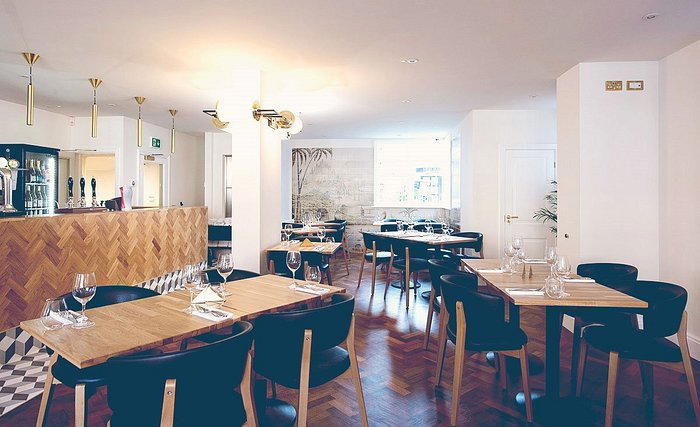
Tiny bustling spot with lively, fast-paced street food atmosphere.