Trout Point Lodge of Nova Scotia

A White Star–listed dining destination in the Tobeatic Wilderness of southwestern Nova Scotia, Trout Point Lodge sits at the intersection of wild-harvest sourcing and remote hospitality. The surrounding forest, rivers, and coastline define what ends up on the plate. For those willing to make the drive into Yarmouth County, the lodge represents one of Atlantic Canada's most serious wine-and-food propositions.
 Discover on Pearl
Pearl is the En Primeur Club membership app — saves, bookings, and concierge access live there. Same editors, same standards.
- Address
- 189 Trout Point Rd, East Kemptville, NS B0W 1Y0, Canada
- Phone
- +1 902-761-2142
- Website
- troutpoint.com
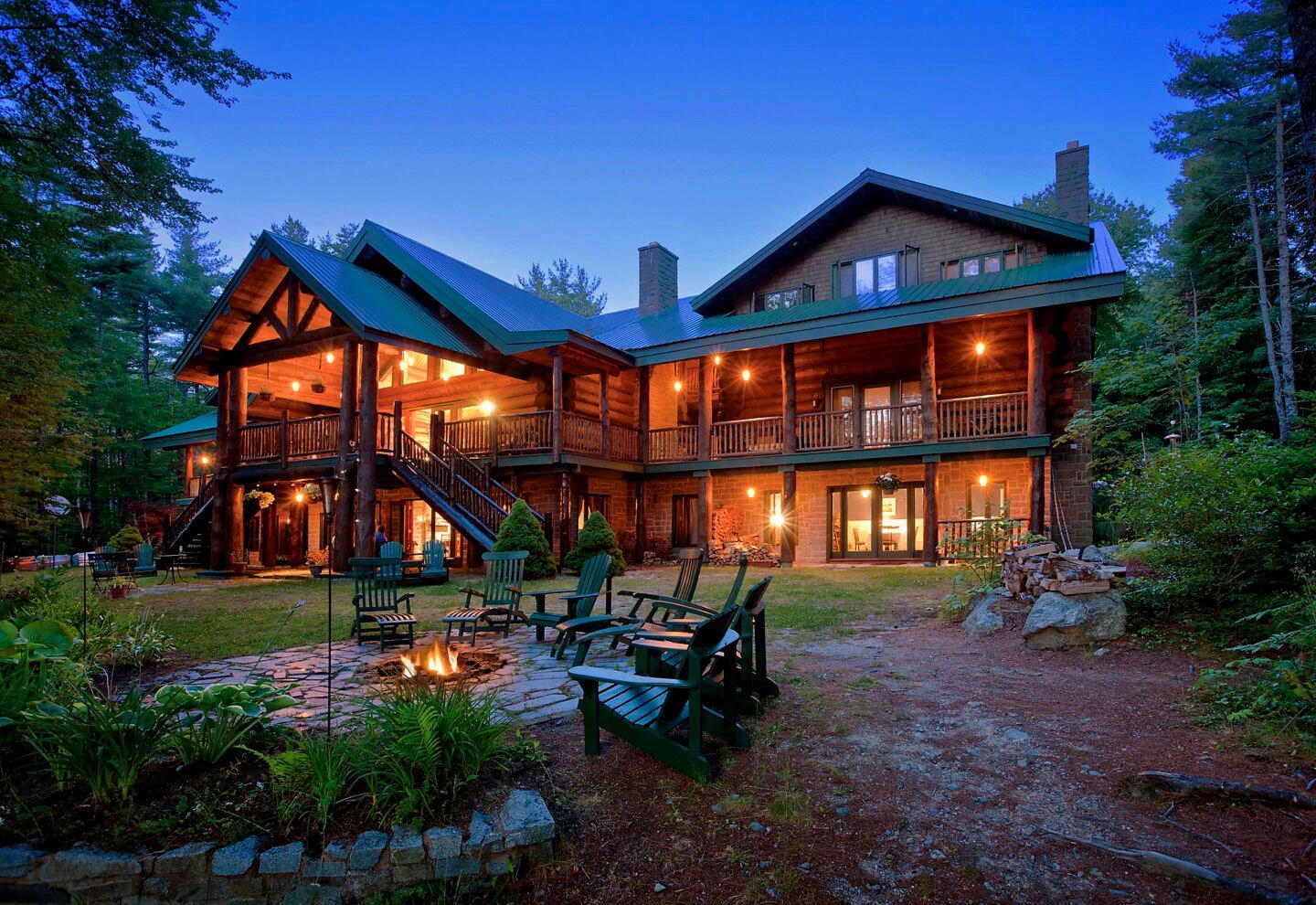
Where the Wilderness Sets the Menu
Southwestern Nova Scotia's Tobeatic region is not a place you pass through. The roads into Yarmouth County narrow as the forest closes in, and the last kilometres to Trout Point Lodge are a deliberate act of arrival. That physical remove is not incidental to the dining experience here, it is the argument for it. In this part of Atlantic Canada, the distance between the source of an ingredient and the kitchen is often measured in walking minutes rather than supply-chain days. That compression shapes a style of cooking that is harder to replicate in Halifax or anywhere along the province's more trafficked coastline.
The lodge sits on the Tusket and Napier rivers, and the broader Tobeatic Wilderness Area, one of the largest protected wilderness zones in eastern Canada, surrounds the property. This geography is the foundation of the sourcing story. Wild trout, foraged mushrooms, fiddleheads in spring, and game from the surrounding forest are not novelty inclusions here; they are the structural logic of a kitchen that cannot pretend the wilderness is decorative. Across Canada's more discussed fine-dining addresses, from Tanière³ in Quebec City to Eigensinn Farm in Singhampton, the most credible sourcing claims rest on direct relationships with specific landscapes. Trout Point's landscape is not a relationship, it is the address itself.
The Atlantic Canada Sourcing Tier
Canada's ingredient-led restaurant movement has concentrated around a handful of well-documented nodes: the Niagara Peninsula, Prince Edward County, the Okanagan, and pockets of Quebec's rural hinterland. Atlantic Canada is less covered by the national food press, which has meant that operations like Trout Point Lodge have developed without the density of comparison that shapes dining expectations in Toronto or Vancouver. That comparative isolation works in two directions. It means the lodge faces less competitive pressure to perform for critics, but it also means that recognition, when it arrives, carries weight.
The property's White Star designation from Star Wine List is a meaningful credential in this context. Star Wine List's White Star tier is awarded to venues whose wine programs meet a defined curatorial standard. For a remote lodge in Yarmouth County rather than an urban fine-dining room, earning that recognition places Trout Point in a category defined by program quality rather than location. In Atlantic Canada, that kind of wine recognition is unusual enough to function as a genuine differentiator. Venues in Nova Scotia with comparable wine ambition tend to be clustered around the Annapolis Valley's wine corridor, not deep in the province's southwestern wilderness.
For a broader reading of how sourcing-led cooking is reshaping Canadian restaurant culture outside the major cities, the contrast is instructive. Narval in Rimouski anchors its program in the St. Lawrence ecosystem. Restaurant Pearl Morissette in Lincoln builds around its own estate production. The Pine in Creemore works within a tight regional radius. Each of these operations treats geography as culinary infrastructure, not backdrop. Trout Point Lodge belongs to that category, with the added variable of genuine wilderness scale.
What the Setting Demands of a Visitor
Arriving at a remote lodge in southwestern Nova Scotia requires more planning than booking a table in a city. The nearest commercial airport is Yarmouth, which has limited national connections; many visitors route through Halifax and drive the roughly three-hour stretch through Annapolis Valley and then west into Yarmouth County. This is not a detour from a trip to Nova Scotia, it is its own destination decision. Guests who treat the lodge primarily as a dining experience rather than an accommodation are missing the structural logic of the place. The cooking, the wine program, and the physical setting are designed to work together across a stay, not a single sitting.
That model of destination dining is more common in France's regional auberge tradition or in the Scandinavian wilderness lodge format than in Canadian hospitality, which has generally separated accommodation ambition from kitchen ambition at the rural scale. The convergence of both at Trout Point gives it a positioning that sits closer to Alo in Toronto in terms of wine seriousness, but closer to Eigensinn Farm in terms of how place and production define the entire proposition. For those building a Nova Scotia itinerary with food and wine as the primary criteria, the surrounding context supports a multi-day stay.
The Wine Program in Regional Context
A White Star from Star Wine List is a list-quality signal, not a volume or cellar-size award. It indicates that the selection has been assembled with curatorial intent: range, representation, and the capacity to match food rather than simply fill a wine list. At a wilderness lodge, where restocking depends on logistics that urban restaurants do not face, that kind of curation is harder to maintain. The recognition implies that the wine program here is not an afterthought appended to a nature retreat, but a considered part of the experience architecture.
For context, the broader trend in Canadian destination dining has moved toward treating the wine program as a co-equal part of the proposition. AnnaLena in Vancouver and Jérôme Ferrer - Europea in Montreal both maintain wine programs that extend well beyond what the price point of a single dish would suggest. At Trout Point, the wine program's credentialed status means visitors arriving with serious wine interest will find a list built for that engagement. The region rewards a wine-focused itinerary.
Planning Your Visit
Trout Point Lodge is a destination property, which means the practical planning differs from a city restaurant booking. Seasonal timing matters considerably in this part of Nova Scotia: the Tobeatic wilderness is most accessible from late spring through autumn, and the sourcing calendar for wild ingredients follows that arc. Spring brings fiddleheads and early foraged greens; summer and autumn bring the most diverse range of wild and local ingredients from the surrounding forest and rivers. Winter access requires more preparation, and the full range of the kitchen's sourcing strengths is less available in the colder months.
For those building a broader Atlantic Canada food and wine itinerary, the lodge makes most sense as a terminus rather than a stopover, given its position in the province's far southwest. Routing in from Halifax allows for stops through the Annapolis Valley wine region before arriving in Yarmouth County. The remoteness is the point, not a logistical inconvenience to be minimised. Venues like DEER + ALMOND in Winnipeg, ÄNKÔR in Canmore, and ARLO in Ottawa each represent what serious cooking looks like in Canadian cities removed from the Toronto-Vancouver axis. Trout Point makes the corresponding argument for what serious cooking looks like when a city is removed from the equation entirely. For reference points further afield on wine-serious destination dining, Le Bernardin in New York City and Emeril's in New Orleans represent the urban end of that spectrum.
In Context: Similar Options
Comparable venues nearby, for context on price, style, and recognition.
| Venue | Cuisine | Price | Awards | Notes |
|---|---|---|---|---|
| Trout Point Lodge of Nova ScotiaThis venue — the venue you are viewing | Atlantic Acadian Fine Dining | $$$$ | ||
| Raymonds | Modern Newfoundland Fine Dining | $$$$ | , | downtown |
| Barbara | Contemporary Seasonal Tasting Menu | $$$$ | , | Chinatown |
| Restaurant Limousine | French Bistro | $$$ | , | Saint-Lambert Village |
| CABANE À SUCRE AU PIED DE COCHON | Quebec Sugar Shack / Seasonal Canadian | $$$ | , | St-Benoît de Mirabel |
| Aperí at Paggi House | Wine bar & charcuterie | $$$ | , | Austin |
Continue exploring
More in East Kemptville
Hotels in East Kemptville
Browse all →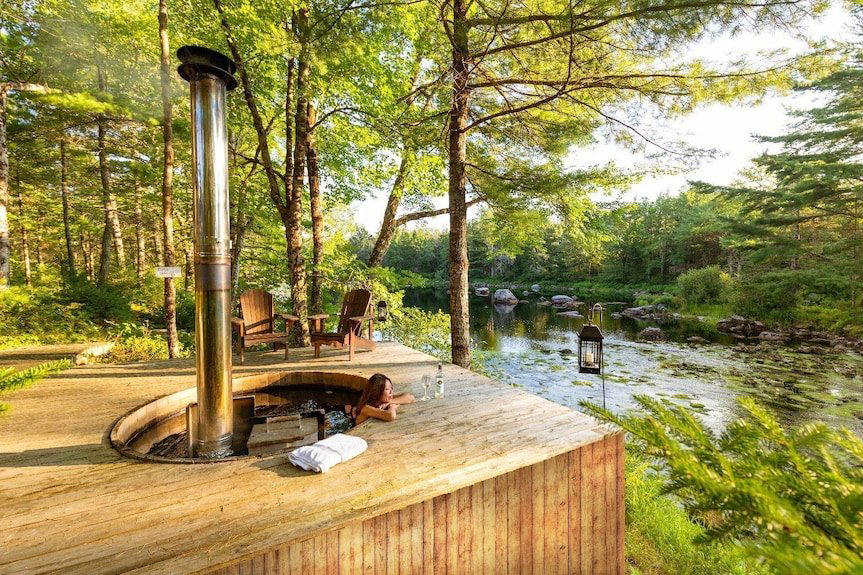
At a Glance
- Romantic
- Rustic
- Cozy
- Scenic
- Elegant
- Intimate
- Date Night
- Special Occasion
- Celebration
- Waterfront
- Hotel Restaurant
- Extensive Wine List
- Farm To Table
- Local Sourcing
- Waterfront
Cozy and colorful with dark dining rooms featuring slate black floors, dark gray stone walls, and black tablecloths, creating an elegant yet rustic atmosphere.