Our verdict
Traktørstedet Ludviglyst sits along the Julsø lakeside outside Silkeborg, occupying a setting where Danish countryside hospitality and natural surroundings define the experience as much as what arrives at the table. The traktørsted tradition, a historic Danish roadhouse format built around seasonal cooking and unhurried dining, gives this address its clearest context among the region's restaurants.

Pearl is the En Primeur Club membership app, where members save venues, book tables and use the concierge.
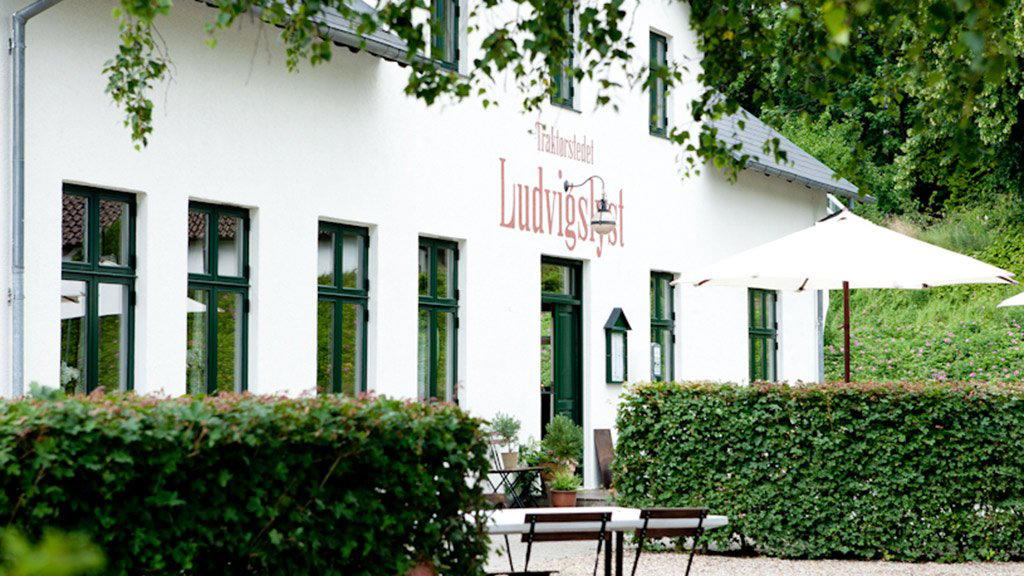
Where the Lake Sets the Terms
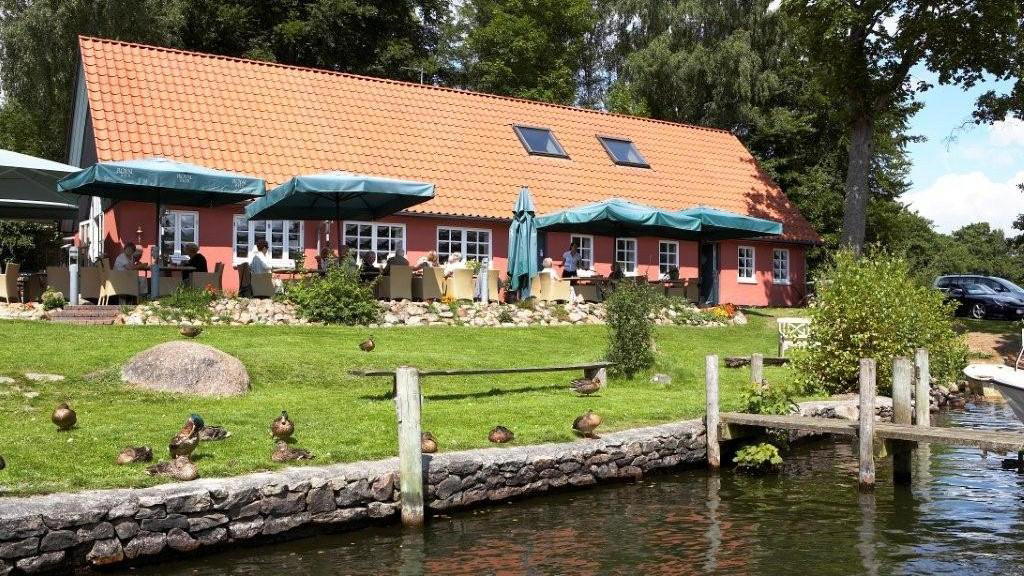
The approach to Ludviglyst along Julsøvej tells you something before you reach the door. The Julsø lake system, part of the broader Silkeborg Lakes network that cuts through the Jutland highlands, is among the most significant inland water landscapes in Denmark, deep, cold, and edged by beech forest that shifts from pale green in May to copper and rust by October. Dining venues positioned against this kind of geography tend to fall into two categories: those that treat the view as backdrop, and those where the surroundings actively shape what ends up on the plate and how long guests stay. Traktørstedet Ludviglyst belongs to the latter tradition.
The word traktørsted carries historical weight in Danish food culture. These were the waystation inns of pre-industrial Denmark, positioned on travel routes to offer travellers food, drink, and rest. The format was never about urban refinement, it was about produce close at hand, preparation that made sense in a working kitchen, and a relationship between the natural setting and the table that urban restaurants have spent decades trying to reconstruct artificially. That Ludviglyst operates within this tradition on a lakeside address in the Silkeborg hinterland places it in a category that has more in common with Henne Kirkeby Kro in Henne or Frederiksminde in Præstø than with the urban fine-dining operations in the region's larger cities.
The Sensory Register of a Lakeside Traktørsted
Danish lake country dining has a specific sensory character that distinguishes it from coastal or city formats. Light arrives differently here, diffused through water vapour in the mornings, sharp and horizontal in the late afternoons when the lake surface catches it directly. The ambient sound register at a venue like Ludviglyst would be dominated by water, wind through the beeches, and the kind of near-silence that makes conversation feel like the main event rather than something to compete with music or street noise. This is the kind of environment where the Danish concept of ro, a word that combines quiet, calm, and purposeful stillness, is not a design choice but a physical given.
That atmospheric context matters for understanding how Ludviglyst fits into Silkeborg's broader dining picture. The city's urban restaurant scene, which includes addresses like Evald, Restaurant Piaf, and La Casita, operates on a different register entirely, town-centre pacing, indoor environments, menus calibrated to walk-in and booking crowds. Ludviglyst is not competing in that space.
Danish Provincial Cooking and the Traktørsted Kitchen
The traktørsted tradition in Denmark has always prioritised proximity over ambition. The kitchens that operated these waystation formats historically cooked what the region produced, freshwater fish from the lakes, game from the surrounding forests, root vegetables and preserved goods that could sustain a menu through the colder months. That tradition has found a contemporary parallel in the New Nordic movement, which refined exactly these principles to international attention through restaurants like Geranium in Copenhagen and Jordnær in Gentofte. The difference is one of register rather than philosophy: where the Copenhagen fine-dining tier applies those principles at the highest technical level, the provincial traktørsted applies them with less ceremony and more directness.
Freshwater fish from the Silkeborg lakes, perch, pike, eel, have been a culinary constant in this part of Jutland for centuries. Eel in particular carries a specific cultural weight along these waterways, and Aalekroen in Silkeborg has built its identity around exactly that tradition. The broader Silkeborg dining picture, surveyed in our full Silkeborg restaurants guide, shows a city where local produce identity remains strong even as international influences have entered the urban dining scene.
Placing Ludviglyst in the Regional Context
Jutland's mid-region has developed a credible fine-dining identity over the past decade, anchored partly by Frederikshøj in Aarhus and expanded by addresses like Domæne in Herning and LYST in Vejle. Further afield, Alimentum in Aalborg and ARO in Odense have extended that argument across the peninsula. What these venues share is a commitment to Danish produce identity expressed through technically disciplined kitchens. Ludviglyst operates in a different register, the traktørsted format is structurally less about technical progression and more about sustained hospitality rooted in place, but the underlying sourcing philosophy connects it to the same regional food culture.
For visitors arriving in Silkeborg with a specific interest in landscape-linked dining, the choice between Ludviglyst and the city's urban addresses is not a quality comparison but a format decision. Those after a lakeside setting with historical depth and unhurried pacing will find a different kind of experience here than at Svostrup Kro, another inn-format address in the Silkeborg area with its own distinct positioning along the Gudenå river corridor. The two venues share a format category but occupy different geographic settings, each shaped by its specific waterway.
Internationally oriented readers who track venues like Dragsholm Slot Gourmet in Hørve for the Danish estate-dining model will find Ludviglyst operates at a less formal register, without the castle setting or the multi-course tasting format that defines the slot tradition. The comparison is more instructive for what it reveals about the range within Danish countryside dining than for any direct overlap.
Planning a Visit
Ludviglyst sits at Julsøvej 248, 8600 Silkeborg, which places it outside the city centre along the lake road, a drive rather than a walk from town. The lakeside setting is at its most atmospheric in summer, when long Danish evenings extend the outdoor register well past nine o'clock, and in autumn, when the beech forest surrounding the lake turns and the light drops to a lower, warmer angle. Booking directly via the venue is advisable for weekend visits during peak season, when the combination of local regulars and visitors exploring the lake district creates genuine demand. Those comparing options in the Silkeborg area should consider the full dining picture, urban addresses like Evald and Restaurant Piaf for town-centre convenience, Ludviglyst for the specific pleasure of eating beside the Julsø with the format and pace that the traktørsted tradition provides.
Frequently asked questions
Where do I go for Traktørstedet Ludviglyst?
Traktørstedet Ludviglyst is located at Julsøvej 248, 8600 Silkeborg, Denmark, Silkeborg.
Is Traktørstedet Ludviglyst worth the drive from Silkeborg city centre?
Ludviglyst sits along Julsøvej outside the Silkeborg centre, making it a deliberate road trip rather than a casual stroll, which is consistent with how Danish traktørsteder have always operated, as destination stops along rural routes rather than urban conveniences. The Julsø lake setting adds geographic context that no city-centre address in the region can replicate. Jutland's mid-region has built a credible dining identity over the past decade, and Ludviglyst participates in that through its format and location rather than through any single chef credential.
What's the signature dish at Traktørstedet Ludviglyst?
What the traktørsted format historically signals is a kitchen grounded in seasonal, proximate ingredients, produce and proteins drawn from the surrounding Jutland region rather than imported luxury goods. check the venue's official channels via Julsøvej 248, 8600 Silkeborg for current menu information.
Do they take walk-ins at Traktørstedet Ludviglyst?
No booking policy is documented for Ludviglyst at this time. Given its position on the Julsø lake road outside Silkeborg's centre, the venue draws both local regulars and visitors making a deliberate trip, which typically means tables fill ahead of peak periods. Contacting the restaurant at Julsøvej 248, 8600 Silkeborg before arriving is the safest approach, particularly on weekends or during the summer lake season.
Peers in This Market
Comparable venues nearby, for context on price, style, and recognition.
| Venue | Cuisine | Price | Notes |
|---|---|---|---|
| Traktørstedet LudviglystThis venue (the venue you are viewing) | Organic Danish Lakeside Dining | $30–50 | Not listed |
| La Casita | Authentic Mexican | $20–30 | Silkeborg |
| Svostrup Kro | Traditional Danish Inn Cuisine | $50–100 | Silkeborg |
| Restaurant Piaf | Southern French with Danish influences | Not listed | Quartier Latin |
| Evald | French Brasserie & Café | $20–30 | Papirfabrikken |
| Aalekroen | Traditional Danish Lakeside Inn | Not listed | Silkeborg Lakes |
Continue exploring
More in Silkeborg
Details
- Cozy
- Rustic
- Scenic
- Family
- Casual Hangout
- Terrace
- Historic Building
- Farm To Table
- Local Sourcing
- Organic
- Waterfront
- A La Carte
- Organic Focus
Current opening hours
- Monday
- Closed
- Tuesday
- Closed
- Wednesday
- 12–11 PM
- Thursday
- 12–5 PM
- Friday
- 12–11 PM
- Saturday
- 12–11 PM
- Sunday
- 12–5 PM
Hours can change for holidays and private events. Hours as of .
Light-filled, homey atmosphere with a relaxed, unpretentious vibe.