Trade Food Hall
Trade Food Hall occupies a polished address at 2222 Michelson Drive in Irvine's Airport Area, placing it squarely inside one of Orange County's most commercially active corridors. As a food hall concept, it draws on the broader national shift toward multi-vendor dining formats that give office workers and visitors genuine variety without the commitment of a single restaurant. It sits a short distance from several of Irvine's more established full-service dining rooms.
Pearl is the En Primeur Club membership app — saves, bookings, and concierge access live there. Same editors, same standards.
- Address
- 2222 Michelson Dr Suite 212, Irvine, CA 92612
- Phone
- +19493332111
- Website
- tradefoodhall.com
- Directions
- Get directions
 Saves & bookings on Pearl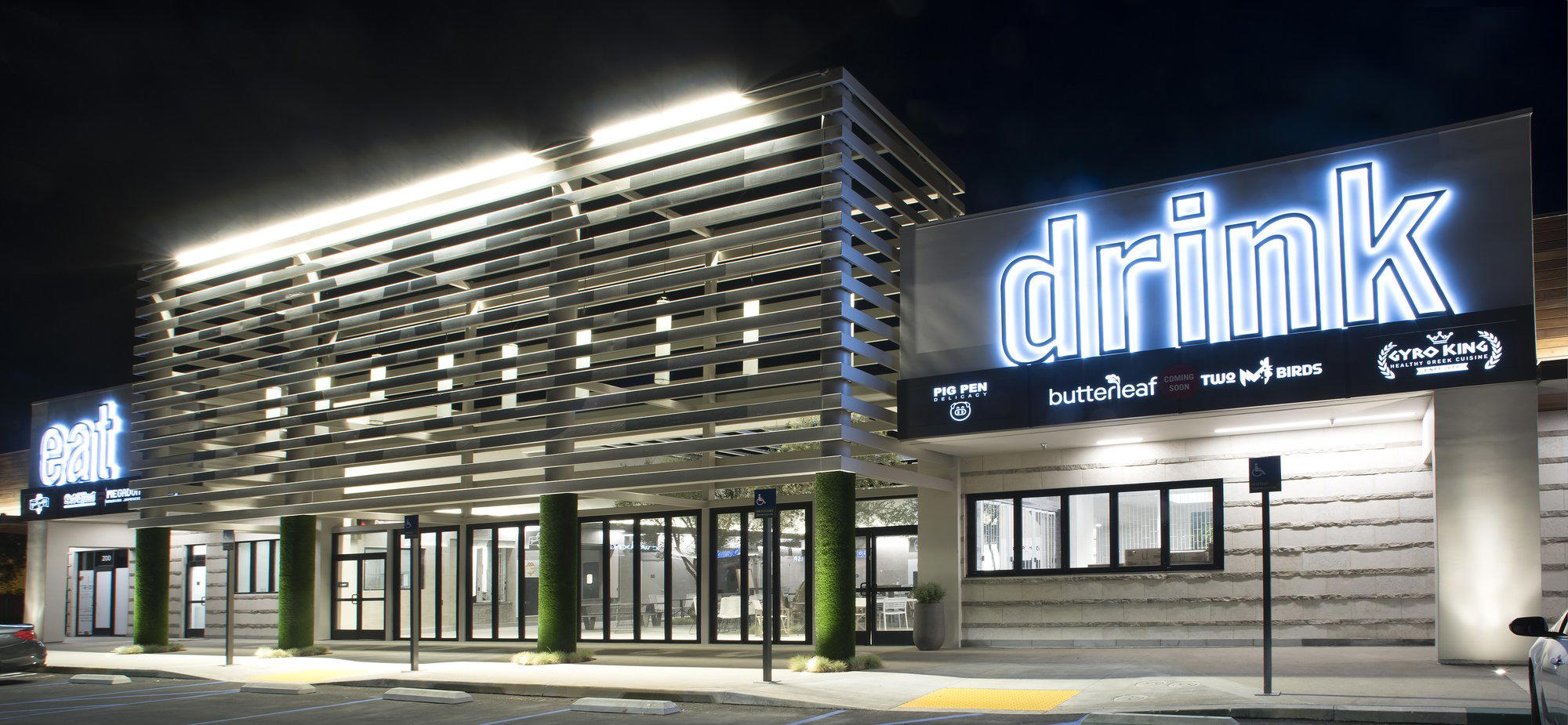
Where Irvine's Corporate Core Meets the Food Hall Format
The stretch of Michelson Drive that runs through Irvine's Airport Area reads like a case study in Southern California's post-2000 office development: mid-rise glass towers, structured parking, manicured medians, and the kind of lunch-hour foot traffic that sustains an entire tier of mid-market dining. Trade Food Hall at 2222 Michelson Drive sits in this environment by design. Food halls as a format have always tracked commercial density, and the Airport Area, which flanks John Wayne Airport and connects to the 405 corridor, provides exactly the conditions that make the model work: volume, time pressure, and a customer base with varied tastes and short windows to satisfy them.
That context matters for understanding what Trade Food Hall is, and equally, what it is not. It does not position itself against full-service restaurants like Andrei's Restaurant or Bistango, both of which occupy a more occasion-driven tier of the Irvine dining scene. Nor does it compete directly with the casual but focused formats found at California Fish Grill. The food hall sits in its own category, one defined by aggregation rather than depth, and by the logic of convenience as much as culinary ambition.
The Food Hall Format in a California Context
Across the United States, the food hall model went through a significant expansion wave in the 2010s, driven partly by the repositioning of urban real estate and partly by a dining public that had grown comfortable with counter-service delivery even at higher quality levels. California absorbed that trend selectively. In Los Angeles, food halls anchored to specific neighborhoods developed their own identities. Orange County's version has tended to skew toward corporate-adjacent locations, where the primary driver is weekday lunch rather than weekend destination dining.
This places Trade Food Hall in a specific and honest segment. The Airport Area is not a residential neighborhood with a street-level culture of evening wandering. It is a business district that empties on weekends and fills Monday through Friday with a working population that values speed and variety in approximately equal measure. The food hall format addresses that directly. Where a single-concept restaurant requires a visitor to commit to one cuisine and one price point, a food hall redistributes that decision across multiple vendors, lowering the stakes of any individual visit and making return frequency easier to justify.
That dynamic is different from what you find in destination-dining environments. Restaurants like The French Laundry in Napa, Le Bernardin in New York City, or Alinea in Chicago are built around single-minded culinary vision and require planning months in advance. Even within California, places like Providence in Los Angeles, Lazy Bear in San Francisco, or Single Thread Farm in Healdsburg operate on a fundamentally different premise. The restaurant belongs to a separate tradition, one where the editorial question is less about tasting notes and more about whether the format serves its context well.
The Airport Area as Dining Territory
Irvine's dining scene is more varied than the city's corporate image suggests. The Irvine Spectrum area, several miles to the southeast, has a denser leisure-dining cluster. The areas around UC Irvine pull in a younger, price-sensitive demographic. The Airport Area itself has traditionally been the domain of expense-account restaurants and hotel dining rooms, with a few independent operators carving out space in mixed-use developments along Jamboree and Michelson. Capital Seafood Restaurant and Angelina's Pizzeria Napoletana represent the kind of single-concept operations that have found footing in adjacent parts of the city, each serving a defined audience with a defined offer.
The restaurant enters this geography as a consolidation point. Rather than asking the Airport Area's lunch population to choose between a handful of individual restaurants, it offers that choice within a single space. The Suite 212 address within 2222 Michelson places it inside a larger commercial development, which means the foot traffic is built into the building's own occupancy rather than drawn from a destination-seeking public. That is a structural advantage in a market where weekday volume is reliable and weekend traffic is thin.
The contrast with food halls is useful context for understanding why some of Irvine's more specialized restaurants, from the Mediterranean at Andrei's to the broader American dining at Bistango, have maintained distinct audiences rather than competing directly with aggregation-format venues.
How to Approach a Visit
The restaurant at 2222 Michelson Drive, Suite 212, Irvine, CA 92612 is a Global Fast-Casual Food Hall in Irvine, with an average price of about $20 per person. It is accessible from the 405 freeway via the Jamboree Road exit, placing it within a short drive of John Wayne Airport and the surrounding hotel corridor. Because it operates within a commercial building, one practical approach for first-time visitors is to arrive during standard business hours, when the venue is at peak operation. Parking in the 2222 Michelson structure follows the building's general commercial arrangements. No specific booking is required for food hall-format dining, which means spontaneous visits are the norm rather than the exception. For those comparing options in the Airport Area before committing to a format, the food hall's multi-vendor structure makes it a lower-friction entry point than a full-service reservation elsewhere in the corridor.
Irvine's food hall tier sits some distance from the tasting-menu circuit that runs through Southern California's upper dining bracket, places like Addison in San Diego or the nationally recognized programs at institutions like Blue Hill at Stone Barns in Tarrytown, Atomix in New York City, The Inn at Little Washington, Emeril's in New Orleans, or 8 1/2 Otto e Mezzo Bombana in Hong Kong. The restaurant answers a different question, and on the terms of that question, its location and format are coherent answers to the specific demands of the Airport Area lunch market.
Style and Standing
Comparable venues nearby, for context on price, style, and recognition.
| Venue | Cuisine | Price | Notes |
|---|---|---|---|
| Trade Food HallThis venue — the venue you are viewing | Global Fast-Casual Food Hall | $$ | Not listed |
| Heirloom Farmhouse Kitchen | Farm-to-Table American Fusion | $$ | Irvine Spectrum |
| The Balcony Grill & Bar | Taiwanese Shabu Shabu Grill | $$ | Diamond Jamboree |
| Taco Rosa | Mexico City Mexican Taqueria | $$ | Irvine |
| O Fine Japanese Cuisine | Contemporary Japanese Omakase | $$$ | Irvine |
| Maldon's Brasserie | French Bistro & Patisserie | $$ | Irvine |
Continue exploring
More in Irvine
Restaurants in Irvine
Browse all →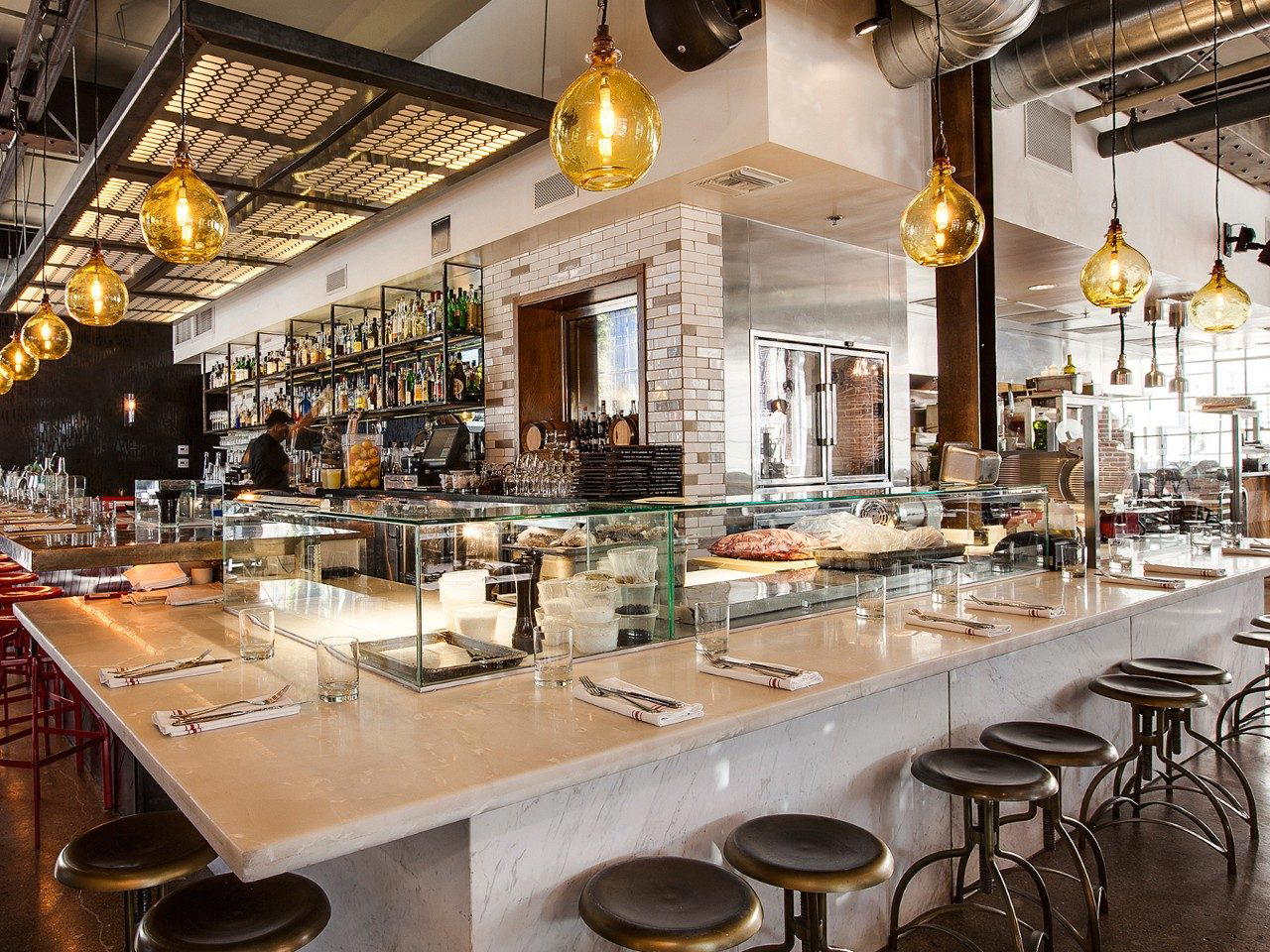
Bars in Irvine
Browse all →
Hotels in Irvine
Browse all →

Wineries in Irvine
Browse all →
At a Glance
- Lively
- Trendy
- Modern
- Casual Hangout
- Group Dining
- Open Kitchen
- Craft Cocktails
Current opening hours
- Monday
- 11 AM–9 PM
- Tuesday
- 8 AM–9 PM
- Wednesday
- 8 AM–9 PM
- Thursday
- 8 AM–9 PM
- Friday
- 8 AM–10 PM
- Saturday
- 8 AM–10 PM
- Sunday
- 11 AM–8 PM
Hours can change for holidays and private events. Last verified .
Lively indoor-outdoor atmosphere providing an escape with diverse fast-casual dining options and a central bar.