
Tonkatsu Taketei Tagami ten belongs to Kagoshima’s serious pork-cutlet conversation, where the city’s reputation for kurobuta gives even a modest meal sharper context. Its Tabelog 100 Tonkatsu 2026 selection and repeat 2022 recognition place it among Japan’s specialist tonkatsu addresses rather than casual fry shops.
Pearl is the En Primeur Club membership app — saves, bookings, and concierge access live there. Same editors, same standards.
- Address
- 鹿児島県鹿児島市田上7丁目2-14
- Phone
- +81992820228
- Website
- tabelog.com
 Saves & bookings on Pearl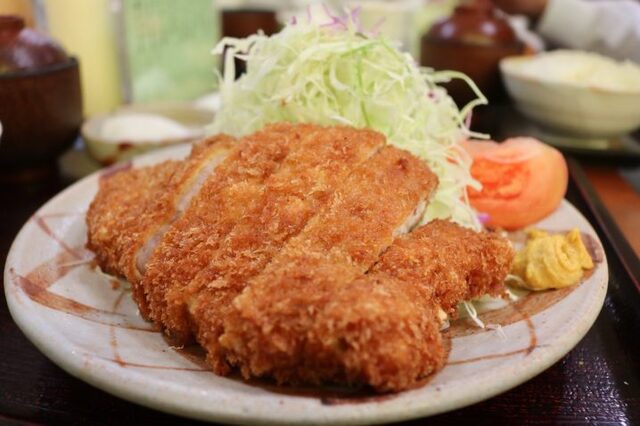
Approaching a house-style tonkatsu restaurant in Kagoshima changes the terms of the meal before the first cutlet reaches the table. This is not the theatre of a counter-only Tokyo fry room or the formality of a hotel dining room. The appeal lies in a more local register: pork cutlet as everyday craft, with the quiet confidence of a city that treats pork as part of its culinary identity rather than a novelty.
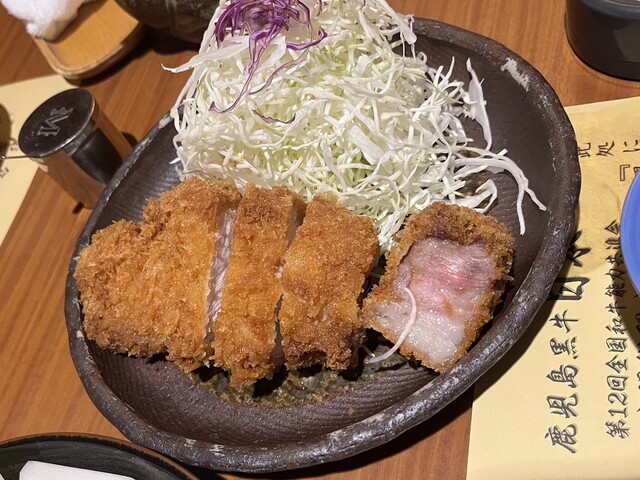
Kagoshima has a particular claim in this category because kurobuta, the prefecture’s black pork, anchors so much of the region’s food culture. Tonkatsu is a direct test of that reputation. The format leaves little space for distraction: pork, coating, frying oil, cabbage, rice, sauce, and timing. When a cutlet works, the argument is not made through ornament. It is made through sourcing discipline and control of texture.
Kagoshima pork culture gives the cutlet its frame
Japan’s tonkatsu map is often discussed through Tokyo and Nagoya, but Kagoshima reads differently. Here, pork is not only an imported restaurant genre; it is tied to regional agriculture and local appetite. That context matters because a tonkatsu specialist in Kagoshima competes not only with other restaurants, but with a broader expectation that pork should carry depth without heaviness.
Tonkatsu Taketei Tagami ten sits inside that expectation. Its selection for Tabelog 100 Tonkatsu 2026, after recognition in the same category in 2022, gives the address a national signal in a field where consistency is easier to claim than to maintain. The Tabelog score of 3.68 also places it in the tier of restaurants that attract attention beyond neighbourhood regulars while remaining grounded in a familiar Japanese dining format.
The useful comparison in Kagoshima is not simply price or popularity. Aji no Tonkatsu Maruichi occupies the same pork-cutlet conversation, while higher-spend restaurants such as Toriya Yamaguchi and Karen Kagoshima ten point to another side of the city’s dining economy. Against that spread, this category makes a persuasive case for Kagoshima at a lower spend: technique and ingredient identity can carry the meal without luxury framing.
The format rewards focus rather than ceremony
Tonkatsu is a narrow craft, and that narrowness is its strength. A specialist has to get the sequence right every service: the cut, the crumb, the fry, the rest, the final plate. In Kagoshima, the pork itself adds pressure. A cutlet that loses clarity under oil or sauce wastes the regional advantage. A successful one lets the diner understand why the prefecture’s pork reputation travels so well across Japan.
The room’s counter seating and tatami room signal a practical, local style rather than a destination tasting-menu posture. Children are welcome, take-out is offered, and the restaurant is non-smoking. Those details matter because they place the address within the Japanese everyday-specialist tradition: a restaurant can be highly regarded without asking the diner to treat lunch or dinner as a ceremony.
That is also where the critical interest lies. Tonkatsu at this level depends on repetition. Unlike kaiseki or sushi, where seasonal variation can dominate the narrative, pork cutlet asks whether a restaurant can make a compact set of decisions feel precise again and again. The Tabelog 100 Tonkatsu recognition is meaningful because it comes in a category crowded with specialists across Japan, many of them operating with similar ingredients and formats. Differentiation comes through execution, not novelty.
How it fits a Kagoshima food itinerary
For travellers building a Kagoshima dining day, tonkatsu is a useful anchor because it connects regional product with a meal that does not require a long service window. The city’s broader table moves between market cooking, charcoal grilling, set meals, shochu bars, and regional comfort food. Ichiba Shokudo Jounan ten gives the market-dining side of the city; Akadori Sumiyaki Daiyasu points toward charcoal and poultry; Charcoal-grilled Fish & Clay Pot-cooked Rice Ochawan, Japanese Set Meal Diner covers the set-meal register; and BAR STINGER shifts the evening toward drinks.
Within that itinerary, Tonkatsu Taketei Tagami ten is the pork reference point: not a broad introduction to Japanese dining, but a focused look at how Kagoshima’s ingredient identity translates into a cutlet. The better way to read it is alongside other local specialists rather than against destination fine dining. For a wider plan, use Our full Kagoshima restaurants guide, then layer in Our full Kagoshima bars guide, Our full Kagoshima hotels guide, Our full Kagoshima wineries guide, and Our full Kagoshima experiences guide.
The same Japanese-specialist logic appears far beyond Kagoshima, though in different forms: -Grilled beef Sukiyaki- KAMAKURA TANUKIAN 鎌倉 たぬき庵 in Kamakura frames beef through sukiyaki;. 鮪と炭火焼き うお炭 秋葉原店 in Tokyo turns on tuna and charcoal;.cafe in Osaka shows how casual formats can carry local rhythm;.know in Kumamoto adds another Kyushu reference; (Shoku) Vietnam in Kawasaki and [Curry Senmon Ten] Maruyama Kyoju. in Sapporo underline how single-category restaurants define neighbourhood eating in Japan. Across the Pacific, Jōdo Saké Bar in Los Angeles and Onigiri Time in Pasadena show how Japanese formats travel when the focus stays disciplined.
The editorial verdict is plain: this is a Kagoshima address for diners who care about pork as a regional product and tonkatsu as a technical craft. The recognition gives it a national marker; the local context gives that marker meaning.
A Quick Peer Check
Side-by-side context: comparable cuisine and price.
| Venue | Cuisine | Price | Notes |
|---|---|---|---|
| Tonkatsu Taketei Tagami tenThis venue — the venue you are viewing | Tonkatsu (Japanese pork cutlet) | $$ | Not listed |
| Aji no Tonkatsu Maruichi | Kagoshima Kurobuta Tonkatsu | $$ | downtown Kagoshima (Takamibaba) |
| Kumasotei | Traditional Satsuma Cuisine | $$ | Higashi Sengoku-cho |
| Ramen Kokinta | Kagoshima-style ramen shop | $ | Tenmonkan |
| Torisen Ippo | Traditional Yakitori & Chicken Izakaya | $$ | Tenmonkan |
| Tonkatsu to, Shabushabu. Kurobuta Fukuya | Kagoshima Kurobuta Tonkatsu & Shabu-shabu | $$$ | Tenmonkan |
Recognition history
Dated appearances from independent guides and award organizations, with the underlying list record or original source where available.
Tabelog 100 #42 · No. 42
Tabelog · Tabelog 100 - Tonkatsu - 2026
Continue exploring
More in Kagoshima
Restaurants in Kagoshima
Browse all →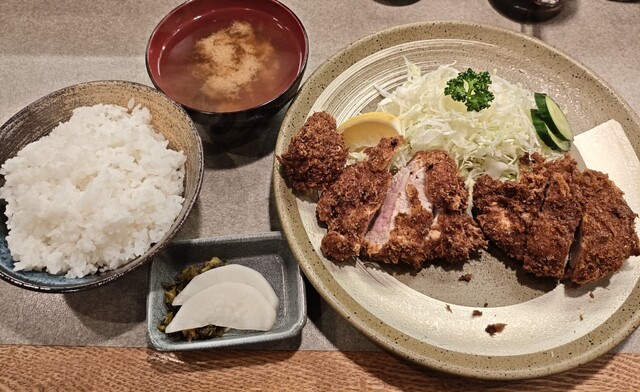
Hotels in Kagoshima
Browse all →
Wineries in Kagoshima
Browse all →
At a Glance
- Classic
- Cozy
- Lively
- Family
- Casual Hangout
- Group Dining
- Solo
- Standalone
A classic, house‑style tonkatsu restaurant with counter seats and tatami rooms, non‑smoking and usually busy with families and friends, creating a warm, lively yet comfortable atmosphere.