The Whale Wins

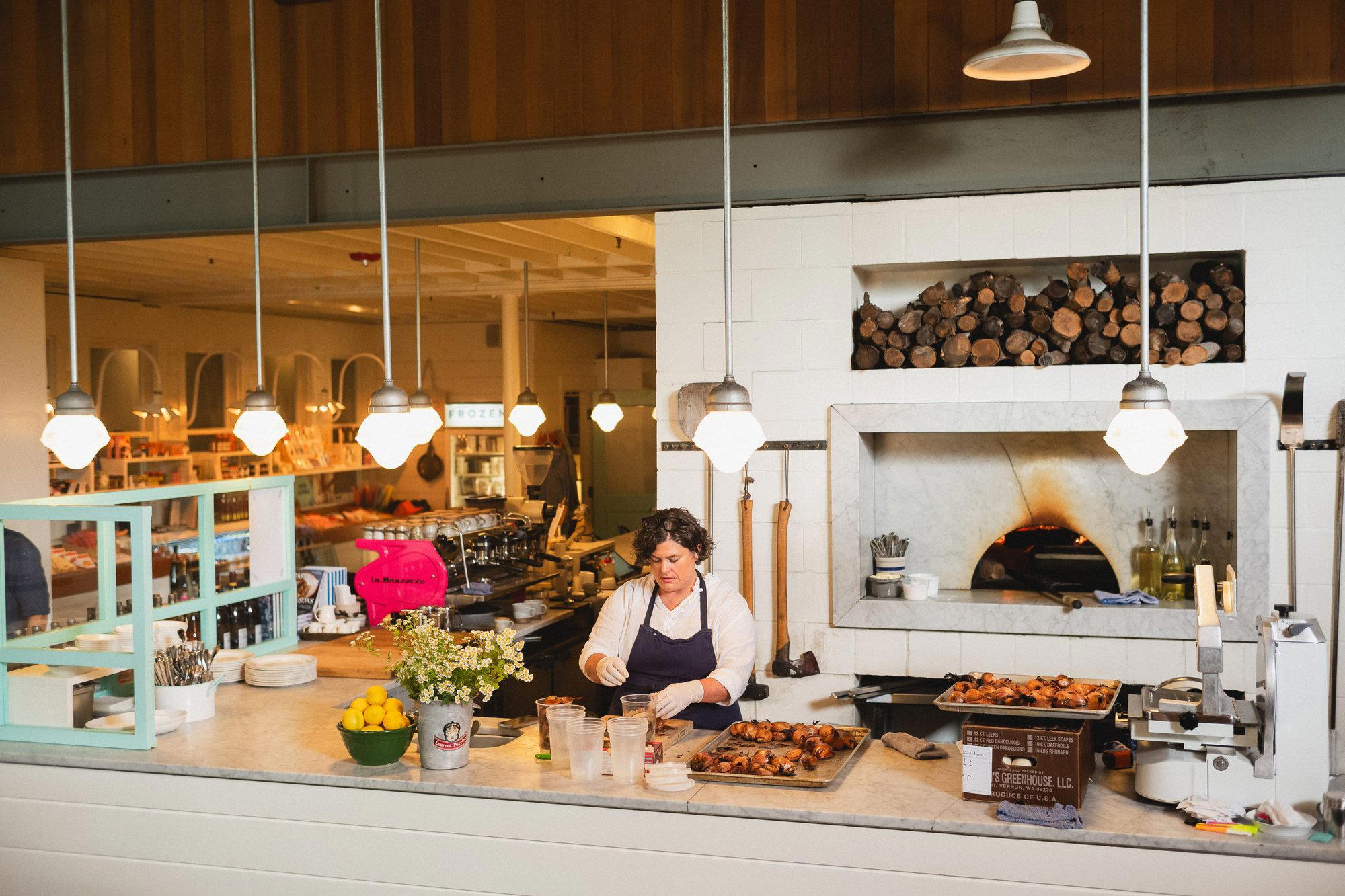
The Whale Wins in Seattle's Fremont neighbourhood operates at the intersection where wood-fired technique meets the Pacific Northwest's deep larder of local vegetables, seafood, and preserved ingredients. The format is rooted in the kind of open-hearth cooking that has reshaped American casual-fine dining over the past decade, with an emphasis on seasonal sourcing and considered execution.
- Address
- 3506 Stone Way N, Seattle, WA 98103
- Phone
- +1 206 632 9425
- Website
- thewhalewins.com
- Directions
- Get directions
Wood Fire and the Northwest Larder
A particular kind of restaurant has taken hold in American cities over the past fifteen years: one that applies serious technique to local ingredients without the ceremony of white tablecloths or prix-fixe constraint. The wood-fired, vegetable-forward model that Blue Hill at Stone Barns in Tarrytown helped codify on the East Coast found fertile ground in the Pacific Northwest, where the raw material is often extraordinary, Dungeness crab in winter, Walla Walla onions in summer, wild mushrooms running from August through December, and where the dining culture has always leaned toward informality without sacrificing quality. The Whale Wins, at 3506 Stone Way N in Seattle's Fremont neighbourhood, is a restaurant serving wood-fired vegetable-focused American cooking at a price tier around $40 per person.
The address places it inside a district that has shifted over the past decade from light-industrial to something closer to a neighbourhood dining corridor, anchored by local regulars rather than tourist circuits. Fremont sits north of Lake Union, and the restaurants that have succeeded here tend to reflect a specific Seattle character: product-driven, not flashy, and calibrated to the city's appetite for cooking that is honest about what it is. That is the context in which The Whale Wins operates.
The Technique Behind the Fire
Wood-fire cooking has moved well beyond trend status in American restaurants. It now represents a distinct methodology with its own logic: high heat that caramelises sugars in root vegetables more efficiently than a gas oven, smoke that integrates into proteins over time, and a kitchen discipline that demands precise timing because the fire does not respond to a dial. Across the country, from Smyth in Chicago to Lazy Bear in San Francisco, the format has attracted chefs who want the constraints of live fire to shape their menus rather than limit them.
The intersection of that technique with Pacific Northwest ingredients is where the editorial angle on The Whale Wins becomes most useful. The region gives cooks unusual raw material: Pacific halibut and Chinook salmon carry a different fat profile from Atlantic equivalents; local farms in the Skagit Valley produce brassicas and alliums with concentrated flavour; Puget Sound shellfish arrives in conditions that support minimal intervention. The question any wood-fire restaurant in Seattle must answer is how those ingredients are treated once they meet the heat.
In Seattle's broader dining context, the wood-fire, local-larder format appears across several price tiers. Canlis, operating at the refined end of the city's market, has incorporated wood-fire elements into a programme with deep classical roots. Joule approaches the same raw material from a Korean-American perspective. The restaurant occupies a different register: the approach reads as more casual in format, with the emphasis on shareable plates and vegetable-forward composition that places it closer to wine-bar-adjacent dining than to structured tasting menus.
Fremont and the Neighbourhood Scale
The geography of where a restaurant locates itself is rarely incidental. Fremont's Stone Way corridor is not Capitol Hill or South Lake Union; it draws a neighbourhood crowd rather than a downtown destination crowd, and that shapes everything from portion format to noise level to the kind of wine list that makes sense. Nationally, the restaurants that have most effectively combined fire technique with local sourcing in neighbourhood-scale formats include Single Thread Farm in Healdsburg and Addison in San Diego, though both operate at a considerably higher price point and with more formal structure than the restaurant appears to.
The relevant Seattle comparison is probably less with destination restaurants and more with the mid-tier neighbourhood spots that have given the city its dining reputation: the kind of place where a table on a Tuesday is accessible, the wine list has considered natural-leaning options, and the food is taken seriously without the occasion requiring advance planning. Other Seattle addresses at that register include 1415 1st Ave, 1744 NW Market St, and 2963 4th Ave S. The restaurant sits within that tier as a Fremont-specific expression of what Seattle neighbourhood dining has become.
The Broader American Conversation
It is worth placing the restaurant inside the wider argument about what American cooking is doing right now. The movement toward local sourcing, open kitchens, and fire-based technique represents a deliberate departure from European classical structure. At one ambitious end, that argument is made by chefs like those at The French Laundry in Napa or Le Bernardin in New York City, who have constructed their own rigorous frameworks. At a more global-technique level, Atomix in New York City demonstrates how imported methodology can produce something distinctly rooted in local identity. Even in Europe, chefs at places like Atelier Moessmer Norbert Niederkofler in Brunico have made regional sourcing the central discipline rather than a secondary consideration.
The restaurant engages with this conversation at a neighbourhood scale. The Pacific Northwest larder is among the strongest in the United States, and the wood-fire method is well-suited to its produce. Whether any given visit delivers on that potential depends on execution, on whether the fire is managed with the precision the ingredients deserve, and whether the menu composition shows genuine understanding of what the region's seasons produce at their peak.
For a broader map of where the restaurant fits within Seattle's restaurant scene, it sits alongside the city's other significant addresses. Comparisons to other fire-and-produce programmes nationally can be drawn through Providence in Los Angeles, Emeril's in New Orleans, and The Inn at Little Washington in Washington, each of which handles the local-ingredient mandate at a different price point and with different formal ambitions.
Know Before You Go
| Detail | Information |
|---|---|
| Address | 3506 Stone Way N, Seattle, WA 98103 |
| Neighbourhood | Fremont, north of Lake Union |
| Reservations | |
| Price range | |
| Dietary needs | |
| Nearest context | Fremont dining corridor; accessible from Capitol Hill and South Lake Union by car |
What It’s Closest To
Comparable venues nearby, for context on price, style, and recognition.
| Venue | Cuisine | Price | Notes |
|---|---|---|---|
| The Whale WinsThis venue — the venue you are viewing | Wood-Fired Vegetable-Focused American | $$ | Not listed |
| Union Saloon | American Comfort Food & Craft Cocktails | $$ | Wallingford |
| Molly Moon's Homemade Ice Cream | Homemade Ice Cream | $$ | Wallingford |
| Brave Horse Tavern | American Gastropub | $$ | South Lake Union |
| Assembly Hall | Food Hall with Diverse Options | $$ | Denny Triangle |
| Lunchbox Laboratory | Gourmet Burgers & Shakes | $$ | Cascade |
Recognition history
Dated appearances from independent guides and award organizations, with the underlying list record or original source where available.
James Beard Award Best Chefs
James Beard Award
Continue exploring
More in Seattle
Restaurants in Seattle
Browse all →
Bars in Seattle
Browse all →
Hotels in Seattle
Browse all →

At a Glance
- Cozy
- Rustic
- Modern
- Date Night
- Casual Hangout
- Special Occasion
- Open Kitchen
- Craft Cocktails
- Farm To Table
- Local Sourcing
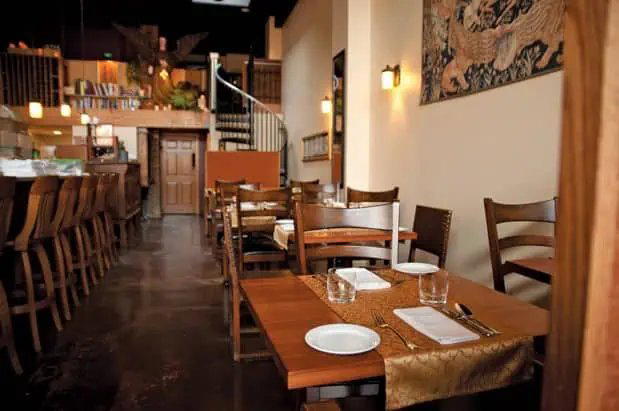
Lively, light-filled cottage-like space with bright and airy layout and wood-fired oven.