The Quarter
On a Georgian terrace in Liverpool's Falkner Street conservation area, The Quarter occupies a stretch of L8 that has quietly sustained independent hospitality for decades. The address places it within walking distance of the city's Georgian Quarter proper, where the pace of a meal tends to follow the neighbourhood rather than a kitchen timer. For visitors mapping Liverpool beyond the waterfront, it represents a different register of the city's dining culture.
Pearl is the En Primeur Club membership app — saves, bookings, and concierge access live there. Same editors, same standards.
- Address
- 7 Falkner St, Liverpool L8 7PU, United Kingdom
- Phone
- +44 151 707 1965
- Website
- thequarteruk.com
- Directions
- Get directions
 Saves & bookings on Pearl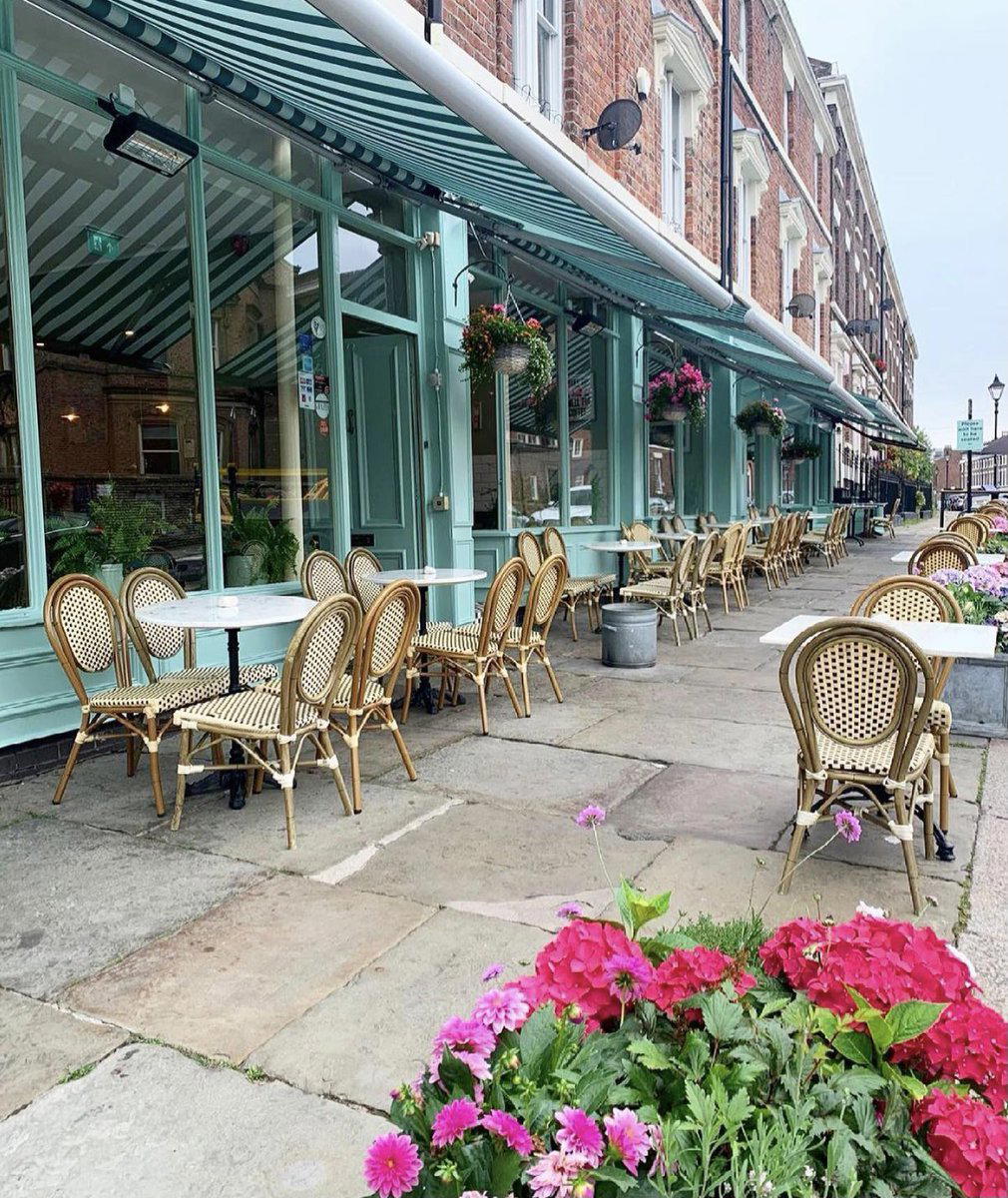
A Street That Sets the Pace
Falkner Street is one of Liverpool's better-preserved Georgian terraces, and the built environment does a specific kind of work before you even sit down. The conservation area around L8 has resisted the kind of rapid commercial turnover that has reshaped other parts of the city centre, which means the venues that take root here tend to reflect neighbourhood rhythms rather than tourist-facing formats. The Quarter sits at 7 Falkner St in Liverpool's L8 district, serving Italian-Inspired Mediterranean cooking in a casual, walk-in-friendly setting,211 reviews.
That physical setting matters to how dining works here. Liverpool's restaurant geography has split, in recent years, between the dense waterfront and Albert Dock cluster and a looser, more residential spread through the Georgian Quarter and the streets around Lark Lane. The latter belt tends to produce venues with a more local clientele and a different sense of occasion. The Quarter belongs to that second geography.
The Ritual of the Meal in the Georgian Quarter
Across the broader Liverpool dining scene, the question of pacing has become a meaningful differentiator. At the city's higher-end contemporary addresses, such as Belzan with its modern cuisine format or Vetch at the ££££ tier, menus are structured to move through courses at a deliberate tempo. But that kind of formal orchestration is not the only model that works. There is a separate tradition, more European in cadence, where the meal is not managed by the kitchen but negotiated between the table and the room: another bottle, another half-hour, a second look at what's left on the bread plate.
The venues along the Georgian Quarter's residential streets tend to sit closer to that second tradition. It is a dining ritual that rewards staying rather than progressing, where the architecture of the meal is measured in conversation rather than course intervals. For Liverpool residents who have been coming to this part of L8 for years, it is precisely the point.
This is worth contextualising against the broader shape of British casual dining, which has spent the last decade oscillating between small-plates formats designed for rapid turnover and longer, set-menu experiences that impose structure from above. The middle ground, where a table is yours for the evening without ceremony, has become harder to find in many cities. Liverpool's Georgian Quarter retains more of it than most.
Where The Quarter Sits in Liverpool's Independent Scene
Liverpool has a well-developed layer of independent hospitality operating below the price tier of its most ambitious kitchens. At the ££ bracket, addresses like Bistrot Vérité on Rosemount Place have built consistent followings around a defined culinary identity, while Cafe Tabac holds a similar neighbourhood-anchor position in the Bold Street corridor. The restaurant's Falkner Street address places it in a comparable structural role within L8: a venue whose value to the area is as much about presence and continuity as about any single menu decision.
That kind of institutional weight is different from the logic that drives destination dining. Restaurants like Moor Hall in Aughton or L'Enclume in Cartmel draw visitors from significant distances on the strength of specific culinary reputations. The restaurant operates on a different axis, one where regularity and neighbourhood embeddedness carry more weight than acclaim. Both models are legitimate; they are simply answering different questions about what a restaurant is for.
For visitors building a broader Liverpool itinerary, the city's independent food scene extends across several distinct clusters. Delifonseca Dockside handles the waterfront end of the independent spectrum, while EastZeast represents the city's South Asian dining tier.
The Broader British Context
It is useful to situate Liverpool's neighbourhood dining culture within the wider British picture. The country's most formally recognised restaurants tend to cluster along predictable axes: London addresses like CORE by Clare Smyth, rural destination venues like Gidleigh Park in Chagford or Ynyshir Hall in Machynlleth, and market-town anchor restaurants like Hand and Flowers in Marlow. The logic connecting those venues is one of culinary ambition measured against national and international recognition.
Below that tier, a different kind of value operates. Neighbourhood restaurants in cities like Liverpool, Birmingham (where Opheem represents one model of serious ambition), and Cambridge (see Midsummer House) sit in variable relationship to that formal recognition economy. Some pursue it; many do not. The venues that have lasted longest in Liverpool's Georgian Quarter tend to belong to the latter group, building their case on repeat custom and local embeddedness rather than critical positioning.
That is not a lesser achievement. In a city where hospitality turnover has accelerated since 2020, sustained independent operation on a residential terrace is itself a data point worth reading carefully.
Planning a Visit
Falkner Street sits in the L8 postcode, south of the city centre, and is accessible on foot from the main train stations in roughly twenty to twenty-five minutes depending on pace. The surrounding Georgian Quarter is best explored on foot: the area's terraced streets are compact and the independent businesses are close enough together to make a pre- or post-dinner walk through the conservation area a natural extension of the evening. Given the neighbourhood character of the venue and its likely local clientele, booking ahead is advisable rather than optional, particularly across weekends. Visiting as part of a broader Liverpool day is direct: the waterfront and Albert Dock are reachable without a taxi, making a Georgian Quarter dinner a workable second act to an afternoon further north.
For diners who regularly track venues across the international scene, from Le Bernardin in New York City or Lazy Bear in San Francisco to Waterside Inn in Bray or hide and fox in Saltwood, the Georgian Quarter register will read as a deliberate step away from the formal dining circuit. That is the correct read.
Cuisine and Awards Snapshot
Comparable venues nearby, for context on price, style, and recognition.
| Venue | Cuisine | Price | Notes |
|---|---|---|---|
| The QuarterThis venue — the venue you are viewing | Italian-Inspired Mediterranean | $$ | Not listed |
| Maray Bold Street | Modern Middle Eastern Small Plates | $$ | Bold Street |
| Panoramic 34 | Modern British Fine Dining | $$$ | Central Liverpool |
| EastZeast | Punjabi Indian | $$ | Kings Dock |
| Spire | Modern British Bistro | $$ | Wavertree |
| Maray Bold Street | Dining | $$ | Bold Street |
Continue exploring
More in Liverpool
Restaurants in Liverpool
Browse all →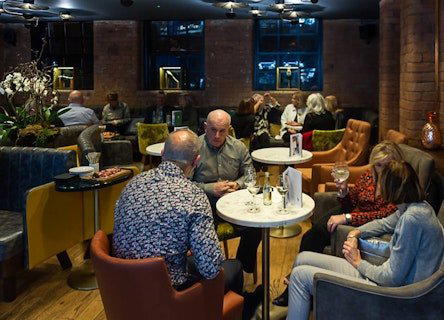
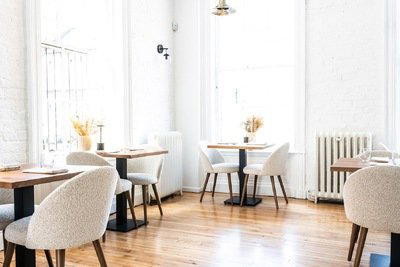
Bars in Liverpool
Browse all →
Hotels in Liverpool
Browse all →
Wineries in Liverpool
Browse all →
At a Glance
- Bohemian
- Cozy
- Lively
- Trendy
- Casual Hangout
- Brunch
- Group Dining
- Family
- After Work
- Terrace
- Standalone
- Open Kitchen
- Beer Program
- Local Sourcing
- Farm To Table
- Street Scene
Current opening hours
- Monday
- 9 AM–11 PM
- Tuesday
- 9 AM–11 PM
- Wednesday
- 9 AM–11 PM
- Thursday
- 9 AM–11 PM
- Friday
- 9 AM–11 PM
- Saturday
- 9 AM–11 PM
- Sunday
- 9 AM–11 PM
Hours can change for holidays and private events. Last verified .
Casual café vibe by day with stripped wood floors and art-adorned walls; transforms into a busy, energetic restaurant in the evening with a European bistro-style terrace for outdoor people-watching.