EastZeast
EastZeast occupies a dramatic waterfront position at King's Dock, where the South Docks meet the broader Port of Liverpool. The restaurant places South Asian cuisine against one of the city's most significant industrial heritage backdrops, drawing a mixed crowd of locals and visitors who arrive for the setting as much as the food. It sits in a different register from Liverpool's growing neighbourhood restaurant scene.
Pearl is the En Primeur Club membership app — saves, bookings, and concierge access live there. Same editors, same standards.
- Address
- King's Dock, Port of Liverpool, Keel Wharf, Liverpool L3 4BX, United Kingdom
- Phone
- +44 151 707 9377
- Website
- eastzeastlvp.co.uk
- Directions
- Get directions
 Saves & bookings on Pearl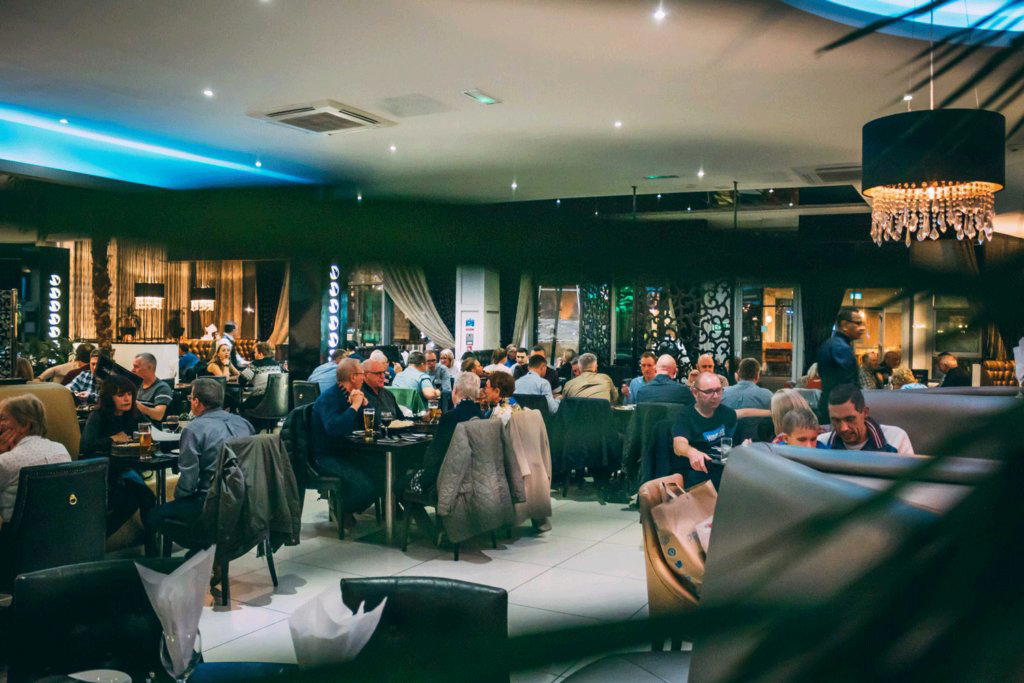
Where the Docks Shape the Dining
Liverpool's waterfront has always carried more weight than geography alone. The King's Dock stretch, running south from the Albert Dock's heritage cluster toward Keel Wharf, represents a different chapter in the city's relationship with its river: less tourist-polished, more physically present. Arriving at EastZeast on Keel Wharf, the scale of the port infrastructure registers before anything on the menu does. The Mersey is wide here, the sky tends to dominate, and the industrial sightlines give the approach a character that few city-centre restaurants in the UK can replicate. This is not a restaurant that competes on neighbourhood charm or proximity to other dining options. It competes on its position.
That positioning matters because waterfront dining in British cities follows a recognisable pattern: early redevelopment phases fill with chain operators attracted by footfall, then independent or mid-scale operators move into secondary sites as the area matures. Liverpool's South Docks corridor has moved through several of those cycles. EastZeast at King's Dock represents the kind of destination placement that relies on the journey being part of the draw, in the way that Moor Hall in Aughton or L'Enclume in Cartmel use their remove from urban centres as a structural element of the experience, not merely a footnote.
South Asian Cooking Against a Northern Industrial Backdrop
South Asian restaurant culture in northern English cities has shifted considerably over the past two decades. The corridor model, where a cluster of similarly priced Indian and Pakistani restaurants occupied a single street and competed on volume and value, has given way to a more dispersed and category-differentiated map. Some operators have moved into the mid-market with regional specificity and modern service formats. Others, like Mowgli Water Street in Liverpool city centre, have built identities around a casual, snack-led format derived from the street-food tradition rather than the sit-down subcontinental meal. EastZeast occupies a different point on that spectrum: a larger-format, destination-positioned restaurant where the physical scale of the space and the setting do significant work alongside the kitchen.
This distinction is worth holding onto when considering what EastZeast is for. It is not the place to benchmark against Liverpool's tighter, more editorial neighbourhood options like Belzan or Manifest, which operate in an entirely different register of scale and ambition. Nor does it sit in the same competitive frame as Bistrot Vérité or NORD, where the kitchen's technical programme is the primary editorial subject. EastZeast is, in structural terms, a large-format South Asian restaurant in a landmark waterfront location, and that combination has its own logic and its own audience.
The Keel Wharf Location as Context
King's Dock sits roughly a kilometre south of the Pier Head, past the Echo Arena and the Exhibition Centre. The area has developed substantially since the early 2000s, when the dock was largely disused. Today it anchors Liverpool's events and arena district, which means EastZeast draws from a broader catchment than its address alone would suggest: pre-show diners, hotel guests from the surrounding district, and groups looking for a venue that can accommodate larger tables with a view. For visitors arriving from outside the city, the location is accessible by foot from Liverpool Central or by taxi from Lime Street, though the walk along the waterfront from the Albert Dock is the more memorable approach.
This positioning in the events corridor rather than the food-led neighbourhoods of Lark Lane or the Georgian Quarter is a meaningful signal. It means the restaurant functions on different metrics from the venues that attract the city's food-focused press attention. Comparable destination-format waterfront restaurants elsewhere in the UK, including venues that combine South Asian cooking with harbour or riverside settings in Bristol, Cardiff, and Edinburgh, tend to perform well on occasion dining, group bookings, and tourist footfall rather than on the repeat-visit frequency that neighbourhood restaurants depend upon. EastZeast's Keel Wharf address places it squarely in that category.
Liverpool's Broader Dining Context
Liverpool's restaurant scene has developed substantial depth over the past decade without acquiring the Michelin density of Manchester or Leeds. The city's food credibility is carried more by independents operating at the £££ mid-market level than by flagship fine dining. For visitors who want to map the full range, our full Liverpool restaurants guide covers the city's current spread across cuisine types and price points. For context on comparable ambition in UK fine dining, CORE by Clare Smyth in London, The Fat Duck in Bray, and Gidleigh Park in Chagford represent the tier where technical programme and chef credentials dominate the editorial conversation, a frame that does not apply to EastZeast's format. For international reference points on South Asian cooking at the highest level, Atomix in New York City illustrates how Asian culinary traditions perform within fine-dining structures, while Le Bernardin in New York City demonstrates how a single cuisine type can anchor a restaurant's identity across decades. These comparisons are not proxies for EastZeast's positioning, but they establish a broader map of how location, format, and cuisine type interact across the category.
Liverpool also rewards visitors who look beyond restaurants. Our full Liverpool hotels guide, bars guide, wineries guide, and experiences guide map the city's wider offer for visitors planning time in the city around a dining itinerary. For those interested in the UK's broader regional fine dining scene, Hand and Flowers in Marlow represents a compelling model of regional ambition outside London.
Planning Your Visit
EastZeast's address at King's Dock, Keel Wharf, Liverpool L3 4BX places it within Liverpool's waterfront events district. The most practical approach for first-time visitors is to allow time before or after dinner to walk the dock edge, where the industrial scale of the Mersey and the port infrastructure provide a context that no interior design choice could replicate. Booking ahead is advisable on event nights at the adjacent arena, when the surrounding area fills quickly. For groups, the restaurant's scale makes it one of the more accommodating options in a city where larger tables can be difficult to arrange at the smaller neighbourhood venues that dominate Liverpool's independent dining scene.
How EastZeast Liverpool compares with similar nearby venues.
| Venue | Cuisine | Price |
|---|---|---|
| Fraiche | Modern British | Not listed |
| Manifest | Modern British | £££ |
Continue exploring
More in Liverpool
Restaurants in Liverpool
Browse all →
Bars in Liverpool
Browse all →
At a Glance
- Elegant
- Lively
- Group Dining
- Family
- Celebration
- Date Night
- Open Kitchen
- Waterfront
Current opening hours
- Monday
- 5–11 PM
- Tuesday
- 5–11 PM
- Wednesday
- 5–11 PM
- Thursday
- 5–11 PM
- Friday
- 5–11:30 PM
- Saturday
- 5–11:30 PM
- Sunday
- 3–11 PM
Hours can change for holidays and private events. Last verified .
Sleek luxury decor with crystal chandeliers and grand piano, creating an elegant yet lively atmosphere.
Know Before You Go
- Getting there
- King's Dock, Port of Liverpool, Keel Wharf, Liverpool L3 4BX, United Kingdom