Our verdict
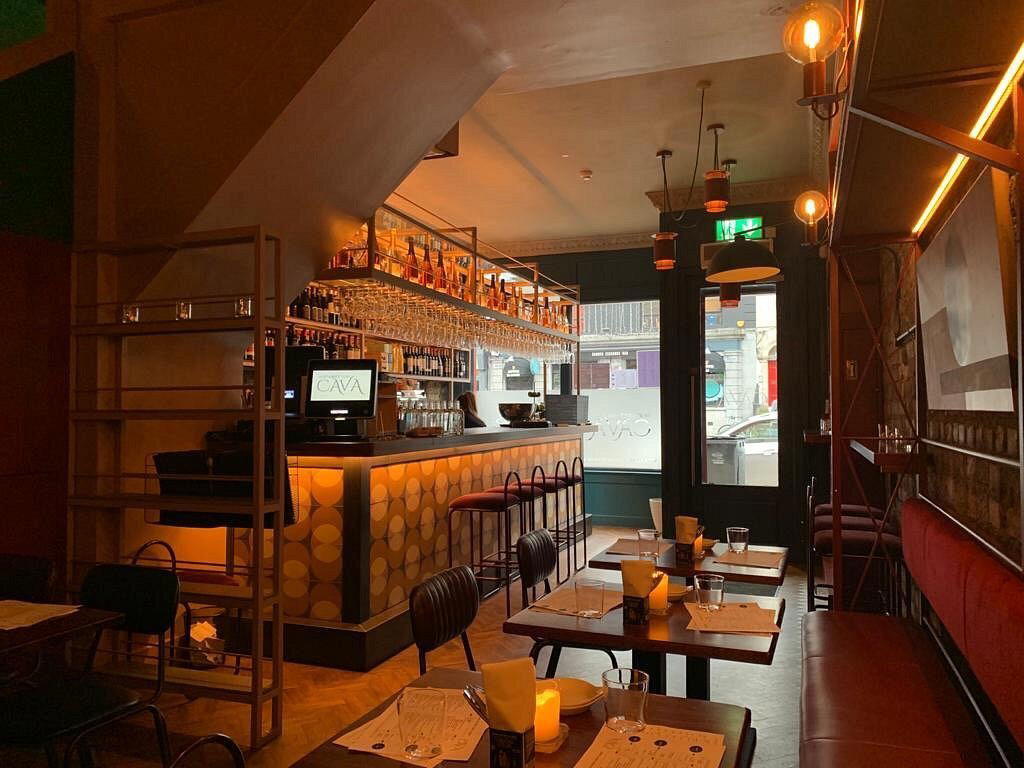
Camden Street's cava bar occupies a specific niche in Dublin's drinking and eating scene: the Spanish wine-led format that pairs serious fizz with pintxos-style small plates. The Port House Cava sits on one of the city's most active evening strips, where the format travels well, lowering the commitment compared to a full sit-down dinner while raising the occasion above a standard pub round.

Pearl is the En Primeur Club membership app, where members save venues, book tables and use the concierge.
The menu
What to order
- Gambas pil pil
- Croquetas
- Patatas bravas
- Chorizo al vino
- Beef cheeks
- Padron peppers
- Churros
Camden Street and the Spanish Bar Format in Dublin
Camden Street Lower is one of Dublin's more restless strips, a stretch where independent restaurants, wine bars, and late-night venues compete across a short run of Georgian buildings. The block attracts a crowd that treats the street as a destination in itself rather than a stop en route elsewhere. Within that context, the Spanish cava bar format occupies an interesting position: it offers the sociability of a bar with the food seriousness of a casual restaurant, and the fizz-led drinks list gives it a distinct identity that separates it from the Irish pub on one side and the modern European wine bar on the other.
Cava, Spain's méthode traditionnelle sparkling wine from the Penedès region, has always operated in the shadow of Champagne's cultural dominance. The grape varieties, Macabeu, Xarel·lo, Parellada, produce a wine with more textural breadth and earthier character than most entry-level Champagne, and at a price that allows a bar to build a serious list without immediately pushing guests into premium territory. The format translates well to a city like Dublin, where the evening out tends to involve movement between venues rather than a single long table. A cava-led bar with small plates resets the pacing of a night without requiring the commitment of a tasting menu or a full à la carte sitting.
The Port House Cava, at 21 Camden Street Lower, extends a format the Port House group has built across several Dublin addresses. The model centres on Spanish wines, cava primarily, but also the broader Spanish wine canon, alongside pintxos and small plates that track the northern Spanish bar tradition. That tradition, rooted in Basque and Navarrese culture, treats small bites not as appetisers preceding a larger meal but as the meal itself, assembled across multiple rounds and matched to whatever is being poured. It is a more democratic format than the Irish tasting menu circuit, and one that allows the kitchen to run at consistent quality without the choreography of a multi-course service.
Where Cava Sits in Dublin's Drinking Culture
Dublin has added wine bars at pace over the last decade, with the category splitting between natural-wine-focused rooms aimed at a younger crowd and more classical European formats aimed at drinkers who arrived via fine dining. The Port House model sits closer to the latter, with a Spanish specialisation that gives it a clear identity in a market where generic European wine bar concepts can blur together.
The city's upper tier of formal dining, restaurants like Patrick Guilbaud, Chapter One by Mickael Viljanen, and Glovers Alley, operates on longer bookings, higher spend, and a format that asks guests to commit an evening to one table. The Port House Cava sits several tiers below that in spend and commitment, which is not a criticism, it is a different proposition entirely. For the same neighbourhood, Bastible and D'Olier Street offer modern Irish and European cooking in a mid-to-upper casual format. The cava bar model is more lateral: it competes for the same evening slot but by removing the meal structure entirely.
Across Ireland, restaurants operating in the serious casual tier have expanded the conversation about what a night out anchored in good food and drink can look like without the formality of a tasting menu. Places like Aniar in Galway, Bastion in Kinsale, and Campagne in Kilkenny each work within a defined culinary identity, the Port House format applies the same discipline to a wine-led format. The difference is that the drinks list structures the visit rather than the kitchen menu.
The Pintxos Format and What It Demands
The northern Spanish small plate tradition that informs the Port House model has a specific logic: the food is designed to be ordered in rounds, eaten standing or perched, and calibrated to match what is in the glass. Pintxos in their original Basque context are displayed on bar tops and priced by the piece, with guests cycling through options as the evening progresses. The format puts pressure on sourcing and execution at the item level, there is no sauce or accompaniment to carry a weak main, and the small scale means any inconsistency is immediately visible.
Dublin's proximity to excellent Irish produce gives a Spanish-format bar an interesting ingredient base to work with. The tension between Spanish culinary tradition and Irish raw materials, dairy, seafood, cured meats sourced or produced locally, is one the Port House kitchens have addressed across their locations. The approach is consistent with a broader pattern visible in Irish restaurants from Liath in Blackrock to dede in Baltimore and Chestnut in Ballydehob: Irish ingredients read differently when the culinary framing shifts away from the European fine dining default.
Planning Your Visit
Camden Street runs parallel to South Great George's Street and sits within walking distance of St Stephen's Green and the Grand Canal area. The strip is active from early evening, and venues here fill quickly on Thursday through Saturday nights. For the broader Dublin restaurant scene, our full Dublin restaurants guide covers the city's range across price tiers and formats.
| Venue | Format | Price Tier | Booking Lead Time |
|---|---|---|---|
| The Port House Cava | Wine bar / small plates | Mid-casual | Walk-in or short lead |
| Patrick Guilbaud | Fine dining (French-Irish) | €€€€ | Weeks in advance |
| Bastible | Modern Irish, à la carte | €€€€ | Days to weeks |
| Glovers Alley | Modern cuisine, tasting menu | €€€€ | Weeks in advance |
Other strong Irish addresses for reference when building a wider itinerary: Terre in Castlemartyr, Homestead Cottage in Doolin, House in Ardmore, and Lady Helen in Thomastown each represent the kind of regionally rooted cooking that complements a Dublin visit. For international reference points on what serious wine-led or tasting formats look like at the top of the market, Le Bernardin in New York City and Atomix in New York City represent the precision-driven end of the spectrum.
Frequently asked questions
Does The Port House Cava work for a family meal?
The pintxos format at 21 Camden Street Lower suits groups that want to graze and share rather than commit to a set menu, which can work for families with older children comfortable in a wine-bar setting. The ordering-in-rounds structure keeps the table engaged but does mean the pace is driven by the room rather than a kitchen timetable. Younger children or those expecting a conventional sit-down dinner may find the format less suited to their needs.
Is The Port House Cava better for a quiet night or a lively one?
Camden Street Lower is one of Dublin's busier independent-venue strips, and the Port House format, counter seating, small plates ordered in rounds, cava by the glass, is designed for a social tempo rather than a long, quiet dinner. Earlier sittings on weeknights will be calmer, but the venue's Spanish bar logic lends itself to a lively evening. If silence is the priority, this address on a weekend is not the right call.
How does The Port House Cava differ from other Spanish bars in Dublin city centre?
The Port House Cava positions itself specifically around cava, Spanish sparkling wine, as the primary drink, rather than the broader wine or cocktail lists that define most of Dublin's Spanish-leaning venues. The pintxos format reinforces that Basque-bar identity, where the food and drink are designed to move together in short, repeated rounds. That combination of a sparkling-wine focus and counter-style small plates is a narrower brief than the general tapas restaurants concentrated further north in Dublin 2.
What should I eat at The Port House Cava?
The venue operates on the northern Spanish pintxos model, where food is ordered in rounds of small plates rather than as a single structured menu. The practical approach is to order a few pieces at a time and repeat what works, which is how the format functions in its Basque origins. Specific current dishes are best confirmed directly with the venue at 21 Camden Street Lower, as the offering can rotate.
What's The Port House Cava's location?
The Port House Cava is located at 21 Camden Street Lower, Saint Kevin's, Dublin, D02 HH92, Ireland, Dublin.
A Quick Peer Check
| Venue | Cuisine | Price | Awards | Notes |
|---|---|---|---|---|
| The Port House CavaThis venue (the venue you are viewing) | Spanish Tapas & Basque Pintxos | $30–50 | Not listed | Not listed |
| Patrick Guilbaud | Modern French Fine Dining | $150–200 | 2 Michelin Stars · La Liste Top Restaurants | Irish - French, Modern French |
| Bastible | Modern Irish | $100–150 | 1 Michelin Star · The Sunday Times Ireland’s 100 Best Restaurants | Modern Cuisine |
| Host | Modern Italian | $50–100 | Michelin Plate | Not listed |
| mae | Modern Irish Fine Dining | $50–100 | Michelin Plate · The Sunday Times Ireland’s 100 Best Restaurants | Not listed |
| Matsukawa | Authentic Edomae Omakase | $100–150 | Michelin Plate · La Liste Top Restaurants | Not listed |