John Kavanagh The Gravediggers has anchored Glasnevin's social life since 1833, sitting directly opposite the gates of Glasnevin Cemetery. One of Dublin's oldest continuously operating pubs, it draws a cross-section of the city — locals, historians, and visitors — with unchanged Victorian interiors, a no-frills pint of Guinness, and a reputation built on consistency rather than reinvention.
Pearl is the En Primeur Club membership app — saves, bookings, and concierge access live there. Same editors, same standards.
- Address
- 1 Prospect Square, Glasnevin, Dublin, D09 CF72, Ireland
- Phone
- +353 87 296 3713
- Directions
- Get directions
 Saves & bookings on Pearl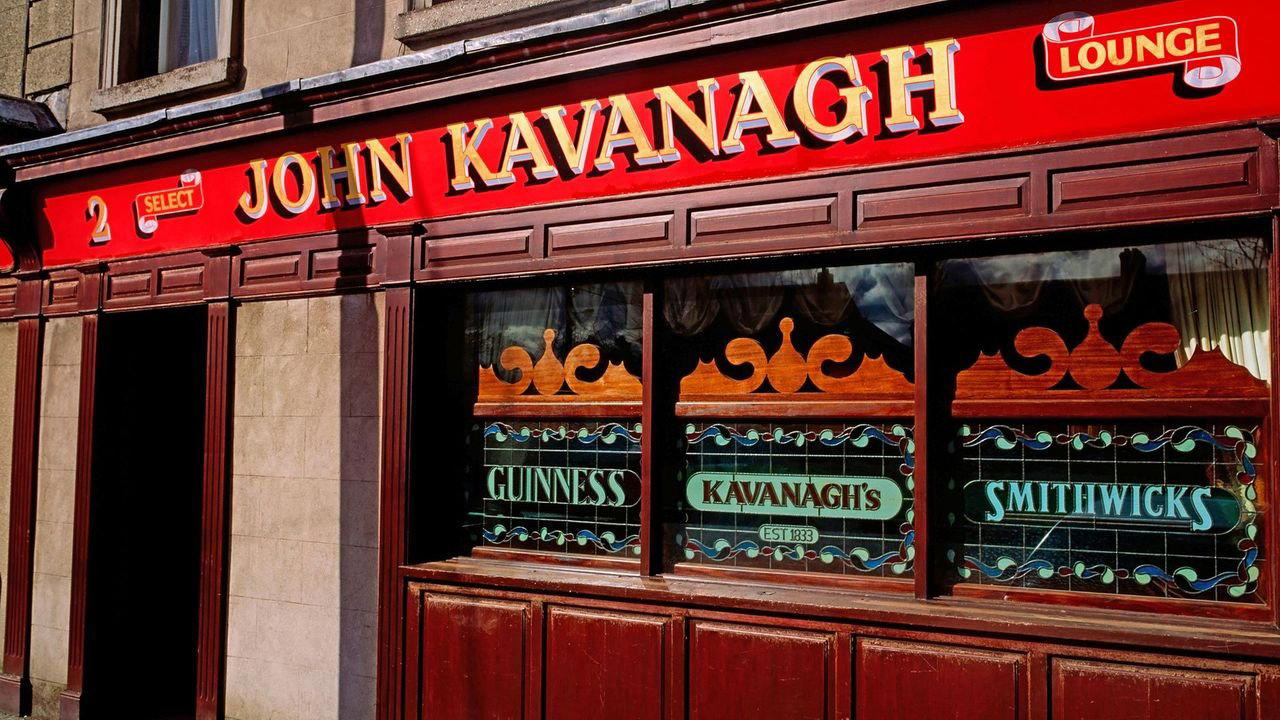
The Pub That Time Forgot to Change
There is a particular kind of Dublin pub that resists the pressure to modernise — no craft cocktail menu, no reclaimed-timber feature wall, no DJ nights. John Kavanagh The Gravediggers, at 1 Prospect Square in Glasnevin, belongs to that category so completely that it has become the reference point for it. Opened in 1833, it sits directly opposite the main gates of Glasnevin Cemetery, the burial ground that holds Daniel O'Connell, Michael Collins, and Éamon de Valera among its 1.5 million interred. The pub did not choose that association; it simply stayed put while the neighbourhood built itself around both institutions.
Walking up Prospect Square, the pub's facade does not announce itself with signage designed to attract passing trade. The building is low, dark-painted, and set into a terrace — easy to miss if you do not know to look. That quality of being found rather than found-for-you has shaped the clientele for nearly two centuries. The people inside are largely regulars, or friends of regulars, or people who made a specific decision to come here. That self-selection filters the atmosphere before you reach the bar.
Glasnevin's Gathering Point
The neighbourhood-as-context matters here more than it does at most Dublin pubs. Glasnevin is a residential, working-class-to-middle-class district north of the Royal Canal, historically Catholic and historically minded in ways that much of inner-city Dublin has shed. The cemetery and the adjacent National Botanic Gardens give the area an unusual density of heritage infrastructure for what is otherwise a quiet suburb. The Gravediggers sits at the hinge between those institutions and the ordinary domestic life of the streets behind them.
That positioning means the pub functions as a genuine neighbourhood watering hole in the original sense, not as a themed recreation of one. Funeral parties have stopped here after interments at the cemetery for generations. Sunday walkers from the Botanic Gardens account for another layer of trade. Add the Glasnevin residents who treat it as a default local, and the result is a room that cycles through the full social register of the area rather than settling into a single demographic. This is notably different from the self-conscious community-pub concept that has become a feature of Dublin's bar openings in recent years, where the idea of neighbourhood belonging is built into the branding from day one. At the Gravediggers, it accreted.
For comparison, Dublin's newer bars, A Fianco, Bar 1661, Bar Pez, and Bison Bar & BBQ, represent a city-centre bar culture built around specificity of concept: Irish whiskey, natural wine, a particular food style. The Gravediggers operates on a different axis entirely, one where the concept is time itself.
The Interior as Historical Document
The pub's interior is the most direct evidence of what continuity looks like in practice. The layout runs through a series of small interconnected rooms, dark wood, low ceilings, worn surfaces, with no gesture toward the open-plan modernisation that reshaped most of Dublin's Victorian pubs from the 1990s onward. The bar itself is compact, designed for a time when a pub served fewer drinks options and more of each. There are no draught taps for craft ale or imported lager alongside the Guinness; the offer is deliberately narrow.
This is a structural choice with consequences. In a city where Bar 1661 has built its entire identity around the depth of the Irish spirits list, and where wine bars like 64 Wine in Glasthule have expanded the definition of what an Irish neighbourhood bar can offer, the Gravediggers' refusal to widen the drinks programme reads as a position rather than an oversight. The pint of Guinness here carries the weight of the building's entire reputation. Regulars will tell you it pours well, which, in Dublin pub culture, is the operative criterion.
The Irish Pub as Heritage Category
Pubs of the Gravediggers' vintage and character occupy a specific position in how Ireland thinks about its own cultural infrastructure. The country has, in the past two decades, developed an explicit preservation instinct around what are variously called traditional pubs, Victorian pubs, or simply old pubs, buildings that retain fittings, layout, and atmosphere from before the era of theme-bar renovation. Several of Ireland's most regarded examples of this type are outside Dublin: Arthur Mayne's Pharmacy in Cork and Prim's Bookshop in Kinsale both occupy historic premises that carry their own layered history. Further out, Lough Eske Castle in Donegal and Pig's Lane in Killarney represent the hospitality tradition in a different register. The Gravediggers sits at the older, more austere end of this continuum, closer in spirit to a working pub that happens to be very old than to a heritage attraction that happens to serve drinks.
Internationally, the category has loose parallels. Baba'de in Baltimore and Bar Leather Apron in Honolulu both occupy a neighbourhood-anchor role in their own cities, though through entirely different means. What connects them is the sense that the bar exists in service of a community that was there before the bar became notable.
Planning Your Visit
The Gravediggers sits in Glasnevin, roughly 3 kilometres north of Dublin city centre, and is most naturally reached by bus or taxi rather than on foot from the tourist core. The journey is worth considering deliberately: this is not a pub that sits conveniently between other stops on a central Dublin itinerary. That slight inconvenience is part of its value, coming here is a decision, which means the room skews toward people who made the same one.
There is no booking system for a pub of this format; you arrive and find space. Weekday afternoons are the quietest entry point. Weekend evenings fill with a mix of locals and visitors who have done the research, and the small rooms can feel close. If you are visiting Glasnevin Cemetery or the Botanic Gardens, both within a few minutes' walk, the sequencing is natural: the cemetery and gardens open early, and the pub is the logical endpoint. See the full Dublin restaurants and bars guide for broader city planning.
Continue exploring
More in Dublin
Bars in Dublin
Browse all →
Restaurants in Dublin
Browse all →
Hotels in Dublin
Browse all →
Wineries in Dublin
Browse all →
At a Glance
- Classic
- Rustic
- Well Known
- Quiet
- Cozy
- Casual Hangout
- Solo
- Historic Building
- Standalone
- Seated Bar
- Booth Seating
- Counter Only
- Whiskey
- Draft Cocktails
Current opening hours
- Monday
- 11:30 AM–10:30 PM
- Tuesday
- 10:30 AM–10:30 PM
- Wednesday
- 10:30 AM–10:30 PM
- Thursday
- 10:30 AM–11:30 PM
- Friday
- 10:30 AM–11:30 PM
- Saturday
- 10:30 AM–11:30 PM
- Sunday
- 12:30–10:30 PM
Hours can change for holidays and private events. Last verified .
Warm, conversation-enhancing atmosphere with solid wood interiors, brass fixtures, wooden booths, stained glass, and open fireplace dating back to 1833; lived-in 19th-century charm with minimal modern intrusions.
Know Before You Go
- Getting there
- 1 Prospect Square, Glasnevin, Dublin, D09 CF72, Ireland