The Noodles & Saloon Kiriya

A compact Nagareyama ramen counter with Tabelog Ramen EAST “Tabelog 100” selections in 2018, 2024, and 2025, The Noodles & Saloon Kiriya belongs to the serious suburban ramen circuit rather than the Tokyo trophy-table chase. Its appeal is precision at everyday ramen pricing: a small room, a short-service rhythm, and a menu category that includes ramen, abura-soba, and maze-soba.
Pearl is the En Primeur Club membership app — saves, bookings, and concierge access live there. Same editors, same standards.
- Address
- 4 Chome-475-1 Nishihatsuishi, Nagareyama, Chiba 270-0121, Japan
- Website
- twitter.com
- Directions
- Get directions
 Saves & bookings on Pearl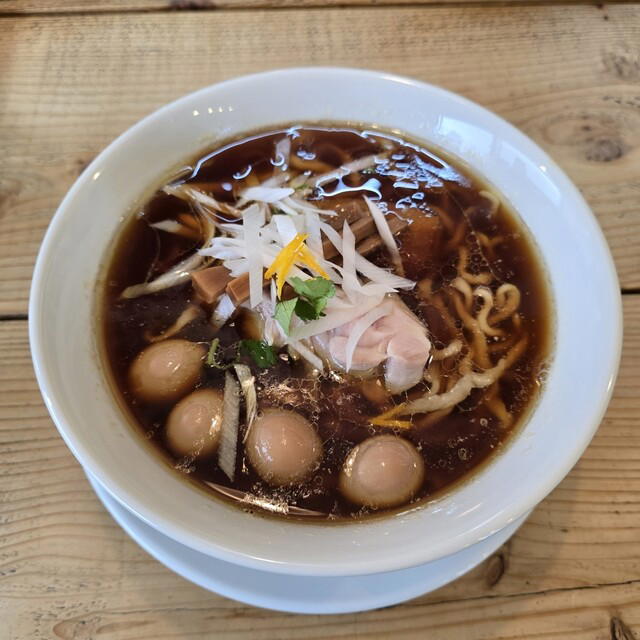
Approaching a serious ramen shop in Chiba differs from arriving at a Ginza counter or hotel dining room. The cues are smaller: a focused service rhythm, a format built for the bowl rather than lingering, and the calculation of whether the day’s noodles merit a train ride beyond central Tokyo. In Nagareyama, The Noodles & Saloon Kiriya belongs to that culture of narrow windows and focused eating, where reputation is measured less by ceremony than by repeat attention from ramen obsessives.
Ramen in the eastern Kanto orbit is a category of precision, not convenience. Serious shops compete on broth structure, noodle texture, tare balance, and the discipline of serving a bowl at the moment it is ready. Sourcing matters because ramen leaves few hiding places: stock, seasoning, fat, noodles, and toppings appear in sequence. A shop recognized in the 2025 Tabelog Hyakumeiten enters a crowded field where small differences carry weight, especially outside the central Tokyo districts international visitors overwork.
Suburban ramen, judged by craft rather than theatre
Nagareyama’s dining scene rewards attention different from Tokyo’s destination restaurants. The city has family-run counters, neighborhood specialists, and low-friction lunch rooms that rely on regulars as much as destination diners. Ramen is a useful measure of local seriousness: democratic in price, unforgiving in execution, and often more revealing than a formal tasting menu. The Noodles & Saloon Kiriya fits that pattern with ramen, abura-soba, and maze-soba, three forms that test seasoning and noodle handling differently.
Soup ramen centers the kitchen’s stock work; abura-soba shifts attention to oil, tare, and noodle coating; maze-soba makes mixing and balance the diner’s final act. That range signals craft more than breadth. The question is not how many options exist, but whether each format carries its logic. A focused ramen shop has little room for drift: each bowl moves quickly from preparation to customer, and the pace keeps focus on texture and temperature rather than ceremony.
The recognition also frames a Nagareyama comparison. Nagareyama Suzuki operates in a different dining lane, while LES TEMPS PLUS Honten sits closer to the casual neighborhood bracket. Kiriya’s appeal is narrower: ramen craft with a price signal that keeps it in everyday territory, not special-occasion dining. For a fuller city read, our full Nagareyama restaurants guide maps the broader local table, while our full Nagareyama hotels guide, our full Nagareyama bars guide, our full Nagareyama wineries guide, and our full Nagareyama experiences guide place the stop inside a wider itinerary.
Why sourcing shows up in the bowl
Ramen’s ingredient question is often misunderstood. It is not only rare produce or premium labels; it is how components behave under pressure. Noodles need the right bite for the broth or sauce. Tare must season with definition without flattening stock. Aromatic fat has to carry flavor without making the bowl heavy halfway through. In dry styles such as abura-soba and maze-soba, ingredient work becomes more direct because no soup volume softens imbalance.
This is where Kanto’s ramen culture becomes compelling for travelers who know the headline Tokyo shops. Eastern Japan has a dense ramen circuit in which suburban addresses draw serious attention when consistency is high. A Tabelog score of 3.74, combined with 2025 Hyakumeiten selection, is a meaningful signal. It does not make the meal luxury; it suggests the shop is judged against ramen peers by diners who care about small technical decisions.
The format also explains the solo-dining fit. Ramen rewards concentration and speed, and a streamlined noodle-shop setting reduces the social choreography of formal Japanese dining. Direct, focused eating makes sense because the bowl is the event. Any broader service details only widen the practical picture; the rhythm remains lunch-counter direct in spirit: arrive, choose, eat while the noodles are in their intended state, and leave room for the next person. That is not compromise; it is the tradition working as designed.
How to place it in a Nagareyama day
For travelers, the smart framing is not “detour or skip,” but what kind of day it supports. Nagareyama can be a quieter Chiba counterpoint to Tokyo’s overloaded restaurant routes, especially for diners interested in how everyday Japanese food categories develop local followings. Kiriya works well as a lunch anchor for a food-focused half day rather than a long evening plan. As with many serious ramen stops, timing can be part of the experience, so arrive with patience rather than squeeze it between fixed appointments.
Payment and access expectations should be checked before setting out, because small ramen shops can be more practical than polished in the details that matter to visitors. The essential point is the format: this is not a private-room or special-occasion restaurant, but a focused place for ramen, abura-soba, and maze-soba. Current listings and social updates are the safest check for temporary closures or service changes before making the trip.
Seen against Japan’s wider casual dining spectrum, Kiriya is not trying to compete with formal destination rooms or heavily produced city restaurants. It belongs closer to the specialist-casual lane: focused food, quick rhythm, and a reputation built around repeat attention rather than spectacle. Abroad, the same reader instinct might lead to compact Japanese casual formats, but Nagareyama is more local and less translated.
The editorial case is simple: this is a recognized ramen shop where ingredient handling and format discipline matter more than dining-room polish. For a traveler chasing Japan’s serious casual food culture, that is enough reason to pay attention.
In Context: Similar Options
Comparable venues by cuisine and price in the same metro.
| Venue | Cuisine | Price | Notes |
|---|---|---|---|
| The Noodles & Saloon Kiriya | Specialty Ramen Shop | $ | Nishi-Hatsuishi |
| Nagareyama Suzuki | Traditional Soba Noodle Shop | $$ | : Nishi Hatsuishi |
| LES TEMPS PLUS Honten | French Patisserie | $$ | Nagareyama Centralpark |
| 旭がのぼるまで | Miso Ramen | $ | Susukino |
| Yayoi (やよい軒 筑紫口店) | Japanese Teishoku | $ | Hakata |
| Tsukemen Michi | Tsukemen ramen shop | $ | Katsushika |
Recognition history
Dated appearances from independent guides and award organizations, with the underlying list record or original source where available.
Tabelog 100 #14 · No. 14
Tabelog · Tabelog 100 - Ramen - EAST - 2025
Continue exploring
More in Nagareyama
Restaurants in Nagareyama
Browse all →



Bars in Nagareyama
Browse all →





At a Glance
- Cozy
- Lively
- Solo
- Casual Hangout
- After Work
- Standalone
- Local Sourcing
Current opening hours
- Monday
- Closed
- Tuesday
- 11 AM–3 PM
- Wednesday
- 11 AM–3 PM
- Thursday
- 11 AM–3 PM
- Friday
- 11 AM–3 PM
- Saturday
- 11 AM–3 PM
- Sunday
- Closed
Hours can change for holidays and private events. Last verified .
A small, no‑smoking ramen shop with about a dozen seats, simple interiors and waiting area, focused on the bowl rather than décor; expect a lively but orderly atmosphere with serious ramen fans and some queuing at lunch.
Know Before You Go
- Reservations
- Walk in friendly
- Getting there
- 4 Chome-475-1 Nishihatsuishi, Nagareyama, Chiba 270-0121, Japan