The Ninth



1 Michelin Star · AA Rosettes 3 Rosettes · The Good Food Guide GFG Good
Our verdict
On Charlotte Street, The Ninth operates as a neighbourhood bistro with a Michelin star behind it, Jun Tanaka's French-Mediterranean kitchen draws from the coastlines of Provence, Sicily, and beyond, producing a sharing menu that moves between Italian and Provençal registers with quiet assurance.

Pearl is the En Primeur Club membership app, where members save venues, book tables and use the concierge.
The menu
What to order
- Crab and seaweed tartlets
- Sea bream carpaccio
- Iberico pork pluma
- Crispy agria potatoes
Where the Mediterranean Meets Fitzrovia
Charlotte Street is one of central London's most densely packed dining corridors, a stretch where competition is constant and novelty has a short shelf life. The restaurants that endure here tend to do so not through spectacle but through a particular kind of confidence: a clear culinary identity, a room that reads as lived-in rather than designed-to-impress, and a pace that makes the middle of the working week feel worth dressing for. The Ninth sits squarely in that tradition.
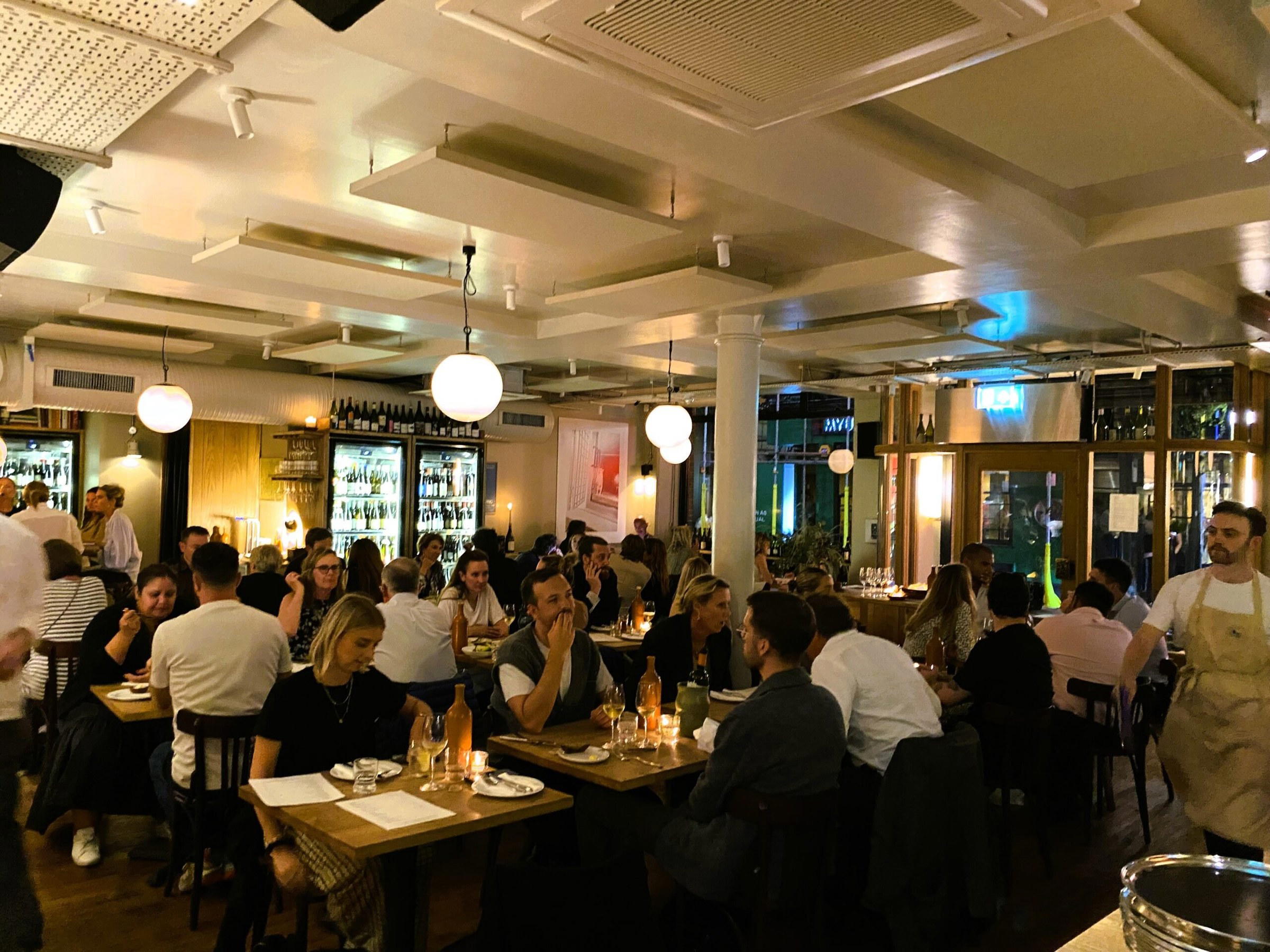
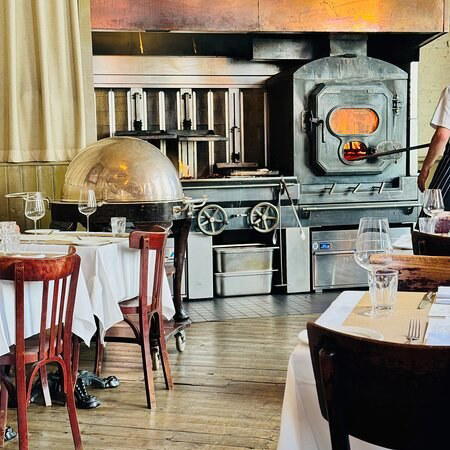
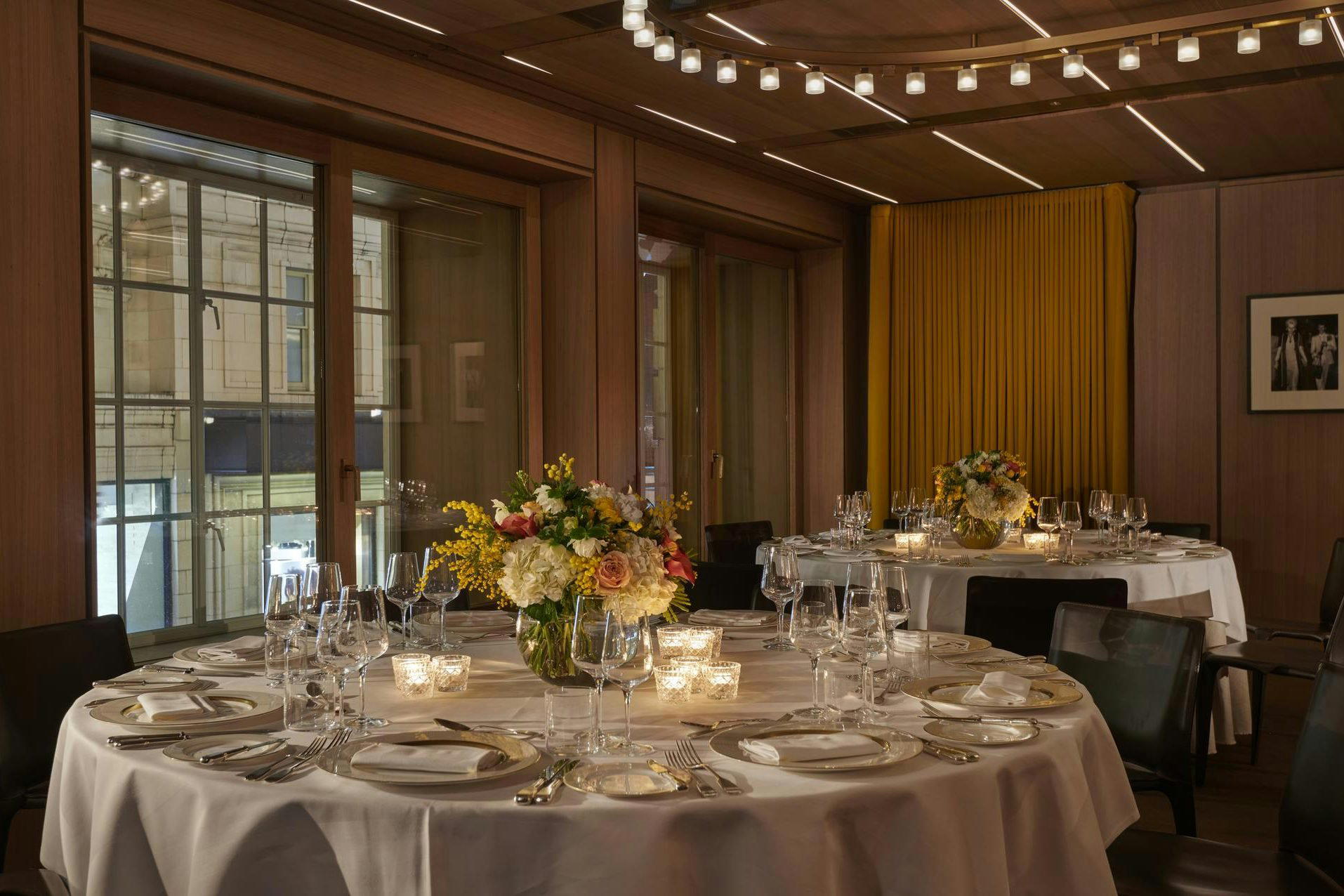
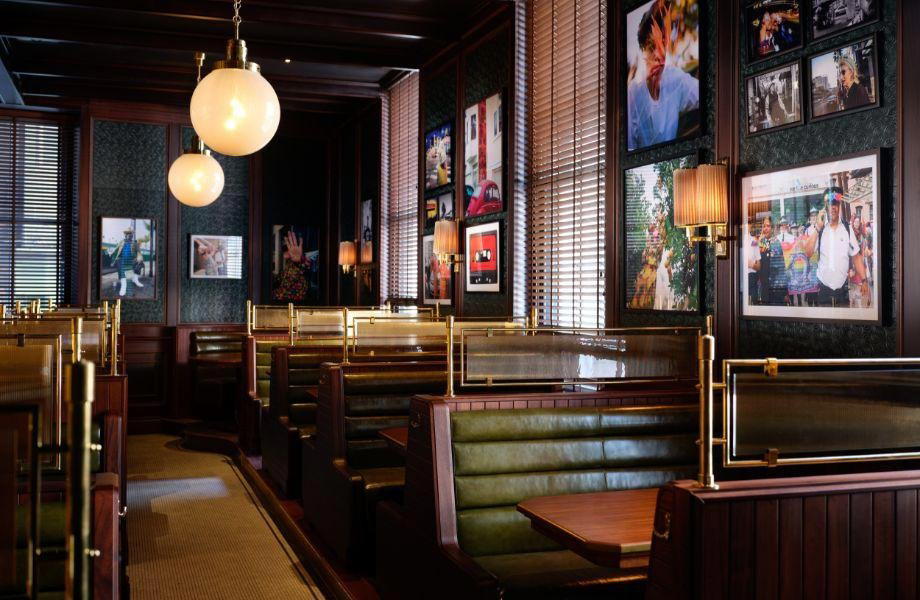
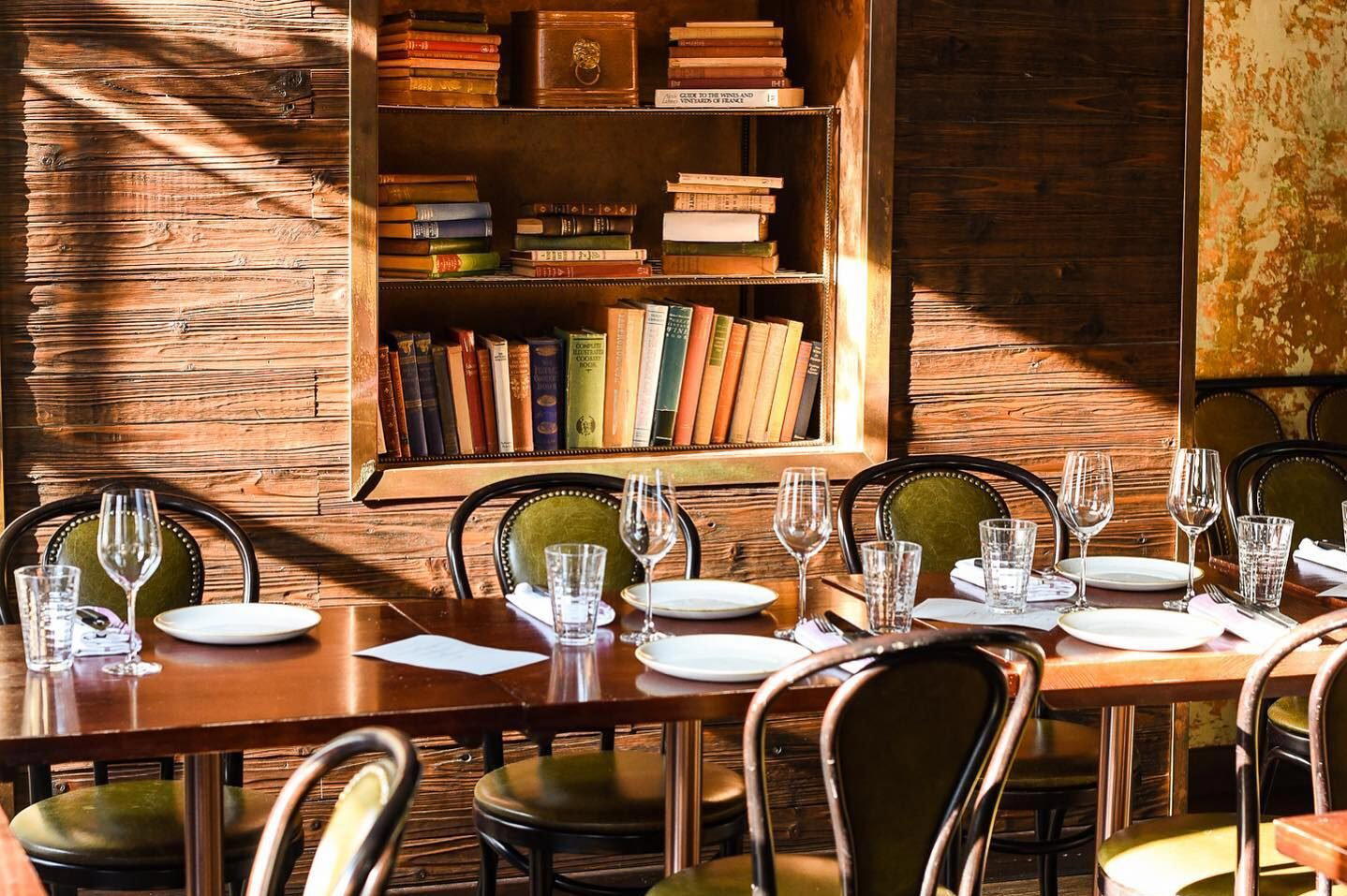
That positioning is deliberate. Two floors of closely set tables, grey banquettes against roughcast brickwork, ornamental lighting, and mirrors create an atmosphere that encourages lingering rather than spectating. The kitchen's point of view is Mediterranean in the broadest and most honest sense, not the softened, tourist-facing version of that cuisine, but something that moves between Provence, Sicily, and the Ligurian coast with real fluency. Jun Tanaka, whose training sits within the French haute tradition, brings a disciplined technique to ingredients and preparations that have their roots in southern European cooking. A tempura-battered red mullet with carrot and shallot escabeche carries a brief autobiographical note, the batter technique a quiet acknowledgement of Tanaka's Japanese heritage, but the surrounding composition is entirely Mediterranean in spirit.
The Logic of the Sharing Menu
Sharing formats have become a default mode for a particular tier of London restaurant, somewhere between the rigid tasting counter and the traditional à la carte. The Ninth's menu sits in that middle space, though not without tension. The format works cleanly for smaller plates, crab and seaweed tartlets, coccoli dough balls with puréed artichoke and black truffle, where division is direct and the communal logic holds. It becomes more complicated with larger mains: a whole grilled sea bass surrounded by mussels and Sicilian datterini tomatoes, or monkfish, prawns, and clams served in broth, are dishes that resist easy portioning. The menu reads, at points, as though it would prefer to abandon the sharing concept entirely and trust the diner to order with intention.
That minor structural ambiguity aside, the cooking itself is precise where it counts. The Mediterranean influence runs deep enough to feel structural rather than decorative: Sicilian datterini tomatoes in red and amber shades; a veal chop with morels that takes a simpler, more classical approach to its main protein; a wild garlic aïoli described in the kitchen's own notes as "shrieking-green", vivid language for a vivid ingredient. Desserts follow the same logic of restraint interrupted by occasional abundance: a chopped peach poached in mulled wine with yoghurt sorbet and mint oil, alongside a choux au craquelin with a chocolate-based shell encasing pistachio ice cream. The set lunch offers what several critics have noted as strong value relative to the dinner menu.
The Charlotte Street Context
Charlotte Street occupies an interesting position in London's dining geography. It is technically central, W1T, close enough to Soho and Bloomsbury to draw from both, but it has always had a slightly separate character from the louder restaurant clusters further south. The neighbourhood's identity has historically been built around media, architecture, and advertising agencies rather than finance or tourism, which produces a different kind of regular customer: less interested in occasion dining, more interested in a room where they can actually hear the conversation. The Ninth's atmosphere, informal, staffed by people described as having "personable maturity without being overbearing", suits that clientele precisely.
In the broader London context, The Ninth occupies a different price tier from the city's leading Michelin tables. CORE by Clare Smyth, Restaurant Gordon Ramsay, Sketch, The Lecture Room and Library, The Ledbury, and Dinner by Heston Blumenthal all operate at the ££££ tier, where the dining room becomes part of the proposition and the meal is structured as an event. The Ninth's £££ positioning places it in a register where the food is the argument and the room is a supporting context rather than a performance space. For a certain kind of diner, that distinction matters as much as the star count.
Mediterranean Cooking as a Cross-Cultural Form
The editorial angle worth holding onto with The Ninth is what the Mediterranean actually means as a culinary framework. The basin's food cultures have always been syncretic, Greek, Arab, Berber, Catalan, Provençal, Sicilian, and Levantine traditions overlapping and exchanging along shared coastlines for centuries. What contemporary European chefs do when they cook "Mediterranean" is, consciously or not, working inside that tradition of exchange. At The Ninth, the Italian-Provençal register that dominates the menu is not a rigid stylistic label but a range of reference points: the escabeche technique that arrived in southern Europe via North Africa and the Arab world; the Sicilian tomato varieties that carry the memory of centuries of agricultural cross-pollination; the black truffle that bridges French and Italian fine-dining traditions simultaneously.
Tanaka's Japanese training adds one further layer to that crossroads logic. The tempura batter on red mullet is a small detail, but it makes a structural point: cooking that draws from multiple coastline traditions is not a recent innovation but a continuation of how Mediterranean food has always developed. The Ninth's menu, read carefully, sits inside that longer conversation rather than commenting on it from outside.
For comparison, Le Bernardin in New York City and Atomix in New York City represent different points on the spectrum of cross-cultural fine dining, the former a benchmark of French technique applied to seafood, the latter a Korean-inflected counter that has made New York's tasting-menu scene more international in its reference points. The Ninth operates at a less rarified level than either, but within its own tier it performs the same kind of cultural synthesis with considerably less self-consciousness about doing so.
The Wine List and What It Signals
The wine program at The Ninth is described as mostly impressive, with good growers represented throughout. The noted gap is in the by-the-glass selection for dry whites, where the range skews toward high-acid varieties, Sauvignon Blanc, Riesling, Verdejo, at the expense of broader variety. For a menu with significant Provençal and Sicilian content, the absence of more southern French and Italian whites by the glass is a minor but genuine limitation. A carafe of Vermentino or a Fiano from Campania would sit more naturally alongside a whole grilled sea bass with Sicilian tomatoes than a Sauvignon Blanc from the Loire. The bottle list apparently compensates for this, but for diners eating lightly or keeping the bill measured, the glass options represent an area the kitchen hasn't fully aligned with its stated geography.
Planning Your Visit
The Ninth operates lunch and dinner from Monday through Saturday, with service running from noon to 2:30 PM and 5:45 PM to 9 PM each day; the kitchen is closed on Sundays. The address is 22 Charlotte Street, London W1T 2NB, within walking distance of Goodge Street and Tottenham Court Road underground stations. The price tier of £££ positions it as a considered but not exceptional spend for London, dinner for two with wine will be a meaningful outlay but not at the level of the city's tasting-menu rooms. The set lunch has been noted as offering particularly strong value relative to dinner. The room across two floors means the restaurant can absorb solo diners as well as groups; the sharing menu format works for both configurations, though larger tables will have more flexibility across the stronger sharing dishes. The restaurant returned to service following a period of closure after a fire, which makes the current operation a re-established rather than a newly opened proposition, the room and the cooking have had time to settle back into rhythm.
For broader planning, see our full London restaurants guide, our full London hotels guide, our full London bars guide, our full London wineries guide, and our full London experiences guide. For those extending their UK trip beyond the capital, The Fat Duck in Bray, L'Enclume in Cartmel, Moor Hall in Aughton, Gidleigh Park in Chagford, Hand and Flowers in Marlow, and Le Manoir aux Quat' Saisons, a Belmond Hotel in Great Milton represent a range of serious kitchens within reasonable reach of London.
Frequently asked questions
What are the opening hours for The Ninth?
Hours at The Ninth: Monday 12 PM-2:30 PM 5:45 PM-9 PM Tuesday 12 PM-2:30 PM 5:45 PM-9 PM Wednesday 12 PM-2:30 PM 5:45 PM-9 PM Thursday 12 PM-2:30 PM 5:45 PM-9 PM Friday 12 PM-2:30 PM 5:45 PM-9 PM Saturday 12 PM-2:30 PM 5:45 PM-9 PM Sunday closed.
Is The Ninth more mid-range or high-end?
Pricing at The Ninth is listed as £££.
What's The Ninth known for in terms of accolades?
The Ninth has received recognition including: Jun Tanaka’s restaurant may be centrally located on Charlotte Street, with its plethora of dining options, but this feels very much like a neighbourhood spot. Two floors of closely set tables and a relaxed, informal atmosphere help to creat….
What do people recommend at The Ninth?
Michelin inspectors have flagged the crab and seaweed tartlets and the coccoli dough balls with puréed artichoke and black truffle as strong opening moves. Among mains, the monkfish with prawns and clams in broth draws attention, though the sharing format makes it one of the trickier dishes to split across the table. The set lunch is consistently noted as good value relative to the à la carte, making it the entry point most worth booking around.
How would you describe the cuisine at The Ninth?
Where exactly is The Ninth?
The Ninth is located at 22 Charlotte St. London W1T 2NB, United Kingdom, London.
Is The Ninth chef-led?
The chef associated with The Ninth is Jun Tanaka.
Cuisine-First Comparison
A quick peer list to put this venue’s basics in context.
| Venue | Cuisine | Price | Awards | Notes |
|---|---|---|---|---|
| The NinthThis venue (the venue you are viewing) | Modern Mediterranean Sharing Plates | $50–100 | 1 Michelin Star · AA Rosettes 3 Rosettes | Not listed |
| The Ledbury | Modern British Fine Dining | $300–500 | 3 Michelin Stars · World's 50 Best #42 | Modern European, Modern Cuisine |
| Sketch, The Lecture Room and Library | Modern French Fine Dining | $200–300 | 3 Michelin Stars · World's 50 Best #18 | Modern French |
| CORE by Clare Smyth | Modern British Fine Dining | $150–200 | 3 Michelin Stars · World's 50 Best #97 | Modern British |
| Restaurant Gordon Ramsay | French Fine Dining | $200–300 | 3 Michelin Stars · World's 50 Best #13 | Contemporary European, French |
| Dinner by Heston Blumenthal | Historic British Fine Dining | $200–300 | 2 Michelin Stars · World's 50 Best #45 | Modern British, Traditional British |
Recognition history
Dated appearances from independent guides and award organizations, with the underlying list record or original source where available.
Michelin 1 Star
Michelin
AA Rosettes 3 Rosettes
AA Rosettes
The Good Food Guide GFG Good
The Good Food Guide
Opinionated About Dining Top New Restaurants in Europe Recommended
Opinionated About Dining
Full recognition history (6 entries)
Michelin 1 Star
Michelin
Michelin 1 Star
Michelin