1890 by Gordon Ramsay




Inside The Savoy, 1890 by Gordon Ramsay occupies a ten-table room named for Auguste Escoffier, who arrived at the hotel in that same year. A surprise tasting menu draws on Escoffier's classical repertoire, reworked through modern technique, and earned a Michelin star in 2024. Friday and Saturday lunches offer a shorter four-course format for those who prefer a compressed experience.
Pearl is the En Primeur Club membership app — saves, bookings, and concierge access live there. Same editors, same standards.
- Address
- Savoy Hotel, Strand, London WC2R 0EU, United Kingdom
- Phone
- +44 20 7499 0124
- Website
- gordonramsayrestaurants.com
- Directions
- Get directions
 Saves & bookings on Pearl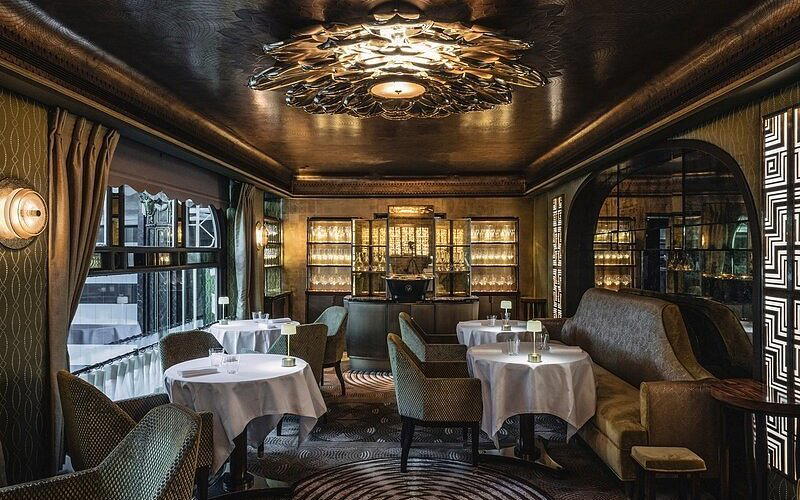
The Weight of 1890
The Strand has housed grand dining rooms for well over a century, and few addresses carry more accumulated expectation than The Savoy. When Auguste Escoffier arrived here in 1890, he brought with him the brigade system and a codified approach to French cookery that would shape professional kitchens across Europe for generations. 1890 by Gordon Ramsay is a one-Michelin-star restaurant at The Savoy in London, with a price of about $225 per person. The room that now bears the year of his arrival, 1890 by Gordon Ramsay, sits inside that history deliberately, using it not as decoration but as an argument: that classical French technique remains a living discipline, capable of absorbing modern refinement without losing its structural logic.
That argument is increasingly worth making in London, where the relationship between classical French cooking and contemporary innovation has grown complicated. At the summit of the market, venues like Sketch, The Lecture Room and Library have pushed French fine dining toward theatrical abstraction, while others have drifted toward a broadly European modernism that treats French technique as one toolkit among many. 1890 positions itself differently: classical reference is explicit, almost declarative, while the cooking applies modern methods to reach outcomes Escoffier would have recognised in spirit, if not always in form.
Ten Tables, No Shortcuts
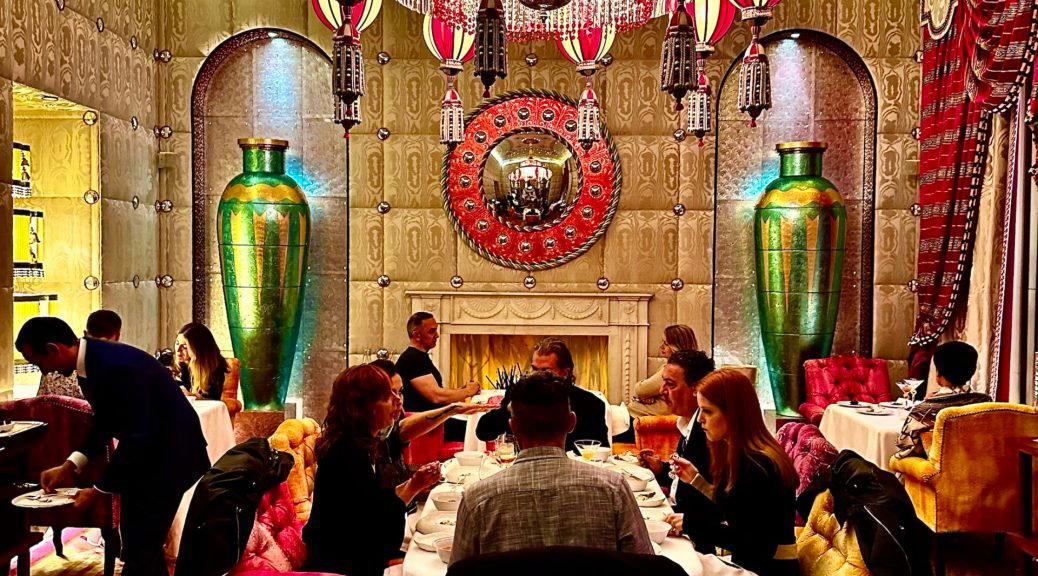
The room itself enforces a particular kind of attention. Just ten well-spaced tables sit beneath art deco detailing and rich golden hues that echo the wider Savoy aesthetic without replicating it wholesale. At this capacity, the dining room operates closer to a private space than a restaurant in any conventional sense, service ratios are high, ambient noise is low, and the experience has the pacing of a considered meal rather than an engineered one. In London's tasting-menu tier, where rooms at CORE by Clare Smyth and The Ledbury typically seat considerably more, the ten-table count at 1890 places it firmly in the city's most intimate fine-dining bracket.
Arriving through the Savoy's familiar Strand entrance and finding your way to this room is part of the experience, the hotel's public spaces are substantial, and the restaurant exists within them as something deliberately contained. The contrast between the hotel's grand scale and the room's deliberate smallness is not incidental. It signals intent: this is not a flagship dining room built for volume or visibility, but a format designed around depth of service and the kind of focused attention that a ten-table cover count actually allows.
The Tension That Defines the Menu
The central editorial question for any restaurant working in this tradition is how far modern technique can travel before the classical reference becomes nominal. At 1890, the answer appears to sit at a measured midpoint. The surprise tasting menu draws inspiration from Escoffier's repertoire, a body of work rooted in clarity of flavour, precise sauce work, and ingredient-led composition, and applies contemporary methods to it. Ingredients such as Cornish John Dory appear in the kitchen's sourcing, suggesting a commitment to British provenance as the raw material through which French classical structure is expressed. This is a recognisable position in modern British fine dining: French architecture, local ingredients, technique that bridges both.
The surprise format removes selection from the diner's hands entirely, which is a meaningful choice at this price point. In a room honouring a chef who systematised French cuisine into transferable knowledge, presenting a menu the kitchen controls entirely carries a certain internal logic. The kitchen commits to a sequence; the diner commits to trust. On Friday and Saturday lunchtimes, a four-course version of the menu provides a more accessible entry, shorter in duration, structured around the same principles, but calibrated for a midday sitting rather than an extended evening.
This kind of dual format, full tasting menu for evening, abbreviated set for lunch, is increasingly common among London's Michelin-starred hotel restaurants, where the lunch slot serves a different audience without compromising the kitchen's core position. The Savoy location adds a layer: Friday and Saturday lunches here will draw a mix of hotel guests, local professionals, and destination diners who want the 1890 experience without the full evening commitment.
Where 1890 Sits in London's Fine-Dining Tier
The Michelin star places 1890 in a defined peer group, though its competitive positioning differs from other starred restaurants in the city. At ££££ pricing inside a grand hotel, it sits alongside properties like Pavyllon London in the hotel fine-dining bracket. The Gordon Ramsay Group's flagship, Restaurant Gordon Ramsay in Chelsea, holds three Michelin stars and represents the group's highest formal recognition; 1890 operates as a more contained, historically anchored complement to that position rather than a parallel ambition.
Beyond London, the French Contemporary category at the Michelin-starred level has produced particularly discussed rooms of recent years. Amber in Hong Kong and Odette in Singapore both work within French classical structures inflected by their local contexts, and the comparison is instructive: the question of how French fine dining adapts without dissolving is not specific to London, but 1890's answer, anchoring explicitly to a named historical figure and a specific year, is unusually direct.
Within the broader British fine-dining circuit, the tasting-menu format at this price and format tier includes country-house restaurants such as The Fat Duck in Bray, L'Enclume in Cartmel, and Moor Hall in Aughton, alongside more regionally specific starred rooms like Gidleigh Park in Chagford, Hand and Flowers in Marlow, and hide and fox in Saltwood. 1890's urban hotel setting and French-classical framing place it in a distinct sub-category within this broader field.
Planning a Visit
1890 by Gordon Ramsay operates Tuesday through Thursday from 6:30 PM to 9:30 PM, with Friday and Saturday service running from noon through 9:30 PM. The restaurant is closed Sunday and Monday. The Savoy sits on the Strand in central London (WC2R 0EU), a short walk from Charing Cross station and within easy reach of Covent Garden. Given the ten-table capacity and the profile of the 2024 Michelin star, booking well in advance is the practical approach, the cover count means availability is genuinely constrained rather than performatively so. The price per person sits around $225, positioning this as a considered occasion rather than a spontaneous booking.
Cuisine and Awards Snapshot
Comparable venues nearby, for context on price, style, and recognition.
| Venue | Cuisine | Price | Awards | Notes |
|---|---|---|---|---|
| 1890 by Gordon RamsayThis venue — the venue you are viewing | Modern French Fine Dining | $$$$ | Michelin 1 Star | Not listed |
| Pétrus by Gordon Ramsay | Modern French Fine Dining | $$$$ | Michelin 1 Star | Belgravia |
| Humo | Modern Wood-Fired Fusion with Japanese Influence | $$$$ | Michelin 1 Star | Mayfair |
| Mauro Colagreco at Raffles London at The OWO | Hyper-Seasonal Fine Dining | $$$$ | Michelin 1 Star | Whitehall |
| Elystan Street | Modern European Fine Dining | $$$ | Michelin 1 Star | Chelsea |
| Cornus | Modern French Fine Dining | $$$$ | Michelin 1 Star | Belgravia |
Recognition history
Dated appearances from independent guides and award organizations, with the underlying list record or original source where available.
AA Rosettes 4 Rosettes
AA Rosettes
Michelin 1 Star
Michelin
Opinionated About Dining Classical in Europe Highly Recommended
Opinionated About Dining
Opinionated About Dining Newly Added European Restaurants
Opinionated About Dining
Star Wine List
Star Wine List
Michelin 1 Star
Michelin
World's Best Wine Lists Awards WBWL 3-Star
World's Best Wine Lists Awards
Michelin 1 Star
Michelin
World's Best Wine Lists Awards WBWL 3-Star
World's Best Wine Lists Awards
World's Best Wine Lists Awards WBWL 3-Star
World's Best Wine Lists Awards
Continue exploring
More in London
Restaurants in London
Browse all →
Hotels in London
Browse all →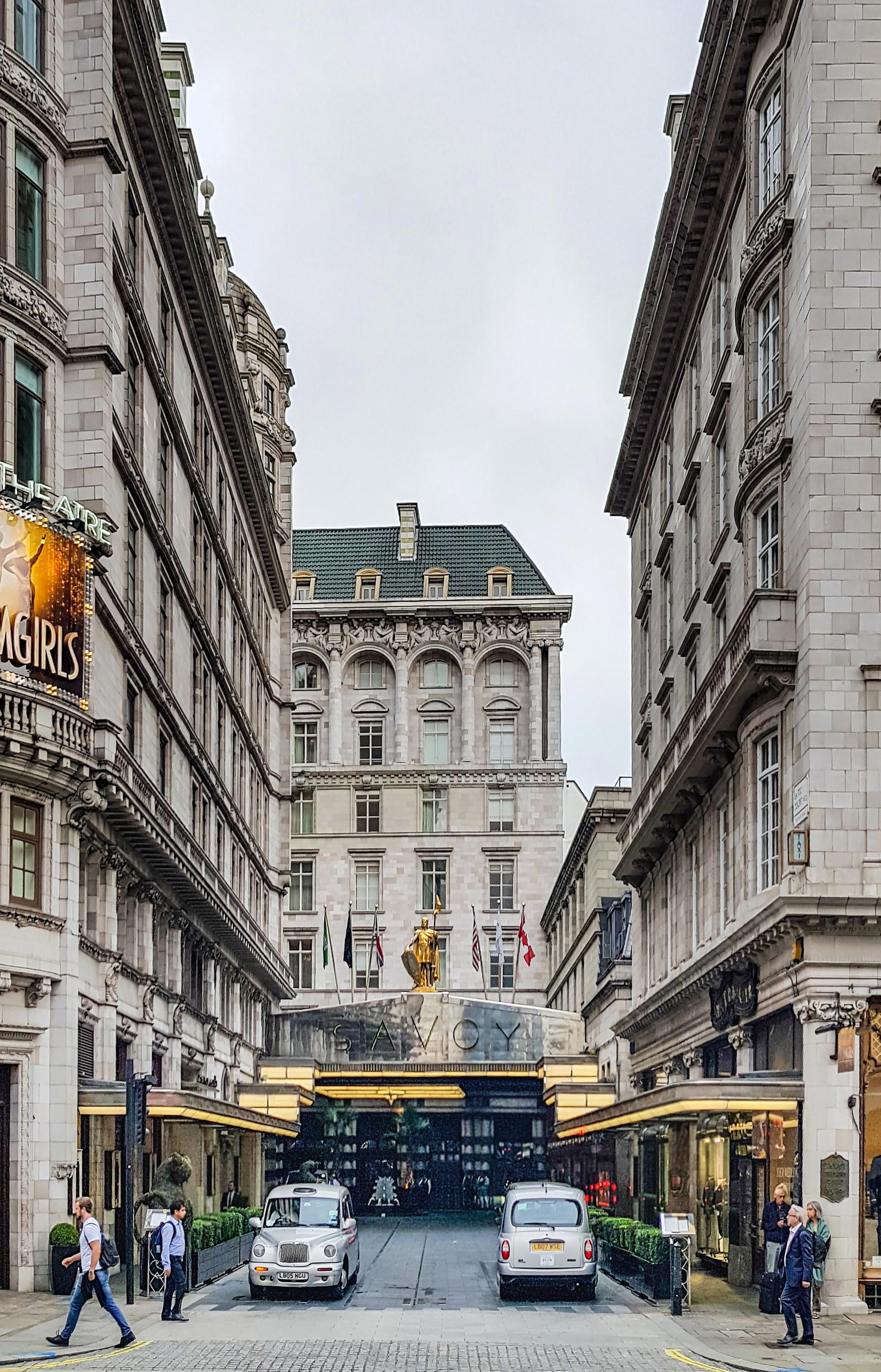
Wineries in London
Browse all →
At a Glance
- Elegant
- Intimate
- Sophisticated
- Classic
- Date Night
- Special Occasion
- Hotel Restaurant
- Historic Building
- Extensive Wine List
- Sommelier Led
- Local Sourcing
- Street Scene
Rich golden hues and art deco styling with low lighting, creating an elegant and intimate atmosphere overlooking the hotel entrance.