The Mulberry
A bakery-brasserie on Sawtelle Boulevard in West Los Angeles, The Mulberry occupies a format that sits between casual French bistro and neighbourhood café. Part of a stretch that has evolved into one of the city's more considered dining corridors, it suits those looking for the kind of all-day eating culture that Paris perfected and Los Angeles is still learning to sustain.
 Discover on Pearl
Pearl is the En Primeur Club membership app — saves, bookings, and concierge access live there. Same editors, same standards.
The Sawtelle Corridor and the All-Day Eating Question
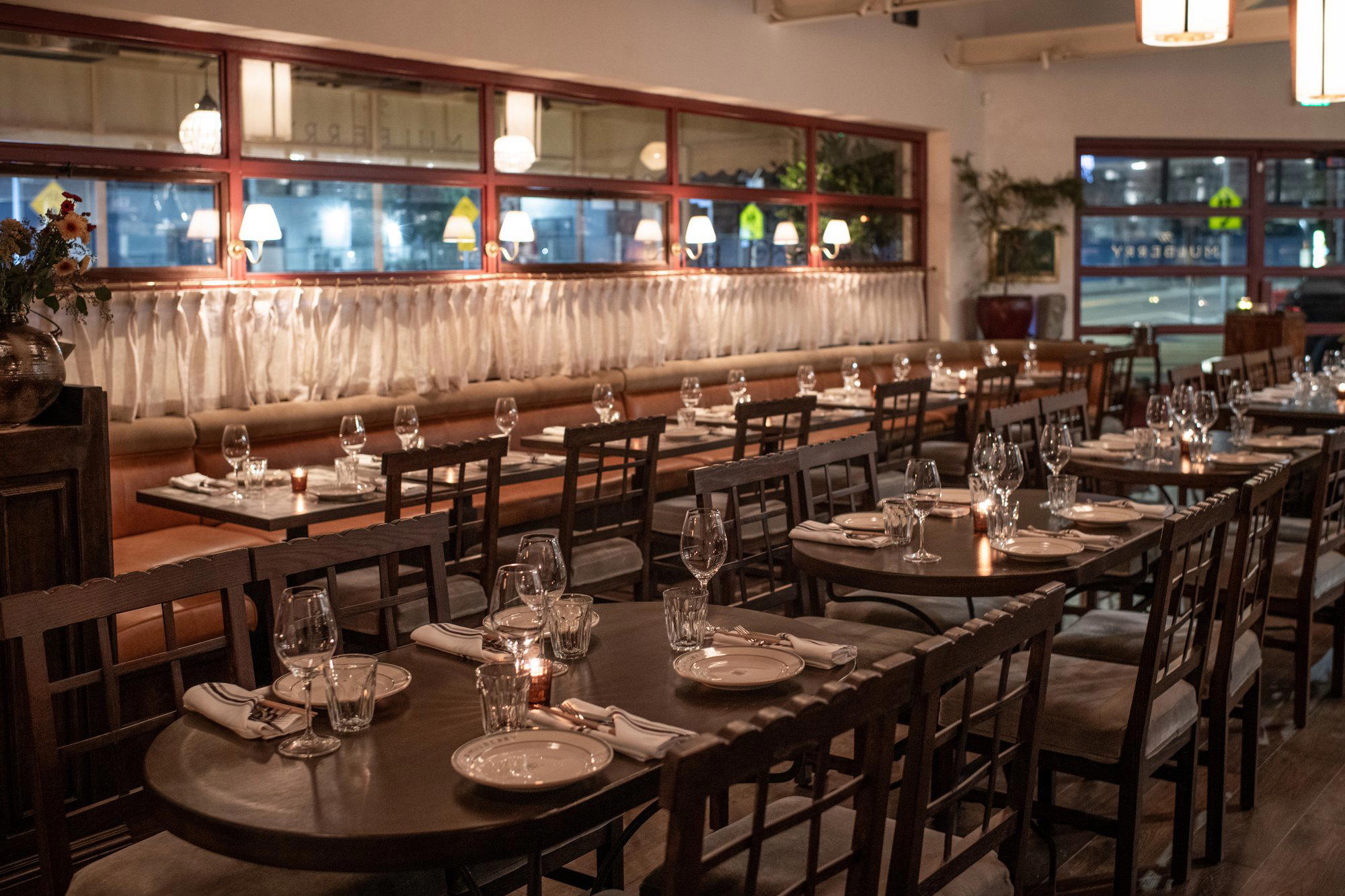
Sawtelle Boulevard has spent the better part of two decades being known primarily for its Japanese restaurants, ramen counters, izakayas, and sushi spots clustered between Olympic and Santa Monica Boulevard. That identity remains, but the street has broadened. Bakeries, wine-forward casual spots, and brasserie-format restaurants have moved in alongside the older Japanese establishments, and The Mulberry sits within that more recent wave. As a bakery-brasserie hybrid operating at 1800 Sawtelle Blvd, it occupies a format that European cities have long understood and American dining cities are still calibrating: the all-day room that does serious pastry work in the morning and transitions into a proper meal proposition by evening.
That format question matters more in Los Angeles than almost any other American city. Unlike Le Bernardin in New York City, where the operating assumption is a single, clearly defined dinner-focused experience, or the tasting-menu architecture of places like Alinea in Chicago, the Los Angeles dining scene has historically struggled with the middle register. The city does exceptional high-end (see Providence, Somni) and it does casual with conviction (the ramen and Korean BBQ infrastructure is genuine). What has been harder to sustain is the French bistro model: the room where a croissant at 8am and a glass of Burgundy with duck confit at 7pm feel like expressions of the same coherent philosophy.
What the Bistro Tradition Actually Requires
The French bistro is a specific thing, and it is worth being precise about what defines it before applying the label loosely. The original Parisian bistro was never about price alone, it was about consistency of mood, a limited but confident menu executed without pretension, and the understanding that the room belonged as much to regulars as to visitors. Quality bread was not a detail; it was the baseline. The same applied to butter, to coffee, to the carafe wine. The bistro format succeeded because it made no distinction between a quick lunch and a lingering dinner. You could sit for twenty minutes or two hours and the room accommodated both without making either feel wrong.
That model has influenced French-adjacent openings across the United States, from the brasserie wave in New York in the 1990s through to the current generation of Franco-Californian rooms operating in cities like San Francisco. Lazy Bear in San Francisco represents one end of that spectrum, the communal, format-driven dinner. The bakery-brasserie format that The Mulberry operates within represents a different position on the same axis: less theatrical, more habitual, and explicitly built around the rhythm of a neighbourhood rather than a destination dining occasion.
In Los Angeles, Kato and Hayato have demonstrated that West LA can sustain ambitious, focused restaurant formats with serious critical attention. The Mulberry operates in a different register, the casual end of the French-influenced spectrum rather than the tasting-menu tier, but the underlying question it answers is the same: can a neighbourhood room in Los Angeles build the kind of everyday loyalty that the bistro format requires to function at its finest?
The Bakery-Brasserie Format in Practice
The bakery-brasserie is a format that asks more of an operator than either element alone. A standalone bakery can succeed on product quality and morning traffic. A standalone brasserie can build an evening identity and coast on dinner covers. The combined format requires a kitchen that can execute laminated dough at 6am and a properly built sauce by noon, and a front-of-house team that can handle takeaway coffee customers without making seated diners feel like they are eating in a café, and vice versa. The rooms that get this right tend to share a few characteristics: they have a clearly legible identity that does not change register between morning and evening, they invest seriously in their bread and pastry program as a signal of the kitchen's overall standards, and they price in a way that reflects the neighbourhood rather than the occasion.
Internationally, this format has precedents that hold up well under scrutiny. The Parisian model, think the brasseries that anchor arrondissement corners rather than the tourist-facing grands cafés, has always treated the bread basket as a statement of intent. Alain Ducasse's Louis XV in Monte Carlo operates at the absolute opposite end of formality, but even there, the treatment of bread and butter as a meaningful first act rather than a filler course reflects the same French instinct that good bakery-brasserie work draws from.
Sawtelle's existing dining density, the Japanese restaurant cluster, the newer wine bars, the handful of café-format openings, gives The Mulberry a neighbourhood context that works in its favour. The street has foot traffic across the day, not just at dinner, which is a practical advantage for a format that needs morning and lunch covers to be viable. West Los Angeles more broadly has a professional and residential population that is genuinely accustomed to all-day café culture, even if the French bistro version of that culture is less deeply embedded here than in coastal cities with larger French expatriate communities.
Where It Sits in the West LA Dining Picture
The West LA dining corridor has grown more considered in recent years. Osteria Mozza established that the Westside could sustain serious Italian work with critical and commercial success. The more recent openings at the French-Asian end of the spectrum, Camphor operates in this territory, though downtown rather than on the Westside, have shown that Los Angeles diners are willing to engage with French culinary reference points delivered with local confidence rather than imported deference. Against that backdrop, the bakery-brasserie format reads less as a novelty and more as a logical next step: French in its bones, Californian in its execution, and neighbourhood-focused in a way that the higher-end tasting-menu rooms cannot be by definition.
Elsewhere on the West Coast, Single Thread Farm in Healdsburg and The French Laundry in Napa anchor the Northern California end of the French-influenced fine dining spectrum, providing a useful counterpoint to what the Los Angeles casual-format rooms are attempting at a different price point and register.
The Mulberry is a Modern Korean-American Bistro in Los Angeles at 1800 Sawtelle Blvd, and meals run at a price tier around $75 per person. Sawtelle is accessible from the 405 and sits within walking distance of the densely residential blocks between Santa Monica and Olympic, which means the lunch and weekend morning trade is drawn from a genuinely local catchment rather than a destination-dining pilgrimage.
Price and Recognition
Comparable venues nearby, for context on price, style, and recognition.
| Venue | Cuisine | Price | Awards | Notes |
|---|---|---|---|---|
| The MulberryThis venue — the venue you are viewing | Sawtelle, Modern Korean-American Bistro | $$$ | , | |
| Seogwan by Yellow Cow | Koreatown, Korean BBQ & Naengmyeon | $$$ | , | |
| Master Ha | Harvard Heights, Korean Seafood | $$ | , | |
| K-Team BBQ | Koreatown, Korean BBQ | $$ | , | |
| Bonjuk | $$ | , | Wilshire Center, Traditional Korean Porridge & Bibimbap | |
| Cho Dang Gol | Traditional Korean Tofu House | $$ | , |
Continue exploring
More in Los Angeles
Restaurants in Los Angeles
Browse all →
Bars in Los Angeles
Browse all →

Hotels in Los Angeles
Browse all →
Wineries in Los Angeles
Browse all →
At a Glance
- Romantic
- Cozy
- Intimate
- Elegant
- Modern
- Date Night
- Special Occasion
- Group Dining
- Casual Hangout
- Open Kitchen
- Private Dining
- Craft Cocktails
- Sake Program
Moody with soft candlelight, dim lighting, warm wood, textured surfaces, and an open kitchen framed by colorful glass, creating a cozy yet elegant neighborhood bistro atmosphere.