The Grand Nihao
The Grand Nihao occupies a unit within Flavor Bliss at Alam Sutera, South Tangerang's mixed-use dining precinct that has quietly drawn the city's Chinese-food crowd away from older commercial strips. The venue sits within a broader cluster of casual and mid-range options at this address, making it a reference point for the area's evolving appetite for Chinese dining outside of Jakarta proper.
Pearl is the En Primeur Club membership app — saves, bookings, and concierge access live there. Same editors, same standards.
- Address
- Flavor Bliss, Unit 17 Alam Sutera, Pakulonan, Kec. Serpong Utara, Kota Tangerang Selatan, Banten 15325, Indonesia
- Phone
- +622129005115
- Website
- grandnihao.com
- Directions
- Get directions
 Saves & bookings on Pearl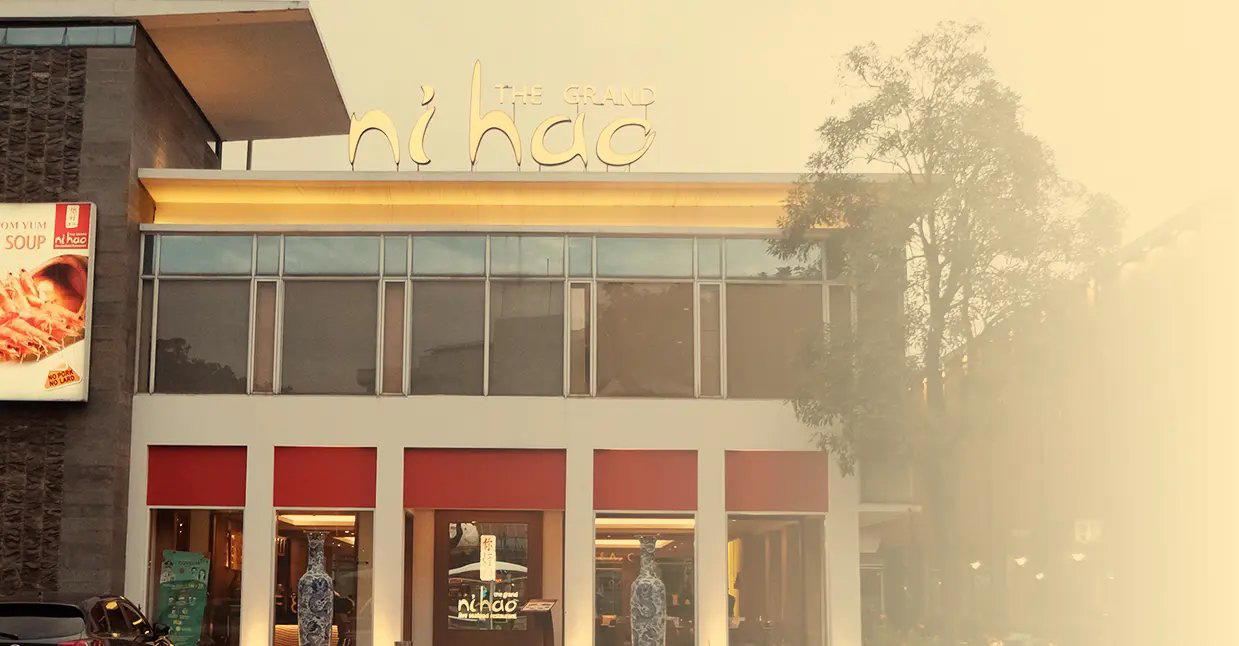
Chinese Dining in South Tangerang's Alam Sutera Corridor
The Grand Nihao is a Chinese Seafood restaurant in South Tangerang, Indonesia, at Flavor Bliss, Unit 17 Alam Sutera. The development at Pakulonan, Kec. Serpong Utara, sits within the broader Alam Sutera township, a satellite city that has absorbed a significant share of greater Jakarta's middle and upper-middle residential overflow over the past fifteen years. Where early dining options in that corridor leaned heavily on mall food courts and chain operators, the current mix includes a wider range of independently positioned restaurants, among them Cutt & Grill Flavor Bliss and Hachi Grill Alam Sutera, which together signal the precinct's appetite for grill-forward, protein-centred formats.
The Grand Nihao operates at Unit 17 within that same Flavor Bliss development.
The Ritual of the Chinese Restaurant Table
Chinese restaurant dining, in its Indonesian-urban expression, follows a set of inherited conventions that the format of a place like The Grand Nihao inherits by default. Shared dishes arrive in no fixed sequence, or rather, the sequence is governed by the kitchen's rhythm rather than a European-style progression. Soup and stir-fries may arrive simultaneously with cold appetisers; rice is a constant presence, not a course marker. This style of eating is democratic in its logic: the table is the unit of consumption, not the individual diner. Ordering well means reading the group, balancing textures and temperatures across dishes, and knowing when to stop rather than when to add.
In Indonesian cities, Chinese restaurant culture carries a long history. The Peranakan Chinese community established foodways that blended Hokkien, Teochew, and Cantonese techniques with local ingredients, producing a hybrid cuisine that is distinct from mainland Chinese cooking while remaining recognisably in that family. Restaurants operating under more explicitly mainland-Chinese positioning, as Nihao's naming convention suggests, tend to lean toward Cantonese or northern Chinese references: roasted meats, dim sum formats, braised preparations, and the kind of starch-heavy comfort dishes that travel well across generations. For a regional comparison on the dim sum end of this spectrum, Hwang Fu Dimsum in Tangerang represents a more focused expression of that particular sub-format.
The hotpot tradition occupies a different register entirely, more participatory, more theatrical, and tied to a specific social contract where the cooking is shared and the table itself becomes the kitchen. Options like Chongqing Liuyishou Hotpot in South Jakarta and Hai Di Lao in Central Jakarta have established that format at a chain scale, where the dining ritual is as much about service choreography as it is about the ingredients themselves. The restaurant's positioning at Flavor Bliss places it in a different register from those larger operators, closer in scale and context to the neighbourhood Chinese restaurant that serves as a weekly habit rather than an occasion.
Eating at Flavor Bliss: Practical Orientation
Flavor Bliss functions as a dining cluster within the Alam Sutera development, meaning arrival is typically by car or motorcycle, consistent with how most South Tangerang residents move between commercial destinations. The precinct's unit layout places individual restaurants in proximity to one another, which means foot traffic between operators is common, a format that rewards places with visible kitchens or displays that can stop a passing diner. For those already anchored at this address, the surrounding options include Calicoffice on the café end and Kimukatsu Bintaro Jaya Xchange for Japanese katsu formats, a reminder that the precinct's competitive set spans multiple cuisines rather than a single category.
The restaurant is open daily from 10:30 AM to 9 PM, and reservations are recommended.
Where The Grand Nihao Sits in the Regional Picture
Indonesian dining culture at the premium end has been reshaped in recent years by restaurants operating in the capital and in Bali at a different level of ambition and technique. August in Jakarta and Locavore NXT in Ubud represent one pole of that shift, tasting-menu formats with sourcing narratives and international critical recognition. At the other pole sit the neighbourhood restaurants that serve consistent, recognisable food to a local crowd on a recurring basis, with none of the pressure of occasion dining. The restaurant at Flavor Bliss reads as the latter: a Chinese restaurant embedded in a residential-commercial precinct, likely drawing from the surrounding Alam Sutera catchment rather than from destination diners.
That positioning is neither a limitation nor a criticism. The neighbourhood Chinese restaurant is among the more durable formats in urban Asia, precisely because it serves a social function that occasion dining cannot: the mid-week dinner with family, the Sunday lunch that runs long because nobody is in a hurry, the table that gets the same dishes every visit because those dishes are the point. In cities where dining out is a weekly rather than monthly event for a large share of the population, the restaurant that executes familiar food with consistency holds a different kind of value than the one chasing critical attention. For reference on how that value plays out at higher technical registers, Kita 喜多 Restaurant And Bar in Kecamatan Menteng offers a point of comparison on the Japanese-Chinese dining spectrum in greater Jakarta.
Cuisine and Recognition
Comparable venues nearby, for context on price, style, and recognition.
| Venue | Cuisine | Price | Notes |
|---|---|---|---|
| The Grand NihaoThis venue — the venue you are viewing | Chinese Seafood | $$ | Not listed |
| Hachi Grill Alam Sutera | Halal Japanese Yakiniku & Shabu-Shabu | $$ | Alam Sutera |
| Kimukatsu Bintaro Jaya Xchange | Layered Katsu Japanese | $$ | Bintaro Jaya Xchange |
| Cutt & Grill Flavor Bliss | Steakhouse Grill | $$ | Alam Sutera |
| Calicoffice | Australian-Japanese Fusion Cafe | $ | Serpong, BSD City |
| Chongqing Liuyishou Hotpot (重庆刘一手火锅) | Chongqing Hotpot | $$ | South Jakarta |
Continue exploring
More in South Tangerang
Restaurants in South Tangerang
Browse all →
Bars in South Tangerang
Browse all →
At a Glance
- Lively
- Group Dining
- Private Event
- Private Dining
Current opening hours
- Monday
- 10:30 AM–9 PM
- Tuesday
- 10:30 AM–9 PM
- Wednesday
- 10:30 AM–9 PM
- Thursday
- 10:30 AM–9 PM
- Friday
- 10:30 AM–9 PM
- Saturday
- 10:30 AM–9 PM
- Sunday
- 10:30 AM–9 PM
Hours can change for holidays and private events. Last verified .