The Farmhouse at Redcoats
A converted farmhouse in the Hertfordshire countryside, The Farmhouse at Redcoats sits in the quieter register of the English rural dining scene, where the surrounding agricultural land shapes what arrives on the plate. For those driving north from London through Hitchin, it represents a considered alternative to the well-trodden Chilterns circuit, grounded in seasonal, locally sourced cooking and a setting that trades metropolitan polish for genuine rural character.
Pearl is the En Primeur Club membership app — saves, bookings, and concierge access live there. Same editors, same standards.
- Address
- Redcoats Green, Hitchin SG4 7JR, United Kingdom
- Phone
- +441438729500
- Website
- farmhouseatredcoats.co.uk
- Directions
- Get directions
 Saves & bookings on Pearl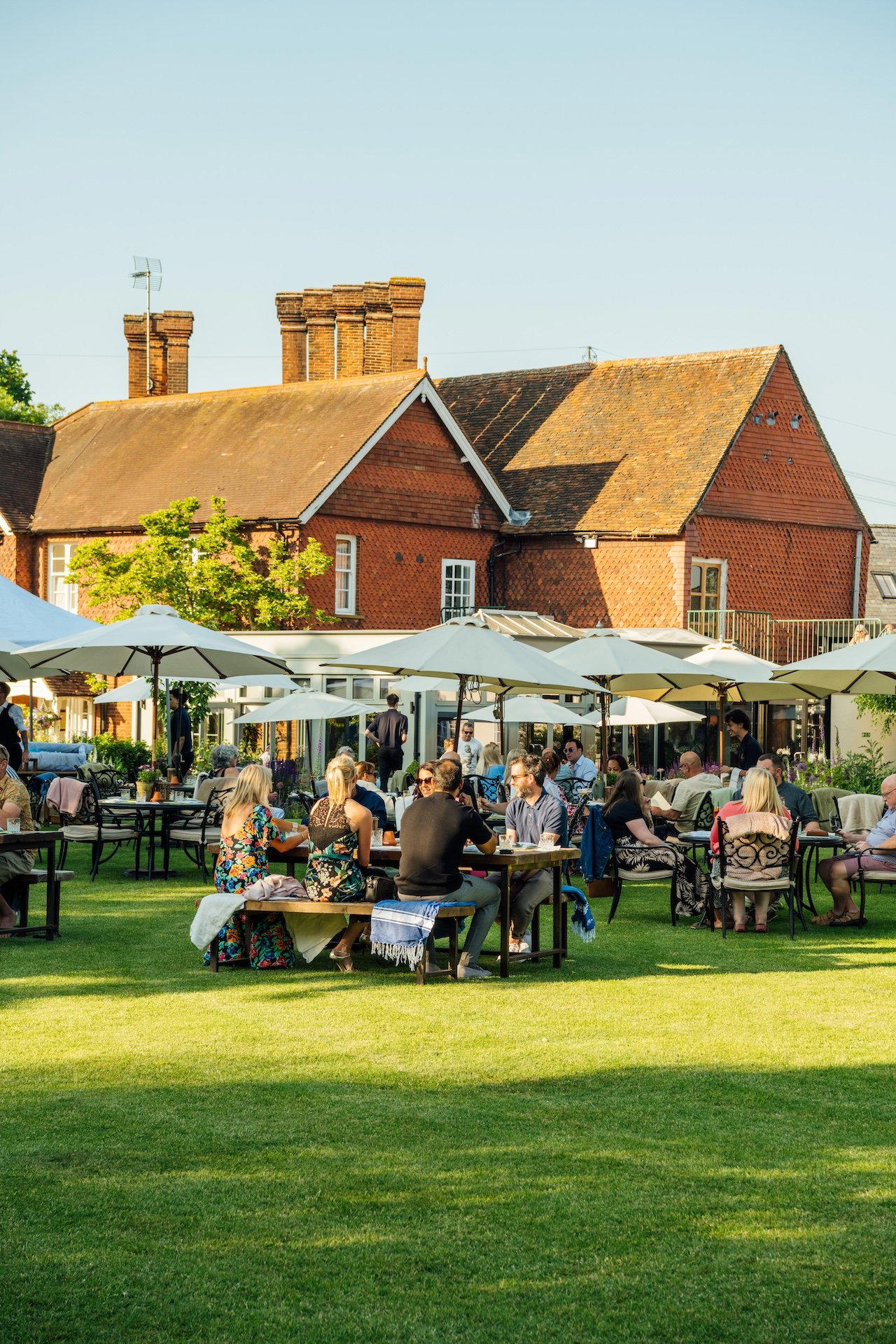
Where Hertfordshire's Fields Meet the Plate
England's country-house dining tradition has long operated on a particular logic: take a building with genuine age and character, surround it with productive land or at least the appearance of it, and let the setting do much of the editorial work. The Farmhouse at Redcoats is a restaurant in Hitchin, Hertfordshire, serving Modern British Farm-to-Fork cooking at about $50 per person. It belongs to this lineage, but it occupies a quieter, less publicised tier than the trophy addresses that appear in award shortlists each autumn. That positioning is, for many diners, precisely the point. Properties like Le Manoir aux Quat'Saisons in Oxford or Gidleigh Park in Chagford set the upper ceiling for the format; The Farmhouse at Redcoats operates well below that in terms of fanfare, which tends to suit a diner looking for substance without theatre.
Hertfordshire sits in an agricultural corridor that has supplied London's markets for centuries. The county's soil, its proximity to the Home Counties' farming networks, and its relatively compact distances to urban centres make it a reasonable base for kitchens that want to source with some degree of local specificity. In that broader context, a farmhouse setting in this part of England is not merely aesthetic, it carries a plausible claim to genuine provenance, the kind of supply-chain proximity that dining rooms in central London have to work considerably harder to establish.
The Case for Ingredient-Led Cooking in the Rural English Model
One durable argument for eating at a working or working-adjacent farm property is not atmosphere but sourcing integrity. When a kitchen is physically close to its suppliers, the gap between field and plate compresses in ways that affect the cooking directly. This is a different proposition from urban restaurants that build farm-to-table narratives around relationships that exist largely on paper or at seasonal intervals.
The English country restaurant tradition has approached this question with varying levels of seriousness. At one end sit places like L'Enclume in Cartmel and Moor Hall in Aughton, where kitchen gardens and dedicated farm suppliers are woven directly into multi-course tasting menus and documented in granular detail. At the other end, the language of local sourcing functions more as atmosphere than supply-chain commitment. The Farmhouse at Redcoats sits in Hertfordshire's established agricultural belt, which provides the geographic conditions for genuine local procurement, what the kitchen does with that proximity is the relevant question.
That ingredient-first framing is also what distinguishes the more compelling examples of this format from mere gastropub ambition. Compare it with something like Hand and Flowers in Marlow, which has built a clear critical identity around accessible but technically serious cooking in an unpretentious pub building. The farmhouse model at Redcoats operates with a different register, the setting implies a different kind of claim about origins and season, and the cooking should answer to that setting rather than simply coexist with it.
The Setting and What It Signals
Approaching a property like this along the lanes of Hertfordshire, the physical environment does specific work. Stone or brick farm buildings, open fields at the perimeter, a car park that doubles as a farmyard in the mind if not in fact, these details establish an expectation before anyone has read a menu. The interior of a well-managed conversion in this format typically retains enough original fabric (exposed beams, flagstone or worn wood flooring, low ceilings in older sections) to maintain the narrative the exterior sets up, while adding enough comfort to justify a serious dining occasion.
This is where the format differs structurally from the urban dining room, which must create atmosphere entirely from design decisions. A farmhouse dining room earns atmosphere through what is already there and what it implies about the food's origins. The risk, as with many properties in this category, is that the setting becomes the primary product and the cooking recedes to support act. The leading examples of the English rural dining model, among them hide and fox in Saltwood and 33 The Homend in Ledbury, maintain a kitchen ambition that matches the setting's implicit promise.
Hitchin and the Hertfordshire Dining Context
Hitchin is a market town with a medieval street plan and a modest but genuine food culture that has developed incrementally rather than through any single moment of critical attention. It lacks the gravitational pull of Cambridge, which draws venues like Midsummer House into a more visible critical orbit, and it is not a destination food town in the way that Bray is, anchored as that village is by Waterside Inn and its decades of accumulated reputation. What Hitchin has is a catchment area of commuter-belt residents with urban dining expectations, and a surrounding countryside that supplies genuine agricultural variety across the seasons.
The restaurant sits outside the town centre proper, in the hamlet of Redcoats Green, which places it firmly in the rural-retreat category rather than the neighbourhood-restaurant category. That distinction matters for planning: this is a destination with specific purpose, not a drop-in. Diners arriving here are making a deliberate choice to leave town behind, which shapes the pacing and the expectations of an evening in ways that a high street address never does. The comparison here is with properties like Restaurant Andrew Fairlie in Auchterarder or Ynyshir Hall in Machynlleth, both of which require deliberate travel and reward it accordingly.
Planning a Visit
The practical realities of a venue in this location favour those arriving by car; Hertfordshire's rural road network connects Redcoats Green to the A1(M) and to Hitchin itself without undue difficulty, but public transport to this specific hamlet is not a realistic option for most visitors. The property's address at Redcoats Green, Hitchin SG4 7JR, serves as the reliable navigation anchor. Booking in advance is advisable, particularly for weekend lunch and dinner. A venue of this type in an agricultural setting tends to track the English seasons fairly directly, which makes autumn and spring visits particularly well-timed for produce-led cooking.
Comparison Snapshot
Comparable venues nearby, for context on price, style, and recognition.
| Venue | Cuisine | Price | Notes |
|---|---|---|---|
| The Farmhouse at RedcoatsThis venue — the venue you are viewing | Modern British Farm-to-Fork | $$$ | Not listed |
| Bread Street Kitchen & Bar | Modern British restaurant & bar by Gordon Ramsay | $$$ | City of London |
| Old Compton Brasserie | Modern British Brasserie | $$$ | Soho |
| The Orchard Room | British Afternoon Tea | $$$ | Westminster |
| Olympic Studios | British Brasserie | $$$ | Barnes |
| Hans' Bar & Grill | British Grill | $$$ | Knightsbridge |
Continue exploring
More in Hitchin
Restaurants in Hitchin
Browse all →
Bars in Hitchin
Browse all →
Hotels in Hitchin
Browse all →

At a Glance
- Rustic
- Cozy
- Classic
- Scenic
- Elegant
- Date Night
- Group Dining
- Celebration
- Private Event
- Brunch
- Garden
- Private Dining
- Historic Building
- Standalone
- Extensive Wine List
- Farm To Table
- Local Sourcing
- Organic
- Garden
Historic, countryside setting with quirky details, stylish interiors, and a warm, friendly, cozy feel.