The Bombay Club

A Penn Quarter institution with decades of standing on the D.C. scene, The Bombay Club operates at the intersection of colonial-era club aesthetics and polished Indian cooking. Half-moon banquettes, a clientele drawn from the Beltway's upper ranks, and a menu that spans Northern grills to Southern coconut curries make it a consistent reference point for serious Indian cuisine in the capital. Michelin Plate recognised in 2024.
Pearl is the En Primeur Club membership app — saves, bookings, and concierge access live there. Same editors, same standards.
- Address
- 815 Connecticut Ave NW, Washington, DC 20006
- Phone
- (202) 659-3727
- Website
- bombayclubdc.com
- Directions
- Get directions
 Saves & bookings on Pearl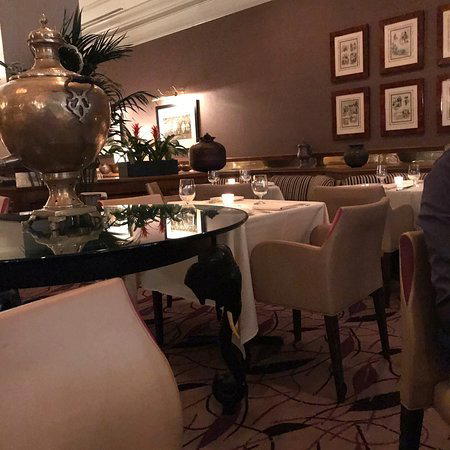
The Room That Sets the Tone
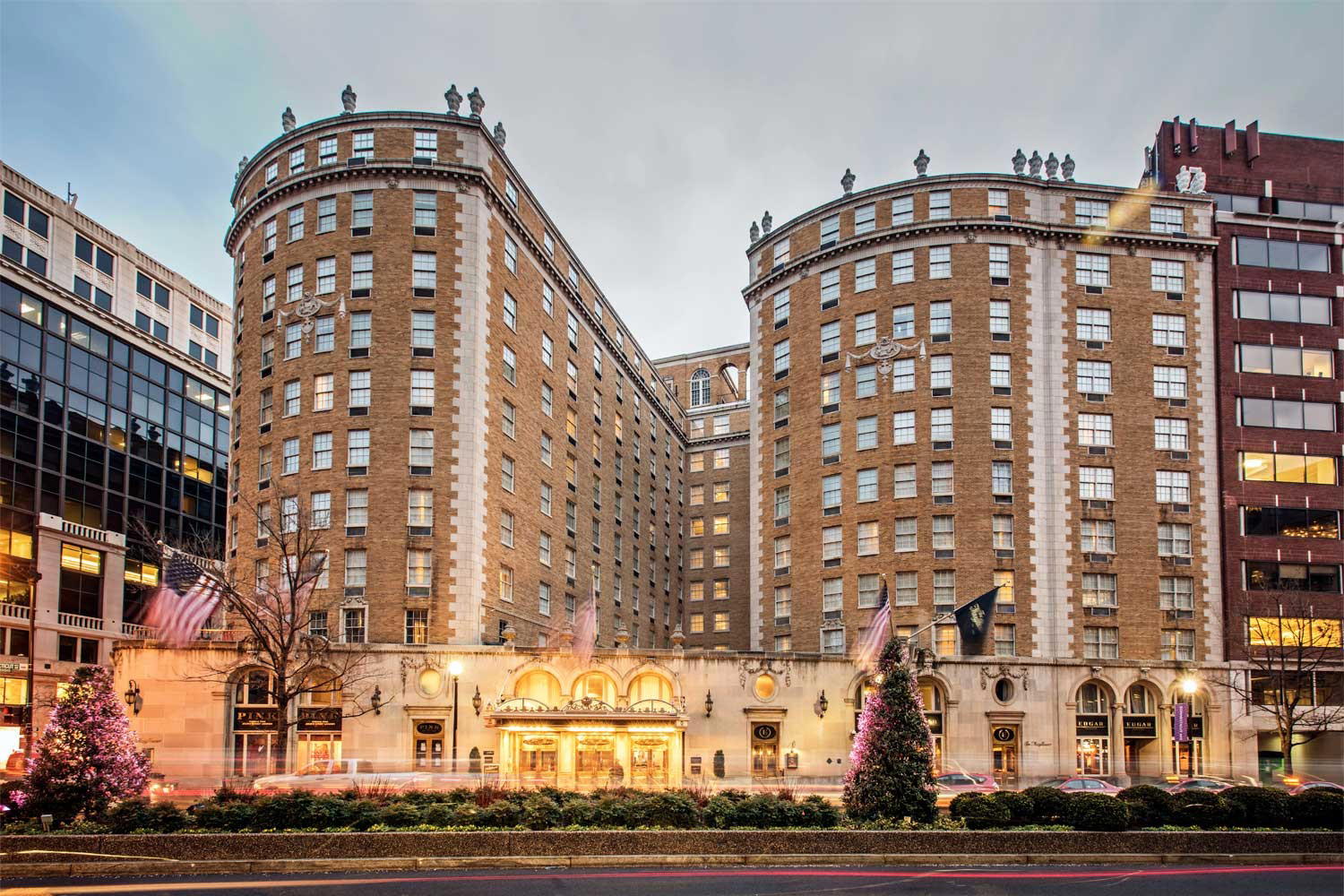
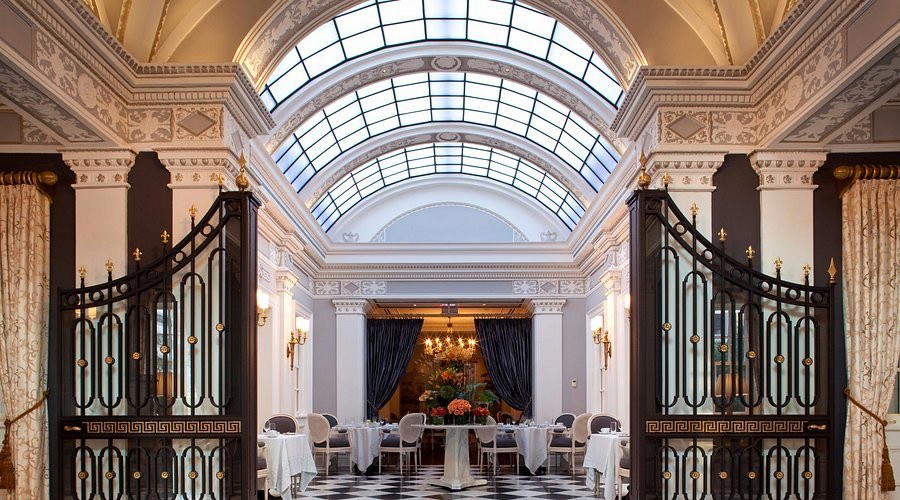
Connecticut Avenue, a block from the White House, has a particular register: buttoned-up, architecturally serious, the kind of address where the buildings themselves communicate seniority. The Bombay Club reads the neighbourhood correctly. Step inside and the reference points are immediate: high ceilings, formal upholstery, half-moon banquettes that frame the room like a series of private alcoves. The design vocabulary is a deliberate nod to the clubs of the British Raj, not a theme-park approximation, but a considered interior language that prioritises formality, quiet, and a certain lateral spaciousness. Conversation carries here without competing against a sound system. The lighting sits at the level that suits a long dinner rather than a quick table turn.
In a city where a great many restaurants signal ambition through exposed concrete and a deliberately austere aesthetic, The Bombay Club holds a different position. The physical container is itself an argument, for decorum, for a version of Indian hospitality rooted in a different century, and for the idea that a dining room should feel like somewhere rather than nowhere. That argument has been made, consistently, for a number of decades now along the same stretch of Connecticut Avenue.
The Politics of the Room
D.C.'s restaurant scene has always been partly a function of its professional ecosystem. Proximity to the White House and the corridors of federal power means that certain dining rooms acquire a secondary identity as working space for the political class. The Bombay Club is among the clearest examples of this phenomenon in the city. Senators, lobbyists, and Beltway-adjacent figures occupy the banquettes with enough regularity that the room functions, in practice, as something close to a private club with a public dining licence. Owner Ashok Bajaj has built a multi-restaurant presence across D.C. over several decades, and The Bombay Club sits at the more formal end of that portfolio, the property that makes the clearest case for Indian cuisine as a dining category appropriate to the highest-register business lunch or political dinner.
This social context matters to how the room feels. There is a particular quality to spaces that have been vetted repeatedly by people whose professional lives depend on correct reading of environments. The restaurant has cleared that bar and kept clearing it. The 2024 Michelin Plate recognition is the kind of acknowledgement that consolidates rather than creates a reputation, by that point, the room had already been operating as a reference point in the capital's Indian dining conversation for years.
What the Menu Is Actually Doing
Indian cuisine in the United States occupies a complicated position in the critical imagination. A persistent tendency to reduce it to a single, largely North Indian register, heavy sauces, tandoor-dominant menus, has gradually been corrected by a generation of restaurants working across regional specificity. The restaurant's menu addresses this by spanning the subcontinent more deliberately than the category average. Northern grilled meats and slow-cooked preparations sit alongside Southern seafood and coconut-inflected dishes, which is less common in D.C.'s Indian dining tier than it should be.
Within that structure, specific items have acquired the kind of quiet consensus that develops around dishes that are genuinely well-executed rather than merely crowd-pleasing. The goat cheese and spiced tomato kulcha functions as an opener that bridges familiar and less familiar flavour territory, the kulcha format is well understood, the filling combination less so, and the balance between the two is what determines whether a dish like this works. The braised lamb curry that follows is a study in restraint: tender protein, a sauce with sweet notes that don't overwhelm the spice register, a bowl that asks to be eaten slowly. These are dishes where technique is present in the result rather than announced by it. Chef Nilesh Singhvi leads the kitchen in that direction.
That approach places the restaurant in a specific tier within D.C.'s Indian dining conversation. Rasika occupies the more contemporary, technically adventurous end of the spectrum. Daru and Karma Modern Indian work in different registers again, the former with a cocktail-forward Indian identity, the latter with a modern tasting format. The restaurant sits at the intersection of classical technique and institutional authority, which is a different value proposition than any of those. For comparison across international markets, Trèsind Studio in Dubai and Opheem in Birmingham represent how the Indian fine-dining conversation has developed in other cities, a useful frame for understanding where the restaurant sits in a wider global context.
Within D.C.'s broader fine-dining tier, where restaurants like Albi are redefining what Middle Eastern cuisine can look like at the highest price points, the restaurant operates at the $$$ price range, accessible relative to the ceiling of the D.C. market, but firmly in serious-dining territory. For reference on what that tier looks like in other American cities, Le Bernardin in New York City, Lazy Bear in San Francisco, Alinea in Chicago, The French Laundry in Napa, Emeril's in New Orleans, Single Thread Farm in Healdsburg, and Rania in D.C. itself offer useful calibration points across the American fine-dining spectrum.
Longevity as a Critical Category
There is a version of the critical conversation about restaurants that systematically undervalues longevity. New openings generate more coverage than sustained performance; a decade-old dining room rarely produces the kind of editorial energy that a first-week reservation rush does. The restaurant is a corrective to that bias.
That kind of track record is not incidental to the experience. It is part of what the room is selling: a version of reliability that the capital's more restless dining culture does not always provide.
Know Before You Go
- Address: 815 Connecticut Ave NW, Washington, DC 20006
- Price range: $$$ (mid-to-upper tier; formal dining pricing)
- Recognition: Michelin Plate (2024)
- Cuisine: Indian, spanning Northern and Southern regional traditions
- Atmosphere: Formal club-style interior; half-moon banquettes; Raj-era design references
- Clientele: Political figures, Beltway insiders, business diners
- Location context: One block from the White House on Connecticut Avenue NW
- Booking: Advance reservations recommended given consistent demand from the Beltway professional set
Standing Among Peers
Comparable venues nearby, for context on price, style, and recognition.
| Venue | Cuisine | Price | Awards | Notes |
|---|---|---|---|---|
| The Bombay ClubThis venue — the venue you are viewing | Elegant Indian Fine Dining | $$$ | Michelin Plate | Not listed |
| Rasika | Modern Indian | $$$ | Michelin Plate | East End |
| Opal | Modern American Wood-Fired | $$$ | Michelin Plate | Chevy Chase |
| BlackSalt | Modern Seafood | $$$ | Michelin Plate | Berkley |
| Tapori | Modern Indian Street Food | $$$ | Not listed | Near Northeast |
| Chang Chang | Modern Chinese | $$$ | Michelin Plate | Dupont Circle |
Recognition history
Dated appearances from independent guides and award organizations, with the underlying list record or original source where available.
Michelin Plate
Michelin
Michelin Plate
Michelin
Continue exploring
More in Washington DC
Restaurants in Washington DC
Browse all →
Bars in Washington DC
Browse all →
Hotels in Washington DC
Browse all →
At a Glance
- Elegant
- Sophisticated
- Classic
- Cozy
- Intimate
- Date Night
- Business Dinner
- Special Occasion
- Live Music
- Historic Building
- Craft Cocktails
- Extensive Wine List
Current opening hours
- Monday
- 11:30 AM–2:15 PM, 5–9:30 PM
- Tuesday
- 11:30 AM–2:15 PM, 5–9:30 PM
- Wednesday
- 11:30 AM–2:15 PM, 5–9:30 PM
- Thursday
- 11:30 AM–2:15 PM, 5–9:30 PM
- Friday
- 11:30 AM–2:15 PM, 5–10 PM
- Saturday
- 5–10 PM
- Sunday
- Closed
Hours can change for holidays and private events. Last verified .
Elegant with pale pastels, ceiling fans, greenery, plush seating, starched linens, and relaxing live piano; warm, inviting, and sophisticated.