
Tabelog 100 #17
Our verdict
The Bar CASABLANCA is a small Yokohama cocktail bar in Bashamichi, selected for Tabelog Bar 100 in 2022 and built around a counter-led drinking ritual rather than high-volume nightlife. Its 15-seat format, cocktail focus, and late-afternoon-to-late-night rhythm make it a precise stop for drinkers who value pacing, conversation, and classic bar etiquette.

Pearl is the En Primeur Club membership app, where members save venues, book tables and use the concierge.
The menu
What to order
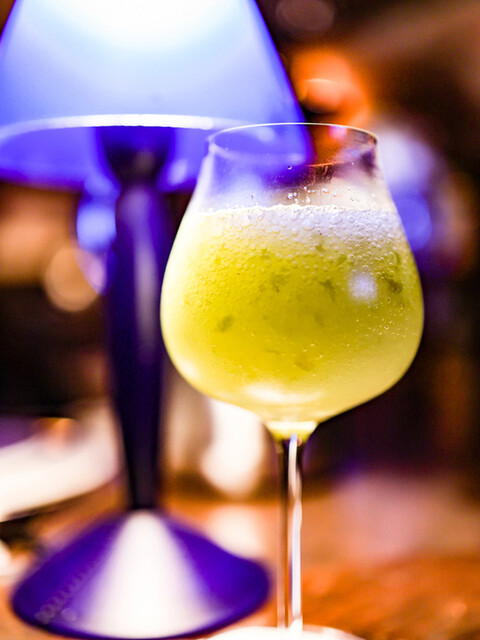
- Seasonal fruit cocktails
- Apple Cocktail
- Yuzu Gin Tonic
- Pomegranate & Grapefruit Cocktail
- Classic cocktails
Bars in Japanese port cities can carry a different charge from hotel lounges or neon cocktail rooms. The shift matters: street noise thins, the room tightens, and the counter becomes the evening’s point rather than a place to wait for a table. In Yokohama, that ritual has weight. The city’s drinking culture sits between international port influence and Japanese bar discipline, and The Bar CASABLANCA belongs to the quieter side: bar-focused, measured, and built for guests who understand the first decision is tempo, not speed.
Yokohama is often read through its waterfront, hotels, and polished dining, but the city also has a more adult cadence after dark. Its appeal is sequence over spectacle: dinner nearby, a measured drink after, then the last train or a slow walk through the city. A bar becomes part of the evening grammar, not an accessory. The Bar CASABLANCA’s selection for Tabelog Bar 100 in 2022 gives it a public credential, but the more useful signal is category: a focused bar structured around proximity, restraint, and observation.
A counter ritual in a city shaped by after-dinner drinking
Japanese bars reward guests who read the room. Conversation drops, orders are considered, and the counter is not simply furniture; it is the stage where technique, pacing, glassware, and service timing become visible. In a Yokohama bar, solo drinkers and pairs often make more sense than large groups. The appeal is not novelty, but the discipline of a bar that centres the drink and lets the evening unfold one order at a time.
This is where Yokohama differs from louder bar circuits elsewhere. Other cities may have density, international awards infrastructure, and constant concept-bar churn. Yokohama’s stronger drinking rooms can feel more local, with less pressure to turn the night into performance. The Bar CASABLANCA fits that mode. It sits in the same city where food-led decisions range across Yokohama dining rooms before the evening narrows into a quieter bar setting. This bar does not compete with those tables; it completes the night.
The Tabelog Bar 100 recognition helps because Japan’s bar scene can be opaque to visitors. Many serious rooms do not explain themselves loudly online, and some venues can be hard to assess from outside. Here, the award places the bar within a national category of bar-focused addresses, while the format keeps expectations grounded. This is not a sprawling lounge or party bar, but a Japanese model where bartender workspace, guest posture, and service cadence define the night.
How it compares with Yokohama's dinner-first addresses
The surrounding dining choices clarify the bar’s role. Tonkatsu Aoki Yokohama bashamichi ten, Sushi Tsugu, Bashamichi Okawa, and LA FIGLIA DEL PRESIDENTE all answer dinner questions in different ways. Against that spread, The Bar CASABLANCA is a post-meal specialist: not necessarily the night’s main reservation, but the room that determines whether the evening ends with precision or drift.
That distinction matters. Yokohama rewards chaining venues within the city rather than treating every stop as a separate expedition. A visitor might build the night around dinner in Yokohama, then move into a bar setting whose scale slows the group down. Large parties are the wrong lens. The counter-driven structure favours a measured mood, and the bar identity signals a ceiling on social sprawl. In Japanese bar etiquette, that is a strength: fewer moving parts, less noise, and more attention to the drink.
For wider food itineraries, the bar also separates Yokohama from the rest of Japan’s dining circuit. A café in another city, a regional dining address, or a curry stop elsewhere answer different travel questions. Yokohama is about the port-city evening: varied dining, Western-influenced routes, bars, and hotel corridors within a few transit stops. The Bar CASABLANCA belongs to that rhythm rather than to a checklist of spectacle-driven destinations.
Who should make room for it
The right guest is not chasing a loud room or maximalist drinks list. The right guest wants the formal pleasures of a Japanese bar: a seat, a pause, a careful order, and the social intelligence to let the room set the pace. Award recognition will attract list-checkers, but the format better serves drinkers who already enjoy counter culture. For a multi-stop crawl, it may be the wrong emphasis. For a controlled final act after dinner, it makes sense.
Practical expectations shape the experience. The venue is listed in the Bar category, carries a Tabelog score of 3.90, and has a dinner budget of JPY 2,000 - JPY 2,999. Those details define the frame better than overpromising a scene. Guests seeking volume, novelty, or a view should calibrate carefully. Guests who value a bar in Yokohama will understand the appeal faster than anyone arriving for noise or spectacle.
Yokohama itineraries benefit from category discipline. Use Our full Yokohama restaurants guide for dinner planning, Our full Yokohama bars guide for later rooms, Our full Yokohama hotels guide for where to base the night, Our full Yokohama wineries guide for wine-led detours, and Our full Yokohama experiences guide for non-restaurant planning. Nearby comparisons help, too: Yokohama dining shifts quickly by category, price, and mood, and unnamed regional addresses can feel entirely different within a short trip. For a broader international contrast, Japanese-inspired formats abroad show how familiar rituals travel, adapt, and lose or gain context outside Japan.
Frequently asked questions
Is The Bar CASABLANCA suitable for children?
The Bar CASABLANCA is a bar in Yokohama, and its Tabelog 100 Bar selection points to a grown-up drinking room rather than a child-oriented stop.
What is the atmosphere like at The Bar CASABLANCA?
Expect a focused bar atmosphere in Yokohama. Tabelog singled it out in its 2022 Bar 100 list, which signals a serious drinks-focused room rather than a casual pub.
What's the price range at The Bar CASABLANCA?
Pricing at The Bar CASABLANCA is listed as JPY 2,000 - JPY 2,999 View spending breakdown.
Where is The Bar CASABLANCA?
Yokohama.
Cuisine Lens
Nearby venues at a similar price tier for orientation.
| Venue | Cuisine | Price | Awards | Notes |
|---|---|---|---|---|
| The Bar CASABLANCAThis venue (the venue you are viewing) | Authentic Cocktail Bar | $20–30 | Tabelog 100 #17 | Not listed |
| LENTO | Neighborhood cafe with Western-style comfort food and sweets | $10–20 | Tabelog 100 #91 | Naka |
| Casablanca Katano Shurui Hanbai | Japanese Bar | Not listed | Tabelog 100 #55 | Naka |
| Yakitori Midori | Yakitori Omakase | $50–100 | Tabelog 100 #97 | Naka |
| Kikuya Yogashi Ho Motomachi honten | Japanese Confectionery / Cake Shop | $1–10 | Tabelog 100 #77 | Naka |
| PRIMO | Italian Fine Dining | $100–150 | Tabelog 100 #91 | Naka |
Recognition history
Dated appearances from independent guides and award organizations, with the underlying list record or original source where available.
Tabelog 100 #17 · No. 17
Tabelog · Tabelog 100 - Bar - 2022
Continue exploring
More in Yokohama
Restaurants in Yokohama
All restaurants in Yokohama →

Bars in Yokohama
Browse all →



Details
- Sophisticated
- Classic
- Intimate
- Date Night
- Solo
- After Work
- Special Occasion
- Standalone
- Craft Cocktails
- A La Carte
- Small Plates
- Craft Cocktails
- Vegetarian Friendly
Current opening hours
- Monday
- 4 PM–12:30 AM
- Tuesday
- 4 PM–12:30 AM
- Wednesday
- 4 PM–12:30 AM
- Thursday
- 4 PM–12:30 AM
- Friday
- 4 PM–12:30 AM
- Saturday
- 4 PM–12:30 AM
- Sunday
- 4 PM–12:30 AM
Hours can change for holidays and private events. Hours as of .
Low-key, intimate, and classic, with a mature cocktail-bar atmosphere centered on seasonal fruit drinks and an experienced bartender-led experience.