Our verdict
The Ambassador Training Restaurant at 250 Blaxland Road, Ryde, sits inside a hospitality education institution, where students deliver full table-service meals to paying guests as part of their accredited training. The format places it in a small but growing category of Sydney dining where ethical sourcing and reduced-waste kitchen practice are built into the curriculum itself, not bolted on as marketing.

Pearl is the En Primeur Club membership app — saves, bookings, and concierge access live there. Same editors, same standards.
- Address
- 250 Blaxland Rd, Ryde NSW 2112, Australia
- Phone
- +61279203621
- Hours
- Mon 6:30–9 PMTue ClosedWed 12–2 PM, 6–9 PMThu 6:30–9 PMFri 12–2 PM, 6–9 PMSat–Sun Closed
- Website
- opentable.com.au
- Directions
- Get directions
- Booking
- Book on OpenTable
The menu
What to order
- Scallop galette with braised leek and beurre blanc
- Kangaroo
- Salmon with crispy skin
- Beef cheeks
- Matcha sponge
- Strawberry cheesecake
A Dining Format Built Around What Happens in the Kitchen Before the Plate Arrives
Sydney's restaurant conversation tends to gravitate toward its harbour-adjacent flagships and inner-city natural wine bars. Ryde sits outside that orbit, and 250 Blaxland Road sits further still from the kind of venue that earns column inches in the weekend supplements. Yet the training restaurant format, of which The Ambassador Training Restaurant is a Sydney example, represents something the city's more celebrated rooms rarely manage: a kitchen where sustainability practice is structural, not cosmetic. When waste reduction, ethical sourcing, and nose-to-tail discipline are written into a course curriculum rather than a PR brief, the results tend to be more rigorous than most.
Australia has produced some serious thinking on this front. Brae in Birregurra operates its own kitchen garden and has made closed-loop sourcing central to its reputation. Attica in Melbourne has drawn sustained attention for its engagement with indigenous ingredients and ethical producer relationships. These are destination restaurants with decades of intention behind them. The training restaurant operates on different logic: sustainability here is pedagogical. Students learn it because the curriculum requires it, which means the next generation of cooks entering Sydney's kitchens arrives with those habits already formed.
Where the Training Restaurant Sits in Sydney's Dining Ecology
Sydney's dining geography has long been weighted toward the CBD, the inner east, and the lower north shore. Rockpool and Saint Peter define the upper tier of what Australian cuisine looks like at full expression. Venues like 10 William St and 1021 Mediterranean represent a mid-tier with serious culinary intent. 10 Pounds and bills in Bondi Beach sit in the accessible everyday register. The training restaurant occupies none of these tiers in a conventional sense. It is not competing for the same diner. It operates as an educational facility that happens to serve food to paying guests, which gives it a freedom that commercial rooms rarely have: the freedom to make the process visible.
That visibility is part of the point. In a standard restaurant, the kitchen is hidden and the supply chain is almost entirely invisible to the diner. In a training environment, procurement decisions, preparation methods, and waste management are all subjects of instruction. A student who learns to break down a whole animal, use the trim in a stock, and account for every gram of produce is receiving training that the wider industry benefits from downstream. Johnny Bird in Crows Nest and Bayly's Bistro in Kirribilli sit geographically close to Ryde and represent the kind of neighbourhood dining those trained students may eventually enter. The pipeline matters.
The Sustainability Argument for Training Kitchens
The Australian hospitality industry generates significant food waste at every level of the supply chain. Institutional kitchens, including training facilities, have historically been among the worse offenders, purchasing in bulk without the precision that smaller commercial kitchens apply. That calculus has shifted in recent years as TAFE and private hospitality colleges have increasingly embedded food cost management, waste auditing, and ethical sourcing into their assessments. A student who cannot demonstrate sound procurement and waste reduction practices may not pass, which makes sustainability a competency rather than a value-add.
This contrasts with how the commercial dining sector typically handles the subject. For established rooms, sustainability commitments often arrive after the brand is formed, retrofitted into a narrative that was built on other foundations. For a training restaurant, the commitment is foundational because the curriculum requires it. Whether that produces a more authentic or simply a more systematic approach is an open question, but the outcome for the industry is the same: trained professionals who understand the environmental and financial cost of waste from day one.
Globally, this model has precedent. The hospitality schools of Lausanne and Le Cordon Bleu have long operated training tables for paying guests. In the United States, programs at culinary institutes in Hyde Park and San Francisco have produced graduates who went on to define regional dining movements. The training restaurant is not a second-tier dining experience by definition. At its better examples, it is a serious table staffed by motivated students under close supervision, producing food that reflects current industry standards because those standards are what is being taught.
Reading the Room: What to Expect at a Training Venue
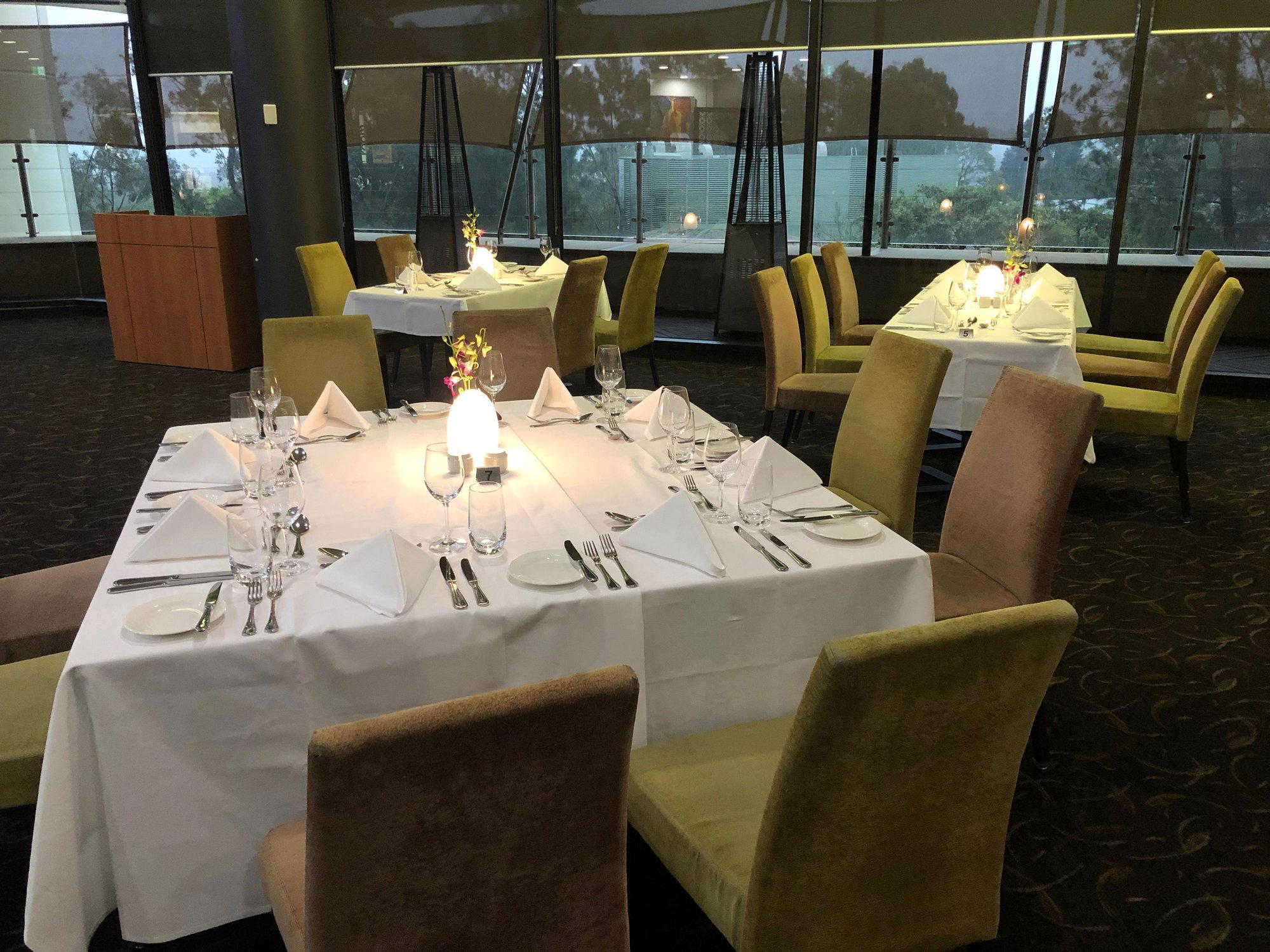
Service at a training restaurant runs at a different pace than a commercial room. There will be more deliberate movements, more checking of notes, occasionally more time between courses. For a diner accustomed to the efficiency of a polished commercial team, that cadence takes adjustment. For a diner interested in what hospitality actually looks like in formation, it is instructive. The students are learning table management, timing, and guest communication in real conditions, which means the room operates as a live classroom.
The food itself reflects what is in the curriculum at any given time. Training kitchens typically cycle through classical technique before moving toward contemporary applications, so the menu at any point may read more formally than the broader Sydney market. That is not a limitation so much as a signal of where in the teaching cycle the cohort sits. Vegetables are often handled with more care than in commercial kitchens where speed governs, because careful preparation is an assessment criterion. The same applies to saucing, plating, and mise en place.
For diners who want to understand how Sydney's next wave of cooks is being trained, and who are comfortable with a format that prioritises learning over consistency, the training restaurant format offers something that no amount of polish at a commercial room can replicate. See our full Sydney restaurants guide for a wider map of where the city's dining sits right now, from Hungry Wolfs Italian Restaurant in Newcastle to Kulcha Restaurant Wollongong and beyond.
The comparison set for The Ambassador Training Restaurant is not Le Bernardin in New York City or Atomix in New York City. It is not even Bar Carolina in South Yarra or Barry Cafe in Northcote. Jaani Street Food in Ballarat and similar regional venues show how far from the CBD serious food can travel. Ryde is considerably closer.
Planning Your Visit
Because The Ambassador Training Restaurant operates on an academic calendar rather than a commercial one, availability is tied to term dates and assessment periods rather than seasonal demand. Service sessions are typically lunch-focused during teaching weeks, with fewer evening seatings than a comparable commercial room. Booking well ahead of a preferred date is advisable, and confirming directly with the institution about current session availability is the only reliable way to secure a table.
Quick reference: 250 Blaxland Rd, Ryde NSW 2112. Operated within a hospitality training institution.
Frequently asked questions
What's The Ambassador Training Restaurant's location?
The Ambassador Training Restaurant is located at 250 Blaxland Rd, Ryde NSW 2112, Australia, Sydney.
Is The Ambassador Training Restaurant in Ryde cheaper than a comparable Sydney commercial restaurant?
Training restaurants in Sydney typically operate at significantly lower price points than commercial rooms of equivalent service formality, because the cost model is structured around education rather than revenue. At venues like The Ambassador in Ryde, this often means a three-course formal service for a fraction of what a mid-tier CBD room would charge. The trade-off is a slower, more deliberate pace of service rather than any reduction in the care applied to the food.
What's the best thing to order at The Ambassador Training Restaurant?
Training kitchen formats of this kind reliably produce careful classical cookery — the kind of output that results when students are assessed on precision rather than speed. Dishes that require disciplined technique, such as sauced proteins or structured desserts, tend to be where training rooms demonstrate their strengths most clearly.
How far ahead should I plan for The Ambassador Training Restaurant?
Availability at The Ambassador Training Restaurant in Ryde is tied to the academic calendar, not a commercial bookings schedule. Two to three weeks ahead is a reasonable lead time during active term periods, though some sessions close earlier if they are used for assessment.
Cuisine and Recognition
Comparable venues nearby, for context on price, style, and recognition.
| Venue | Cuisine | Price | Awards | Notes |
|---|---|---|---|---|
| The Ambassador Training RestaurantThis venue — the venue you are viewing | Modern Australian with French Technique | $30–50 | Not listed | Not listed |
| La Boucherie | Contemporary French Steakhouse | $50–100 | Not listed | Baulkham Hills |
| Hemingway's Manly | French Bistro with Australian Influences | Not listed | Not listed | Manly |
| Le Petit Flot | Contemporary French Bistro with Japanese Twist | $50–100 | Not listed | Sydney |
| Bistro Gadi | French Bistro with Seasonal Australian Produce | $20–30 | Not listed | Sydney |
| Franca Sydney | French Brasserie | $100–150 | Star Wine List | Potts Point |