
Teruya is for diners who want Osaka washoku at the kaiseki end of the spectrum rather than the city’s louder grill-and-counter vernacular. The cooking turns on Kyoto-honed technique, especially dashi work, with seasonal courses framed by antique vessels and contemporary ceramics.
Pearl is the En Primeur Club membership app — saves, bookings, and concierge access live there. Same editors, same standards.
- Address
- Japan, 〒542-0064 Osaka, Chuo Ward, Ueshio, 2 Chome−1−24 グレース上汐 101
- Phone
- +81 80-5638-7455
- Website
- teruya-osaka.jp
- Directions
- Get directions
 Saves & bookings on Pearl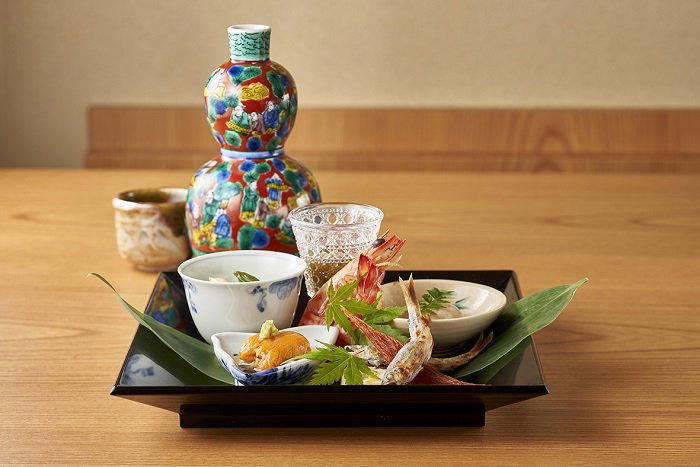
Approach the room expecting quiet rather than theatre. Osaka often sells itself through movement: counter chatter, steam, sauce, late-night appetite. Teruya belongs to another register of the city’s dining culture, where the meal is built around pacing, temperature, serving ware and the controlled extraction of flavour. The point is not volume or novelty; it is how a seasonal ingredient changes once it passes through dashi, steam, a covered bowl or a restrained garnish.
Dashi, seasonality and the Osaka end of refined discipline
Seasonal dining in Kansai is not a single formula. Kyoto supplies much of the grammar: wanmono, steamed preparations, takiawase, seasonal references and a respect for negative space on the plate. Osaka brings a different pressure, because the city’s dining identity is direct, practical and appetite-led. The interesting restaurants in this category do not reject that appetite; they refine it until the pleasure sits in broth clarity, texture and sequence rather than obvious richness.
Teruya’s clearest signal is its dashi. The kitchen uses a light style designed to draw out the character of each ingredient, then lets other components transfer flavour back into the broth across bowls, steamed items and simmered courses. That matters because dashi is not a background liquid in this tradition. It is the measuring instrument. A heavy hand flattens the meal; a thin one leaves it polite. The craft sits in the middle, where the blend, the seasoning and seasonal produce register without turning the course into a demonstration.
The serving ware also carries weight. Antique vessels and pieces by modern artists place the meal inside a broader Japanese aesthetic habit: seasonality is not only what is cooked, but what the object, colour, size and temperature imply. This is where higher-end seasonal cooking differs from a conventional tasting menu. The sequence asks the diner to read small changes, not wait for a crescendo. A covered bowl, a steamed item and a simmered dish can look modest on paper, yet they reveal the kitchen’s hierarchy of priorities more clearly than a showpiece course.
Within Osaka, that makes Teruya a useful counterpoint to more overtly accessible dining in the city. Shunzen Kiraku, Kirari, Hozan and Yugen offer other ways to read the category, while Oimatsu Hisano belongs in the same broader conversation around refined Osaka dining. The difference is not a simple ranking; it is a question of what a diner wants from the evening. Those looking for the city’s broader range can compare Teruya with other Osaka dining rooms, each of which helps map a different point on the local seasonal-cooking spectrum.
The format rewards patience, not checklist dining
This is a restaurant for diners who already understand why restraint can carry as much force as spectacle. The Michelin 1 Star recognition attached to Teruya is useful less as a trophy than as a category marker: it places the restaurant in the tier where precision, vessel choice and course order are judged as an integrated system. In this style, the owner-chef’s personality should not dominate the room. The work is visible in proportion: how lightly a broth is seasoned, how long a steamed course is held, how a simmered dish gains depth without becoming sweet or heavy.
That also means the meal is a poor fit for anyone chasing a long list of famous dishes. Fine dining in this mode resists the signature-item economy. The experience depends on the season and the internal rhythm of the menu, so the right comparison is not a counter built around prized cuts, nor a meal driven only by direct chef-to-guest exchange. It is closer to a conversation between Kyoto-honed technique and Osaka’s appetite for clarity and generosity, with the volume turned down.
For travellers building a wider Osaka itinerary, Teruya works as the composed anchor meal rather than the night of excess. The city can supply quick bites, grilled food, casual counters and bar-led late nights with ease; this room shows the opposite side of Osaka, where a refined setting buys concentration and the diner’s attention becomes part of the format. Use Our full Osaka restaurants guide for the dining spread, then place it against stays, drinks and cultural planning through Our full Osaka hotels guide, Our full Osaka bars guide, Our full Osaka wineries guide and Our full Osaka experiences guide.
How to place it within a wider Japanese dining map
Teruya is not trying to represent all of Japanese cuisine. It represents a specific, high-discipline strand of seasonal cooking where dashi, vessel and sequence carry more meaning than abundance. That distinction helps when comparing it with dining outside Osaka. Some restaurants build themselves around a richer, narrower format; others point toward charcoal, seafood, everyday comfort or cross-cultural cooking. Teruya’s focus is quieter: the flavour of the ingredient, the dashi that frames it and the small unseen tweaks that make each item feel particular.
Even within the fine-dining conversation, geography changes the grammar. Kyoto-honed technique carries its own codes, while restaurants elsewhere can translate similar formats with different expectations around luxury, pacing and ingredient display. Teruya’s argument is more local and more exacting: in Osaka, this kind of seasonal cooking earns its place by making restraint feel deliberate rather than timid.
In Context: Similar Options
Comparable venues by cuisine and price in the same metro.
| Venue | Cuisine | Price | Awards | Notes |
|---|---|---|---|---|
| TeruyaThis venue — the venue you are viewing | Kappo Kaiseki | $$$$ | Michelin 2 Star | Not listed |
| Sushi Harasho | Traditional Edomae Omakase | $$$$ | Michelin 2 Star | Tennōji |
| KAHALA | Creative Kaiseki Fusion | $$$$ | Michelin 2 Star | Kita |
| Naniwakappo NOBORU | Naniwa Kappo | $$$$ | Michelin 1 Star | Kita |
| Fujiya 1935 | Modern Japanese with European influences | $$$$ | Michelin 2 Star | Chūō |
| Oimatsu Hisano | Modern Seasonal Kaiseki Omakase | $$$$ | Michelin 2 Star | Chūō |
Recognition history
Dated appearances from independent guides and award organizations, with the underlying list record or original source where available.
Michelin 2 Stars
Michelin
Continue exploring
More in Osaka
Restaurants in Osaka
Browse all →




Bars in Osaka
Browse all →


Hotels in Osaka
Browse all →



Wineries in Osaka
Browse all →
At a Glance
- Intimate
- Elegant
- Quiet
- Sophisticated
- Date Night
- Special Occasion
- Chefs Counter
- Sake Program
Simple Japanese-style decor with a calm, intimate counter atmosphere emphasizing restraint and sensory focus.