On a quiet Alfama street, Tentações de Goa brings the Luso-Indian kitchen tradition of Goa to central Lisbon with a focus that few restaurants in Portugal attempt. The cooking sits at the intersection of Portuguese colonial history and South Asian spice culture, making it one of the city's more distinctive addresses for anyone tracing the full arc of Portuguese culinary identity.
Pearl is the En Primeur Club membership app — saves, bookings, and concierge access live there. Same editors, same standards.
- Address
- R. de São Pedro Mártir 23, 1100-555 Lisboa, Portugal
- Phone
- +351 21 887 5824
- Website
- thefork.pt
- Directions
- Get directions
 Saves & bookings on Pearl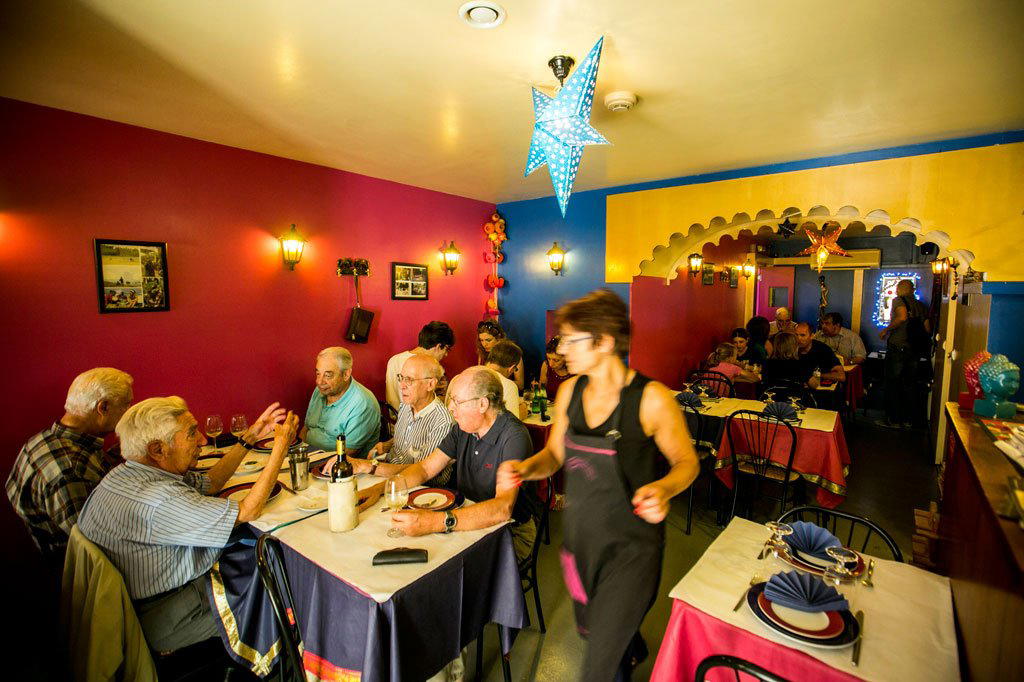
Where Alfama Meets the Arabian Sea
Rua de São Pedro Mártir is the kind of street that Lisbon does quietly: narrow, slightly downhill, tiled facades leaning into each other at odd angles. Walking toward Tentações de Goa, the first sensory signal is olfactory rather than visual, cumin, tamarind, and something fermented and warm that belongs neither to a Portuguese tasca nor to an Indian restaurant in the conventional sense. That displacement is the point. Goan cuisine occupies a culinary category that most restaurants in Europe either flatten into generic curry territory or ignore entirely, and this address on the edge of Alfama has positioned itself around the more specific, historically rooted version of that kitchen.
The Luso-Indian Kitchen in European Context
Goan food is the product of roughly 450 years of Portuguese colonial presence in western India, a duration long enough to produce something genuinely hybrid rather than simply layered. Vindaloo, in its original Goan form, derives from the Portuguese vinha d'alhos, wine, vinegar, and garlic, transformed by Indian spice logic and local proteins over generations. Xacuti, sorpotel, cafreal: these are dishes that carry the grammar of two culinary traditions without being reducible to either. In Lisbon, the city from which those colonial ships departed, the argument for Goan cooking has a particular resonance. The cuisine is, in a direct sense, partly Portuguese in origin, and placing it here closes a historical loop that most of the city's dining culture leaves open.
Among Lisbon's high-end restaurants, addresses like Belcanto, CURA, or Eleven, which work contemporary Portuguese idioms through tasting-menu formats, Goan cuisine rarely appears even as a reference point. The broader Portuguese fine-dining conversation, whether in Lisbon or across the country at addresses like Vila Joya in Albufeira, Casa de Chá da Boa Nova, or The Yeatman in Vila Nova de Gaia, tends to orient itself around Atlantic seafood, Alentejo land traditions, and the wine regions of the Douro and Algarve. Goa exists as a historical footnote in that narrative rather than a culinary thread. Tentações de Goa pulls that thread.
The Front-of-House as Editorial Argument
In restaurants that work with cuisines requiring cultural translation, the role of front-of-house shifts. A server explaining the difference between a vindaloo and a cafreal is not simply describing menu items, they are making an argument about culinary history, correcting assumptions that guests often arrive with, and calibrating the experience so that the food lands in the right interpretive frame. That function becomes a form of collaboration with the kitchen: the dish alone cannot do all the explanatory work, and a team that understands the cuisine at that level of depth changes what the meal communicates.
This dynamic appears across restaurants that work at the intersection of two distinct culinary cultures. At formats like Lazy Bear in San Francisco or Le Bernardin in New York City, the alignment between kitchen intent and front-of-house delivery is a structural part of the proposition. At a more intimate scale, and with a cuisine that many guests encounter here for the first time in its less-diluted form, that alignment becomes even more load-bearing. The leading version of a meal at a place like Tentações de Goa depends on whether the room knows how to frame what arrives from the kitchen.
Alfama as the Right Neighbourhood
The address in Alfama is not incidental. The neighbourhood carries the oldest sediment of Lisbon's multicultural history, Moorish, Jewish, and later colonial traces are embedded in its street plan and its architecture. It is also, outside the main tourist corridors, a residential district with a lower density of restaurants competing for the same evening crowd. That means Tentações de Goa does not sit in a dining cluster where guests move between comparable options. It occupies a more solitary position, which creates a different relationship between the restaurant and its neighbourhood: the room draws people who are specifically there for it, not visitors who ended up nearby.
Lisbon's broader dining geography rewards that kind of specificity. The city's most interesting food addresses increasingly occupy side streets rather than main plazas, serving cuisines that reflect the full range of Portugal's historical connections rather than a simplified Atlantic-and-tiles version of Portuguese identity. For anyone mapping that geography more thoroughly, the EP Club Lisbon restaurants guide provides the fuller picture.
Placing Goa in the Portuguese Dining Arc
Portugal's dining reputation has been built primarily on its European Atlantic identity. The Michelin-recognised addresses, Ocean in Porches, Antiqvvm in Porto, Il Gallo d'Oro in Funchal, Fortaleza do Guincho in Cascais, reference the sea, the land, and the wine in ways that feel continuous with a western European fine-dining tradition. Addresses like Ó Balcão in Santarém or Al Sud in Lagos operate in more regional registers. None of them particularly engage with the Goan or African strands of Portuguese culinary history. That gap is not an oversight, it reflects the way Portuguese national cuisine has been constructed and marketed, but it is a gap nonetheless.
Restaurants like 2Monkeys and 50 Seconds from Martin Berasategui represent different ways Lisbon's dining is reaching beyond its inherited frameworks. The restaurant does something structurally similar from a different direction: not by applying international technique to Portuguese ingredients, but by recovering a cuisine that Portuguese history produced and that the city has largely left underrepresented. That recovery, done with the right level of kitchen and floor discipline, is a more consequential act than the address might initially suggest. Elsewhere in the Algarve, Gusto by Heinz Beck in Almancil demonstrates what happens when a non-Portuguese culinary framework finds a committed local audience. The Goan case is both more specific and more historically grounded.
Planning Your Visit
The restaurant is located at Rua de São Pedro Mártir 23 in Lisbon's Alfama district, close enough to the historic centre to reach easily on foot from the Graca tram line or by taxi from Baixa. The neighbourhood context makes this a natural anchor for an Alfama evening: the streets around São Pedro Mártir hold enough architectural and atmospheric interest to carry the hours before and after the meal.
- Shrimp Masala
- Pork Vindaloo
- Goan Fish Curry
- Crab Curry
- Prawn Curry
- Xacuti
- Chicken Goesa Curry
Comparable Spots
Comparable venues nearby, for context on price, style, and recognition.
| Venue | Cuisine | Price | Notes |
|---|---|---|---|
| Tentações de GoaThis venue — the venue you are viewing | Authentic Goan & Indo-Portuguese Cuisine | $$ | Not listed |
| O Everest Restaurant | Nepalese and Indian | $$ | Saldanha |
| Top Fishtail Restaurante | Authentic Indian & Nepali | $$ | Alcantara |
| Queijaria Nacional | Portuguese Cheese & Charcuterie | $$ | Rossio |
| SecAdegas | Portuguese Petiscos | $$ | Estefania |
| Sol e Pesca | Portuguese Tinned Fish Bar | $$ | Chiado |
Continue exploring
More in Lisbon
Restaurants in Lisbon
Browse all →
Bars in Lisbon
Browse all →
Hotels in Lisbon
Browse all →
At a Glance
- Cozy
- Intimate
- Classic
- Date Night
- Casual Hangout
- Group Dining
- Special Occasion
- Standalone
- Beer Program
Current opening hours
- Monday
- 7–10 PM
- Tuesday
- 12–3 PM, 7–10 PM
- Wednesday
- 12–3 PM, 7–10 PM
- Thursday
- 12–3 PM, 7–10 PM
- Friday
- 12–3 PM, 7–10 PM
- Saturday
- 12–3 PM, 7–10 PM
- Sunday
- Closed
Hours can change for holidays and private events. Last verified .
Cozy and informal with warm, intimate lighting in two small dining rooms; narrow storefront with total seating for approximately 30 people creates an authentic, unpretentious atmosphere.