White Guide Sweden Restaurants - Fine Level
Our verdict
Tengu occupies a deliberate position in Stockholm's dining scene, where Japanese technique and Nordic restraint find common ground on Rådmansgatan 12. The address places it in the Vasastan district, a neighbourhood that rewards those willing to look beyond the obvious tourist circuits. In a city where the multi-course format has become the dominant idiom of serious dining, Tengu earns its place through precision rather than spectacle.

Pearl is the En Primeur Club membership app — saves, bookings, and concierge access live there. Same editors, same standards.
- Address
- Rådmansgatan 12, 114 25 Stockholm, Sweden
- Phone
- +46468303989
- Hours
- Mon–Fri 11:30 AM–10 PMSat–Sun 12–10 PM
- Website
- mymenuweb.com
- Directions
- Get directions
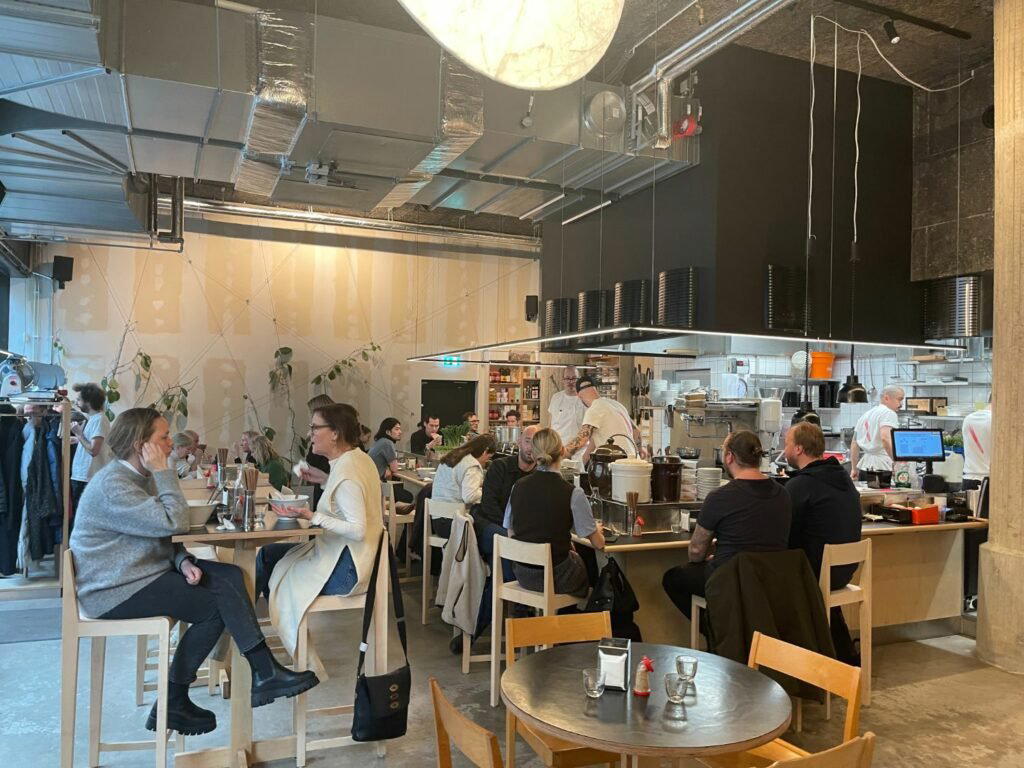
Where Japanese Precision Meets the Nordic Counter
Stockholm's serious dining scene has, over the past decade, consolidated around a particular format: the multi-course tasting menu, served at an intimate counter or in a sparse, considered room, where the sequencing of dishes does most of the storytelling. The city's most decorated addresses — Frantzén, AIRA, and Aloë — have all arrived at different expressions of this same logic: restraint in the room, density in the plate. Tengu, at Rådmansgatan 12 in Vasastan, belongs to that tradition, though it approaches it from a different direction. Japanese culinary thinking, the kind that prizes temperature control, textural contrast, and the deliberate pacing of courses, is the structural spine here, set against Stockholm's instinct for minimalism and local product.
Vasastan is the right neighbourhood for this kind of proposition. It sits north of the centre without the tourist density of Gamla Stan, and its residents skew toward the kind of repeat-visitor diner who sustains a serious restaurant rather than filling seats once on a special occasion. Addresses in this district tend to earn loyalty slowly and keep it for years. Rådmansgatan itself is a quiet residential street, the sort of address that requires a diner to arrive with a specific intention rather than stumble in from a passing crowd.
The Architecture of the Meal
In Japanese-influenced tasting formats, the progression of a meal carries more weight than any single dish. The sequence is the argument: what comes first establishes the register, what comes in the middle carries the load, and what closes determines whether the experience resolves or merely stops. Stockholm's leading multi-course rooms have absorbed this logic from different angles. Adam / Albin builds through New Nordic idiom; Operakällaren anchors itself in Swedish classical tradition. Tengu positions its progression within a Japanese frame, where the principles of ma (negative space between courses) and umami accumulation guide the meal's arc as much as any individual technique.
That architecture matters in practice. A meal at a counter like this is typically structured to move from lighter, more acidic preparations toward richer, more concentrated ones, with the pacing calibrated so the diner arrives at the final courses still engaged rather than fatigued. The leading versions of this format, think of how Atomix in New York manages its Korean-inflected progression, or how Le Bernardin sequences seafood through rising intensity, treat the meal as a piece of music with movements rather than a collection of dishes. Tengu operates within that same principle applied to its Stockholm context.
Stockholm's Position in Scandinavian Fine Dining
Understanding where Tengu sits requires some sense of what Stockholm's fine dining tier looks like in aggregate. The city's top-end restaurants occupy a competitive set that includes multiple Michelin-starred addresses and a broader layer of serious, unstarred rooms with strong regional followings. Beyond Stockholm, the Swedish fine dining picture is completed by addresses like Vollmers in Malmö, VYN in Simrishamn, and ÄNG in Tvååker, each working from different regional raw materials but sharing an underlying commitment to the tasting format as the primary vehicle for serious cooking.
Within Stockholm itself, the tier immediately below the two- and three-star addresses is where much of the most interesting cooking happens. Restaurants in that band compete on specificity: what they cook, how they source it, and whether the format feels genuinely considered rather than borrowed. Tengu's Japanese technical orientation gives it a clear identity in that space, distinct from the New Nordic rooms and the European classical houses that otherwise define the peer group.
For a broader map of the city's dining options at every price point, our full Stockholm restaurants guide covers the relevant addresses across neighbourhoods and categories.
Japanese Technique in a Nordic City
The cross-pollination of Japanese precision and Nordic restraint has become one of the more productive creative tensions in contemporary European cooking. Stockholm is a particularly receptive host for this conversation. The city's culinary culture already prizes economy of gesture, high-quality domestic produce, and a suspicion of theatrical excess, all values that map easily onto Japanese kitchen discipline. Where French-Japanese fusion often results in richness layered on richness, the Nordic-Japanese intersection tends toward the opposite: a competitive stripping away, each element present for a reason rather than for effect.
Across Scandinavia, addresses like Knystaforsen in Rydöbruk and Signum in Mölnlycke demonstrate how regional Swedish cooking absorbs outside influence without losing its grounding in local product and landscape. Tengu's position in Stockholm participates in that same broader tendency, with Japanese technique acting as a set of tools applied to the questions the Nordic kitchen is already asking about simplicity, seasonality, and restraint.
Planning a Visit
Rådmansgatan 12 is accessible from central Stockholm by metro (Rådmansgatan station on the red line sits close by) or on foot from Östermalm and the inner city in under twenty minutes. The Vasastan address is practical rather than dramatic, no doorman, no external theatre, which is consistent with the restaurant's orientation toward the food rather than the frame. Given the size typical of serious counter-format restaurants in this city and the format's dependence on consistent bookings to manage product waste, reservations are the only reliable route to a table; turning up without one at a room of this type in Stockholm is rarely productive. Lead times at comparable Stockholm addresses in this tier run from two to six weeks depending on the day, with weekend sittings filling earliest. Visitors combining Tengu with other Swedish addresses might pair the trip with a stop at 28+ in Gothenburg, PM & Vänner in Växjö, or Enoteket in Norrköping to build a broader picture of Swedish dining outside the capital.
Frequently asked questions
What's Tengu's location?
Tengu is located at Rådmansgatan 12, 114 25 Stockholm, Sweden, Stockholm.
How does Tengu fit into Stockholm's Japanese dining scene?
Stockholm has developed one of Northern Europe's more considered clusters of Japanese-influenced restaurants over the past decade, and Tengu on Rådmansgatan 12 sits within the counter-format end of that category. The address places it between Östermalm and the inner city, accessible from Rådmansgatan metro station on the red line. Within Stockholm's fine dining tier, the Japanese-Nordic crossover has moved from novelty to a recognised approach, with Tengu representing the counter-service expression of that direction.
What's the best thing to order at Tengu?
Tengu operates within the Japanese-influenced tasting menu format, where the full sequence is the point rather than any single dish ordered à la carte. Arriving committed to the complete progression, at a counter restaurant on Rådmansgatan 12 in Stockholm, gives the meal its proper architecture. Selecting individual dishes would work against the logic the kitchen is building across the whole service.
Should I book Tengu in advance?
Counter-format restaurants in Stockholm's fine dining tier routinely fill weeks out, and Tengu at Rådmansgatan 12 operates within that same demand pattern. Booking as far ahead as the reservation system allows is the practical approach. Walk-in availability at this level of the Stockholm scene is rarely a reliable option.
What's the signature at Tengu?
The defining characteristic at Tengu is the application of Japanese tasting-menu structure to a Stockholm dining context, where Nordic restraint and Japanese precision share a productive overlap. The counter format itself functions as the signature: a fixed progression, close proximity to the kitchen, and a meal shaped by sequence rather than selection. That format is increasingly where Stockholm's serious dining is concentrated.
A Tight Comparison
Comparable venues nearby, for context on price, style, and recognition.
| Venue | Cuisine | Price | Awards | Notes |
|---|---|---|---|---|
| TenguThis venue — the venue you are viewing | Japanese Ramen and Small Plates | $20–30 | White Guide Sweden Restaurants - Fine Level | Not listed |
| Ai Ramen Klara | Japanese Ramen | $20–30 | Not listed | Norrmalm, Japanese Ramen |
| Helens Sushi | Japanese Sushi & Asian Fusion | $20–30 | Not listed | Hornstull, Japanese Sushi & Asian Fusion |
| Barbro | Japanese Fusion Small Plates | $20–30 | White Guide Sweden Restaurants - Fine Level | Hornstull, Japanese Fusion Small Plates |
| Miyakodori | Japanese Izakaya & Yakitori | $50–100 | Star Wine List · White Guide Sweden Restaurants - Very Fine Level | Norrmalm, Japanese Izakaya & Yakitori |
| Tennstopet Grill | Traditional Swedish Husmanskost | $20–30 | Not listed | Vasastan, Traditional Swedish Husmanskost |
Recognition history
Dated appearances from independent guides and award organizations, with the underlying list record or original source where available.
White Guide Sweden Restaurants - Fine Level
White Guide