
Michelin Bib Gourmand
Our verdict
Operating from Bağdat Caddesi since 1978, Tavacı Recep Usta Bostancı is one of Istanbul's most established ocakbaşı-style grill houses. Spread across two floors in Maltepe, it has built its reputation on lamb skewers, sac tava, and grilled aubergine dishes prepared with no concession to culinary fashion. The celebrity photographs lining its walls mark decades of consistent, crowd-driven appeal on Istanbul's Asian shore.

Pearl is the En Primeur Club membership app, where members save venues, book tables and use the concierge.
The menu
What to order
- Lamb Kebab (Kuzu)
- Adana Kebab
- Hunkar Begendi
- Saç Tava
- Baklava
Where the Grill Takes Precedence
Along the Asian side of Istanbul, Bağdat Caddesi has long functioned as a social artery, a strip that rewards those willing to look beyond the obvious tourist circuits of Sultanahmet and Beyoğlu. The dining culture here is less about international reference points and more about a particular Turkish confidence in the grill: the ocakbaşı tradition, where coal-fired cooking and the ritual of shared mezze define the evening. Tavacı Recep Usta Bostancı, operating from its address at No. 6 since 1978, sits within that tradition with the kind of institutional weight that only decades of consistent service can produce.
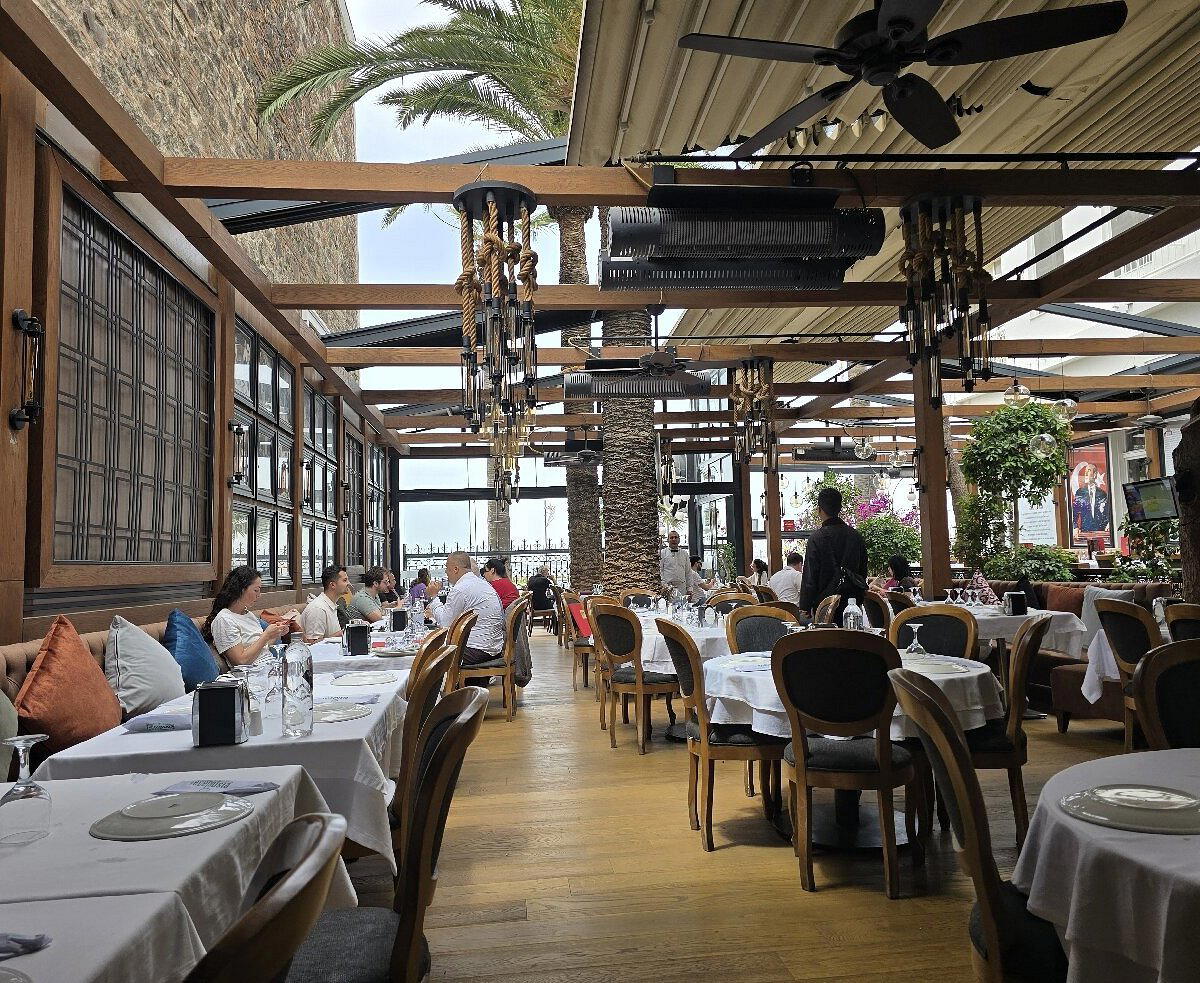
The setting across two floors is spacious and deliberately unpretentious. There is no design programme at work here, no studied minimalism or curated soundtrack. What you find instead is a room built around the social logic of the Turkish grill house: large tables suited to groups, an atmosphere shaped by the clatter and heat of active cooking, and walls dense with photographs of celebrities who have made their way here since the late 1970s. That archive of faces is not mere decoration. It is a document of how a restaurant earns cultural legitimacy in Istanbul, not through awards columns, but through the sustained preference of people with access to any table in the city.
The Case for Lamb, Stated Plainly
Istanbul's grill-house tradition draws a clear line between the chef-driven modernism at venues like Turk Fatih Tutak and the rooftop-Mediterranean registers of Mikla, and the older, more direct proposition of the ocakbaşı. The latter makes no argument for novelty. It argues instead for mastery of a narrow set of techniques: the management of heat, the quality of the raw ingredient, and the precision of seasoning that allows lamb to speak for itself.
At Tavacı Recep Usta, that argument is made through a menu centred on lamb, grilled dishes, and mezze. The skewers arrive at the table still sizzling from the grill, a detail that matters because it signals the kitchen's pacing, its understanding that temperature and timing are not finishing touches but core to the dish. Sac tava, diced lamb cooked in a tomato and chilli pepper sauce with enough acidity to cut the fat, is the kind of preparation that rewards comparison across a dozen Istanbul kitchens. Grilled aubergine and pepper alongside minced lamb follows a similar logic: simple assemblies where the quality of char and the balance of smoke against sweetness carry the weight of the plate.
This positions the restaurant in a different competitive set from the ₺₺₺₺ modern Turkish tier occupied by Neolokal or Arkestra. The comparison that matters is not with tasting-menu formats but with other long-running ocakbaşı houses where consistency over time is the primary measure of quality. Against that standard, an operation running since 1978 without apparent concession to changing fashions is making a deliberate and defensible editorial statement about what Turkish grill cooking is and where its value lies.
On the Wine Question, and What the Tradition Actually Calls For
The editorial angle of wine depth and cellar curation does not find its natural home in the ocakbaşı tradition, and it would be a distortion to suggest otherwise. Turkey's wine culture, while growing, has developed primarily around the western Aegean coast and Thrace, and the classic pairing logic at a grill house of this type runs through rakı rather than a cellar. The anise-driven national spirit, lengthened with water, has a documented affinity with grilled lamb and charred vegetables that no sommelier argument has successfully displaced in a traditional setting.
That is not a criticism of the venue. It is a structural observation about the category. At Casa Lavanda or at the modernist end of the Istanbul dining spectrum, a conversation about cellar depth and wine curation is the right conversation. At a traditional ocakbaşı with decades of identity built around fire and meat, the more honest frame is what the house pours alongside its food and whether it serves the cooking. Rakı's role here is not incidental. It is load-bearing.
Visitors arriving from international grill traditions, from the live-fire intensity of venues like Le Bernardin's opposite register, or the celebratory communal spirit of Emeril's in New Orleans, will find that the ritual of rakı service at a Turkish table carries its own formal logic worth understanding before the meal begins.
The Asian Shore, and Why It Matters
Istanbul's dining reputation has long been anchored to the European side: Beyoğlu, Karaköy, Nişantaşı. The Asian shore, with its residential character and longer-established neighbourhood dining culture, operates with different assumptions. The clientele at a Bağdat Caddesi institution is not passing tourist traffic. It is a local and regional audience that has chosen the restaurant on its own terms, which means the pressure to perform for an unfamiliar audience does not apply in the same way.
This distinction shapes the experience. Tables tend toward the larger end, suited to the Turkish convention of eating at length with extended company. The two-floor layout accommodates volume without the atmosphere collapsing into noise, a function of space management that long-running venues in Istanbul have generally solved better than newer openings. For context on what else the city offers across formats, our full Istanbul restaurants guide maps the range from ocakbaşı to fine dining. The bars guide, hotels guide, wineries guide, and experiences guide cover the rest.
For those moving beyond Istanbul, the traditional grill-and-mezze logic translates to other parts of Turkey. 7 Mehmet in Antalya occupies a similar institutional position on the southern coast. Maçakızı in Bodrum, Narımor in Izmir, Agora Pansiyon in Milas, Ahãma in Göcek, and Aravan Evi in Ürgüp each represent a distinct regional expression of the same broad tradition of shared tables and fire-cooked protein.
Planning a Visit
The restaurant is located at Altintepe, Bağdat Caddesi, No. 6, Maltepe, on Istanbul's Asian shore, accessible by Marmaray rail or by ferry from the European side to Kadıköy followed by a short southward transit along the coast road. The two-floor format handles significant volume, which means it tends to absorb walk-in traffic more readily than the smaller, counter-format ocakbaşı operations in Kadıköy proper. A large group will find the layout well suited to long, unhurried meals. The menu's structure, mezze to share, grilled mains to follow, rewards arriving without a fixed plan and ordering in rounds.
Frequently asked questions
Would Tavacı Recep Usta Bostancı be comfortable with kids?
Yes, the format works well for families. The restaurant spreads across two floors with a lively, spacious layout, and shared plates, skewers, mezze, sac tava, arrive in a sequence that suits a varied table. The atmosphere is social rather than hushed, which takes pressure off younger diners.
What kind of setting is Tavacı Recep Usta Bostancı?
A traditional Turkish ocakbaşı grill house on Bağdat Caddesi, Maltepe, two floors, large tables, and a room built for groups rather than intimate couples' dinners. The walls carry photographs of celebrities who have eaten here over the decades since 1978, which tells you something about the crowd it attracts and the consistency it has maintained.
What awards or recognition does Tavacı Recep Usta Bostancı have?
Tavacı Recep Usta Bostancı has received recognition including: Lamb, grilled dishes and mezze are the specialities of this lively, spacious restaurant spread over two floors. This is where traditional Turkish cuisine reveals all of its generosity. Picture the skewers arriving at your table, still sizzl….
What should I eat at Tavacı Recep Usta Bostancı?
The kitchen's documented specialities are lamb, grilled dishes, and mezze. Sac tava, diced lamb cooked in a tomato and chilli pepper sauce, is a dish the restaurant is specifically known for, alongside grilled aubergine and pepper with minced lamb. Order the skewers and let the grill lead.
Pricing, Compared
Comparable venues nearby, for context on price, style, and recognition.
| Venue | Cuisine | Price | Awards | Notes |
|---|---|---|---|---|
| Tavacı Recep Usta BostancıThis venue (the venue you are viewing) | Traditional Turkish Grilled Kebabs & Lamb | $30–50 | Michelin Bib Gourmand | Not listed |
| 29 | Modern Turkish with Mediterranean influences | $100–150 | Michelin Plate · Gault & Millau Türkiye 1 Toque | Kurucesme, Modern Turkish with Mediterranean influences |
| Araf İstanbul | Modern Turkish Fire Cooking | $50–100 | Michelin Bib Gourmand · Gault & Millau Türkiye 2 Toques | 19 Mayis, Modern Turkish Fire Cooking |
| The Red Balloon Yalıkavak | Modern North Aegean Mediterranean | Not listed | Michelin Plate · Gault & Millau Türkiye 1 Toque | Asmali Mescit, Modern Northern Aegean Cuisine |
| Alaf | Modern Anatolian Nomadic Cuisine | $30–50 | Michelin Plate · Gault & Millau Türkiye 2 Toques | Kurucesme, Modern Anatolian Nomadic Cuisine |
| Karaköy Lokantası | Modern Turkish Meze | $50–100 | Michelin Bib Gourmand · Gault & Millau Türkiye 1 Toque | Kemankeskaramustafapasa, Modern Turkish Meze |
Recognition history
Dated appearances from independent guides and award organizations, with the underlying list record or original source where available.
Michelin Bib Gourmand
Michelin
Continue exploring
More in Istanbul
Restaurants in Istanbul
All restaurants in Istanbul →
Bars in Istanbul
All bars in Istanbul →
Details
- Lively
- Classic
- Scenic
- Elegant
- Group Dining
- Family
- Casual Hangout
- Business Dinner
- Waterfront
- Terrace
- Local Sourcing
- Waterfront
- A La Carte
- Family Style
- Ayran
- Tea
- Coffee
- Vegetarian Friendly
Current opening hours
- Monday
- 11 AM–11 PM
- Tuesday
- 11 AM–11 PM
- Wednesday
- 11 AM–11 PM
- Thursday
- 11 AM–11 PM
- Friday
- 11 AM–11 PM
- Saturday
- 11 AM–11 PM
- Sunday
- 11 AM–11 PM
Hours can change for holidays and private events. Hours as of .
Lively and spacious with warm, inviting atmosphere; bright and energetic during peak hours with traditional Turkish decor and photographs of notable guests throughout.