Taste 1973


1 Michelin Star · Guía Repsol 1 Sol
Our verdict
Taste 1973 holds a Michelin star and occupies a distinct position in the Canary Islands dining scene: a tasting-menu restaurant inside Playa de las Américas' Villa Cortés hotel where every dish is anchored to the islands' pre-Hispanic Guanche culinary roots. Two structured menus, a 50-variety cheese trolley, and a research team that includes marine biologists and historians give the format unusual intellectual depth for a resort destination.

Pearl is the En Primeur Club membership app — saves, bookings, and concierge access live there. Same editors, same standards.
- Address
- Hotel Villa Cortés*, Av. Rafael Puig Lluvina, 38, 38650 Playa de las Américas, Santa Cruz de Tenerife, Spain
- Phone
- +34 922 75 77 00
- Hours
- Mon–Tue ClosedWed–Sat 7–11 PMSun Closed
- Website
- europe-hotels.org
- Directions
- Get directions
- Booking
- Book on TheFork
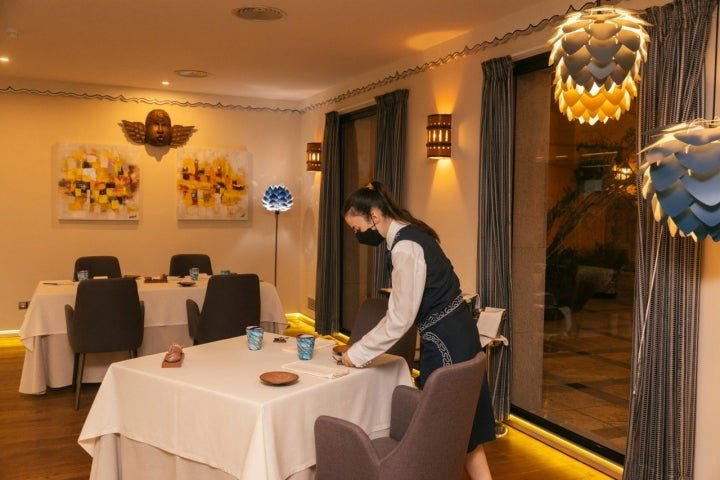
Where the Ritual Begins
The south of Tenerife is not where most people expect to find serious tasting-menu cooking. Playa de las Américas built its reputation on volume tourism, beach proximity, and reliable sun — not on the kind of slow, sequenced dining that demands full attention for three hours. The dining room is open Wednesday through Saturday from 7 PM to 11 PM, and the format is tasting menu only — a structural choice that signals intent before a single course arrives.
That four-night week matters. Tasting-menu restaurants that close half the week are making a statement about pace and preparation. The kitchen is not producing covers seven nights running; it is producing a specific, considered experience on a controlled schedule. For the diner, this means arriving into a room that has had time to reset, and a brigade that is not running on fumes. The ritual starts before the food: the act of booking deliberately, arriving at a hotel property that operates in a different register than the strip restaurants outside, and accepting that the evening has a shape you do not control.
The Architecture of the Menus
Spain's creative fine dining scene has, for the better part of two decades, been defined by laboratories, techniques borrowed from chemistry, and a conceptual restlessness that sometimes outpaces the plate. The country's leading addresses, Disfrutar in Barcelona, El Celler de Can Roca in Girona, DiverXO in Madrid, Mugaritz in Errenteria, Arzak in San Sebastián, and Azurmendi in Larrabetzu, all operate at the €€€€ price tier and share a commitment to anchoring innovation in a specific regional identity. Taste 1973 belongs to that creative tier and shares the same price bracket, but its regional anchor is narrower and, arguably, more archaeologically specific: the Guanche people, the pre-Hispanic indigenous inhabitants of the Canary Islands.
Two tasting menus are on offer, Roque Guincho and Roque de Arona Hío, both named after geological formations on the island, both structured so that Canarian cooking is present in every course without exception. This is not the tokenistic use of a local ingredient inside a globally-framed technique. The menus are built from the culture outward, supported by a research team that has revisited Guanche culinary roots with the involvement of marine biologists, neurologists, and historians. That interdisciplinary scaffolding is unusual at any price point. It positions Taste 1973 closer to the research-led model of Aponiente in El Puerto de Santa María, where marine science informs every sea-based ingredient decision, than to the more purely technique-focused formats found in other starred Spanish rooms.
Each course arrives with an information card that details the product used and its origin, with individual cards dedicated to different islands in the archipelago. The sequencing of these cards through the meal creates a secondary narrative running alongside the food: a history of the islands delivered in small, legible increments. At addresses like Quique Dacosta in Dénia or Martin Berasategui in Lasarte-Oria, the educational function of the meal is implicit in the technique. Here, it is made explicit on paper, a choice that some diners will find enriching and others may find didactic, but which is at minimum consistent with the kitchen's stated intent.
Dry-Aged Fish, Seafood Rice, and the Cheese Trolley
Within the creative tasting format, a few elements carry particular weight. The kitchen has a clear investment in dry-aged fish, a technique that remains a minority pursuit in Spanish fine dining even as it has gained traction in Nordic and Japanese contexts. Aging fish shifts its texture and concentrates its flavour in ways that divide opinion, but the commitment here is evident rather than incidental.
The Michelin inspectors who awarded the restaurant its star in 2024 specifically noted the seafood rice with scarlet red prawns and a dish listed as Thunnus thynnus, the formal species name for Atlantic bluefin tuna, as standout moments. These are the kinds of references that tell you the cooking is grounded in the specific marine ecology of the waters around the Canaries rather than in a generic Mediterranean seafood tradition.
The cheese trolley arrives near the close of the meal and operates on a different register from the rest of the format. More than 50 varieties of Canarian cheese are presented. The Canary Islands produce a range of cheeses that rarely travel far beyond the archipelago, and a trolley of this scope, offered in a starred dining context, does genuine curatorial work. At creative-tier addresses in France or Italy, Alléno Paris au Pavillon Ledoyen or Enrico Bartolini in Milan, the cheese course tends to be a European greatest-hits selection. The Taste 1973 trolley is the opposite: emphatically local, emphatically archipelago-specific.
The Dining Pace and What It Asks of You
Editorial angle on this restaurant is the meal as a structured ritual, and that framing holds because the experience genuinely requires participation rather than passive consumption. The information cards mean you are asked to read. The dual menu format means you have made a considered choice before arriving. The dry-aged fish and the Guanche-rooted dishes mean some courses will present flavours or textures outside the conventional tasting-menu comfort zone.
This is not a criticism. The creative dining tradition in Spain has always demanded engagement from the diner, it is the compact that restaurants like El Celler de Can Roca and Disfrutar built their reputations on. Taste 1973 operates in the same intellectual tradition, applied to a region whose culinary history has received almost no fine-dining attention. The 2024 Michelin star, awarded in what is effectively a resort market rather than a culinary capital, is recognition that the ambition translates into quality at the plate level.
Starred restaurants in resort settings often carry more variable reviews than city counterparts because the diner mix is broader.
Planning Your Visit
Taste 1973 is inside Hotel Villa Cortés, a five-star property on Avenida Rafael Puig Lluvina in Playa de las Américas, a location that makes it equally accessible to guests of the hotel and diners staying elsewhere on the southern coast of Tenerife. The restaurant operates Wednesday through Saturday only, with service running from 7 PM to 11 PM. Monday, Tuesday, and Sunday are closed. At the €€€€ price tier, this is a special-occasion investment by any measure on the island. Booking in advance is advisable; tasting-menu restaurants of this format and recognition do not hold tables easily on short notice, particularly on weekend nights.
For further context on dining in the area, see our full Playa de las Américas restaurants guide, including El Lajar de Bello and Goxoa for grilled formats at a different price point and pace. If your time in the south of Tenerife extends to other categories, our hotels guide, bars guide, wineries guide, and experiences guide cover the wider area in the same editorial depth.
Frequently asked questions
Is Taste 1973 good for families?
Straightforwardly: no. The €€€€ price tier, tasting-menu-only format, and the deliberate, slow-paced dining ritual make it a poor fit for families with children. This is an adult, special-occasion restaurant in a resort city where most family dining options sit several price tiers lower.
How would you describe the vibe at Taste 1973?
If you arrive expecting the easy-going, sun-and-sea register that defines most dining in Playa de las Américas, recalibrate before you book. Holding a Michelin star at the €€€€ level in a resort market means the restaurant operates with the seriousness of a city fine-dining room: structured, attentive, and quiet enough to follow the information cards that accompany each course. If that kind of focused, research-informed dining experience is what you are looking for, the tone is exactly right. If you want something more relaxed, the format will feel like it is asking more of you than you want to give.
What do people recommend at Taste 1973?
Go for the full tasting menu, whichever of the two you choose, and pay attention to the dry-aged fish courses and the seafood rice with scarlet red prawns, both flagged specifically by Michelin in the 2024 star citation. Do not rush past the cheese trolley: with more than 50 Canarian varieties on offer, it is one of the most complete presentations of island cheese culture available in a dining context anywhere in the archipelago. The Thunnus thynnus dish, bluefin tuna in its formal designation, also draws consistent recognition from those who have eaten through the menu.
Cuisine and Recognition
| Venue | Cuisine | Awards |
|---|---|---|
| Taste 1973This venue — the venue you are viewing | Avant-Garde Canary Islands Fine Dining | 1 Michelin Star · Guía Repsol 1 Sol |
| Aponiente | Progressive - Seafood, Creative | Michelin 3 Star |
| Arzak | Modern Basque, Creative | Michelin 3 Star |
| DiverXO | Progressive - Asian, Creative | Michelin 3 Star |
| El Celler de Can Roca | Progressive Spanish, Creative | Michelin 3 Star |
| Quique Dacosta | Creative | Michelin 3 Star |
Recognition history
Dated appearances from independent guides and award organizations, with the underlying list record or original source where available.
Michelin 1 Star
Michelin
Guía Repsol 1 Sol
Guía Repsol
Full recognition history (4 entries)
Michelin 1 Star
Michelin
Michelin 1 Star
Michelin
Continue exploring
More in Playa de las Américas
Restaurants in Playa de las Américas
Browse all →
Bars in Playa de las Américas
Browse all →
Hotels in Playa de las Américas
Browse all →
Wineries in Playa de las Américas
Browse all →

Details
- Elegant
- Sophisticated
- Intimate
- Special Occasion
- Date Night
- Open Kitchen
- Hotel Restaurant
- Extensive Wine List
- Local Sourcing
- Tasting Menu
Current opening hours
- Monday
- Closed
- Tuesday
- Closed
- Wednesday
- 7–11 PM
- Thursday
- 7–11 PM
- Friday
- 7–11 PM
- Saturday
- 7–11 PM
- Sunday
- Closed
Hours can change for holidays and private events. Last verified .
Intimate and luxurious with open kitchen views, thoughtful service, and an immersive, educational atmosphere focused on island heritage.